Late-Night Transport: Night Rider Buses and Midnight Taxi Surcharges
You’ve just had an amazing night out in Singapore – perhaps a delicious late dinner, a few drinks at a buzzing rooftop bar, or maybe a concert that ran longer than expected. The buzz is still there, but then reality hits: the MRT has stopped running, and your usual bus route is nowhere to be found. Suddenly, getting home feels like a complex mission, and the thought of inflated taxi fares can be a real buzzkill. This guide is here to unravel the mysteries of late-night transport in Singapore, helping you navigate Night Rider buses and understand those infamous midnight taxi surcharges, so you can get home safely and without a huge dent in your wallet.
The Midnight Maze: When Public Transport Calls It a Night
Let’s be honest, Singapore’s public transport system during the day is a marvel of efficiency. The MRT and regular bus services are incredibly reliable, clean, and connect almost every corner of the island. But once the clock strikes midnight (or close to it), that seamless connectivity undergoes a significant change. It’s a common expat rite of passage to miss the last train and suddenly feel a bit adrift, especially if you’re new to the city.
MRT and Bus Operating Hours: The Hard Cut-Off
The Mass Rapid Transit (MRT) system, our beloved subway, typically operates from around 5:30 AM until about midnight, sometimes extending to 1 AM on Friday and Saturday nights and on the eve of public holidays. The last train timings vary depending on the line and station, but generally, you’re looking at a hard cut-off. Similarly, regular bus services follow suit, winding down around the same time. If you’re at, say, Clarke Quay on a Saturday night, and you haven't glanced at the clock, that cheerful "Service has ended" announcement can send a shiver down your spine.
It’s easy to get complacent when trains arrive every few minutes during peak hours. You feel invincible, able to zip across the island with ease. But once those gates close for the night, the landscape completely transforms. That comfortable, air-conditioned ride home from the city centre suddenly isn't an option, and you're left weighing your remaining choices. This abrupt shift from a highly convenient, affordable network to limited alternatives is where many foreigners, used to 24-hour subway systems in other major cities, feel the pinch and the initial wave of "oh dear, what now?" panic.
Why Knowing These Hours is Crucial for Expats
For us expats, understanding these operating hours isn’t just about avoiding inconvenience; it’s about managing your budget and your sanity. Singapore offers a fantastic social scene, from late-night hawker centre feasts to lively bars in areas like Holland Village or Club Street. These activities often naturally extend past the public transport curfew. If you’re out with friends, enjoying a few drinks, it’s easy to lose track of time.
Imagine you're catching up with old university friends in the CBD, and the conversation flows, drinks are ordered, and before you know it, it's 1:30 AM. If you live in, say, Pasir Ris, and you completely missed the last train, your S$2.50 MRT ride home just transformed into a potentially S$30-S$40 (or more, depending on surge) taxi fare. That’s a significant difference, especially if it happens often! For more general tips on getting around, you might find our guide on Public Transport in Singapore: MRT, Buses, and Commuting Hacks incredibly useful. Knowing these timings allows you to either plan an early exit, arrange shared rides, or prepare for the alternative costs, saving you from a nasty surprise when you check your bank statement the next morning.
Decoding Night Rider Buses (and Night Owl for SBS Transit)
Alright, so the MRT is sleeping, and regular buses are tucked away in their depots. Does that mean you’re absolutely stuck with a taxi or ride-hailing service? Not necessarily! Singapore does offer some lifeline services specifically for the late-night crowd, mainly in the form of Night Rider buses and their equivalent, Night Owl services. These are like guardian angels for those of us who just can't bring ourselves to call it an early night.
What Are Night Rider and Night Owl Services?
Think of Night Rider (operated by SMRT) and Night Owl (operated by SBS Transit) as special, limited express bus services designed to ferry people home from key nightlife and commercial areas. They kick into gear when the regular public transport system shuts down, typically running on Friday, Saturday nights, and the eve of public holidays. Their primary goal is to provide a more affordable alternative to taxis for people heading home after work or play.
These buses don't run as frequently as regular buses, nor do they cover every single residential street. Instead, they operate on specific, pre-defined routes that usually start from central locations like Orchard Road, the CBD, Clarke Quay, and City Hall, fanning out to major residential estates across the island. It’s a bit like a night-time shuttle service, making sure you don't have to break the bank just because you enjoyed yourself a little too much. They're a true testament to Singapore’s commitment to providing options, even if they require a bit more planning.
Routes, Fares, and How to Use Them
When it comes to routes, both Night Rider and Night Owl services follow radial patterns. For instance, you might find Night Rider services like NR1, NR2, NR3, etc., heading towards specific regions like Woodlands, Sengkang, or Jurong East from the city centre. Similarly, Night Owl buses (like 1N, 2N, 3N) will connect areas like Marina Centre or Esplanade with heartland towns. These routes are thoughtfully designed to cover as many major residential areas as possible, though you might still have a walk from your final stop.
The fares for these services are higher than standard bus fares but still significantly cheaper than a taxi, usually a flat rate, regardless of distance. You can pay using your trusty EZ-Link card or by tapping your credit/debit card enabled for Using SimplyGo: Tapping Your Credit Card or Phone for Bus and Train Fares. To ensure you catch the right bus, it's absolutely crucial to check the specific routes and schedules beforehand. Apps like Moovit, Google Maps, or the official SMRTConnect and SBS Transit apps are your best friends here. They provide real-time tracking and route information, which can be a lifesaver when you're standing at a dimly lit bus stop at 2 AM. Trust me, I’ve been there, frantically refreshing my app, wondering if I missed it or if it’s just running on "island time."
Pros and Cons: A Realistic View
Like all things, Night Rider and Night Owl services come with their own set of advantages and disadvantages. It's important to have a realistic perspective so you can decide if they're the right fit for your late-night journey.
Pros:
- Cost-Effective: This is hands-down the biggest pro. They are substantially cheaper than a taxi or a ride-hailing service with midnight surcharges, especially if you're traveling solo. Saving S$20-S$30 on a ride home can add up quickly over a month!
- Relatively Reliable: While not as frequent as daytime services, these buses generally stick to their schedules. You might have to wait 20-30 minutes, but they will eventually show up, barring any unforeseen traffic incidents.
- Wide Coverage (for major routes): They do a decent job of connecting the core nightlife areas with many large residential estates, providing a solid backbone for late-night transport.
Cons:
- Limited Operating Days and Hours: They only run on Friday, Saturday, and eve of public holidays, and typically only from around 11:30 PM/12:00 AM to 4:00 AM/4:30 AM. Any other night, or if you're out past these hours, you're out of luck.
- Infrequent Services: Waiting 20-30 minutes for a bus when you're tired and just want to get home can feel like an eternity. Don't expect rapid-fire arrivals like during the day.
- Less Direct: While they cover major routes, they don't offer door-to-door service. You might still have a 10-15 minute walk from your bus stop to your home, especially if you live further into a housing estate. This is perfectly safe in Singapore, but less convenient than a taxi dropping you right at your block.
- Can Be Crowded: Especially during peak late-night hours (e.g., 1 AM to 2 AM), these buses can get quite packed with other revelers, making for a less-than-serene ride.
Here's a quick comparison to help you weigh your options:
| Feature | Night Rider / Night Owl Buses | Taxi / Ride-Hailing Service |
|---|---|---|
| Cost | Low (flat rate, usually S$4.00 – S$5.00) | High (metered fare + booking fee + midnight surcharge) |
| Convenience | Lower (fixed routes, less frequent, requires walking from stop) | High (door-to-door, on-demand, direct route) |
| Availability | Fri, Sat, Eve of PH only; limited hours (approx. 12 AM – 4 AM) | 24/7 (though availability can vary, especially off-peak) |
| Frequency | Every 20-30 minutes | On-demand (can be quick or involve waits due to surge) |
| Route Flexibility | Fixed routes to major residential hubs | Direct to your exact destination |
| Comfort | Standard public bus; can be crowded | Private car; comfortable, less crowded (unless carpooling) |
Navigating Taxi and Ride-Hailing Midnight Surcharges
If Night Rider buses don’t serve your area, don’t run on the night you’re out, or you simply prefer the comfort and directness of a private ride, you’ll be looking at taxis and ride-hailing apps. This is where the cost can really start to climb, thanks to the dreaded midnight surcharges and dynamic pricing. It’s definitely a moment where you feel the cost of living for a single expat, or a family, truly kick in!
The Midnight Hike: Understanding Surcharges
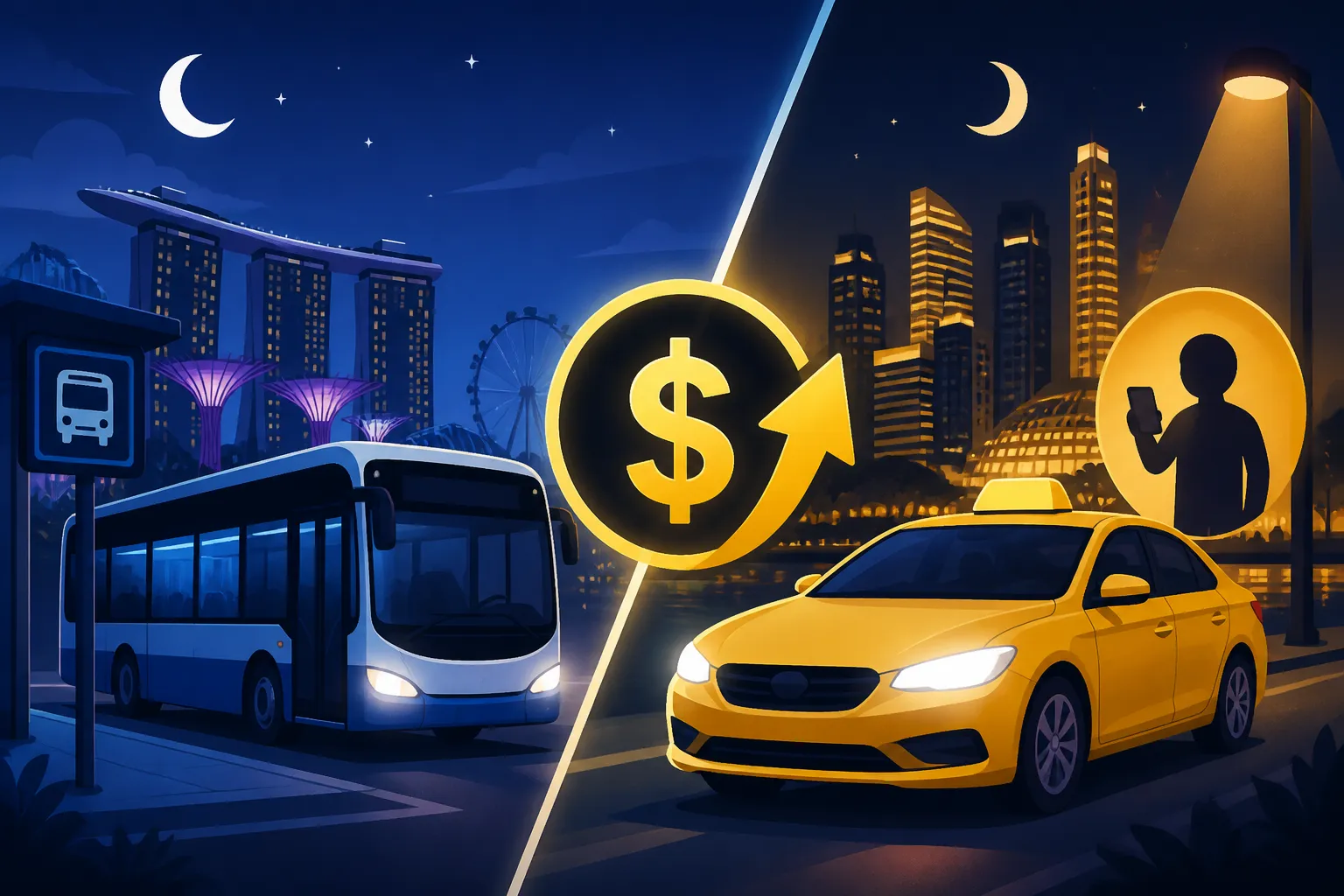
So, why do prices suddenly jump after midnight? It’s simple economics, my friends: supply and demand. Fewer drivers are on the road during these late hours, and those who are, are often incentivized by higher pay. This comes in the form of midnight surcharges. For traditional taxis, this usually means a flat percentage increase added to your metered fare. Typically, between 12:00 AM and 5:59 AM, you can expect a 50% surcharge on your total fare. That means a S$20 ride just became S$30, before any booking fees.
For ride-hailing apps like Grab, Gojek, TADA, and CDG Zig, it’s a slightly different beast: dynamic pricing, often referred to as "surge pricing." While they don't always have a fixed "midnight surcharge" percentage like traditional taxis, the algorithm detects higher demand in certain areas at certain times (like post-midnight in popular nightlife spots) and adjusts prices accordingly. This can sometimes result in even higher increases than the traditional taxi surcharge, making that ride home feel like a luxury purchase. The first time you see a S$50 fare for a journey that cost S$15 just a few hours earlier, it's a genuine "ouch" moment, I can tell you.
Ride-Hailing Apps: Dynamic Pricing in Action
Ride-hailing apps are a lifesaver for convenience, but their dynamic pricing models can be a real head-scratcher, especially after midnight. Here's how it generally works: the more people requesting rides in a specific area at a specific time, the higher the price. This means that if you're leaving a popular club or a large event, you're almost guaranteed to face surge pricing.
My personal tip for mitigating this? Check multiple apps! I always have Grab, Gojek, and TADA downloaded. What's surging on Grab might be slightly less expensive on Gojek, or vice versa. Sometimes, waiting just 5-10 minutes for the immediate post-event rush to subside can bring prices down a little. Another trick is to walk a block or two away from the absolute epicentre of demand. If everyone is hailing from the exact same street corner, walking to a quieter, adjacent street might get you a slightly better rate. And for these tactics, having reliable data is non-negotiable. This is where an eSIM from a provider like Airalo becomes incredibly handy – you absolutely need to be connected to compare prices across apps without draining your regular data plan or worrying about roaming charges. Don't forget that many apps also offer carpooling options, which can significantly cut down costs if you're willing to share. Check out our detailed guide on Ride-Hailing Apps: Grab, Gojek, TADA, and CDG Zig Explained for more insights into each service.
Traditional Taxis: Flag-Down vs. Booking
While ride-hailing apps have certainly taken over much of the market, traditional taxis still have their place, especially late at night. You have two main options here: flagging one down on the street or booking one through an app or hotline.
Flagging down a taxi can sometimes be easier in central areas after midnight, particularly if you’re patient and keep an eye out for those green (comfort) or blue (citycab) lights indicating availability. The benefit is you avoid any booking fees. However, you're still subject to the 50% midnight surcharge on the metered fare. The downside is that in certain areas or during very high demand, finding an available taxi to flag down can be a challenge. I remember standing outside a pub in Boat Quay for ages, just hoping a yellow light would appear!
Booking a taxi through one of the various taxi company hotlines (like ComfortDelGro's 6552 1111) or through the CDG Zig app will typically incur a booking fee on top of the metered fare and the midnight surcharge. The advantage, of course, is convenience and a guaranteed ride (usually). For traditional taxis, you’re always paying the metered rate plus the surcharges, unlike ride-hailing apps where prices are fixed upfront. It's often a trade-off: guaranteed ride with a booking fee versus the uncertainty of a street hail but without the extra fee.
Strategies for Smart Late-Night Travel
Navigating Singapore’s late-night transport doesn’t have to be a stressful ordeal. With a bit of planning and a few savvy tricks, you can enjoy your evenings without the worry of getting stranded or blowing your budget on a single ride home. Experience shows that a little foresight goes a long way.
Planning Ahead: Know Your Options Before You Go Out
My absolute number one piece of advice is to never leave home without a rough idea of your journey back. Before you even step out the door, take a moment to check the last MRT and bus timings for your area from your intended destination. This takes literally two minutes on Google Maps or any transport app. This simple step can save you so much grief. If you know the MRT stops at 12:30 AM and you plan to be out until 2 AM, you're already mentally prepared for the taxi cost or know which Night Rider route to aim for.
It's also a good habit to plan your exit strategy. If you're with friends, discuss splitting a taxi fare beforehand. If you know you'll be using a Night Rider bus, look up the route and the nearest stop to your home. Perhaps you can even coordinate with a friend who lives along the same route to alight together. This proactive approach helps reduce decision fatigue and stress when you're tired and just want to crash. For any unexpected health issues while out late, it's also smart to know about 24-Hour Clinics in Singapore: After-Hours Medical Care Guide as a backup, just in case.
Cost-Saving Hacks and Safety Tips
Beyond planning, there are several practical hacks to make your late-night journey smoother and more affordable:
- Split the Fare: The most obvious and effective strategy. If you’re with friends heading in the same general direction, always, always share a taxi or ride-hailing service. It drastically cuts down the individual cost, making those midnight surcharges much more bearable.
- Segment Your Journey: If you live far from the city centre, consider taking the MRT as far as it goes before it shuts down, then switching to a shorter taxi or bus ride for the "last mile." This often works out cheaper than a full-distance taxi ride from the CBD.
- Walk Away from the Surge: As mentioned, a short walk (5-10 minutes) away from a high-demand area can sometimes reduce the dynamic pricing on ride-hailing apps. It's not guaranteed, but it's worth trying if you see exorbitant fares.
- Always Have Data and Battery: This cannot be stressed enough. Your phone is your lifeline for booking rides, checking routes, and for safety. Make sure it's fully charged, or carry a power bank. Using an eSIM like
Airaloensures you're never caught off guard with a depleted data plan, which is crucial for comparing those surge prices across multiple apps. - Safety First: While Singapore is incredibly safe, it's always wise to stick to well-lit areas, especially when walking to a bus stop or waiting for a ride. If you're alone, share your ride details or live location with a friend or family member. And of course, in a genuine emergency, always remember Emergency Numbers: Calling 995 for Ambulance and 999 for Police.
Think of these strategies as part of your overall Sirelo-level planning for settling into Singapore life – just as you'd plan your international move, you plan your local movements.
Alternatives to Consider
Sometimes, no matter how much you plan, things just don't align. Here are a couple of other things to keep in mind, even if they're not everyday solutions:
- Friend's Couch: If you find yourself completely stuck and a taxi is just too expensive, consider if you have a friend who lives closer to the action, whose couch you could crash on for the night. This is obviously not for everyone and depends on your friendships, but it's an option some expats find themselves using occasionally.
- Hotel Stay (as a last resort): In very rare and extreme circumstances, if you absolutely cannot get home safely or affordably, a budget hotel in a central location might be an option. This is truly a last resort, but it’s good to know there are places available, especially around areas like Bugis or Clarke Quay, if you're really in a bind. Singapore's efficiency means you won't be truly stranded, but understanding the financial implications is key.
Remember, the goal is always to get home safely and without undue stress. Singapore offers diverse transport solutions; it's just about knowing which one fits your situation best when the night stretches long.
Disclaimer
The information provided in this guide is for general informational purposes only and is subject to change. While we strive to keep the content accurate and up-to-date, public transport timings, fares, surcharges, and app functionalities can evolve. Always check the latest information from official transport operators (SMRT, SBS Transit), ride-hailing apps (Grab, Gojek, TADA), and relevant government agencies for the most current details. We are not financial advisors, and any cost estimations should be considered illustrative.