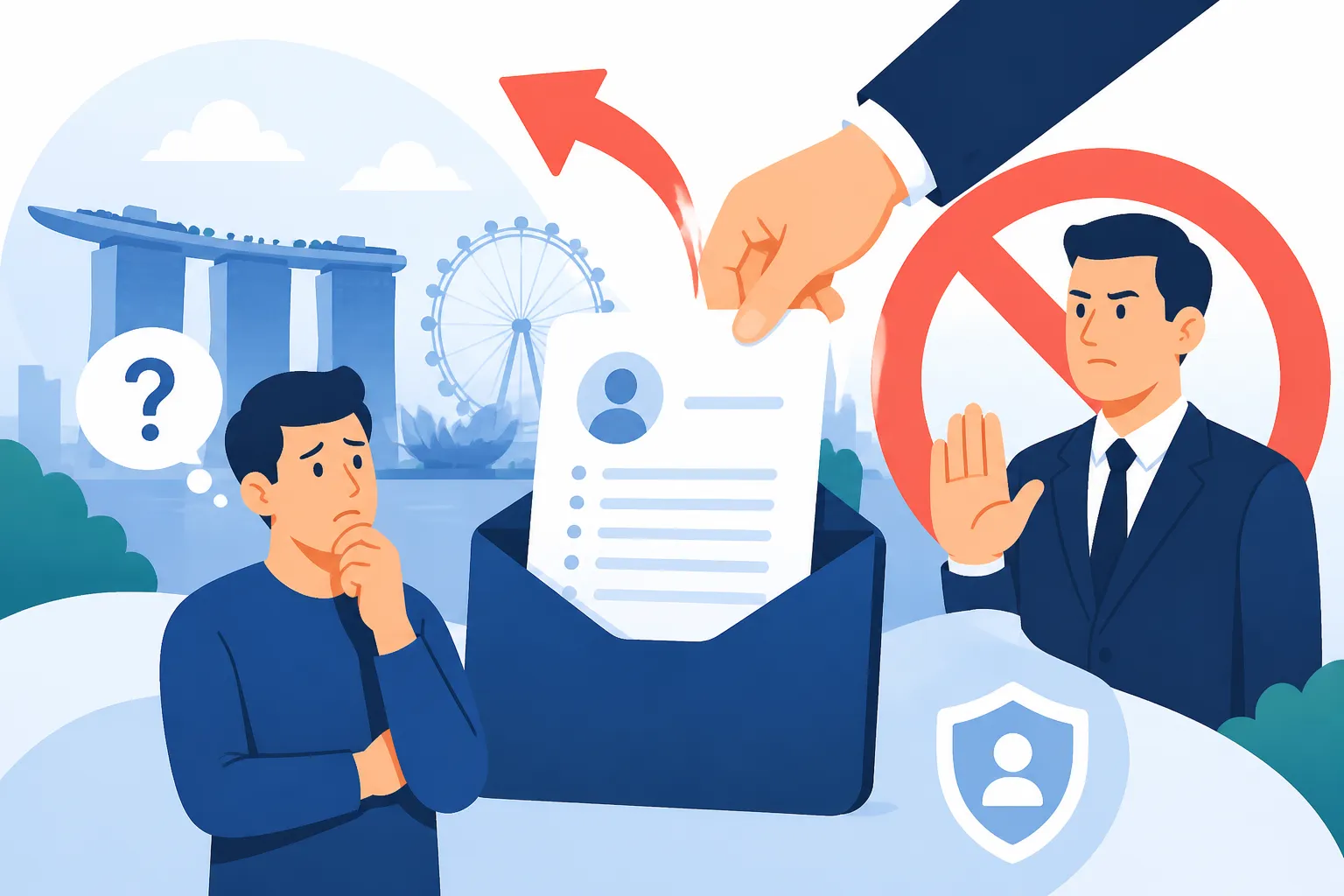
Can a Company Withdraw My EP Application After Submitting It?
It’s a nail-biting waiting game once your prospective employer tells you they’ve submitted your Employment Pass (EP) application to the Ministry of Manpower (MOM) here in Singapore. You start planning your life, dreaming of hawker meals and balmy evenings. But then, a sudden twist – perhaps your circumstances change, or the company has a change of heart. The question that immediately pops up, shrouded in a bit of anxiety, is: Can they actually withdraw that application once it's been sent in? Absolutely. This guide will walk you through the various scenarios where an EP application might be withdrawn, what it means for you, and how to navigate these often-stressful situations.
Understanding the Employment Pass (EP) Application Process in Singapore
Before we dive into withdrawals, let’s quickly recap how an EP application typically works. It’s a pretty structured process, and understanding the stages helps clarify when and why a withdrawal might occur.
The Initial Submission: What Happens Behind the Scenes
When a company decides to hire you as a foreign professional, manager, or executive in Singapore, they don't just send an email to the MOM. There's a formal online application that needs to be completed through the MOM's EP Online portal. This isn't something you, as the candidate, can do directly; it must be initiated and submitted by your prospective employer or an authorized employment agent on their behalf.
During this stage, the company provides a wealth of information about both you and the role. This includes your educational qualifications, work experience, proposed salary, and details about the company itself. They'll also ensure all supporting documents, like copies of your degree certificates and previous employment testimonials, are attached. The MOM takes this information and assesses it against criteria like the COMPASS Framework 2026: Points, Salary Benchmarks, and Top Universities, which helps determine the applicant's suitability. Once everything is meticulously filled out and uploaded, the company hits "submit," and that's when the application officially enters the MOM's processing queue. For a detailed look at how to monitor its progress, refer to our guide on How to Track Your EP Application Status on the MOM Portal.
The Role of the Sponsoring Company
The sponsoring company plays an absolutely critical role throughout the entire EP application journey. They are not just submitting documents; they are making a commitment to the Singapore government that they genuinely intend to employ you in a specific role, for a specific salary, and that you meet the necessary qualifications. This isn't a passive sponsorship; it's an active endorsement.
Because the company is the official applicant, they retain control over the application until a decision is made. This means they are the only party legally able to withdraw the application. If you, as the candidate, decide you no longer want the job, you can inform the company, and they would then initiate the withdrawal process. This distinction is crucial for understanding the dynamics of a withdrawal. They are, in essence, holding the reins of your potential work future in Singapore.
Key Stages of Approval (In-Principle Approval)
After submission, the MOM reviews the application. This can take anywhere from a few days to several weeks, depending on the complexity of the case and the current workload at MOM. You can get an idea of the typical waiting times by checking out our article on Ministry of Manpower (MOM) Processing Times: How Long Does an EP Take?.
The first major milestone you’re usually waiting for is the In-Principle Approval (IPA) letter. This is a golden ticket of sorts. An IPA means that MOM has provisionally approved your application, and you are now cleared to enter Singapore (if you're not already here) to complete the final steps, such as undergoing any required medical examinations for work passes and getting your fingerprints taken at the Employment Pass Services Centre (EPSC). Receiving an IPA is usually a huge relief, as it signals that the bulk of the assessment is done and you're very close to getting your physical EP card. However, even with an IPA in hand, a withdrawal can still happen, though it's less common at this stage.
Scenarios Leading to an EP Application Withdrawal
Life is unpredictable, and sometimes, even the most carefully laid plans go awry. There are several common scenarios where an EP application might be withdrawn, originating from either the company, the candidate, or even the authorities themselves.
Company-Initiated Withdrawals: Reasons and Implications
This is perhaps the most common reason for an application withdrawal, and it can be quite disheartening for the candidate. Companies might withdraw an EP application for a multitude of business-related reasons:
- Restructuring or Role Elimination: A sudden internal reorganisation, a merger, or a decision to cease a particular project or department can lead to the role you were hired for being eliminated. This is often beyond anyone's control and is a harsh reality of the corporate world.
- Budgetary Constraints: Unexpected financial downturns, a major client loss, or a shift in company priorities might mean that the allocated budget for your position is suddenly cut. Companies, especially startups or those in volatile industries, might face this challenge.
- Finding a Local Candidate: While Singapore encourages diversity, there's also a strong emphasis on fair consideration for local candidates. If, during the EP application processing time, the company finds a suitable Singaporean citizen or Permanent Resident for the role, they might opt to withdraw your application. This can happen if the role was advertised, and a highly qualified local candidate applied late in the process.
- Candidate Qualification Issues: Sometimes, a company might discover, perhaps through a more rigorous background check or during the medical examination, that the candidate doesn't fully meet the requirements they initially believed, or that there are discrepancies in their application. For example, if there were issues with degree verification certificates for your EP application.
- Change in Business Strategy: A complete pivot in the company's direction could mean your skills or the role you were hired for no longer align with their future goals.
When a company withdraws an application, they typically inform the MOM directly through the EP Online portal. For you, the candidate, the immediate implication is that your opportunity to work in Singapore with that specific employer is gone. It usually means going back to square one in your job hunt, which can be incredibly frustrating after investing so much hope and time.
Candidate-Initiated Withdrawal: Deciding to Decline
It’s not always the company that changes its mind! You, as the candidate, might decide to withdraw your interest in the role even after the EP application has been submitted. This can stem from various personal or professional reasons:
- Accepting Another Offer: This is a very common scenario. You might have applied for multiple jobs, and another company provides an offer that is more appealing in terms of salary, benefits, company culture, or career progression. It’s a tough decision, but you have to look out for your own best interests.
- Personal Circumstances: Life happens. Perhaps a family situation requires you to stay in your home country, or an unexpected personal event makes the move to Singapore unfeasible at that time.
- Concerns About the Role or Company: Sometimes, during the later stages of the interview process or even after receiving the offer, you might learn new information about the role, the team, or the company culture that gives you pause. Perhaps the promised growth opportunities aren't as clear, or there are red flags that make you rethink the fit.
- Unfavorable Relocation Terms: While many companies offer decent relocation packages, some might be less generous. If the costs of moving, housing, and settling in Singapore outweigh the benefits for you and your family, you might decide against it. If you're looking into relocation, services like Sirelo can help you compare moving companies and get quotes, which might give you a better idea of what to expect.
If you decide to withdraw, you should immediately inform the prospective employer. They will then initiate the formal withdrawal process with MOM. It’s professional courtesy to do so promptly, as it frees them up to look for other candidates. Declining an offer at this stage won't negatively impact your ability to apply for other EPs with different companies in the future.
When ICA or MOM May Revoke an Application
While less common than company or candidate-initiated withdrawals, the Immigration and Checkpoints Authority (ICA) or the MOM themselves can also effectively "withdraw" or revoke an application, usually if something problematic comes to light.
- False Information or Misrepresentation: This is a serious offense in Singapore. If the MOM or ICA discovers that any information provided in the application was false, misleading, or intentionally misrepresented (e.g., fraudulent qualifications, undeclared criminal history), they will not only reject the application but could also ban the individual and the company from future applications.
- Security Concerns: For national security reasons, if an applicant poses a risk, the authorities will revoke the application. While rare, Singapore has strict immigration controls.
- Unsatisfactory Medical Results: If, after receiving an IPA, you undergo the mandatory medical examination and the results reveal certain conditions (e.g., HIV, active tuberculosis), your EP application will be rejected. This isn't a withdrawal in the traditional sense, but the outcome is the same – no EP. For more on this, check out our guide on Medical Examinations for Work Passes: HIV, TB, and Health Clearances.
In these instances, the decision is unilateral by the government agencies, and there is usually little room for appeal unless there's clear evidence of error on their part.
The Practicalities of Withdrawing an EP Application
So, an application needs to be withdrawn. What actually happens? It’s not a simple phone call; there’s a proper procedure to follow, and it has certain implications.
The Formal Process for Withdrawal
The process of withdrawing an EP application is initiated by the sponsoring company through their EP Online account. Here’s a general overview:
- Access EP Online: The employer or their authorised employment agent logs into the MOM’s EP Online portal.
- Locate Application: They navigate to the specific EP application they wish to withdraw.
- Initiate Withdrawal: There will be an option to "Withdraw Application." The employer will be prompted to provide a reason for the withdrawal from a pre-defined list or by stating it themselves.
- Confirmation: Once confirmed, the application status will change to "Withdrawn."
- Notification: Both the employer and, sometimes, the candidate (if their email was provided in the application) will receive an official notification from MOM confirming the withdrawal.
This process is usually straightforward for the company. From the candidate's perspective, the key is to be kept in the loop by the employer. Good employers will communicate transparently and promptly when such a decision is made.
Repercussions and Future Applications
A withdrawn EP application generally carries no negative repercussions for the candidate’s future applications, provided the withdrawal was for legitimate reasons (e.g., company restructuring, candidate accepting another offer) and not due to issues like misrepresentation or fraudulent documents.
- For the Candidate: If your application was withdrawn because you found a better offer or the company's needs changed, you are free to apply for another EP with a different employer immediately. The MOM views each application independently. The system doesn't "flag" you negatively for having a withdrawn application history. Think of it like an interview that didn't work out – you just move on to the next one.
- For the Company: If a company frequently withdraws applications without good reason, or if they are found to have submitted many frivolous applications, it might raise questions with the MOM. However, legitimate business reasons for withdrawal are understood and accepted. The MOM is primarily concerned with ensuring that companies follow fair employment practices and that applications are genuine.
It’s worth noting that if an IPA was issued and you subsequently decided to withdraw, it won’t count against your record for future applications either. The IPA itself isn't a permanent mark until the EP card is issued.
Financial Considerations and Refunds
When an EP application is withdrawn, financial implications can arise, primarily concerning the application fees paid to MOM and any costs incurred by the employer or candidate.
- MOM Application Fees: The application fee for an Employment Pass is generally non-refundable, even if the application is withdrawn or rejected. This fee is typically a small sum (e.g., S$105 for online applications) paid by the employer at the time of submission. So, the company won't get this back.
- Recruitment Agency Fees: If the employer engaged a recruitment agency to find you, they might have paid fees for their services. The terms of these agreements vary. Some agencies might offer partial refunds or a replacement candidate if the initial hire doesn't pan out, especially if the withdrawal happens early. Others might consider their service rendered upon submission or IPA issuance. This is a contractual matter between the employer and the agency.
- Candidate's Expenses: For candidates, if you had already started incurring costs – perhaps booking flights, arranging temporary accommodation, or even starting the process of shipping your belongings – a withdrawal can leave you out of pocket. This is where clarity in your offer letter regarding relocation expenses is crucial. Some companies might have clauses that stipulate reimbursement for certain costs even if the offer is rescinded, but this is not universal. It’s always best to delay significant personal expenses until the IPA is firmly in hand and you are certain of your move. If you've already started transferring funds internationally for your move, platforms like Wise can sometimes help you reverse or redirect transfers, depending on the stage of the transaction.
Here’s a summary table of common withdrawal scenarios and their general impact:
| Scenario | Initiating Party | Typical Reason | Impact on Candidate (Future EP) | Financial Implications (MOM Fee) |
|---|---|---|---|---|
| Company Restructuring | Company | Role eliminated, budget cuts, business change | None, can reapply elsewhere | Non-refundable |
| Candidate Accepts Another Offer | Candidate | Better job, personal reasons | None, can reapply elsewhere | Non-refundable |
| Discovery of Misrepresentation | MOM/ICA | False documents, fraudulent information | Severe negative impact, potential ban | Non-refundable |
| Finding a Local Candidate | Company | Qualified local candidate identified | None, can reapply elsewhere | Non-refundable |
| Unsatisfactory Medical Result | MOM/ICA | Failed medical examination | None, but condition may prevent future EP | Non-refundable |
Navigating the Aftermath and Moving Forward
A withdrawn EP application can feel like a setback, but it's not the end of your journey to Singapore. It's important to react strategically and proactively.
What to Do If Your Application is Withdrawn
First, breathe. This isn't a personal failure, but often a bureaucratic or business reality.
- Seek Clarity from the Employer: Ask for a clear, concise explanation for the withdrawal. Was it due to company changes, or something specific about your application? Understanding the "why" is crucial for your peace of mind and future planning.
- Review Your Options: If the withdrawal was due to company reasons, immediately restart your job search. Don't dwell on it. Singapore's job market is dynamic, and there are always other opportunities. Our guide on Job Hunting in Singapore: Strategies for English-Speaking Professionals can provide some valuable pointers.
- Check Your Current Visa Status: If you are already in Singapore on a Short-Term Visit Pass (STVP) while awaiting your EP, understand the implications. A withdrawn EP means you are still on your STVP, and you must adhere to its validity period. Overstaying is a serious offense. For more details on visas, check out Singapore Visa and Immigration: The Complete Guide for Expats (2026).
- Manage Relocation Logistics: If you had already started planning your move, contact any service providers immediately. If you were using a relocation service like Sirelo, reach out to them to see if you can postpone, cancel, or redirect services. If you made international money transfers using services like Wise, check their policies on recalling or adjusting transfers. It’s about damage control and minimizing financial loss.
Exploring Other Visa Options
Sometimes, an EP might not be the only path. Depending on your situation, other options might exist, especially if your initial application didn't pan out due to eligibility issues with a particular company or role.
- S Pass or Work Permit: These are for mid-skilled and semi-skilled foreign workers, respectively. While not typically for professionals, if your role or salary falls below the EP qualifying criteria for some reason, these might be alternatives, though they come with stricter quotas and levies for employers.
- Dependant’s Pass (DP) or Long-Term Visit Pass (LTVP): If your spouse is already in Singapore on an EP, S Pass, or is a Singaporean citizen/PR, you might be eligible for a Dependant’s Pass or LTVP. A DP allows you to apply for a Letter of Consent (LOC) to work, offering a pathway to employment.
- EntrePass or Tech.Pass: If you're an entrepreneur or a tech leader, these specialized passes might be more suitable, but they have very specific criteria related to business plans, funding, or industry experience.
- Student Pass: If you're considering further education, a student pass could be an option, but it comes with restrictions on working.
Always evaluate your eligibility thoroughly for any alternative visa. It's best to consult the MOM website or a reputable immigration consultant.
Planning Your Next Steps
Whether you're looking for a new job or reconsidering your move, planning is key.
- Re-evaluate Your Job Search Strategy: Reflect on why the previous application might have been withdrawn. Was it a specific company issue, or perhaps your salary expectations or role wasn't fully aligned with MOM's criteria for your qualifications? Adjust your approach if necessary.
- Financial Safeguards: If you're planning another move, remember to hold off on significant financial commitments until you have a confirmed IPA and ideally, your physical EP card in hand. Always have a contingency fund for unexpected changes. When you do get ready to move funds, using a multi-currency account or a service like Wise can help manage exchange rates and transfer fees efficiently.
- Stay Positive: Singapore is a fantastic place for expats, and a single setback shouldn't deter you. The immigration process can sometimes feel like navigating a maze, but persistence pays off. Many expats have faced similar initial hurdles before successfully settling in.
Getting an EP application withdrawn is undoubtedly a bummer, but it’s a situation that many expats have faced. Understanding the process, knowing your rights, and proactively managing the situation will help you navigate it with minimal stress and get you back on track for your Singapore adventure.
Disclaimer
Please note that the information provided in this guide is for general informational purposes only and does not constitute legal or immigration advice. While we strive to keep the information accurate and up-to-date, immigration policies and regulations in Singapore are subject to change by the Ministry of Manpower (MOM) and the Immigration and Checkpoints Authority (ICA). Always refer to the official MOM and ICA websites or consult with a qualified immigration professional for advice specific to your personal circumstances.


