What Happens If You Transfer Money to the Wrong PayNow Number?
The heart-stopping moment you realize you have just sent hundreds, or even thousands, of dollars to a complete stranger is a rite of passage many expats in Singapore would prefer to skip. This guide provides a step-by-step recovery plan for PayNow errors, explains the legal protections under Singapore law, and explores how to safeguard your future transfers to ensure your hard-earned money stays exactly where it belongs.
The Instant Panic of the PayNow Fat-Finger Error
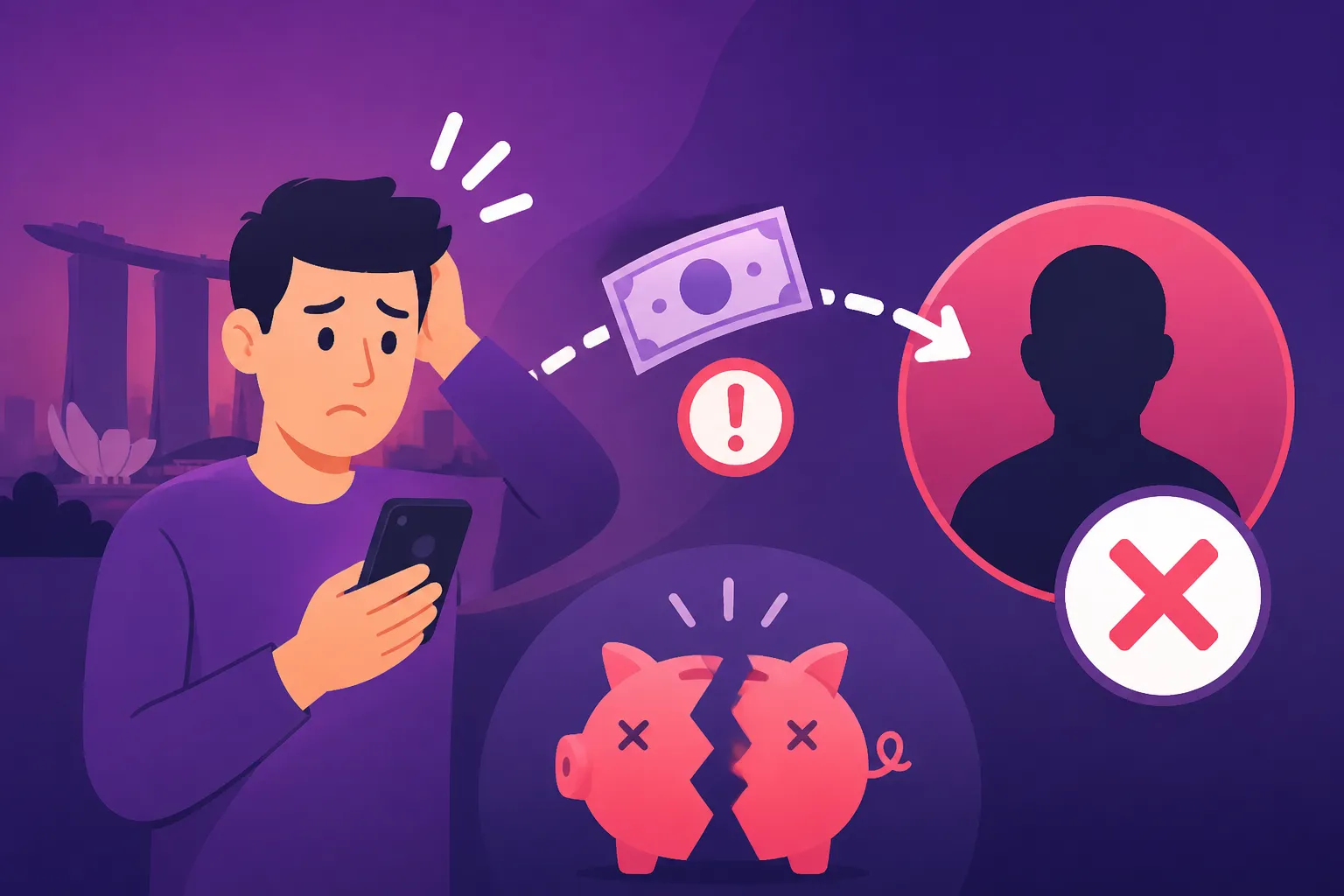
We have all been there: you are standing in a crowded hawker center, the humidity is rising, and you are trying to settle a bill or send money to a friend for dinner. In the rush of the moment, a single digit is entered incorrectly. Because PayNow is designed for instantaneous convenience, the money leaves your account the second you hit "Confirm." Unlike traditional wire transfers that might sit in a "pending" state for hours, PayNow is a part of the FAST (Fast and Secure Transfers) network, meaning the transaction is finalized in seconds.
For many of us moving from countries where banking systems are slower or require more layers of authentication, the sheer speed of the Singaporean financial ecosystem can be a double-edged sword. While it makes PayNow and FAST Transfers: How Singapore Moves Money Instantly an incredible convenience, it removes the safety net of a "cancel" button. If you have sent money to the wrong mobile number or NRIC, you are no longer in control of those funds. The recipient now has the money in their account, and the bank cannot simply "claw it back" without the other party's consent due to strict privacy and banking laws.
Validation of this frustration is important. The administrative hurdles of being an expat are already high enough without adding a financial recovery mission to your to-do list. When you realize the mistake, your first instinct might be to call your bank and demand a reversal. However, the reality of Banking and Finance for Expats in Singapore: Complete 2027 Guide involves navigating specific protocols that require patience and a clear understanding of your rights versus the bank's limitations.
Immediate Steps to Take the Moment You Realize the Mistake
The first sixty seconds after a wrong transfer are critical. Do not close the app immediately. Take a screenshot of the transaction confirmation page. This page contains the transaction reference number, the recipient’s registered PayNow nickname, and the time of the transfer. This information is your primary evidence when dealing with both the bank and the police. If you realize the mistake while still looking at the screen, you have a much higher chance of documenting the error before the details become buried in your transaction history.
Attempting to Contact the Recipient Directly
If you sent the money to a mobile number, you have the most direct path to a resolution. While it might feel awkward, the fastest way to get your money back is to call or message the number you just sent funds to. In many cases, the person on the other end is a fellow resident who understands the mistake. Be polite and transparent. Explain that you made a mistake while using PayNow and provide the transaction details. Most people in Singapore are honest and will be willing to send the money back once they verify the "found" funds in their own account.
However, do not be surprised if the recipient is hesitant. In an era of rampant phishing and banking scams, a stranger calling to ask for a "refund" can look incredibly suspicious. If they seem wary, suggest that they contact their own bank to authorize a reversal rather than sending it back to you manually. This provides a layer of security for both parties. If you are unsure of how to handle these interactions, reviewing Beware of Phishing: How to Avoid Bank SMS Scams in Singapore can help you distinguish between a genuine recovery effort and a potential fraudulent setup.
Notifying Your Bank Immediately
If the recipient is unresponsive or you sent the money to an NRIC/FIN number (where you don't have a contact phone number), your next call must be to your bank’s 24-hour fraud or customer service hotline. While the bank cannot unilaterally reverse the transaction, they can initiate a formal recovery process. They will contact the recipient's bank, which will then reach out to their customer to request permission to return the funds.
Be prepared for this to take time. The bank must follow a specific protocol to protect the privacy of the other account holder. When you call, ensure you have your Singpass details ready, as you may need to log in to verify your identity. If you are still in the process of Understanding Singpass: The Key to Digital Banking and Government Services, this might be a slower process, but it is an essential step in creating a paper trail. The bank will log the case, and this log is vital if you eventually need to escalate the matter to the authorities.
The Legal Reality: Is It a Crime to Keep Wrongfully Transferred Money?
One of the few comforts for expats in Singapore is the strength of the legal system. If you have accidentally sent money to someone and they refuse to return it, they are actually committing a criminal offense. Under Section 403 of the Penal Code, "Dishonest Misappropriation of Property" is a serious matter. This law states that if someone comes across property (including digital money) that does not belong to them and decides to keep it or use it, they can be prosecuted.
Understanding Section 403 of the Penal Code
In the eyes of Singaporean law, the moment a person realizes they have received money that isn't theirs—and they choose to spend it or refuse to return it—they have crossed a legal line. This applies even if they didn't "steal" it in the traditional sense. The act of retaining the "windfall" is the crime. For an expat, knowing that the law is on your side can alleviate some of the stress. If the amount is significant, you should mention this legal standing when communicating with the recipient, though always keep the tone civil to avoid accusations of harassment.
If the recipient continues to refuse, your next step is to file a police report. This can be done online or at any Neighborhood Police Centre. The police take these reports seriously, especially as part of their broader effort to maintain the integrity of PayNow and FAST Transfers: How Singapore Moves Money Instantly. A police report acts as a formal demand. Once the police are involved, they can request the recipient's details from the bank and issue a warning. In most cases, the threat of a criminal record for "dishonest misappropriation" is enough to make even the most stubborn person return the funds.
The Small Claims Tribunal Route
If the police report doesn't result in an immediate return and the amount is under S$20,000 (or S$30,000 with consent), you can take the matter to the Small Claims Tribunal (SCT). This is a relatively low-cost way to seek a legal order for the return of your money without needing a lawyer. As an expat, navigating the SCT is straightforward, but it does require you to have the recipient's name and address, which the police or bank may be able to provide once a formal investigation is underway.
Before you get to this stage, it is worth looking at your Budgeting in Singapore: Cost of Living Benchmarks for Expats to determine if the legal fees and time spent are worth the amount lost. However, for most significant transfers, the SCT is a highly effective tool that reinforces the fact that Singapore does not tolerate financial dishonesty.
Navigating the Bank’s Role in Recovery
The recovery process varies slightly depending on which bank you use. Local giants like DBS, OCBC, and UOB have established departments for handling "erroneous transfers." If you are using one of the newer Digital Banks in Singapore: Trust Bank, GXS, and MariBank Features, the process is entirely digital, usually handled through in-app chat or specialized email support. While digital banks are often faster at processing data, they still have to wait for the recipient's bank to respond, which can create a bottleneck.
| Feature | PayNow (Mobile/NRIC) | FAST Transfer (Account No.) | GIRO (Recurring) | Wise (International) |
|---|---|---|---|---|
| Speed | Instant | Instant | 1-3 Business Days | Varies (Minutes to Days) |
| Reversibility | Very Low (Requires Consent) | Low (Requires Consent) | Medium (Can be stopped) | High (If cancelled before payout) |
| Verification | Nickname Shown | Name often not shown | Pre-verified by bank | Full Name & Details |
| Usage | Small/Daily payments | Large/One-off payments | Rent/Utilities | Cross-border/Expats |
As shown in the table above, PayNow offers the least amount of "built-in" protection compared to GIRO or international platforms like Wise. This is why the verification step—checking the nickname—is the most important thing you can do. When you enter a phone number into the PayNow field, the system will ping the central registry and return a "Nickname." This is usually a shortened version of the person's name or a custom handle. If that nickname doesn't look familiar, stop immediately.
Strategies for Prevention: Avoiding the PayNow Pitfall
The best way to handle a wrong PayNow transfer is to never make one in the first place. As an expat, you might find the Singaporean habit of "PayNow-ing" for everything a bit overwhelming, but there are several habits you can adopt to minimize risk. One of the most effective methods is to use QR codes instead of manual number entry. Most businesses and even individuals can generate a PayNow QR code through their banking app. Scanning a code eliminates the risk of a typo entirely.
Utilizing the "Nickname" Feature and Contact Lists
When you are about to send money, the app will display the recipient's registered nickname. Make it a habit to ask the person, "What is your PayNow nickname?" before you hit send. If they say "John Tan" and the app shows "SweetiePie88," you know something is wrong. Additionally, for people you pay regularly—like a landlord or a recurring tutor—save their details in your banking app’s "Registered Payees" or "Favorites" list. This bypasses the need to enter their number every month, drastically reducing the chance of an error.
For larger sums, such as your monthly rent, you might want to consider Setting Up GIRO Auto-Deductions for Rent, Taxes, and Utilities. While GIRO isn't as "cool" as PayNow, it is much harder to "fat-finger" once it is set up. The bank verifies the account details during the setup phase, providing a level of security that instant transfers simply cannot match. If you are making high-value transfers back to your home country, using a service like Wise provides another layer of verification, as they often require the recipient's full address and bank branch details, making it almost impossible to send money to the wrong person.
Using Multi-Currency Alternatives
For expats who are frequently moving money between SGD and their home currency, relying solely on local PayNow might not be the most efficient strategy. Services like Wise allow you to hold balances in multiple currencies and send money using verified bank details rather than just a phone number. This is particularly useful for paying international school fees or managing property back home. If you are unsure about which platform to use, Comparing Local Banks: DBS vs OCBC vs UOB for Expat Needs can help you decide which local account pairs best with international fintech tools.
Broader Financial Implications for Expats
A wrong transfer isn't just a headache; it can occasionally complicate your financial records, especially if you are a high-net-worth individual or someone who keeps meticulous records for tax purposes. If you are a US citizen, for example, you have to be particularly careful about how your "lost" and "recovered" funds are documented to avoid issues with the IRS. Utilizing services like Taxes for Expats can ensure that these types of anomalies in your bank statements are explained correctly during your annual filings.
Tax Reporting and Financial Record Keeping
When you lose money to a wrong transfer and later recover it, your bank statement will show two distinct transactions: one outgoing and one incoming. Without context, an auditor might see the incoming "refund" as taxable income. This is where Singapore Income Tax for Foreigners: IRAS Rules and Filing (2026) knowledge becomes vital. Keep all your correspondence with the bank and the police report to prove that the incoming funds were a recovery of a mistaken payment, not a new source of earnings. Taxes for Expats professionals often recommend keeping a "financial log" of such incidents to simplify your tax season.
Furthermore, if the incident involves a large sum of money that you were supposed to use for a specific purpose—like a tax payment to IRAS—you might find yourself in a position where you miss a deadline. If this happens, you need to know What to Do If You Missed the April 18 Tax E-filing Deadline. Being proactive and explaining the situation to IRAS, backed by your bank's case number, can often help you avoid late payment penalties.
Protecting Your Credit Score in Singapore
While a single wrong PayNow transfer won't directly affect your credit score, the secondary effects might. If the money you sent by mistake was intended for a credit card bill or a personal loan repayment, the resulting "late payment" will be logged by the Credit Bureau Singapore (CBS): How Your Credit Score is Calculated. A dip in your credit score can make it harder to get Getting a Personal Loan or Car Loan as an Employment Pass Holder in the future.
If you realize a payment will be late because your funds are tied up in a recovery process, contact your creditor immediately. Most banks in Singapore are willing to waive late fees and prevent a negative credit report if you can show that you have a pending "erroneous transfer" case with your bank. This level of communication is a hallmark of Singapore Workplace Culture: Etiquette, Hierarchy, and Communication, and it applies to your relationship with financial institutions as well.
Managing the Emotional Stress of Financial Errors
Finally, it is important to acknowledge the mental toll that financial mistakes can take on an expat. When you are far from home, every administrative hurdle feels magnified. Losing money through a simple typo can lead to feelings of inadequacy or "expat burnout." If the stress of managing your finances in a foreign country is becoming too much, you are not alone. Many foreigners seek help through Mental Health in Singapore: Counseling, Psychiatry, and Expat Support to deal with the pressures of high-stakes living.
Remember that Singapore is one of the safest and most regulated financial hubs in the world. While the speed of PayNow is intimidating, the legal framework surrounding it is designed to protect you from permanent loss due to the dishonesty of others. By following the steps outlined in this guide—documenting the error, notifying the bank, and involving the authorities if necessary—you are taking the most effective path toward recovering your funds. Stay calm, be persistent, and next time, remember to scan the QR code instead.
Disclaimer
This guide is for informational purposes only and does not constitute legal or financial advice. Banking regulations and police procedures in Singapore are subject to change. While the information provided is based on current 2026 practices and legal frameworks like the Penal Code, readers should consult with their respective banks, legal professionals, or the Singapore Police Force for specific advice regarding their individual cases. The author and publisher are not responsible for any financial losses or legal outcomes resulting from the use of this guide.