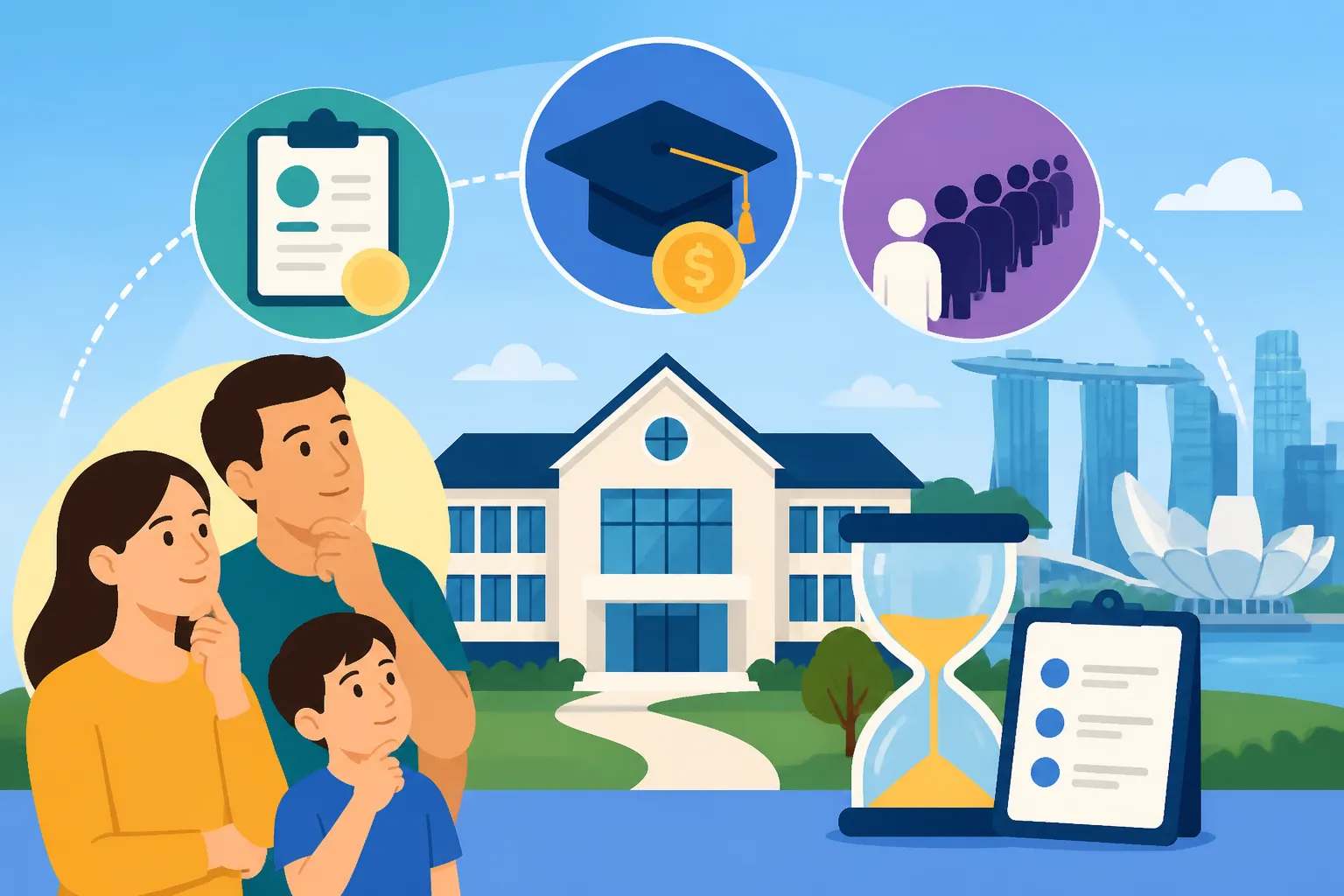
Cost of International Schools: Application Fees, Tuition, and Waitlists
One of the biggest anxieties many expat parents face when considering a move to Singapore is the eye-watering cost of international schooling. It’s not just the sticker shock of the annual tuition; there’s a labyrinth of application fees, capital levies, and hidden charges that can make your head spin. I've personally wrestled with the numbers and spreadsheets trying to figure it all out, and believe me, it’s a full-time job in itself. This guide is here to demystify those costs, break down the various components, and give you a realistic picture of what to expect when planning your child's education in the Lion City.
Decoding the Financial Landscape of International Schools
When you first start looking at international schools in Singapore, it can feel like you've stumbled into a secret society with its own unique financial rules. It's not as simple as a single annual fee; instead, it's a tiered system of payments that begin long before your child even sets foot in a classroom. Understanding each component is crucial for accurate budgeting and avoiding unpleasant surprises down the line.
Application Fees: The Non-Refundable First Hurdle
Before any school will even consider your child's application, you'll be asked to pay a non-refundable application fee. This isn't a deposit or a promise of admission; it’s simply the cost for the school to process your paperwork, assess your child's academic records, and perhaps schedule an interview or assessment. These fees vary widely but typically range from S$1,000 to S$4,000 per child. It's a significant outlay, especially if you’re applying to multiple schools to increase your chances of admission, which many expat families find themselves doing. For instance, if you apply to three schools, you could easily be out S$3,000 to S$12,000 before you even get an acceptance letter. This initial expense often catches newcomers off guard, as they might be comparing it to more straightforward application processes in their home countries.
Consider a family with two children, both needing spots in reputable international schools. They might apply to the Stamford American International School, the Tanglin Trust School, and the United World College of South East Asia (UWCSEA). Each application could set them back thousands, purely for the administrative effort. It's a testament to the high demand for places in these institutions, but it certainly adds to the initial financial burden for expat families relocating to Singapore.
Capital Levies and Building Funds: Hidden Costs Explained
Beyond the application fee, many international schools impose what they call a "capital levy" or "building fund contribution." These are essentially fees designed to help schools fund their infrastructure development, maintenance, and expansion. Unlike tuition, which covers operational costs, these levies are for the physical assets of the school. They can be a one-time payment upon enrollment, an annual charge, or a debenture purchase (which we'll delve into later). The amounts can range dramatically, from S$3,000 to S$10,000 annually or even higher for a one-off payment. Some schools, like the Australian International School Singapore (AISS), include a Capital Levy in their annual fee structure, while others charge it separately.
It's vital to clarify whether this is a recurring annual cost or a one-time fee. Some schools might also offer a choice: pay a higher one-time capital levy, or a lower annual capital development fee. These costs are often non-refundable and are a prerequisite for enrollment, regardless of whether your child attends for one year or many. This financial model ensures that the schools can continue to upgrade their facilities, from state-of-the-art science labs to Olympic-sized swimming pools, but it directly impacts the expat family's budget.
Enrollment and Confirmation Fees: Securing Your Child's Spot
Once your child is accepted, you’ll typically be required to pay an enrollment fee or confirmation fee to secure their place. This fee is often substantial, ranging from S$2,000 to S$8,000, and like the application fee, it's usually non-refundable. It serves as a commitment to the school that your child will indeed attend. This payment usually needs to be made within a tight deadline, often just a few weeks after receiving the offer, which can put pressure on families who are still waiting to hear back from other schools or finalize their relocation plans.
It's not uncommon for families to pay this enrollment fee only to later receive an offer from their preferred school, leading to the difficult decision of forfeiting a significant amount of money or compromising on their first choice. This is where meticulous planning and understanding the nuances of each school's policies become paramount. Always check the exact terms and conditions surrounding these fees, particularly their refund policies, as they can differ significantly from one institution to another.
Tuition Fees: The Core of Your Annual Education Budget
Once you've navigated the initial gauntlet of application and enrollment fees, you arrive at the main event: tuition. This is the recurring cost that forms the bulk of your annual education expenses in Singapore. International school tuition here is globally recognized as being among the highest, reflecting the quality of education, facilities, and diverse faculty they attract.
Annual vs. Termly Payments: Understanding the Billing Cycles
Most international schools in Singapore offer options for tuition payment: either a single annual payment or installments, usually termly (three terms a year) or semi-annually. While paying annually might sometimes offer a slight discount, most families opt for termly payments to spread the financial load. However, it's crucial to understand that these payments are generally due in advance of the academic period they cover. For example, the tuition for the first term of the new academic year (which often starts in August) might be due as early as June or July.
Missing these deadlines can sometimes incur late payment penalties, adding another layer of cost. Be sure to mark these dates clearly on your calendar and set up reminders. Understanding your employer’s medical benefits package before signing is vital for overall family budgeting, but remember that school fees will be a separate, major line item. Families often find managing these large, staggered payments a significant financial juggle.
Variations by Grade Level: Why Secondary School Costs More
A universal truth in international education is that the older your child gets, the more expensive their schooling becomes. Tuition fees typically increase with each ascending grade level. This is largely due to the increased complexity of the curriculum, the need for more specialized teachers and resources for subjects like advanced sciences, arts, and sports, and the smaller student-to-teacher ratios often maintained in higher grades.
For example, a primary school student's annual tuition might be S$30,000 to S$40,000, while a secondary school student (especially in the IB Diploma Programme or A-Levels) could cost anywhere from S$45,000 to S$60,000 per year, or even more at some premium institutions. This upward trend means that parents need to plan for escalating costs as their children progress through the school system. This long-term view is essential, especially if you plan to stay in Singapore for many years.
Additional Academic Support and Electives: Specialised Learning Costs
Beyond the standard curriculum, many international schools offer additional academic support services for students who may need extra help or those with specific learning needs. These can include English as an Additional Language (EAL) support, special educational needs (SEN) programs, or gifted and talented programs. These services are almost always charged separately and can add a significant amount to your annual bill, sometimes thousands of dollars per term.
Similarly, specialized elective subjects, advanced placement courses, or certain vocational programs might also carry extra fees. For instance, if your child is passionate about learning a new language outside of the core curriculum, services like iTalki can be a flexible and cost-effective alternative to private tutors arranged through the school, allowing them to connect with native speakers worldwide. It's a great way to supplement their learning without adding huge expenses to your school bill. Be sure to check the school's prospectus for a detailed breakdown of all potential additional academic charges.
Beyond Tuition: Unpacking the Extra Curriculars and Sundries
While tuition covers the core educational experience, the true cost of international schooling extends far beyond the classroom door. The "international school experience" often includes a rich tapestry of co-curricular activities, special events, and essential supplies, all of which come with their own price tags.
Uniforms, Textbooks, and Supplies: The Essential Shopping List
Just like schools everywhere, international schools require uniforms, textbooks, and various supplies. However, the costs here can be higher due to specific branding, quality, or imported materials. School uniforms typically need to be purchased from designated vendors, and having multiple sets for daily wear, sports, and formal events can quickly add up to hundreds of dollars per child. Many schools also mandate specific digital devices (laptops, tablets) and software, which you'll need to purchase, sometimes from preferred vendors.
Textbooks, particularly for advanced courses, might also need to be purchased or rented, with charges for wear and tear. Even basic stationery and art supplies, while seemingly minor, contribute to the overall expenditure. When you’re budgeting for a move, remember to factor in this initial outlay for kitting out your child for school. It's not just a one-off; you'll likely replace items annually as they outgrow uniforms or update textbooks.
Transport and Lunch Programs: Convenience at a Price
For many expat families, school bus transport is not just a convenience but a necessity, especially given Singapore's traffic and the distances between residential areas and school campuses. Almost all international schools offer extensive bus networks, but this service comes at a premium. Annual bus fees can range from S$2,000 to S$5,000 or more per child, depending on the distance and route. These fees are typically non-refundable once the term starts, even if your child occasionally misses the bus or you choose to drive them.
Similarly, school lunch programs are available and popular, offering balanced meals within the school environment. While some parents pack lunches, many opt for the convenience of the school canteen. Expect to pay anywhere from S$500 to S$1,500 annually per child for a comprehensive meal plan. These "convenience costs" are significant line items that many parents might initially overlook when calculating the overall financial commitment.
After-School Activities and School Trips: Enriching Experiences
International schools pride themselves on offering a vast array of after-school activities (ASAs) and enrichment programs, from sports teams and drama clubs to robotics and coding. While some basic clubs might be included in the tuition, many specialized or external-led activities come with additional fees. These can range from a few hundred dollars per term for a club to thousands for competitive sports training or specialized arts programs.
School trips are another significant area of extra cost. These can range from local excursions to multi-day regional or international trips focused on service learning, cultural immersion, or adventure. While incredibly enriching, these trips often cost hundreds or even thousands of dollars. For instance, a week-long service trip to Vietnam or Cambodia could easily add S$1,500 to S$3,000 to your bill. Parents need to carefully weigh the educational value against the financial implications when deciding which activities and trips their children participate in.
The Intricacies of Waitlists and Debentures
Singapore’s international schools are highly sought after, and many operate with lengthy waitlists, particularly for popular year groups. This demand has led to complex systems involving deposits and debentures, which are crucial for securing a spot but also represent a significant financial commitment.
Understanding Waitlist Deposits: Is Your Money Tied Up?
When applying to a school with a waitlist, you might be asked to pay a "waitlist deposit" to secure your child’s place on the list. This is different from an application fee. While the application fee is for processing, the waitlist deposit signals your serious intent. These deposits can range from a few hundred to several thousand dollars and are sometimes refundable if you withdraw your child before an offer is made, but often non-refundable once an offer is extended and you decline.
The critical thing to understand is how long your money might be tied up. If your child is on a waitlist for a year or two, that deposit money is essentially frozen. This can impact your family’s liquidity, especially if you have multiple children on multiple waitlists. Always clarify the refund policy for waitlist deposits before committing, as it varies widely. For families just starting their journey, our guide on International Schools in Singapore: Choosing the Right Curriculum can offer more insights into selecting the best fit for your children before you start paying these deposits.
Debentures and Capital Contribution Schemes: Getting Priority Access
Some of Singapore's most prestigious international schools, such as UWCSEA or Tanglin Trust School, operate with a debenture system or a similar capital contribution scheme. A debenture is essentially an interest-free loan that you provide to the school for a set period. In return, your child typically receives priority on the admissions waitlist. These debentures can be substantial, ranging from S$25,000 to S$100,000 or even more, per child.
There are usually two types: corporate debentures (purchased by a company, transferable, and thus more expensive) and individual debentures (purchased by parents, often non-transferable, and slightly less expensive). While the debenture amount is usually refundable (minus any administrative fees) when your child leaves the school and their place is filled, it represents a significant upfront capital outlay. For companies moving executives, a corporate debenture can be part of the relocation package. This is where understanding how to find a corporate housing allowance in a 2026 job offer can be helpful, as these benefits often go hand-in-hand.
Refund Policies and Transferability: What Happens If Plans Change
The terms and conditions surrounding refunds for debentures, capital levies, and enrollment fees are incredibly important. Expat life is inherently unpredictable; job transfers, changes in family circumstances, or a decision to repatriate can occur unexpectedly. Many debentures are non-transferable to other families and may only be refunded after a waiting period once your child leaves the school and their place is successfully filled. This means your capital could be tied up for months, or even years, after your child has departed.
It's vital to read the fine print regarding refund eligibility, administrative charges, and the timeline for receiving your money back. Some schools might have clauses where specific fees are entirely non-refundable under certain conditions. This is where it pays to be an informed consumer. If you anticipate a short stay, you might prefer schools with more straightforward fee structures without hefty debenture requirements.
Navigating Financial Aid, Scholarships, and Tax Considerations
The high costs of international schooling often lead expat families to explore every possible avenue for financial relief. While direct financial aid is rare for the majority of expats, understanding employer benefits and tax implications can make a significant difference.
Limited Financial Assistance for Expat Families
Unlike local school systems or universities, direct financial aid or scholarships for international school tuition for expat children are generally very limited. Most scholarships that do exist are highly competitive and typically target academic excellence, specific talents (e.g., music, sports), or students from developing countries, rather than general financial need for the average expat family. It's not impossible, but it shouldn't be relied upon as a primary means of offsetting costs.
Some schools might offer a handful of bursaries for existing students whose families face unexpected financial hardship, but these are usually assessed on a case-by-case basis and are not publicly advertised. This reality underscores the importance of robust financial planning from the outset for any expat family considering international education in Singapore.
Employer Education Allowances: A Lifeline for Many
For many expat families, the primary source of financial relief comes from their employer. Education allowances are a common component of expat relocation packages, especially for senior executives or those on international assignments. These allowances can cover a significant portion, if not all, of the tuition fees, and sometimes even other associated costs like bus fees or capital levies. Negotiating relocation packages: flights, housing, and school fees should definitely include a detailed discussion of education benefits.
However, the terms of these allowances vary wildly. Some companies offer a fixed annual sum, while others cover a percentage of tuition. It's crucial to understand the exact scope of your company's education allowance: does it cover application fees, capital levies, uniforms, and extracurriculars, or just the base tuition? Is there a cap per child or per family? This benefit is often the deciding factor for whether an expat family can afford an international school, so clarify it thoroughly before accepting a job offer. Remember that Singapore Income Tax for Foreigners: IRAS Rules and Filing (2026) might consider certain allowances as taxable benefits, which is a point worth clarifying with your employer or a tax professional.
Tax Implications and Cross-Border Considerations
When it comes to employer-provided education allowances, there can be tax implications both in Singapore and in your home country. In Singapore, certain benefits-in-kind, including education allowances, may be considered taxable income by the Inland Revenue Authority of Singapore (IRAS). It's essential to understand how your specific package is structured and whether these benefits are grossed up or taxed directly. Professional services like Taxes for Expats can provide tailored advice on how education allowances might impact your overall tax liability, helping you avoid unexpected tax bills.
Furthermore, if you are a citizen of a country that taxes its citizens regardless of where they live (like the United States), you'll need to consider how these allowances are treated under your home country's tax laws. Double taxation agreements can help prevent you from being taxed twice, but it requires careful planning. This is where expert advice is invaluable. Speaking to a financial advisor who specializes in expat taxation or an organization like Taxes for Expats is highly recommended to ensure you are compliant and optimizing your financial situation.
Strategies for Budgeting and Making the Right Choice
Given the substantial investment required for international schooling in Singapore, a well-thought-out strategy for budgeting and school selection is not just helpful—it’s absolutely essential. This involves looking beyond the headline tuition fees and understanding the long-term financial picture.
Comparing School Fee Structures: What to Look For
When comparing different international schools, don't just focus on the annual tuition figure. Create a comprehensive spreadsheet that itemizes every single fee:
- Application Fee: Non-refundable, upfront cost.
- Capital Levy/Building Fund: One-time or annual, check refundability.
- Enrollment/Confirmation Fee: One-time, often non-refundable.
- Annual Tuition: Broken down by grade level.
- Uniforms & Textbooks: Estimate initial and recurring costs.
- Bus Fees: Per child, per term/year.
- Lunch Program: Optional, but useful for budgeting.
- After-School Activities: Estimate typical participation costs.
- School Trips: Factor in potential costs for one or two major trips annually.
- Waitlist Deposits/Debentures: Understand the capital outlay and refund terms.
Some schools might consolidate certain fees, while others itemize everything separately. It’s imperative to get a full, transparent breakdown from each school you consider. Don't hesitate to ask for a detailed fee schedule for the upcoming academic year. Our guide on International Schools in Singapore: Choosing the Right Curriculum can also help you narrow down choices based on academic fit, which can then be matched against your budget.
Here’s a simplified example of how fees might stack up for a primary school vs. secondary school student at a hypothetical international school:
| Fee Type | Primary School (e.g., Grade 3) | Secondary School (e.g., Grade 9) | Notes |
|---|---|---|---|
| Application Fee | S$3,000 (one-time, non-ref.) | S$3,000 (one-time, non-ref.) | Paid per child upon application. |
| Capital Levy | S$8,000 (annual, non-ref.) | S$10,000 (annual, non-ref.) | Funds facilities, may be one-time or annual. |
| Enrollment Fee | S$5,000 (one-time, non-ref.) | S$5,000 (one-time, non-ref.) | Paid to confirm acceptance. |
| Annual Tuition | S$38,000 | S$52,000 | Paid annually or termly (e.g., 3 installments). |
| Uniforms (Est. Initial) | S$400 | S$500 | Multiple sets, sports gear. |
| Textbooks & Supplies | S$300 | S$600 | Varies by curriculum and grade. |
| Bus Service (Optional) | S$4,000 | S$4,500 | Annual fee, varies by distance. |
| Lunch Program (Optional) | S$1,000 | S$1,200 | Annual meal plan. |
| Total (Excl. Activities) | S$60,200 | S$79,800 | Rough estimate for the first year, excluding trips/extra activities. |
| Note: These figures are hypothetical and for illustrative purposes only. Actual fees vary significantly by school and year. |
The Long-Term Financial Impact: Planning for Multiple Children
The financial commitment for international schooling multiplies significantly with each additional child. What might be manageable for one child can become an overwhelming burden for two or three. This is why a long-term financial plan is absolutely crucial. Consider the trajectory of costs as your children age, and factor in potential increases in tuition fees year-on-year, which are a regular occurrence.
If you are planning to stay in Singapore for the long haul, this deep dive into future costs is essential. Our guide on Cost of Living for an Expat Family with Kids: School, Housing, and Car further illustrates how school fees integrate into the broader family budget. Some families choose to send one child to an international school and another to a local school (if they qualify and can manage the language barrier) to balance costs. It’s a complex decision that needs careful consideration of both educational philosophy and financial reality.
Alternative Education Paths and Cost-Saving Measures
For many expat families, the high cost of international schools simply isn't feasible, or they prefer alternative approaches. Singapore offers several other educational paths:
- Local Schools (MOE Schools): If one parent is a Singapore Permanent Resident (PR) or citizen, their child may be eligible for enrollment in government schools, which are significantly more affordable. However, competition for places is intense, and the curriculum is primarily geared towards local students. Our article on The Ministry of Education (MOE) Tuition Grant for Foreign Students provides more details on this option.
- Private Local Schools: Some private schools follow the Singaporean curriculum but cater to a more diverse student body, often with slightly different admissions criteria than MOE schools.
- Homeschooling: While less common for expats, homeschooling is a legal option in Singapore, requiring approval from the Ministry of Education. This demands significant parental involvement and self-discipline but drastically reduces tuition costs.
- Learning Support & Tutoring: For specific academic needs, rather than relying solely on the school's additional support programs, external tutors can sometimes be more cost-effective. Platforms like iTalki are excellent for language learning, offering personalized, affordable lessons that can supplement school foreign language programs without the premium attached to school-based tutors. This gives you flexibility and control over specific learning needs.
By exploring all available options and meticulously dissecting the fee structures, expat families can make informed decisions that align with both their educational aspirations and their financial realities in Singapore.
Disclaimer
The information provided in this guide is for general informational purposes only and does not constitute financial, educational, or legal advice. Fees, policies, and regulations for international schools in Singapore are subject to change without notice. Always verify the most up-to-date information directly with the respective schools, the Ministry of Education (MOE), and relevant government agencies. It is highly recommended to consult with a qualified financial advisor, tax professional, or immigration consultant for personalized advice regarding your specific circumstances.