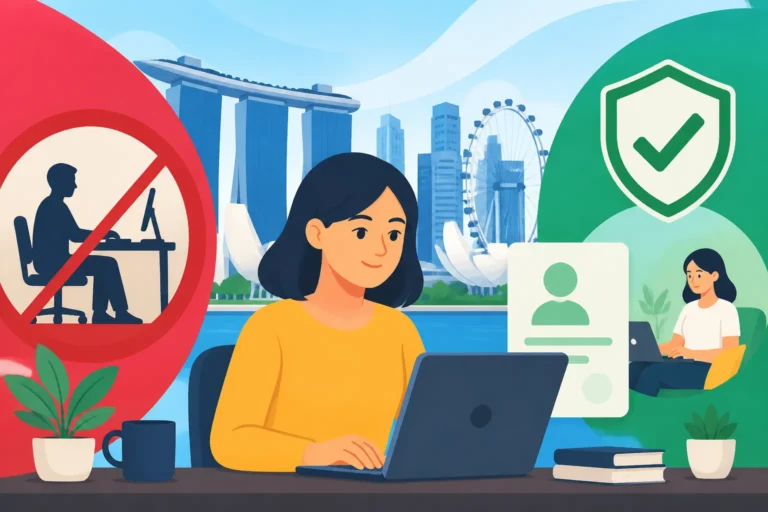
Remote Work in Singapore for an Overseas Employer: Tax and Visa Risks
So, you're dreaming of sipping kopi in a hawker centre while your laptop is open, working away for your company back home, right? It sounds idyllic, but trust me, navigating the world of remote work in Singapore for an overseas employer is far more complex than a simple change of scenery. Many expats stumble over the legalities and tax implications, often unintentionally putting themselves at serious risk. This guide will meticulously break down the visa pitfalls, tax labyrinth, and employer considerations you absolutely need to understand before you even think about setting up your remote office here.
The Allure and The Reality: Why Remote Work in Singapore Isn't So Simple
Singapore, with its vibrant culture, incredible food, and strategic location in Asia, is an undeniable magnet for expats. The idea of living in this dynamic city-state while maintaining your existing job with a company based in, say, London, New York, or Sydney, is incredibly appealing. Many envision a seamless transition, where their laptop and a strong internet connection are all they need. However, the legal and administrative framework in Singapore doesn't always align with this modern, location-independent work fantasy.
The Dream vs. The Legal Framework
The romanticized vision of digital nomadism often clashes sharply with Singapore's strict immigration and employment laws. Unlike some countries that have embraced specific digital nomad visas or more flexible remote work policies, Singapore operates on a more traditional model when it comes to employment. The underlying principle is that if you are physically present in Singapore and performing work, you are generally considered to be employed within Singaporean jurisdiction, regardless of where your employer is registered or where your salary originates. This fundamental distinction is where many remote workers, often unknowingly, run into trouble.
Even if your employer is perfectly happy for you to work from anywhere in the world, their agreement doesn't override Singapore's regulations. The moment you land and start working, you activate a whole new set of legal and tax obligations that pertain to both you as an individual and potentially your overseas employer. It's a nuanced area, and simply having a valid tourist visa doesn't grant you the right to undertake gainful employment, whether it's for a local or foreign entity. Understanding this distinction is the first crucial step to avoiding future headaches.
Common Misconceptions Expats Face
One of the biggest misconceptions is the belief that because your salary isn't paid by a Singaporean entity, it's not "work" in the eyes of the authorities. This simply isn't true. Immigration authorities are concerned with the act of performing work within their borders, not just the source of your paycheck. Another common myth is that if you're working for an overseas company, Singapore won't care about your tax obligations since you're already paying taxes back home. This overlooks the concept of tax residency, which Singapore takes very seriously, and the potential for dual taxation if not managed correctly.
Many expats also assume that if their employer doesn't have a physical presence in Singapore, there's no way for the government to track their activities. While privacy is important, modern immigration and tax agencies have increasingly sophisticated methods of identifying individuals who might be living and working outside the legal framework. Furthermore, relying on word-of-mouth advice or informal online forums can lead to dangerous misinterpretations of the law, setting you up for severe penalties down the road. It’s far better to approach this with a clear understanding of the rules than to rely on hopeful assumptions.
Visa and Immigration Risks: The Elephant in the Room
This is where things get really serious. Singapore's immigration policies are clear, stringent, and consistently enforced. Entering the country as a tourist and then covertly working for an overseas employer is not only illegal but carries significant consequences. You absolutely cannot simply arrive on a Short-Term Visit Pass and start working, no matter how remote your job is. This is a critical point that many aspiring remote workers unfortunately gloss over, leading to severe issues.
The "Tourist Visa" Trap and Overstaying
A Short-Term Visit Pass (STVP), often referred to as a tourist visa, is explicitly for leisure, social visits, or very specific short-term business activities that do not constitute employment. Engaging in any form of "gainful employment" while on an STVP is strictly prohibited. This includes working remotely for your existing company overseas. Immigration & Checkpoints Authority (ICA) officers are highly trained to identify individuals who may be attempting to circumvent work pass regulations. If you arrive and state your intention to work, even remotely, you could be denied entry or face further questioning.
The grace period for an STVP is typically between 14 to 90 days, depending on your nationality. Overstaying this period, even by a single day, is a criminal offense in Singapore and will result in fines, detention, and potentially a caning, depending on the length of overstay. Even if you manage to avoid detection while working remotely on an STVP, the mere act of doing so puts you at risk. Discovering you've been working illegally can lead to your visa being revoked, immediate deportation, and a permanent ban from re-entering Singapore. This is why understanding Short-Term Visit Passes and Tourist Visas: Extensions and Rules is so crucial.
Working Without a Valid Employment Pass or Dependent's Pass
To legally work in Singapore, you need a valid work pass. The most common for skilled professionals is the Employment Pass (EP). If you're working remotely for an overseas employer, you generally need an EP unless you qualify for specific exceptions, which are rare for traditional remote setups. Your overseas company would typically need to sponsor this pass, which means they would effectively need a registered entity in Singapore to employ you or utilize a Professional Employer Organization (PEO) or Employer of Record (EOR) service. Many companies are hesitant to establish a full local presence just for one employee.
Another common scenario involves individuals on a Dependant's Pass (DP). While a DP allows you to reside in Singapore, it does not automatically permit you to work. Previously, DP holders could apply for a Letter of Consent (LOC) to work for a Singapore-registered company. However, as of May 1, 2021, DP holders who wish to work must now obtain a valid work pass (such as an EP or S Pass) in their own right, unless they are setting up a business. This means the days of simply working remotely for an overseas company on a DP, even with an LOC, are largely over. For more details on what your family needs, check out Dependant’s Pass and LTVP: Bringing Family to Singapore. Similarly, you cannot work on an LTVP without specific approvals.
Consequences of Non-Compliance: Fines, Bans, and Jail Time
Singapore has a zero-tolerance policy for immigration offenses. The penalties for illegal employment, whether by the individual or the employer, are severe. For individuals found working without a valid work pass, penalties can include hefty fines (up to S$20,000), imprisonment (up to two years), and often, caning. Additionally, you will almost certainly be deported and barred from re-entering Singapore permanently, affecting any future aspirations to live or work in the city. Your overseas employer could also face significant legal and financial repercussions if found to be complicit in illegal employment practices in Singapore, even if unintentionally.
For your employer, operating with an employee in Singapore without establishing a legal entity or proper work pass sponsorship could trigger "permanent establishment" risks, leading to corporate tax liabilities in Singapore, even if they don't intend to have a presence here. It's a complex legal area that can expose your company to unforeseen tax and regulatory burdens. This is why it's vital for both you and your employer to fully understand the legal landscape before making the leap. Ensuring you have the correct documentation is paramount; ignoring these rules means putting your entire future in Singapore at risk, so review guides like The 2026 ICA No-Boarding Directive (NBD): Pre-Departure Vetting Explained and the overarching Singapore Visa and Immigration: The Complete Guide for Expats (2027) carefully.
Tax Implications for Remote Workers in Singapore
Beyond the immigration hurdles, the tax landscape for remote workers in Singapore can be equally complex, particularly when dealing with an overseas employer. Many expats mistakenly believe that if their salary is paid into an overseas bank account and they are already paying taxes in their home country, Singapore's tax authorities, the Inland Revenue Authority of Singapore (IRAS), won't be interested. This is a common and potentially costly error. Singapore has its own rules for determining tax residency and income tax obligations, irrespective of where your employer is located.
Establishing Tax Residency: The 183-Day Rule and Beyond
In Singapore, your tax residency status determines how your income is taxed. Generally, an individual is considered a tax resident for a particular year of assessment if they are physically present in Singapore or exercise employment (other than as a director of a company) in Singapore for 183 days or more in the preceding calendar year. This is commonly known as the "183-day rule." If you exceed this threshold, you will generally be taxed as a tax resident, which usually means progressive tax rates and the ability to claim certain reliefs.
However, even if you are present for less than 183 days, you could still be deemed a tax resident under certain circumstances, such as the "three-year rule" (if you stay for a continuous period spanning three consecutive calendar years, even if each year is less than 183 days) or the "two-year rule" (if you stay for at least 183 days over two consecutive calendar years). Conversely, if you are in Singapore for less than 60 days in a calendar year, your employment income is typically exempt from tax, unless it relates to a director's fee. It's crucial to understand Tax Residency in Singapore: The 183-Day Rule Explained to accurately determine your tax obligations. For complex scenarios, consulting a specialist is highly recommended, and resources like Taxes for Expats can be invaluable in clarifying your specific situation.
Understanding Income Tax Obligations in Singapore
Once you establish tax residency in Singapore, your employment income derived from or accrued in Singapore is subject to Singapore income tax. This applies even if your employer is based overseas and pays your salary into a foreign bank account. The key here is "derived from or accrued in Singapore," which generally means work performed physically within Singapore's borders. As a tax resident, you'll pay tax at progressive rates, ranging from 0% to 24% for income exceeding S$320,000. For non-residents, employment income is generally taxed at a flat rate of 15% or the resident progressive tax rates, whichever results in a higher tax amount.
The process involves filing an annual income tax return with IRAS. While your overseas employer won't file Form IR8A (which local employers submit), you are still personally responsible for declaring your income accurately. Failure to declare income or pay taxes can result in severe penalties, including fines and imprisonment. Navigating these requirements can be tricky, especially if your employer isn't familiar with Singapore's tax laws. This is precisely why it's so important to consult with tax professionals who understand the nuances of Singapore Income Tax for Foreigners: IRAS Rules and Filing (2026).
Navigating Double Taxation Agreements (DTAs)
Many countries have Double Taxation Agreements (DTAs) with Singapore. These agreements are designed to prevent individuals and companies from being taxed twice on the same income by two different jurisdictions. If your home country has a DTA with Singapore, it may provide mechanisms to offset or reduce your tax liability in one country based on taxes paid in the other. For instance, if you are a tax resident in Singapore and also considered a tax resident in your home country, the DTA will often have "tie-breaker rules" to determine which country has the primary right to tax your income.
While DTAs are incredibly helpful, they are not a "get out of jail free" card. You still need to understand the specific provisions of the DTA between Singapore and your home country and actively claim the relief or credit as per the agreement. This often involves documenting your tax payments and residency status in both countries. Ignorance of DTA provisions doesn't exempt you from tax liabilities. Professional advice from specialists like Taxes for Expats is often essential to effectively leverage these agreements and ensure you are compliant in both jurisdictions without overpaying. Knowing the ins and outs of Double Taxation Agreements (DTA): How Expats Avoid Paying Tax Twice can save you a lot of money and stress.
Navigating the Legal Landscape for Overseas Employers
The legal implications of having an employee work remotely in Singapore extend beyond the individual. For an overseas employer, having an employee based in Singapore, even if working remotely, can unintentionally create a "permanent establishment" (PE) in Singapore, triggering corporate tax obligations and other regulatory compliance issues. Many foreign companies are completely unaware of these risks until it's too late, potentially leading to significant fines and legal entanglements.
Permanent Establishment Risks for Foreign Companies
A "permanent establishment" generally refers to a fixed place of business through which the business of an enterprise is wholly or partly carried on. This can include an office, a factory, or even a branch. However, it can also be triggered if an employee has the authority to conclude contracts in the name of the enterprise and habitually exercises that authority in Singapore. Even if your company doesn't intend to set up a physical office, simply having a remote employee consistently performing core business functions from Singapore could, in the eyes of IRAS, create a taxable presence.
If an overseas employer is deemed to have a PE in Singapore, they become liable for corporate income tax on profits attributable to that PE. This can be a huge administrative and financial burden for companies that are not prepared for it, as they would then need to register a foreign branch or subsidiary, comply with local accounting standards, and file corporate tax returns. The rules are complex and vary depending on the nature of the work performed by the remote employee and the specific DTA (if any) between Singapore and the employer's home country.
Employment Law Considerations: Contracts, Benefits, and Termination
Even if your overseas employer successfully navigates the PE issue, they still need to consider Singapore's employment laws. If you are deemed to be "employed in Singapore," regardless of your employer's location, aspects of Singapore's Employment Act could apply to your employment relationship. This covers crucial areas such as working hours, overtime pay, annual leave, sick leave, public holidays, maternity benefits, and termination procedures.
Your existing employment contract with your overseas company might not align with Singaporean laws, creating potential legal discrepancies. For instance, notice periods, severance pay, or even the language used in your contract might differ from what's legally mandated here. This can lead to disputes if the employment relationship sours. Therefore, the employer might need to issue a supplementary Singapore-compliant employment contract or at least ensure their existing one doesn't contradict local regulations. For a deeper dive into general employment guidelines, you might find Working in Singapore: Job Market, Culture, and EP Guidelines (2027) helpful, as well as Understanding Employment Contracts: Notice Periods and Non-Competes.
Avoiding "Shadow Employment" Scenarios
"Shadow employment" refers to situations where an individual is working in a country without the necessary visa or a proper employment structure, creating an informal and non-compliant arrangement. Both the employee and the employer face risks here. For the employee, it's the risk of deportation, fines, and legal bans. For the employer, it's the risk of permanent establishment issues, corporate tax liabilities, and potential legal action from authorities or the employee if a dispute arises.
To genuinely avoid a shadow employment scenario, the overseas employer essentially has two main options: either establish a legal entity in Singapore (e.g., a subsidiary) to formally employ the individual and sponsor their work pass, or engage with a Professional Employer Organization (PEO) or Employer of Record (EOR) service. These services act as the legal employer in Singapore, handling all compliance, payroll, tax, and HR functions, thus significantly mitigating risks for the overseas company. This makes the entire setup legitimate and protects both parties.
Practical Solutions and Best Practices for Remote Setup
While the landscape can seem daunting, legitimate pathways exist for remote work in Singapore for an overseas employer. It's all about proactive planning, adhering strictly to regulations, and often, leveraging specialized services. Skipping these steps is akin to walking through a minefield blindfolded – possible, but incredibly risky.
Engaging a Professional Employer Organization (PEO) or EOR
For many overseas companies wanting to employ someone remotely in Singapore without setting up their own legal entity, a Professional Employer Organization (PEO) or Employer of Record (EOR) is often the most pragmatic solution. These third-party providers have existing legal entities in Singapore and act as the official employer for compliance purposes. They handle payroll, benefits, tax withholding, and ensure adherence to local employment laws. Essentially, they allow your overseas company to legally employ you in Singapore without incurring the burden of establishing a local subsidiary or managing complex local HR and tax compliance.
While PEO/EOR services come with a fee, the cost is often far less than the legal and administrative expenses of setting up and maintaining a local entity, let alone the potential penalties for non-compliance. This solution also allows the individual remote worker to obtain a legitimate work pass, such as an Employment Pass, under the EOR's sponsorship. It's a clean, compliant way to bridge the gap between an overseas employer and an employee based in Singapore.
Securing the Right Visa for Your Remote Work
Even with an EOR, the individual still needs the correct visa. The most common for skilled professionals working remotely for an overseas company (via an EOR) is the Employment Pass (EP). The EP application process, including meeting salary thresholds and educational qualifications, remains the same. Singapore has also introduced specialized passes like The Tech.Pass and Specialized Visas for High-Tier Digital Talent, which could be relevant for certain highly skilled remote workers in the tech sector who meet specific criteria. These passes are designed to attract top global talent, offering greater flexibility.
It's crucial to understand that merely stating you are a "digital nomad" or "remote worker" will not grant you a special visa in Singapore. You must apply for and be granted a formal work pass that allows you to undertake employment. Ensure you have all necessary documentation for your application, including your passport, educational certificates, and employment contract. The process can take time, so patience is key. For a comprehensive overview, refer to Employment Pass (EP) Application and COMPASS Framework Demystified.
Essential Due Diligence: Legal and Tax Advice
Before making any definitive moves, both you and your overseas employer should seek professional legal and tax advice specific to your situation. This isn't an area for guesswork or relying on generic online information. A qualified Singaporean immigration lawyer can clarify visa requirements and employment laws, while a tax accountant specializing in international tax can help navigate the complexities of individual and corporate tax residency, DTAs, and compliance. Firms like Taxes for Expats offer specialized services for individuals dealing with cross-border tax issues, which can be immensely helpful.
This due diligence phase should involve a clear assessment of your employer's willingness to engage an EOR, the costs involved, and the implications for both your individual and the company's tax profiles. Understanding these intricacies upfront can prevent costly mistakes and provide peace of mind. While seemingly an added expense, expert advice is an investment in ensuring your remote work setup in Singapore is entirely legitimate and sustainable for the long term. You might even need to consider consulting Finding a Trustworthy Tax Accountant for Freelancers in Singapore if your situation leans more towards independent contracting.
Disclaimer
The information provided in this guide is for general informational purposes only and does not constitute legal, tax, or immigration advice. Singapore's laws and regulations are subject to change, and individual circumstances can vary greatly. It is imperative to consult with qualified legal, tax, and immigration professionals for advice tailored to your specific situation before making any decisions related to remote work in Singapore.