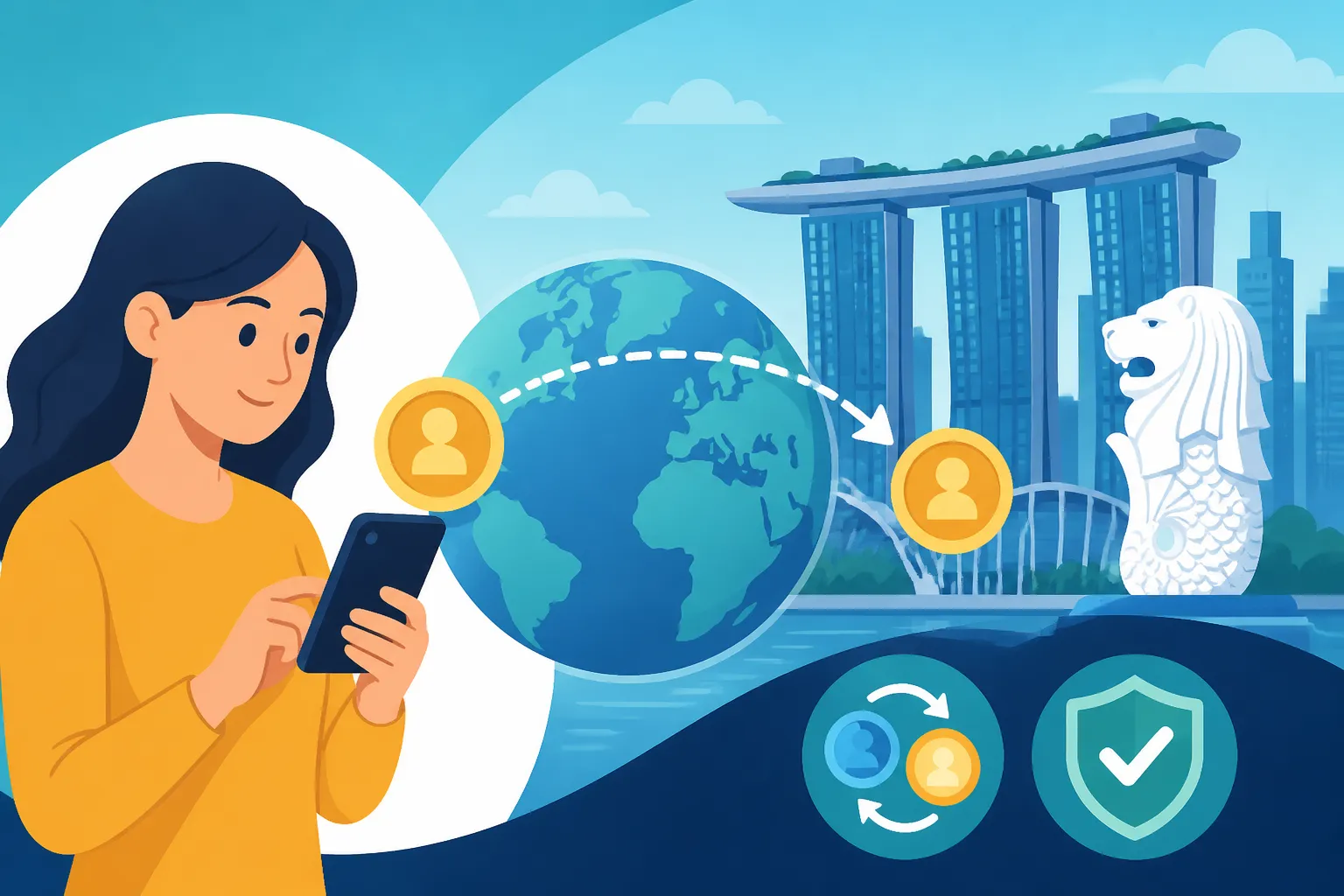
Sending Money Overseas: Remittance and FX Strategies in Singapore
Alright, fellow expats, let's talk about something that hits close to home for so many of us here in Singapore: sending money overseas. Whether it's to support family, pay off a mortgage back home, or simply transfer savings, the process can feel like navigating a minefield of confusing fees, opaque exchange rates, and endless paperwork. This guide is here to demystify it all, offering you a veteran expat's perspective on the best remittance and foreign exchange strategies.
The Expat's Dilemma: Why Sending Money Home is More Complex Than It Seems
When you first arrive in Singapore, you're usually caught up in the whirlwind of getting settled: finding a place to live, setting up your bank account, and navigating the public transport system. The idea of regularly sending a portion of your hard-earned salary back to your home country often takes a backseat until it becomes an urgent necessity. That's when the reality sinks in – it’s not as simple as clicking a button, especially if you want to ensure your loved ones receive the maximum amount possible without excessive deductions.
Many of us move to Singapore for incredible career opportunities and a higher standard of living, but often, a significant motivation is also to provide better support for our families elsewhere. This could mean contributing to a parent's medical bills, funding a sibling's education, or maintaining financial commitments on properties or investments abroad. The emotional weight of these responsibilities is real, and the last thing you need is a financial system that makes it harder, not easier. You want transparency, speed, and fairness, which, let's be honest, aren't always what you get with traditional methods.
Navigating Exchange Rates and Hidden Fees
The most frustrating aspect for many expats is the sheer opaqueness of exchange rates and the 'hidden' fees that seem to magically appear. You see an attractive exchange rate advertised, but by the time your money reaches its destination, a chunk has often vanished. This isn't always outright deception; sometimes it's due to intermediary bank charges, a less-than-favorable exchange rate margin applied by the bank, or simply a lack of clarity in the initial quote. It’s a constant battle to understand exactly how much your recipient will receive and how much you're truly paying for the service.
Consider a scenario: you need to send S$2,000 home for an urgent family matter. You check the mid-market rate online, which is the true exchange rate you see on Google. Your bank, however, offers a slightly different, less favourable rate, and then adds a flat transaction fee on top. Then, the recipient's bank might levy another charge for receiving an international transfer. Before you know it, S$50-S$100 could be gone in fees and unfavourable conversions, which for many families, is a significant amount of money. This isn't just a minor inconvenience; it chips away at the value you're trying to provide, and it feels unfair when you're working so hard to earn those dollars.
The Urgency of Supporting Family Back Home
For many expats, especially those from developing countries, sending money home isn't just about saving or investing; it's about lifeblood. It covers daily expenses, rent, school fees, and medical emergencies. The urgency can be intense. Imagine your parent needing urgent medical treatment, or your child's school tuition deadline looming. In these situations, speed and reliability are paramount. Waiting days for a wire transfer to clear, or discovering unexpected delays due to compliance checks, can cause immense stress and real-world problems for your family.
This urgency often pushes people towards the fastest, most convenient option, even if it means paying higher fees. However, with the right strategies and knowledge, you don't always have to compromise. Understanding the different avenues available in Singapore can empower you to make informed decisions that prioritize both speed and cost-effectiveness. The goal is to ensure your support reaches its intended destination quickly and with as much value intact as possible, easing the burden on both you and your family.
Traditional Banking: The Old-School Way (and its Pitfalls)
For a long time, traditional banks were pretty much the only game in town for international money transfers. And honestly, for some expats, especially those dealing with very large sums or highly complex financial transactions, they still hold a certain appeal due to their perceived security and established infrastructure. However, for regular remittances, relying solely on your primary bank can often mean sacrificing convenience and incurring higher costs.
The process typically involves visiting a branch, filling out forms, or using your bank's online portal to initiate a wire transfer. While most Singaporean banks offer robust online banking platforms, the international transfer sections can sometimes feel a bit clunky or less intuitive compared to their domestic counterparts. This reliance on a system built decades ago, before the advent of digital-first solutions, is where many of the pitfalls lie.
Wire Transfers and SWIFT: Understanding the Process
When you initiate an international bank transfer, you're usually engaging with the SWIFT network. SWIFT stands for the Society for Worldwide Interbank Financial Telecommunication, and it's essentially a global messaging system that allows banks to communicate securely about financial transactions. Think of it as a highly secure email system for banks, not a direct money transfer mechanism itself.
Your funds don't usually travel directly from your bank account in Singapore to your recipient's bank account overseas in one go. Instead, the SWIFT message instructs a series of intermediary banks, or "correspondent banks," to move the money along the chain. Each bank in this chain can, and often does, deduct its own fees. This is why the amount your recipient eventually receives might be less than what you initially sent, and why tracking the exact path of your money can sometimes feel like chasing a ghost. This multi-bank relay system is a significant reason why traditional wire transfers can be slow and expensive.
Bank Exchange Rates and Transaction Charges
This is where traditional banks often lose out to newer digital players. Banks typically don't offer you the "mid-market" exchange rate – the rate you see on Reuters or Google. Instead, they apply a markup, meaning they buy the foreign currency from you at one rate and sell it at a slightly higher rate, pocketing the difference. This spread might seem small, perhaps 1-3%, but it adds up considerably on larger sums.
On top of this, you'll almost certainly face flat transaction fees. These can range anywhere from S$10 to S$50 per transfer, depending on the bank and the destination country. And as mentioned, there might be additional charges from intermediary banks or the recipient bank. Suddenly, that S$2,000 transfer could be costing you S$70-S$100 or more in combined fees and poor exchange rates. While your employer might offer some benefits related to your primary bank, it’s crucial to understand your overall healthcare budgeting in Singapore, especially if you rely on personal funds.
It’s important to clarify these costs upfront. Some banks might advertise "no transfer fees," but then compensate with a wider exchange rate spread. Others might have lower spreads but higher flat fees. It's a complex puzzle, and honestly, few of us have the time or energy to deeply compare every single bank's offering for every single transfer. This is precisely why many expats seek out more transparent and cost-effective alternatives for sending money home.
Digital Remittance Platforms: A Game-Changer for Expats
If traditional banking sounds like a relic from a bygone era, that’s because, in many ways, it is, especially for routine international money transfers. Enter the digital remittance platforms. These services have absolutely revolutionised how expats send money across borders, offering a much-needed breath of fresh air in terms of transparency, speed, and cost-effectiveness. For many of us, companies like Wise (formerly TransferWise) have become household names, synonymous with quick and affordable international transfers.
These platforms operate on a fundamentally different model than traditional banks. Instead of routing money through the slow and expensive SWIFT network, they often use a "local payout" system. This means when you send money from Singapore, your SGD stays in Singapore, and an equivalent amount of local currency is paid out from the platform's account in the recipient's country. This cuts out multiple intermediary banks and their associated fees, making the whole process significantly more efficient.
How Online Platforms Like Wise Work
Let's take Wise as a prime example. When you want to send money using Wise, you pay them in Singapore Dollars from your local bank account. They then use their network of local bank accounts around the world. Instead of actually sending your SGD to your recipient's country, they take your SGD, and then pay out the equivalent amount in the local currency from their bank account in your recipient's country. It’s like a massive global swap shop. This ingenious method sidesteps the traditional SWIFT network, reducing costs and increasing speed.
The real magic of Wise is its commitment to transparency. They typically offer the true mid-market exchange rate – the one you see on independent financial news sites – and charge a small, upfront, variable fee. This fee is clearly displayed before you confirm the transfer, so you know exactly how much your recipient will get and how much you're paying. This level of clarity is incredibly reassuring for expats who have grown weary of hidden bank charges. It's truly a breath of fresh air. They also provide multi-currency accounts, which can be fantastic for those who frequently deal with different currencies. Speaking of which, if you're exploring options, you might want to look into The Best Multi-Currency Accounts for Expats: Wise vs Revolut vs Banks.
Comparing Fees, Exchange Rates, and Transfer Speeds
When choosing a digital remittance platform, you'll want to compare a few key factors:
- Fees: Digital platforms usually charge a percentage of the transfer amount, often with a small fixed component. These fees are generally much lower than bank wire transfer fees and are transparently displayed. Always compare the total cost, including any exchange rate margin, not just the advertised fee.
- Exchange Rates: Look for platforms that offer the mid-market rate or very close to it. Some platforms might advertise "zero fees" but make their money on a less favorable exchange rate. The difference of even 0.5% can be substantial on larger transfers.
- Transfer Speeds: Many digital platforms can complete transfers within minutes or a few hours, especially for popular currency corridors. However, speeds can vary depending on the destination country, the banks involved, and the time of day. Most will give you an estimated delivery time upfront.
- Transfer Limits: Check if the platform has limits on how much you can send in a single transaction or over a period. These limits can vary significantly.
- Recipient Options: Can the money be sent directly to a bank account, or are there options for cash pickup, mobile wallets, or bill payments in the recipient country?
For example, beyond Wise, there are other reputable players like Revolut and Instarem, each with their own fee structures and strengths. Some might be better for certain corridors or specific currencies. It really pays to do a quick comparison using their online calculators before each transfer, especially for larger sums. This flexibility and competitive landscape are huge advantages for expats.
The Convenience of Mobile Apps and User Experience
One of the biggest wins for digital remittance platforms is their superb user experience, particularly through their mobile apps. Gone are the days of needing to visit a bank branch or navigate clunky desktop interfaces. With apps from providers like Wise, you can set up a transfer in a few taps from your phone, anytime, anywhere. This is invaluable when you're juggling work, family, and the busy expat lifestyle in Singapore.
The apps typically offer:
- Intuitive Interfaces: Clear, step-by-step processes that make sending money straightforward, even for first-time users.
- Real-time Tracking: You can usually track the status of your transfer from initiation to completion, providing peace of mind.
- Rate Alerts: Many apps allow you to set up alerts for when an exchange rate hits your desired level, helping you maximise your transfer value.
- Secure Biometric Login: Face ID or fingerprint authentication ensures your transactions are secure.
- 24/7 Access: Send money whenever it's convenient for you, without being limited by bank operating hours.
This level of convenience not only saves time but also reduces the stress associated with managing international finances. For busy expats, the ability to quickly and reliably send money home, often while on the go, is a significant benefit. If you’re often on the move, consider that Managing Exchange Rate Risks When You Earn in SGD can be crucial for your financial planning.
Foreign Exchange (FX) Specialists and Brokers
While digital platforms are fantastic for routine remittances, there's another tier of service available for those dealing with much larger sums, or for businesses: dedicated foreign exchange specialists and brokers. These companies operate solely in the FX market, often providing more personalised service and potentially better rates for high-value transactions than either traditional banks or even some digital remittance platforms.
You might not need an FX broker to send S$1,000 to your parents, but if you're transferring the proceeds from a property sale, moving significant savings, or managing business payrolls across borders, then exploring an FX specialist becomes highly relevant. Their expertise lies in understanding the intricacies of the global currency markets and how to leverage them for your benefit.
When to Consider an FX Broker for Larger Sums
An FX broker typically becomes a viable option when you're looking to transfer amounts upwards of S$10,000, or perhaps even S$50,000 and beyond. At these thresholds, even a small percentage difference in the exchange rate can translate into hundreds or thousands of dollars saved. Banks, even with their 'preferred customer' rates, often still have a wider margin than a specialist who deals exclusively in foreign exchange.
Moreover, FX brokers often provide more tailored advice. They can discuss market trends, help you understand currency volatility, and suggest strategies to mitigate risk. This consultative approach can be invaluable if you're not just moving money, but actively managing your exposure to different currencies. This might be relevant if you're planning a major life event, such as buying property overseas, or repatriating a significant portion of your savings before your financial exit strategy in Singapore.
Negotiating Rates and Spot vs Forward Contracts
One of the key advantages of working with an FX broker is the ability to negotiate rates. Unlike a bank where the rate is generally fixed for retail customers, with a broker, particularly for larger amounts, you can often push for a tighter spread, closer to the interbank rate. This negotiation can lead to substantial savings.
FX brokers also offer more sophisticated tools than standard remittance services:
- Spot Contracts: This is the most common type of transfer, where you exchange currency at the current market rate for immediate delivery (typically within two business days). It's what most digital platforms and banks offer.
- Forward Contracts: This allows you to lock in an exchange rate for a future transfer, typically up to a year in advance. This is incredibly useful if you need to make a large payment in a foreign currency at a specific future date and want to protect yourself from adverse currency movements. For example, if you know you'll need to pay overseas university fees in six months, you can fix the rate today and avoid worrying about the market fluctuating against you.
- Limit Orders: You can set a target exchange rate, and the broker will automatically execute your transfer if and when the market hits that rate. This helps you get the best possible rate without constantly monitoring the markets yourself.
These advanced options are generally not available through standard banking or digital remittance apps, making FX brokers a powerful tool for strategic financial planning, especially for those with substantial international financial commitments. However, remember to do your due diligence and choose a reputable, regulated broker.
Multi-Currency Accounts: Your Personal Global Wallet
Beyond individual transfers, a more integrated approach to managing your international finances is through a multi-currency account (MCA). These accounts are designed with the global citizen in mind, allowing you to hold, send, and receive funds in various currencies from a single platform. For many expats in Singapore, an MCA has become an indispensable tool, especially if you frequently travel, have income/expenses in multiple currencies, or want to protect yourself from constant currency conversion fees.
Singapore is a major financial hub, and several local and international banks, as well as digital providers, offer excellent multi-currency options. These accounts essentially act like a home base for your foreign money, allowing you to convert funds when the exchange rate is favorable and hold onto them until needed, rather than converting every time you make a transaction.
Benefits for Frequent Travelers and International Families
If you're an expat in Singapore, chances are you travel frequently, whether for work or leisure, to nearby destinations like Malaysia or further afield. You might also have family members living in different countries, requiring you to manage funds in various currencies. This is where a multi-currency account truly shines:
- Reduced Conversion Fees: Instead of paying a conversion fee every time you use your Singaporean debit card abroad or make a small international transfer, an MCA lets you hold the foreign currency directly. When you spend in that currency, there's no conversion needed, saving you money.
- Easier Budgeting: You can allocate funds into different currency "pots," making it simpler to budget for expenses in various countries. For instance, you could have a USD pot for US-based subscriptions, a EUR pot for your upcoming European holiday, and of course, your primary SGD pot.
- Receiving Payments: If you freelances or receive income from overseas, an MCA can provide local bank details (e.g., a UK account number and sort code, or a US routing number) allowing you to receive payments in foreign currencies without incurring international transfer fees or unfavourable conversion rates. This is a massive boon for digital nomads or those with diversified income streams.
- Supporting Family Abroad: You can convert a lump sum when the rate is good, hold it in the recipient's currency within your MCA, and then send smaller amounts as needed without worrying about daily rate fluctuations.
For instance, if you have family in the UK and often send pounds, you could convert a larger sum of SGD to GBP in your multi-currency account when the exchange rate is favorable. Then, instead of making individual international transfers from your main SGD account each month, you can just send GBP directly from your GBP balance within the MCA, often at much lower fees, or even fee-free for internal transfers to other users of the same platform.
Managing Different Currencies and Avoiding Conversion Fees
The core advantage of an MCA is its ability to separate your funds by currency. This empowers you to be more strategic with your money. Instead of your bank automatically converting your SGD when you make an overseas payment, you can actively decide when to convert.
Here's how it helps avoid unnecessary fees:
- Spot Conversion: You can monitor exchange rates and, when you see a rate you like, perform a one-off conversion from SGD to another currency (e.g., USD or EUR) within your MCA.
- Hold Funds: Once converted, the funds sit in that foreign currency. When you make a purchase or send money in that currency, the funds are drawn directly from that balance, bypassing any further conversion fees or unfavourable daily rates.
- No FX Markup on Spends: When traveling, using a debit card linked to your MCA often means you spend in the local currency directly from your balance, avoiding the 1-3% foreign transaction fees that many traditional bank cards charge.
Companies like Wise offer excellent multi-currency accounts that are well-regarded by expats globally. They often come with a debit card, allowing you to spend directly from your various currency balances. When comparing options, look at the number of currencies supported, the associated fees (monthly fees, inactivity fees, card issuance fees), and the ease of use. This can significantly reduce the cumulative cost of managing your international financial life. Understanding these nuances is a key part of financial budgeting in Singapore.
Regulatory Landscape and Compliance in Singapore
Singapore is renowned globally for its robust and well-regulated financial sector. This is a massive plus for expats, as it means you can generally trust the institutions you deal with. However, this high level of regulation also means strict rules around money transfers, particularly when it comes to preventing money laundering and terrorist financing. While these rules are ultimately for everyone's safety, they can sometimes add an extra layer of complexity or scrutiny to international transactions, especially for larger sums.
The Monetary Authority of Singapore (MAS) is the central bank and financial regulatory authority in Singapore. They oversee all financial institutions, including banks and remittance service providers, ensuring they comply with stringent requirements. This regulatory oversight is why Singapore is considered such a safe place to do business and manage your finances.
MAS Regulations and Consumer Protection
The MAS regulates remittance service providers under the Payment Services Act (PSA). This means that any entity offering money transfer services to or from Singapore, whether it's a traditional bank or a digital platform like Wise, must be licensed by the MAS. This licensing provides a crucial layer of consumer protection.
What does this mean for you, the expat?
- Security of Funds: Licensed providers are typically required to safeguard customer funds in separate accounts, ensuring that your money is protected even if the company faces financial difficulties.
- Fair Practices: The MAS monitors these providers to ensure fair business practices, transparent fee structures, and proper handling of customer complaints.
- Recourse: If you encounter a problem with a licensed remittance service, you have recourse through the MAS or the relevant dispute resolution channels.
Before using any remittance service, it's always a good idea to quickly check if they are licensed by MAS. Most reputable providers will prominently display this information on their websites. This simple check can give you significant peace of mind.
Anti-Money Laundering (AML) and Know Your Customer (KYC) Requirements
This is where many expats might encounter administrative hurdles, particularly with initial transfers or larger amounts. Singapore has very strict Anti-Money Laundering (AML) and Combating the Financing of Terrorism (CFT) laws, in line with international standards. To comply with these laws, all financial institutions must implement "Know Your Customer" (KYC) procedures.
What KYC and AML mean for your transfers:
- Verification of Identity: When you sign up for a remittance service or open an account, you'll be required to provide identification documents (passport, EP, NRIC if PR) and proof of address. This isn't unique to Singapore; it's a global standard.
- Source of Funds: For larger transfers, or if a transaction appears unusual, you might be asked to provide documentation regarding the source of your funds (e.g., salary slips, bank statements, sale agreements). This is to ensure the money isn't from illicit activities.
- Recipient Information: You'll also need to provide detailed information about your recipient, including their full name, address, bank details, and sometimes their relationship to you, especially if it's a new recipient.
- Transaction Monitoring: Financial institutions continuously monitor transactions for suspicious patterns. A very large transfer, or frequent transfers to a new, unusual destination, might trigger a review.
While these checks can sometimes cause delays, they are essential for maintaining the integrity of the financial system. If your overseas wire transfer gets held by compliance, it's usually because the system has flagged something for review, and providing the requested documentation promptly will help resolve it. It's always best to be prepared to explain the nature of your transfers, particularly if they are substantial or frequent, to avoid unnecessary delays.
Practical Tips for Maximizing Your Remittance Value
Now that we’ve explored the various methods, let's talk strategy. As an expat, every dollar saved on fees or gained through a better exchange rate means more for your family or your own financial goals. Maximizing your remittance value isn't just about picking the cheapest service; it's about smart planning and understanding market dynamics.
Think of it this way: you're working hard to earn those Singapore Dollars, so you want every single cent to count when you send it home. A little bit of foresight and strategic thinking can go a long long way in ensuring your money works harder for you and your loved ones.
Timing Your Transfers: Watching Market Fluctuations
Currency exchange rates are constantly in flux, influenced by global economic news, political events, interest rate decisions, and even daily trading volumes. For smaller, urgent transfers, you might not have the luxury of waiting. However, for larger or non-urgent transfers, timing can make a noticeable difference.
Here’s how you can be smart about it:
- Monitor Rates: Use online tools, financial news sites, or even the rate alert features offered by digital platforms like Wise. Set alerts for when your desired exchange rate is met.
- Understand Volatility: Some currencies are more volatile than others. Transfers between major, stable currencies (like SGD to USD or EUR) might see smaller daily swings compared to transfers to emerging market currencies.
- Avoid Peak Times (if possible): Sometimes, exchange rates can be less favorable during banking holidays or weekends when markets are less active. Fridays and Mondays can also sometimes see higher volatility.
- Look for Trends: While nobody can predict the future perfectly, observing trends over a few days or weeks can give you a sense of whether the rate is generally strengthening or weakening.
For instance, if you need to send a significant amount of money to pay off a mortgage in Australia, and the AUD-SGD rate has been particularly volatile, waiting a few days for a more favorable dip could save you hundreds, if not thousands, of dollars. It requires a bit of patience, but the payoff can be substantial.
Bulk Transfers vs Frequent Smaller Ones
This is a common question, and the answer largely depends on the fee structure of your chosen remittance method:
- Fixed Fees: If your service charges a flat fee per transaction (e.g., S$10 per wire transfer), then making fewer, larger transfers will be more cost-effective. Sending S$2,000 in one go with a S$10 fee is cheaper than sending S$500 four times, which would cost S$40 in total fees.
- Percentage-Based Fees: If the fee is primarily a percentage of the transfer amount (which is common with many digital platforms like Wise), then the cost might be proportionate, regardless of how you break down the transfer. However, some platforms might have a small fixed component plus a percentage, or different tiers, so always check the calculator.
- Recipient Needs: Sometimes, the decision is dictated by your recipient's needs. If they need regular, smaller sums for daily expenses, then frequent transfers might be more practical, even if slightly more expensive in total fees.
Generally, for platforms with low, transparent percentage-based fees, the difference between bulk and frequent transfers might be negligible from a cost perspective. However, if you're dealing with traditional banks and their chunky fixed fees, consolidate your transfers whenever possible. Also, consider the administrative burden – fewer transfers mean less paperwork and monitoring for you.
Tax Implications: What You Need to Know
This is a critical, often overlooked, aspect of sending money overseas. While Singapore has a territorial tax system, meaning you are generally taxed only on income earned within or derived from Singapore, the tax implications of sending money abroad can vary significantly depending on your home country's tax laws and whether you are considered a tax resident there. This is especially important for US citizens, who are subject to worldwide taxation.
Here’s a simplified breakdown, but always remember to consult with a tax professional:
- Singapore Tax: Generally, when you send money out of Singapore, it's money you've already earned and paid income tax on (or it's your savings). Singapore typically doesn't impose an exit tax on money leaving the country. However, if you are a freelancer or business owner, ensure your income is declared correctly in Singapore. Understanding Singapore income tax for foreigners: IRAS rules and filing (2026) is crucial.
- Recipient Country Tax: This is where things get complex. Your recipient might face taxes depending on:
- Gift Tax: Some countries have gift taxes. If you send a large sum, it might be considered a gift and subject to tax for the recipient.
- Inheritance Tax: If the money is part of an inheritance, specific rules apply.
- Income Tax: If the recipient's tax authority perceives the money as income (e.g., payment for services), it could be taxed as such.
- Your Home Country Tax Residency: This is crucial. Even if you're an expat in Singapore, you might still be considered a tax resident in your home country, especially if you haven't formally severed ties or meet certain residency tests. If so, your worldwide income (including your Singapore salary) could be subject to reporting and potentially taxation back home, though double taxation agreements often prevent you from paying tax twice.
This is a complex area, and it’s highly recommended to consult with tax professionals, especially if you're dealing with substantial sums or have complex financial arrangements. Resources like Taxes for Expats specialise in helping expatriates navigate their tax obligations across multiple jurisdictions. Don't assume that because your money is clean in Singapore, it's automatically clear of tax implications elsewhere. Being informed can prevent nasty surprises down the line. You might also want to understand How to Calculate the 183-Day Tax Rule if You Traveled for Work if your residency status is ambiguous.
Comparison of Remittance Methods in Singapore
| Feature | Traditional Banks (e.g., DBS, UOB, OCBC) | Digital Remittance Platforms (e.g., Wise, Revolut, Instarem) | FX Specialists/Brokers (e.g., OFX, WorldFirst) |
|---|---|---|---|
| Typical Transfer Size | Any, but generally for larger or complex needs | Small to Medium (S$100 – S$50,000) | Medium to Large (S$10,000+) |
| Exchange Rate | Markup on mid-market rate | Near mid-market rate | Negotiable, very close to mid-market |
| Fees | Flat transfer fees (S$10-S$50+), hidden intermediary fees | Low percentage-based fees, transparent | Variable, often built into the rate for retail clients |
| Speed | 2-5 business days (SWIFT network) | Minutes to 24 hours (local payout networks) | 1-3 business days |
| Transparency | Often opaque, final amount can be uncertain | High transparency, "what you see is what you get" | High transparency for negotiated rates |
| Convenience | Branch visits or online banking | User-friendly apps/websites, 24/7 | Online platforms, dedicated account managers |
| Key Advantage | Perceived security, comprehensive services | Cost-effectiveness, speed, transparency | Best rates for large sums, advanced FX tools |
| Best For | Complex banking needs, very large institutional transfers | Regular personal remittances, budget-conscious expats | High-value personal transfers, business FX needs |
Sending money overseas from Singapore doesn't have to be a source of constant frustration. With the rise of digital remittance platforms and a clear understanding of the options available, you can navigate the process with confidence, ensuring your hard-earned money reaches its destination efficiently and cost-effectively. Whether you choose the transparency of a platform like Wise, or the tailored services of an FX broker for larger sums, the power to make informed decisions is now firmly in your hands. Remember, every dollar saved on fees is a dollar more in the hands of those who need it.
Disclaimer
The information provided in this guide is for general informational purposes only and does not constitute financial, tax, or legal advice. While we strive to provide accurate and up-to-date information, rules and regulations in Singapore and other countries can change. Always consult with a qualified financial advisor, tax professional, or legal expert for advice tailored to your specific situation before making any financial decisions. We are not liable for any actions taken based on the information provided herein.