Travel Insurance Add-Ons: Are They Better Than Credit Card Coverage?
You’re standing at the boarding gate at Changi Terminal 3, ready for a much-needed break in Koh Samui, when the announcement comes: your flight is canceled due to a tropical storm. Most expats in Singapore simply shrug, thinking their premium credit card has them covered. This guide solves the dangerous "coverage gap" by dissecting whether your credit card insurance is actually enough or if you need dedicated travel insurance add-ons to protect your finances and health.
The Illusion of Free Coverage: Understanding Credit Card Travel Insurance
As expats living in the Lion City, we are often spoiled by the perks of high-end banking. Whether you are using a DBS Altitude, an AMEX Platinum, or a Citi PremierMiles, these cards come with the seductive promise of "complimentary" travel insurance. It feels like one less thing to worry about in our already complex lives of managing EP renewals and high rent. However, this "free" coverage is often more of a marketing tool than a robust safety net. It is designed for the average traveler, not necessarily for the high-stakes life of an international expatriate who might be traveling across multiple borders in a single week.
The first thing you have to understand is that credit card travel insurance is almost always "secondary" coverage. This means if something goes wrong, the provider expects you to claim from every other possible source—your airline, your hotel, or even your Expat Health Insurance in Singapore: Public vs Private Coverage—before they pay a cent. The administrative burden of proving you have exhausted all other options can be a nightmare when you are just trying to get home. Moreover, the definitions of what constitutes a "valid claim" are often much narrower than what you would find in a standalone policy or a dedicated add-on.
The Activation Trap: Did You Pay for the Whole Trip on the Card?
One of the most common ways expats lose their "free" coverage is through the activation fine print. In Singapore, most bank-provided travel insurance only kicks in if you have charged the entire cost of your airfare to that specific card. If you used miles to book your flight and only paid the taxes on your card, you might find yourself completely uninsured. This is a massive pitfall for those of us who religiously collect points to fly back to London, New York, or Sydney.
Furthermore, some cards require you to manually "activate" the insurance through a portal or by sending an SMS before you depart Changi. If you forget this step amidst the chaos of packing and finishing up work at the office, you are essentially traveling without a net. Unlike a dedicated add-on policy that you buy for a specific trip or an annual plan, credit card coverage is often passive and easily invalidated by minor technicalities in how you booked your travel. This is why many veteran expats prefer to use a specialized service like Wise to manage their travel spending while keeping their insurance completely separate and comprehensive. Using Wise allows you to avoid the murky FX markups of traditional bank cards while ensuring your insurance isn't tied to the vagaries of a specific credit card transaction.
Limits and Sub-limits: The Hidden Gaps
Even if you successfully activate your credit card insurance, the limits are often surprisingly low. While the headline might scream "$1,000,000 in Travel Accident Coverage," that usually only applies to extreme scenarios like accidental death or permanent disability. The things you actually need—like coverage for a stolen laptop in a Ho Chi Minh City cafe or a trip cancellation because your child caught Hand, Foot, and Mouth Disease—are capped at much smaller amounts.
For instance, many credit cards offer only $500 for baggage delay, which barely covers a change of clothes and a toothbrush if you are stranded in London for three days. A dedicated add-on policy usually offers much higher limits and broader categories of coverage. If you are a business owner or a high-earning professional, the loss of a single week of work due to a travel mishap can far exceed the measly payouts offered by "free" cards. When you factor in the complexities of international tax residency, especially if you are traveling for work, the financial stakes are even higher. Professionals often consult with Taxes for Expats to ensure that their travel-related expenses and insurance claims don't trigger unforeseen tax liabilities in multiple jurisdictions.
Why Dedicated Add-Ons and Standalone Policies Often Win
The reality of living in Southeast Asia is that travel is rarely just a "vacation." We travel for visa runs, for regional business meetings, and for emergency trips back home to see elderly parents. A dedicated travel insurance add-on or a standalone plan from a provider like MSIG, FWD, or Allianz provides a level of customization that a credit card simply cannot match. These policies are built with the understanding that an expat's life is mobile and often involves high-value items and complex medical needs.
One of the greatest advantages of a standalone policy is the "Cancel for Any Reason" add-on. While credit card insurance typically only covers cancellations for "covered reasons" like death or serious illness, a dedicated policy can be tailored to protect you if your work schedule suddenly changes—a common occurrence in Singapore's high-pressure corporate culture. This flexibility is essential when you consider the Budgeting in Singapore: Cost of Living Benchmarks for Expats and how much a lost flight or a forfeited hotel deposit can set you back.
Medical Evacuation and Repatriation: A Non-Negotiable for Southeast Asia
If there is one reason to ditch the credit card insurance and opt for a dedicated policy, it is Medical Evacuation and Repatriation: Why Expats Need International Cover. While Singapore has world-class hospitals, many of our favorite weekend destinations do not. If you have a serious accident while diving in the Philippines or trekking in Nepal, the cost of a private medevac flight back to Singapore can easily exceed $50,000 to $100,000.
Most credit card policies have very strict definitions of when they will authorize an evacuation. They often insist on moving you to the "nearest acceptable facility," which might not be where you want to go. A high-quality standalone policy, however, often allows for evacuation back to your home country or back to Singapore, where you likely have a primary care physician who understands your medical history. This is a critical distinction that can save your life and your life savings. During these medical emergencies, having access to liquid funds via a multi-currency account like Wise can be a lifesaver for paying upfront deposits at foreign hospitals before the insurance company settles the bill.
Pre-Existing Conditions: The Credit Card Deal-Breaker
Almost every "complimentary" credit card insurance policy in Singapore explicitly excludes pre-existing medical conditions. This means if you have asthma, diabetes, or even a previous back injury, and that condition causes a problem while you are abroad, the insurer will likely reject your claim entirely. This is a massive risk for older expats or those managing chronic health issues.
Dedicated travel insurance add-ons, on the other hand, often offer a "Pre-Existing Condition" rider for an extra premium. This ensures that you are truly protected, regardless of your medical history. Given the strictness of the Singaporean medical system and the potential for Managing Medical Disputes: Patient Rights and Filing Complaints, you want a policy that is transparent and inclusive. It is worth the extra $100 for a trip to know that you won't be left high and dry because of a medical note from five years ago.
Comparing Coverage: Credit Cards vs. Dedicated Policies
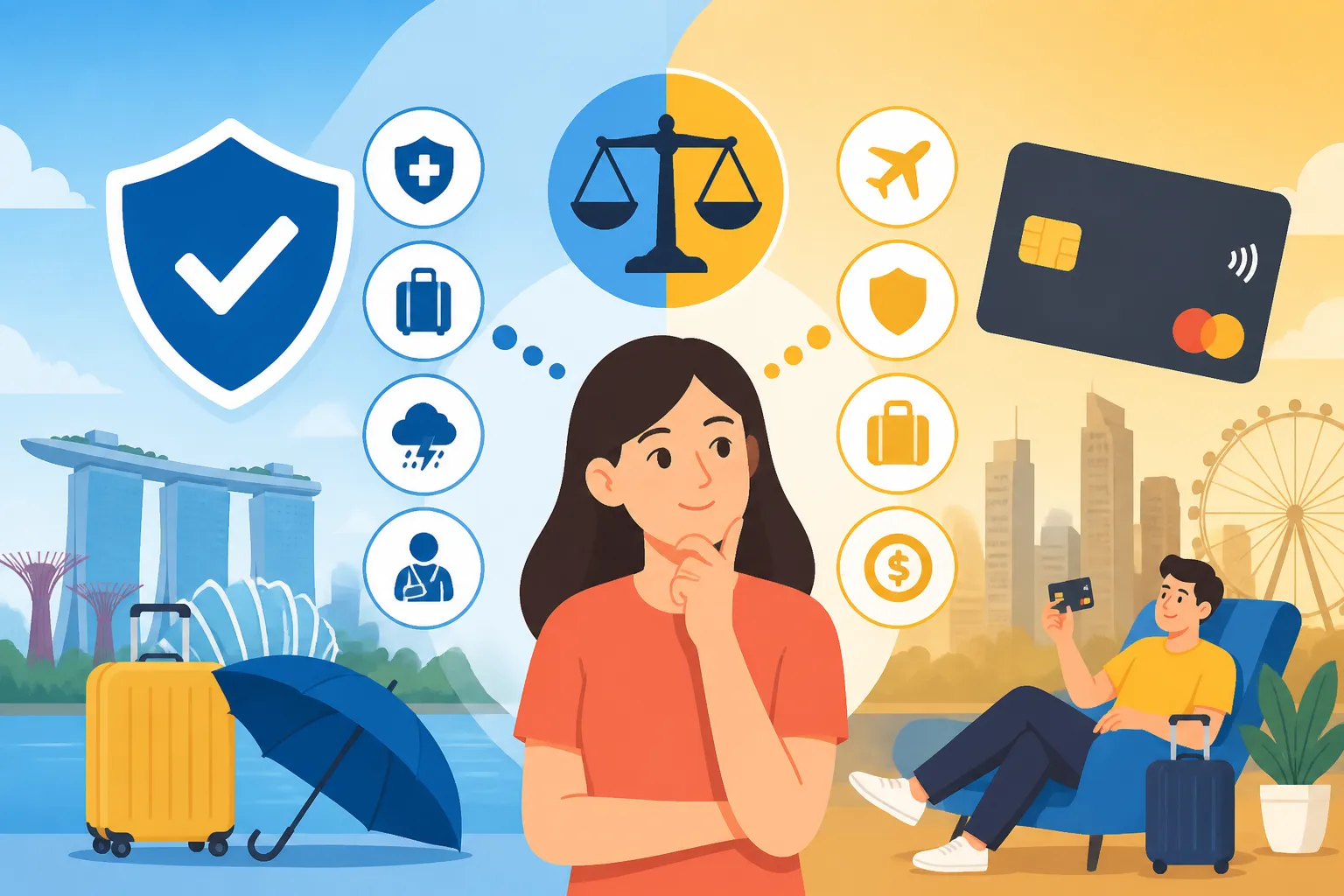
To help you visualize the differences, I have put together a comparison of the typical features found in "free" credit card insurance versus a high-quality dedicated travel insurance add-on available in the Singapore market.
| Feature | Typical Credit Card Insurance | Dedicated Add-On / Standalone Policy |
|---|---|---|
| Activation | Must pay 100% of fare on the card | Active once premium is paid |
| Medical Expenses | Usually capped (e.g., $250k – $500k) | Higher limits (e.g., $1M+) |
| Pre-existing Conditions | Almost always excluded | Can be covered with specific riders |
| Emergency Evacuation | Strict "nearest facility" rules | Often includes repatriation to SG/Home |
| Trip Cancellation | Narrow "covered reasons" only | Options for "Cancel for Any Reason" |
| Sports & Adventure | Usually excludes "hazardous" activities | Add-ons for diving, skiing, trekking |
| Personal Liability | Often limited or missing | Usually included (Up to $1M) |
| Claims Process | Secondary (must claim elsewhere first) | Primary or highly responsive |
Strategic Integration of Your Financial Tools
When you are navigating the complexities of international travel as an expat, your insurance is only one part of the puzzle. You also need to consider how you move money and how your travel affects your global tax footprint. This is where being smart about your brands comes in. For example, when you are hit with an unexpected expense abroad—perhaps a lost bag or a minor medical bill—using a traditional Singaporean credit card can result in 3% to 4% in hidden currency conversion fees. This is why it is wise to keep a Wise account active. Wise provides real-time exchange rates, which is essential if you need to pay for a dedicated insurance add-on or an emergency expense in a foreign currency without getting gouged by the banks.
Furthermore, if your travel is related to your professional life—perhaps you are a digital nomad or a regional director—your travel insurance claims and expenses can have tax implications. This is particularly true for US citizens living in Singapore who must navigate the rigorous requirements of the IRS. Working with a firm like Taxes for Expats can help you understand if your travel insurance premiums are deductible and how to report any significant insurance payouts. They are experts in ensuring that your Singapore Income Tax for Foreigners: IRAS Rules and Filing (2026) remains compliant even as you bounce between different countries.
The Weekend Getaway to Bintan or Batam
For a quick ferry ride to Indonesia, you might think the credit card insurance is "good enough." It is a short trip, what could go wrong? However, consider the prevalence of minor accidents or food poisoning. If you need to visit a local clinic, the bill might only be a few hundred dollars. Many credit cards have a "deductible" or "excess" of $50 to $100 per claim. By the time you file the paperwork and pay the excess, the "free" insurance has provided almost no value.
A dedicated add-on policy often has a lower or zero excess for medical claims. It also provides better coverage for "Travel Inconvenience" like ferry delays, which are common during the monsoon season. If you are preparing for regional travel, it is also a good idea to check your Routine and Travel Vaccinations: Preparing for Regional Asia Travel to ensure you aren't bringing home more than just souvenirs. Having a dedicated policy means you have a 24/7 hotline to call if things go south, providing peace of mind that a credit card's automated phone menu simply cannot offer.
The Long-Haul Flight Back Home
The stakes are highest when you are flying across the world. A flight from Singapore to New York or London involves multiple connections and a much higher risk of lost luggage or missed flights. If your flight is delayed by 12 hours in a transit hub like Dubai or Frankfurt, a dedicated insurance policy will often pay out a fixed sum for every few hours of delay, no questions asked.
Credit card policies are often much stingier with these "delay" payouts, requiring a mountain of receipts for "essential purchases" only. When you are exhausted and trying to navigate a foreign airport, the last thing you want to do is save every receipt for a sandwich and a bottle of water just to get a $20 reimbursement. A dedicated policy treats you like a valued customer, whereas a credit card insurer often treats you like a liability. For these major trips, ensuring your finances are handled via Wise and your tax status is vetted by Taxes for Expats ensures that your focus remains on your family and your journey, not on administrative headaches.
How to Choose the Right Add-On for Your Lifestyle
Choosing the right insurance isn't just about finding the cheapest premium; it's about matching the coverage to your specific expat lifestyle. If you are an active individual who enjoys scuba diving in Thailand or skiing in Japan, you must check the "hazardous activities" clause. Most credit cards exclude these. You will need a dedicated add-on that specifically names these activities.
Additionally, consider the "Personal Liability" aspect. If you accidentally injure someone or damage property while abroad, you could be sued for millions. While we often think of this in a Singapore context—see Why You Should Buy Personal Liability Insurance in Singapore—it is even more critical when traveling in litigious societies like the US or the EU. Most dedicated travel policies include substantial personal liability coverage, which is often missing or severely limited in credit card plans.
Before you set off on your next adventure, take thirty minutes to read the Policy Summary (not just the marketing brochure) of your credit card insurance. If you see words like "Secondary Coverage," "Excess of $100," or "Excludes Pre-existing Conditions," it is a clear sign you should look for a dedicated add-on. As you prepare to leave, don't forget to review your Financial Exit Strategy: Closing Accounts and Tax Clearance if you are nearing the end of your stint in Singapore, as your insurance needs will change once you are no longer a resident.
Emergency Medical Care and Beyond
Ultimately, travel insurance is about protecting your health and your ability to return to your life in Singapore. If you find yourself needing Emergency Medical Care in Singapore: Ambulances and A&E Wards upon your return, you want to ensure that your travel policy has seamlessly handed over the "baton" to your local health coverage.
Relying on a credit card is like using a paper umbrella in a Singaporean thunderstorm—it might look the part, but it won't keep you dry when it matters. Invest in a dedicated add-on, keep your multi-currency spending efficient with Wise, and stay tax-compliant with the help of Taxes for Expats. Your future self, possibly stranded in an airport or sitting in a foreign hospital room, will thank you for your foresight.
Disclaimer
The information provided in this guide is for informational purposes only and does not constitute financial, legal, or medical advice. Insurance policies and terms change frequently in Singapore. Always read the specific Product Summary and Policy Wording of any insurance plan before purchasing or relying on coverage. Consult with a licensed financial advisor to determine the best insurance strategy for your individual needs.