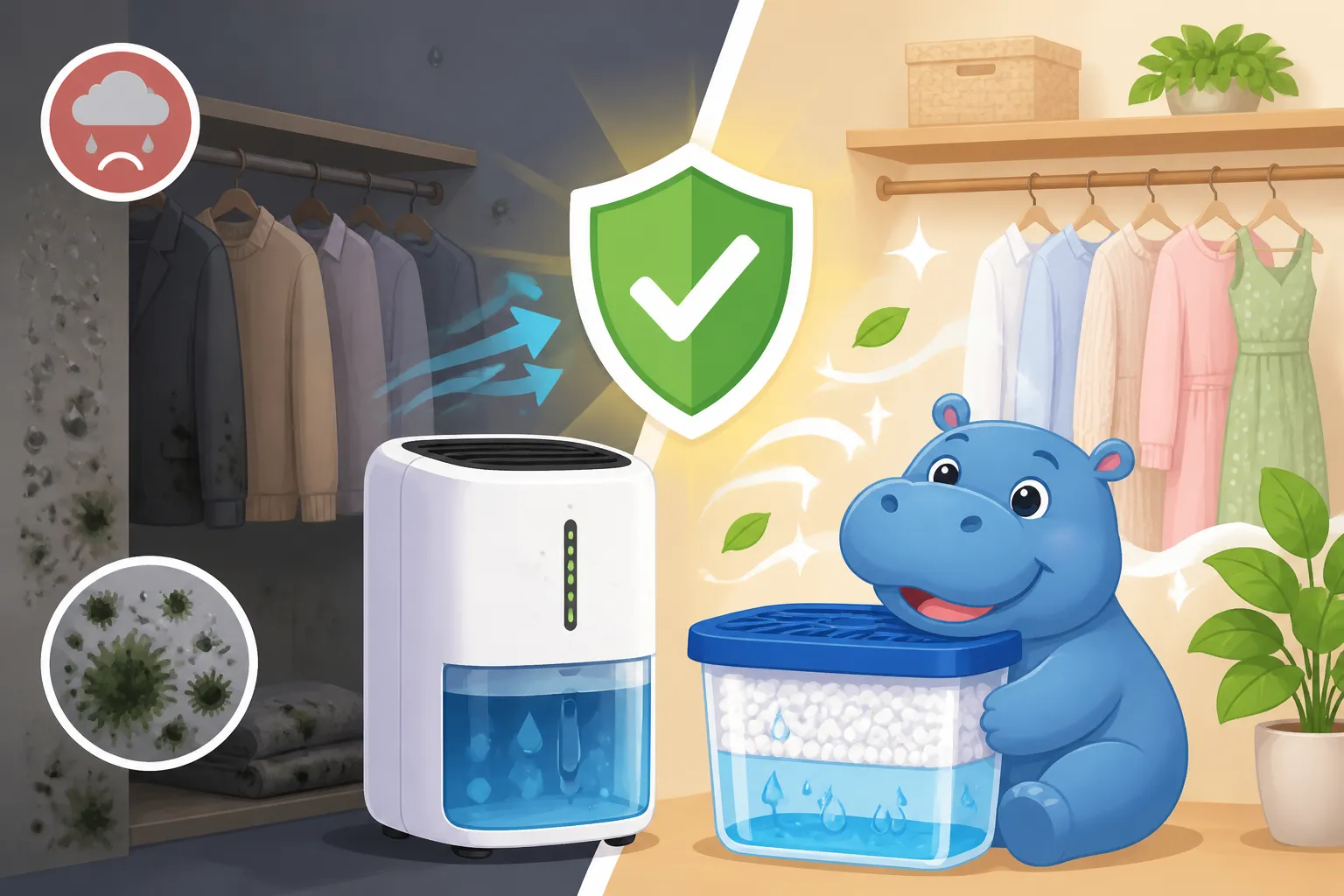
How to Use Dehumidifiers and “Thirsty Hippos” to Prevent Closet Mold
Ah, the notorious Singapore humidity! It's a rite of passage for every expat here to open their wardrobe one day and discover that sneaky, fuzzy green or white visitor claiming their favorite leather bag or that pair of shoes you haven't worn since leaving your home country. It’s frustrating, expensive, and frankly, a bit gross to find mold blooming where it absolutely shouldn't be. This guide is going to walk you through exactly how to tackle this pervasive problem, offering practical, expat-tested strategies using everything from electric dehumidifiers to those little packets lovingly known as "Thirsty Hippos," so you can reclaim your belongings from the damp grasp of the tropics.
Understanding Singapore's Humidity and Why Mold is Your Nemesis
When you first arrive in Singapore, the constant warmth and lush greenery are incredibly appealing. What you don't immediately realize, however, is that this tropical paradise comes with humidity levels that often hover between 70% and 90% all year round. It’s glorious for the plants, but an absolute nightmare for your belongings, especially those tucked away in dark, poorly ventilated spaces like closets.
The Science Behind the Scourge: Why Singapore is a Mold Paradise
Mold thrives in environments with high moisture, stagnant air, and organic materials (which, let's face it, pretty much describes everything in your closet from cotton shirts to leather shoes). In Singapore, the air itself is perpetually damp. When this humid air gets trapped in an enclosed space like a wardrobe, especially one that doesn't get opened often or isn't near an air-conditioned vent, it creates the perfect breeding ground. The temperature inside these enclosed spaces might be slightly cooler than the ambient air, causing condensation on surfaces, which is essentially a free drink for mold spores.
Many expats report meticulously packing away their winter clothes, only to find them riddled with mildew spots a few months later. Or that cherished antique wooden chest from back home, now showing signs of growth on its inner surfaces. It’s not just about cleanliness; it’s a constant battle against the natural climate. Sometimes, even the best efforts seem futile, which can be disheartening, but with the right tools and habits, you absolutely can minimize the damage.
Common Areas Where Mold Hides
Mold is a master of camouflage, preferring the dark, undisturbed corners of your home. In closets, it particularly loves:
- The back walls and corners of wardrobes: These areas often have the least air circulation and can sometimes be cooler against an external wall, creating condensation.
- Leather goods: Shoes, handbags, belts, and jackets made of leather are prime targets because leather is an organic material that absorbs moisture readily. You'll often see a white, powdery bloom that quickly turns green or black if left untreated.
- Expensive bags and accessories: Your designer handbag might be stored in its dust bag, but if the air inside the wardrobe is humid, the dust bag itself can trap moisture against the leather or fabric.
- Any fabric that isn't completely dry: Even if you think your laundry is dry from the dryer or clothesline, residual moisture can be enough to kickstart mold growth once it's hung in a humid closet.
- Books and documents: Paper is highly absorbent. A stack of old magazines or books on a closet shelf can become a mold colony surprisingly quickly, leading to that tell-tale musty smell.
- Shoe cabinets: Especially if you store shoes that have been worn recently or are slightly damp from rain or sweat, these enclosed spaces are a mold magnet.
It's not just about visual mold either; often, the first sign is that distinct musty smell, a clear indicator that spores are at work, even if you can't see them yet.
Deploying Dehumidifiers: Your Heavy Artillery Against Dampness
When it comes to serious moisture control, especially in larger spaces or for persistent mold issues, an electric dehumidifier is your best friend. These machines actively pull moisture from the air, collecting it in a tank that you then empty.
Types of Dehumidifiers for Singapore Homes
Understanding the different types will help you choose the right warrior for your humidity battle.
- Compressor (Refrigerant) Dehumidifiers: These are the most common type you'll find in Singapore. They work much like an air conditioner, drawing in humid air over a cold coil, which condenses the moisture into water droplets that fall into a collection tank. The drier air is then expelled back into the room.
- Pros: Highly effective in the warm, humid conditions typical of Singapore. Great for larger rooms or even drying laundry indoors. Many models come with a humidistat, allowing you to set a target humidity level, and some have continuous drainage options where you can attach a hose to a drain.
- Cons: They can be noisy, like a refrigerator humming, which might be an issue if your bedroom is small. They also consume a fair bit of electricity, so factor that into your monthly utility bill. The initial cost is higher than disposable options.
- Desiccant Dehumidifiers: Instead of refrigeration, these use a desiccant material (like silica gel) to absorb moisture from the air. The material is then heated to release the absorbed water into a collection tank.
- Pros: Generally quieter and lighter than compressor models. They perform well in cooler temperatures, which isn't typically Singapore's main issue unless you have an extremely cold air-conditioned room.
- Cons: Less efficient in very warm, high-humidity environments compared to compressor types. They tend to have higher running costs due to the heating element.
For most expat homes in Singapore, a good compressor dehumidifier is usually the top choice. You can find reliable brands like Novita, Philips, and Karcher at electronics stores or online. If you're grappling with the humidity and trying to manage your budget, understanding your energy consumption through your SP Group account can help you decide how often to run it.
Strategic Placement and Usage Tips
Simply buying a dehumidifier isn't enough; you need to deploy it strategically.
- For Closets within a Room: If you have a built-in wardrobe in your bedroom, running a dehumidifier in the room itself, with the closet doors open, is often the most effective method. The dehumidifier will dry the air in the entire room, and by opening the closet, you allow that drier air to circulate inside. Trying to put a large electric dehumidifier inside a standard wardrobe is often impractical due to size, heat generation, and power cord access.
- For Walk-in Wardrobes: If you're lucky enough to have a walk-in wardrobe, a smaller, portable electric dehumidifier can be placed directly inside. Ensure it has enough space around it for air circulation and that the power cord is safely managed.
- Running Schedules: You don't necessarily need to run it 24/7. Many expats find it effective to run their dehumidifier for several hours a day, perhaps when they're at work or overnight with the closet doors ajar. If you run your air conditioning frequently, the AC itself dries the air, so you might run the dehumidifier less often. However, once the AC is off, the humidity quickly creeps back in, so that's a prime time to deploy your machine.
- Maintenance is Key: Dehumidifiers collect a lot of water. Make sure to empty the tank regularly – sometimes daily, depending on the humidity and the unit's capacity. Most units will automatically shut off when full, but it's best to empty it before it reaches that point. Also, periodically clean the air filter to ensure optimal performance and prevent mold growth within the machine.
- Consider Continuous Drainage: If your dehumidifier supports it and you have a floor drain nearby (perhaps in a bathroom adjacent to your closet), setting up continuous drainage can be a game-changer, eliminating the need to empty the tank manually.
Remember, a dehumidifier is a preventative tool, not a cure-all. If you already have significant mold growth, you'll need to clean that first before the dehumidifier can maintain the environment. For larger scale issues, you might even consider bringing in professionals, as discussed in Tropical Weather Prep: Managing Mold, Humidity, and Monsoon Rains.
"Thirsty Hippos" and Other Disposable Absorbents: Your Everyday Guardians
While electric dehumidifiers are powerful, they might not be practical for every single drawer, shoe box, or small, enclosed closet space. This is where those unsung heroes, the "Thirsty Hippos" and their many generic cousins, come into play.
What are "Thirsty Hippos" and How Do They Work?
"Thirsty Hippo" is a brand name, but it has become synonymous with a whole category of disposable moisture absorbers available across Singapore. These products typically consist of a container filled with calcium chloride crystals, often with a permeable membrane above a collection tray. The magic happens when the calcium chloride crystals absorb moisture from the surrounding air, turning into a liquid that then drips down into the collection tray.
- How they work: It's a simple chemical reaction. Calcium chloride is highly hygroscopic, meaning it readily attracts and holds water molecules from the atmosphere. As it absorbs moisture, it dissolves, forming a brine solution.
- Where to find them: You can pick these up almost anywhere in Singapore. Every FairPrice, Cold Storage, Sheng Siong, and even convenience stores like Cheers will stock them. Daiso is also a treasure trove for various moisture absorber packets and boxes at very affordable prices.
These little tubs are inexpensive and require no electricity, making them perfect for targeted, smaller-scale moisture control.
Best Practices for Using Absorbents in Closets
While they are simple to use, a few tips can maximize their effectiveness:
- Strategic Placement: Place "Thirsty Hippos" on shelves, in the bottom of your wardrobe, inside shoe cabinets, or even in larger drawers. Ensure they are upright and stable to prevent spills, as the collected brine can damage surfaces. For delicate items like expensive handbags, you can place a small packet inside the dust bag, ensuring it doesn't touch the bag directly.
- Frequent Checks and Replacements: These are not a "set it and forget it" solution. In Singapore's humidity, a "Thirsty Hippo" can fill up surprisingly fast – sometimes within a few weeks, sometimes a month or two, depending on the ambient humidity and the size of the container. Make it a routine to check them. Once the crystals have fully dissolved and the tray is full of water, it's time to dispose of the liquid (carefully, as it's a salt solution) and replace the unit.
- Understand Their Limitations: "Thirsty Hippos" are excellent for preventative measures and for maintaining dryness in small, enclosed spaces. However, they are not powerful enough to tackle a severe mold problem or significantly reduce the humidity in an entire room. If you’re seeing visible mold, you need to clean that first, then deploy the Hippo to prevent recurrence.
- Cost-Effectiveness: Compared to an electric dehumidifier, the ongoing cost of regularly replacing "Thirsty Hippos" can add up, especially if you have many closets. However, for specific, small, and contained areas, they are incredibly cost-effective and low-maintenance. They are particularly useful for protecting items you don't access often, like special occasion wear or seasonal bedding.
I remember when my family first moved here years ago, after the wonderful folks from a service like Sirelo had helped us unpack. We quickly realized the sheer volume of "Thirsty Hippos" we'd need. I initially underestimated it and ended up with a few moldy shoes. Live and learn, right? Now, it's just part of the regular grocery run.
Beyond Dehumidifiers and Hippos: Holistic Mold Prevention Strategies
While dehumidifiers and absorbents are your primary tools, a truly effective mold prevention strategy involves a combination of habits and smart storage choices. Think of it as creating a less hospitable environment for mold spores at every turn.
Maximizing Air Circulation and Light
Mold hates dry, moving air and sunlight. These are your natural allies.
- Leave Closet Doors Ajar: Whenever possible, leave your closet doors slightly open, especially if the room is air-conditioned or has a fan running. This allows for better airflow and helps prevent moisture from getting trapped. Even just opening them for an hour or two daily makes a difference.
- Regular Airing: Every few weeks, take out items from your closet – especially those you don't wear often – and let them air out in a well-ventilated space, perhaps near an open window (weather permitting, of course, Singapore's rain can be sudden!). For those living in smaller apartments or condominiums, you might find that while trying to manage your budget in Singapore, opting for less furniture and more open space can incidentally help with air circulation.
- Decluttering: Overstuffed closets are breeding grounds for mold because air cannot circulate. Regularly declutter your wardrobe. If you haven't worn something in a year, consider donating it or storing it properly. This goes for shoes, bags, and accessories too.
- Small Fans in Walk-ins: For larger walk-in wardrobes, a small, oscillating fan can be incredibly effective at keeping the air moving, preventing pockets of stagnant humidity.
Smart Storage Solutions and Fabric Care
How you store your belongings and care for your fabrics significantly impacts mold prevention.
- Ensure Clothes are Bone Dry: This is perhaps the most critical step. Never put clothes away if they are even slightly damp. If you're line-drying, make sure they are completely dry before folding or hanging. If you're using a dryer, consider an extra cycle or hanging them for a short period afterward.
- Vacuum-Seal Bags: For seasonal items or clothes you rarely wear (like those heavy winter coats from home), vacuum-seal bags are a godsend. They completely remove air and moisture, keeping your items safe and mold-free. However, be aware that some delicate fabrics or items with structure (like blazers) might not fare well with vacuum compression.
- Breathable Garment Bags: For suits, dresses, or other items that need protection but also some air, choose garment bags made of breathable fabric like cotton or non-woven material, not plastic dry cleaning bags. Plastic traps moisture and creates a mini-greenhouse effect, inviting mold.
- Cedar Blocks or Sachets: While primarily known for deterring moths and providing a pleasant scent, cedar also absorbs some moisture. Place cedar blocks or sachets strategically throughout your closet. Remember to "refresh" them periodically by lightly sanding them, which releases their natural oils and scent.
- Silica Gel Packets: Those little "do not eat" packets you find in new shoes or electronics are miniature desiccant dehumidifiers. Save them and tuck them into shoe boxes, inside handbags, or in drawers for extra protection. You can even buy larger, reusable silica gel packets that you can "recharge" by baking them in an oven.
Dealing with Existing Mold: A Proactive Approach
Finding mold isn't the end of the world, but quick action is essential to prevent it from spreading.
- Small Spots on Fabric: For minor mold spots on washable fabrics, you can often treat them with a solution of white vinegar (1 part vinegar to 1 part water) or a very diluted bleach solution (test on an inconspicuous area first!). Apply, let it sit, then wash the item thoroughly. For delicate items, professional dry cleaning is a safer bet.
- Leather Goods: For mold on leather, gently wipe it off with a cloth dampened with white vinegar, then follow up with a leather conditioner. Air the item thoroughly in a well-ventilated area, away from direct sunlight, until completely dry.
- Hard Surfaces (Wood, Shelves): A solution of white vinegar and water, or a mild antifungal cleaner, can be used to wipe down moldy surfaces. Ensure the area is completely dry afterward.
- When to Call Professionals: If you have a large mold infestation, especially if it's recurrent or seems to be growing behind walls, it's time to call in a professional mold remediation service. Mold can pose health risks, particularly for those with allergies or respiratory issues. They can identify the source of moisture and ensure thorough removal. Sometimes, the issue might stem from a leaky pipe or poor ventilation in the building structure, which a professional can diagnose. Before you even unpack all your belongings from moving, it’s a good idea to inspect the property for signs of dampness, especially if you're in a partially furnished rental. It's much easier to address problems then than after everything is moved in.
By being vigilant and employing these comprehensive strategies, you can significantly reduce your chances of battling mold in your Singapore home. Remember, consistency is key in this ongoing fight against the humidity. When researching products or looking up advice on how to manage these home issues, having reliable data on your phone can be a lifesaver. Providers like Airalo offer eSIMs that keep you connected without hassle, perfect for when you're out and about comparing brands or checking reviews.
Here's a quick comparison of your main weapons:
| Feature | Electric Dehumidifier | "Thirsty Hippo" / Disposable Absorbents |
|---|---|---|
| Primary Use Case | Whole room humidity control, serious dampness | Small, enclosed spaces (closets, drawers) |
| Effectiveness | High, actively removes large amounts of moisture | Moderate, passively absorbs moisture |
| Cost (Initial) | Higher (S$150 – S$500+) | Low (S$2 – S$8 per unit) |
| Cost (Ongoing) | Electricity bill, filter replacements | Regular replacement cost (can add up) |
| Maintenance | Empty water tank, clean filter, manage power cord | Replace when full |
| Energy Consumption | Yes, requires electricity | No, passive |
| Noise Level | Can be noticeable (humming, fan noise) | Silent |
| Best For | Rooms with high humidity, drying laundry, preventing mold in large wardrobes | Targeted protection for specific items/areas |
| Limitations | Not suitable for very small spaces (e.g., inside a handbag), higher energy use | Cannot dehumidify a whole room, slower acting |
Disclaimer
Please note that the information provided in this guide is for general informational purposes only and does not constitute professional advice. While we strive to offer realistic and helpful guidance based on expat experiences in Singapore, specific situations may vary. Always exercise caution when using cleaning products, follow manufacturer instructions for appliances, and consult with professionals for severe mold issues or health concerns. Local regulations and product availability may change.