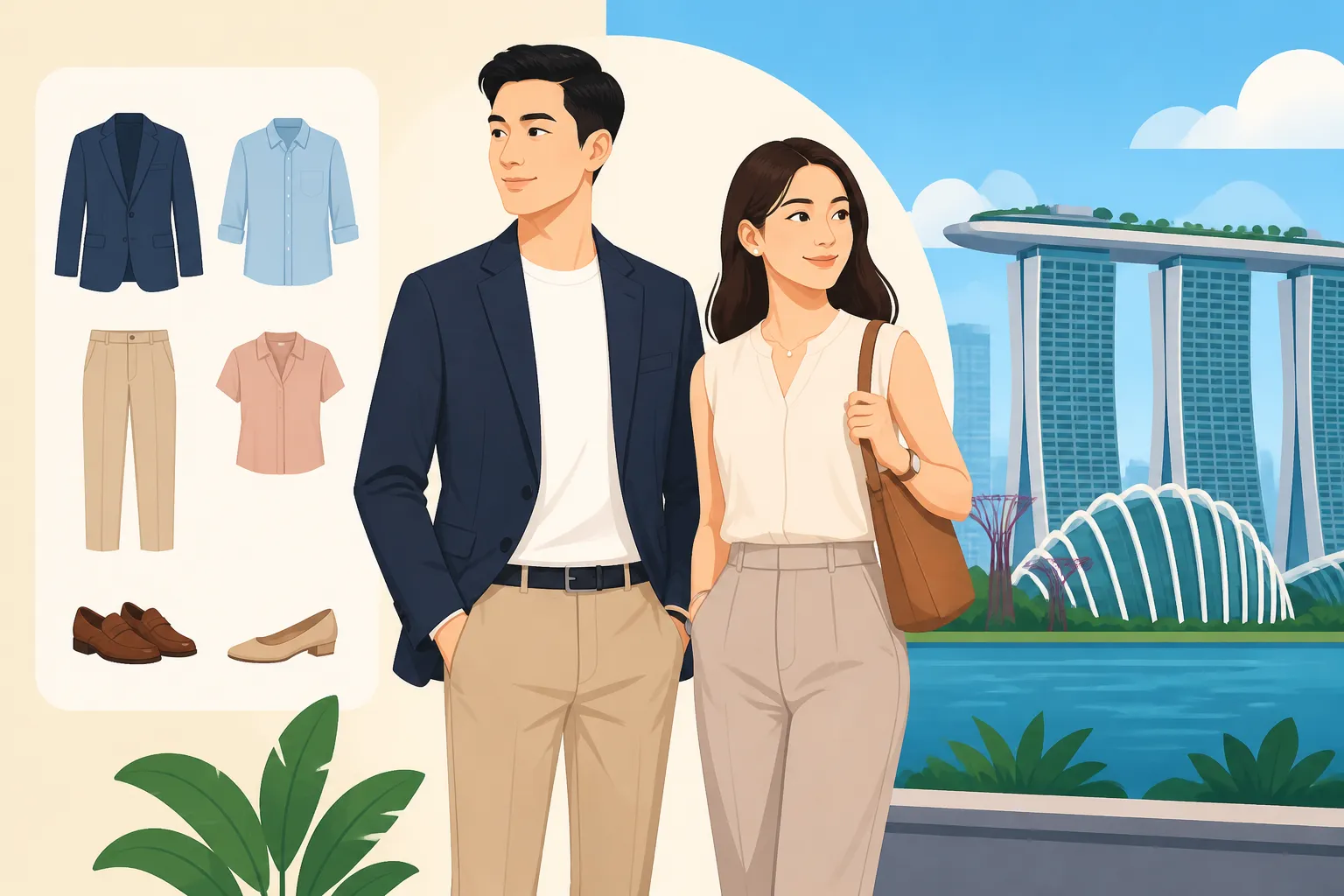
Dress Code Translations: What Does “Smart Casual” Mean in Singapore?
Oh, the infamous "smart casual" dress code in Singapore! It’s a phrase that has caused countless expat wardrobe crises, endless internal debates, and perhaps a few awkward first impressions. You arrive here, brimming with excitement, only to find that what was perfectly acceptable "smart casual" back home might get you some curious stares or even an implied dress code violation in this tropical city-state. This guide is here to unravel that mystery, offering practical, no-nonsense advice for how to navigate Singapore's unique sartorial landscape, ensuring you always look the part without sweating through your shirt.
Decoding "Smart Casual" in Singapore: It's Not What You Think
When someone tells you "smart casual" in Singapore, your brain might immediately conjure images of chinos and a button-down, or a simple sundress and sandals. While those aren't entirely wrong, the local interpretation has a distinct flavor, heavily influenced by the perpetually warm and humid climate, as well as an underlying respect for formality in certain settings. It's less about being overly dressed up, and more about appearing polished, put-together, and considerate of the occasion.
The Local Nuances and Climate Considerations
Singapore is hot, humid, and often rainy. This isn't just a minor detail; it dictates everything from fabric choices to footwear. Heavy wools, thick denim, or anything that doesn't breathe well is typically a no-go for extended wear, especially if you'll be spending time outdoors or in less air-conditioned environments. The local interpretation of "smart casual" leans heavily into lightweight, natural fibers like linen, cotton, and blends that wick moisture.
Think about the context: is it a meeting in a chilly, air-conditioned office tower in Raffles Place, followed by an outdoor lunch at a hawker centre? Or a dinner at a nice restaurant in Dempsey Hill? These transitions are critical. You'll often see locals layering – a light blazer or cardigan over a well-cut blouse or shirt can be easily added or removed. For men, tailored shorts are often acceptable in many social 'smart casual' settings, but almost never in a corporate one, unless specifically stated for a casual Friday. Women often opt for well-tailored capris, skirts, or dresses in breathable fabrics. The key word here is "tailored" – nothing too distressed, baggy, or overtly beachy.
Common Misinterpretations by Expats
Many expats, especially those from more laid-back Western cultures, often underdress when faced with the "smart casual" directive. They might think jeans and a polo shirt are fine for a business lunch, when in fact, dark wash jeans might just barely pass in some very casual offices on a Friday, but a business lunch usually calls for something more elevated. Similarly, for women, while maxi dresses are comfortable in the heat, if they're too flowy or beach-appropriate, they miss the "smart" mark for many Singaporean social occasions.
Another common pitfall is the footwear. Flip-flops or extremely casual sandals are rarely considered "smart casual" unless you're at a resort or a very specific beachside event. For men, boat shoes, loafers, or clean, minimalist sneakers can work. For women, elegant flats, low heels, or dressy sandals are generally safe bets. You wouldn't want to show up to a networking event in Orchard Road thinking your comfortable Birkenstocks are "smart casual" because of the heat. Believe me, I've seen it happen, and while no one will say anything, it certainly doesn't help with first impressions.
Practical Dress Code Applications for Different Settings
Understanding "smart casual" isn't a one-size-fits-all endeavor. Singapore is a melting pot of cultures and industries, and what flies in a tech startup will certainly raise eyebrows in a private bank.
Office Environments and Corporate Culture
In most corporate settings, "smart casual" often means slightly more formal than what you might imagine. For men, this typically translates to collared shirts (button-downs, polos with a structured collar), tailored trousers (chinos or lightweight dress pants), and closed-toe shoes. Ties are almost never required for smart casual, but a blazer can be a good idea for client meetings or if your office is particularly frigid. Jeans are generally a no-go, unless it's a designated "casual Friday," and even then, dark, well-fitting denim is preferred over ripped or faded styles.
For women, blouses, tailored tops, skirts (knee-length or midi are safest), tailored trousers, or dresses are standard. Avoid anything too revealing or overly informal like tank tops or overly casual t-shirts. Always have a light cardigan or blazer on hand, not just for the aircon, but also to add a layer of professionalism when needed. Industries like finance, law, or government typically lean towards the "smarter" end of smart casual, often bordering on business casual. Tech companies, particularly those with a strong international presence, might be more relaxed, but it's always best to observe what your colleagues are wearing during your first week. If you're interviewing for a new role, remember that you also need to understand your employer’s medical benefits package before signing.
Social Gatherings, Dining, and Nightlife
This is where the flexibility of "smart casual" really shines, but also where most people get it wrong. For a nice dinner out in a restaurant at Marina Bay Sands, men might wear a well-fitted polo or a short-sleeved button-down, tailored shorts (not cargo shorts!), or chinos. Women can opt for elegant dresses, skirts with dressy tops, or smart jumpsuits. Think tasteful, contemporary, and comfortable.
For more casual social gatherings like a barbecue at a friend's condo or a visit to a café in Tiong Bahru, the dress code relaxes further. However, even then, "casual" in Singapore rarely means sloppy. Clean t-shirts, well-maintained shorts (for men), and sundresses or shorts/skirt with a nice top (for women) are generally fine. Nightlife can vary wildly. A casual pub might be fine with a t-shirt and jeans, but a high-end club in Clarke Quay will expect something much dressier – often a collared shirt for men and a dress or stylish ensemble for women. When it comes to your social life, having some funds available is important, and you should be aware of the Cost of Living for a Single Expat: Monthly Budget Breakdown to ensure you can enjoy these outings.
Navigating Religious and Cultural Events
Singapore's diverse population means you might be invited to a variety of religious or cultural events. For these, "smart casual" often takes on an added layer of modesty and respect. When visiting temples, mosques, or churches, it’s generally advisable to cover your shoulders and knees. This applies to both men and women. For women, a shawl can be a useful accessory to quickly adapt an outfit for modesty. For men, long trousers are almost always preferred over shorts in these settings, regardless of the heat. If you're unsure, a quick search or asking a local friend is always a good idea. Remember, showing respect for local customs goes a long way.
Building Your Expat Wardrobe: Essential Pieces and Brands
Navigating the Singapore climate and its "smart casual" expectations means being strategic about your wardrobe. It’s not about having endless clothes, but the right ones.
Breathable Fabrics and Climate-Appropriate Choices
This cannot be stressed enough: fabric is king in Singapore. Prioritize natural fibers like linen, cotton, Tencel, and light blends. Avoid synthetic materials like polyester (unless it’s performance-wicking activewear) as they trap heat and moisture, leading to discomfort and visible sweat marks. Uniqlo is a popular choice among expats for its affordable and climate-friendly options like AIRism and linen blends. Muji also offers simple, breathable cotton and linen pieces.
For men, a few pairs of well-fitting chinos in versatile colors (khaki, navy, grey) are essential. Add some short-sleeved button-down shirts in breathable materials, and a couple of high-quality polo shirts. A lightweight blazer in linen or a cotton blend is invaluable for formal meetings or evening events.
For women, a selection of cotton or linen blouses, tailored shorts, midi skirts, and versatile dresses are key. A light cardigan or jacket is also crucial for air-conditioned indoors. Brands like COS, & Other Stories, and local boutiques often carry stylish yet practical options.
Accessories and Footwear to Complete the Look
Accessories can elevate a casual outfit to "smart casual." For men, a good watch and a nice leather belt can make a difference. For women, tasteful jewelry, a structured handbag, and a scarf can easily dress up a simple top and trousers.
Footwear, as mentioned earlier, is critical. For men, loafers, boat shoes, or clean, leather sneakers work well for most smart casual settings. Avoid chunky athletic sneakers unless you’re genuinely exercising. For women, elegant flats, espadrilles, low wedges, or comfortable heels are your friends. Closed-toe shoes are often preferred in corporate settings. Remember, you'll be doing a lot of walking, so comfort without sacrificing style is paramount.
Here's a quick cheat sheet for common dress codes:
| Occasion / Setting | Men's Smart Casual | Women's Smart Casual | What to Avoid |
|---|---|---|---|
| Office (General) | Collared shirt (polo or button-down), tailored chinos/dress pants, loafers/dress shoes. Light blazer for meetings. | Blouse/tailored top, midi skirt/tailored pants/dress. Closed-toe shoes, light cardigan. | T-shirts, ripped jeans, sneakers, flip-flops, overly casual shorts. |
| Business Lunch/Dinner | Collared shirt, tailored chinos/dress pants, dress shoes. Blazer often recommended. | Dress, tailored jumpsuit, blouse with smart skirt/pants. Dressy flats/heels. | T-shirts, athletic wear, beachwear, sneakers, denim (unless very dark/tailored). |
| Nice Restaurant/Social Event | Smart polo/button-down (short sleeve fine), tailored shorts/chinos, boat shoes/stylish sneakers. | Sundress (not beachy), skirt and top, tailored shorts/capris, elegant sandals/flats. | Flip-flops, overly casual t-shirts, overly distressed clothing, activewear. |
| Cultural/Religious Site | Long trousers, collared shirt. Covered shoulders. | Long skirt/pants/dress, covered shoulders and knees. Shawl for modesty. | Shorts, sleeveless tops, revealing clothing. |
| Casual Weekend Outing | Polo/t-shirt, clean shorts/jeans, sneakers/casual shoes. | Sundress, shorts/skirt with a top, sandals/sneakers. | Anything dirty, ripped, or sleepwear-like. |
When in Doubt: Overdressing vs. Underdressing
In Singapore, if you're ever unsure about a dress code, it's almost always better to err on the side of being slightly overdressed rather than underdressed. Singaporeans generally appreciate a well-presented individual, and being a little too smart is usually perceived as a sign of respect for the occasion or your hosts. Underdressing, on the other hand, can sometimes be seen as disrespectful or careless.
Reading the Room and Local Cues
Once you've settled in, you'll start to pick up on the subtle cues. Pay attention to what your colleagues wear, what people wear at the restaurants you frequent, and what's considered appropriate for events. Singaporeans are generally quite direct, but when it comes to social faux pas like dressing inappropriately, they might not explicitly tell you. Instead, you might just feel a slight chill in the air (and not just from the aircon!). This is part of the cultural adjustment that many expats face, similar to how one might need to learn the nuances of local tax regulations through resources like Taxes for Expats or pick up on conversational cues by learning local phrases with a tool like iTalki.
The Power of Observation (and a Quick Ask)
Observing is key. When you're first invited to an event or a new social setting, if you can, discreetly check out photos from previous similar events, or simply ask a trusted local colleague or friend for advice. Most Singaporeans are incredibly helpful and would rather you ask than feel uncomfortable. A simple, "What's the typical dress code for X event?" can save you a lot of grief. Remember, while some cultural aspects like the Ministry of Manpower (MOM) Processing Times: How Long Does an EP Take? are officially documented, dress codes are often unspoken norms.
Ultimately, "smart casual" in Singapore is about striking a balance: looking polished and respectable while also being comfortable enough to handle the climate. It's a continuous learning curve, but one that becomes second nature with a little practice and observation.
Disclaimer
Please note that the information provided in this guide is for general informational purposes only and reflects common practices and observations. Dress codes can be subjective and may vary based on specific industries, companies, establishments, or individual preferences. Always exercise your best judgment and, when in doubt, seek clarification from the event host or local contacts.