Everyday Rules and Etiquette: Fines, Laws, and Social Norms
Arriving in Singapore, many of us expats are immediately struck by the city-state's impeccable order and cleanliness. But beneath the gleaming surface, there's a complex web of explicit laws and subtle social norms that can be baffling, even frustrating, for newcomers. This guide aims to pull back the curtain on Singapore's everyday rules and etiquette, helping you navigate everything from public transport decorum to cultural sensitivities, so you can settle in smoothly and avoid those infamous "fine city" pitfalls.
The Lion City's Legal Landscape: Strict, But Fair
Ah, Singapore. The "Fine City" nickname precedes it, often eliciting chuckles or wide-eyed apprehension from those who haven't lived here yet. It's true, Singapore has a reputation for strict laws and meticulous enforcement, which can feel quite jarring if you're coming from a more relaxed cultural background. But as an expat who's been here a while, I can tell you there's a method to the madness, and it often boils down to maintaining the harmonious, efficient, and pristine environment that makes Singapore so unique. It’s not just about punishment; it’s about collective responsibility and societal well-being.
Understanding Singapore's "Fine City" Reputation
When people talk about Singapore being a "Fine City," they're not just being clever with a pun. It refers to the monetary penalties imposed for a wide array of infractions that might be minor nuisances elsewhere, but here, they’re taken seriously. Think about littering a tissue on the street, spitting in public, or even forgetting to flush a public toilet – yes, these are all prosecutable offences. It’s not about catching you out, but about instilling a sense of civic duty and pride in the shared environment. From the moment you step off the plane at Changi, you’ll notice the pristine condition of everything, and this is largely a direct result of these strictures. For many expats, this initially feels oppressive, but after a while, you start to appreciate the benefits – clean streets, safe public spaces, and a generally orderly society. It’s a trade-off, certainly, but one that contributes to a high quality of life.
The rationale behind many of these laws is rooted in public health, safety, and maintaining a high standard of living in a densely populated island nation. For instance, the ban on chewing gum isn't just an arbitrary rule; it was introduced decades ago to combat the high costs and effort involved in cleaning gum off public property, especially the MRT trains, and to prevent vandalism. While it might seem trivial, these seemingly small acts accumulate, and Singapore made a decision to address them head-on. As an expat, you’ll often find yourself doing a quick mental check before doing something that might be second nature back home. Did I put that receipt back in my bag? Is there a bin nearby for this coffee cup? It becomes ingrained, a part of your daily routine, and ultimately, it helps you fit in and contribute to the local way of life.
Common Misconceptions and the Reality of Enforcement
One common misconception among new arrivals is that Singapore is a police state, with officers lurking around every corner, ready to pounce on unsuspecting foreigners. While enforcement is certainly present, it’s often more subtle and, frankly, less visible than you might imagine. A lot of the compliance comes from self-regulation and social conditioning rather than constant overt policing. You won't see uniformed officers on every street corner, but cameras are ubiquitous, and public awareness campaigns are constant. The fines are real, and they are enforced, but often it’s less about a heavy-handed approach and more about creating an environment where people choose to adhere to the rules.
The reality is that most common infractions aren't met with immediate arrest but rather a summons or a fine. For serious offences, naturally, the consequences are severe, but for everyday transgressions, it’s usually a financial penalty. It's also worth noting that ignorance of the law is not an excuse. This means that as a resident, it's your responsibility to learn and abide by these rules. Thankfully, the government is quite transparent about its regulations, and a quick search can often clarify any doubts. Don't rely on anecdotes from social media; always check official sources. Most importantly, remember that these rules apply equally to everyone, locals and expats alike. There's no special leniency for foreigners, and attempting to argue your way out of a fine usually won't end well. Instead, a polite and apologetic demeanor, while accepting the consequence, is usually the best approach. After a while, you’ll come to appreciate the sense of security and order these regulations foster, making daily life here incredibly smooth and predictable.
Public Decorum and Social Etiquette: Navigating the Unwritten Rules
Beyond the written laws, Singapore also operates on a complex, often unspoken, set of social norms and public decorum. These are the nuances that can make or break your integration experience, dictating how you interact in shared spaces, whether you’re at a busy hawker centre or on a crowded train. Mastering these isn't about avoiding a fine, but about showing respect and seamlessly fitting into the vibrant social fabric of the city. It’s about being mindful of those around you, a key aspect of living harmoniously in a diverse and densely populated place.
Queueing Culture and Personal Space
If there’s one thing Singaporeans excel at, it's queueing. And it's not just a casual suggestion; it’s an ingrained cultural practice. Whether you’re waiting for a bus, ordering food, or checking out at a supermarket, expect to form an orderly line. Cutting the queue, known locally as "chope-ing" without a physical placeholder (more on that later), is considered incredibly rude and can elicit anything from a quiet stare of disapproval to a polite but firm reprimand. It’s a silent agreement that everyone waits their turn, ensuring fairness and efficiency, and disrupting it is a definite faux pas. Don't be that person who causes a ripple of annoyance; just find the end of the line and join it.
Speaking of "chope-ing," this is a uniquely Singaporean phenomenon, especially prevalent in hawker centres during peak lunch hours. Imagine this: you've finally spotted an empty table at Lau Pa Sat, but it's completely surrounded by people. You then notice a packet of tissues, an umbrella, or even a name card placed squarely in the middle of the table. That, my friend, is a "chope." It means the table is reserved, and the person who "chope-d" it is off ordering their food. It might seem strange to leave your belongings unattended, but it's a widely accepted and respected system. Do not remove someone's "chope" item and sit down; you'll immediately become the target of silent, intense disapproval, or worse, a direct confrontation. When you need to reserve your own table, feel free to use your own tissue packet! This is where knowing the local quirks, like Reserving a Seat with a Tissue Packet: Understanding "Chope" Culture, really pays off.
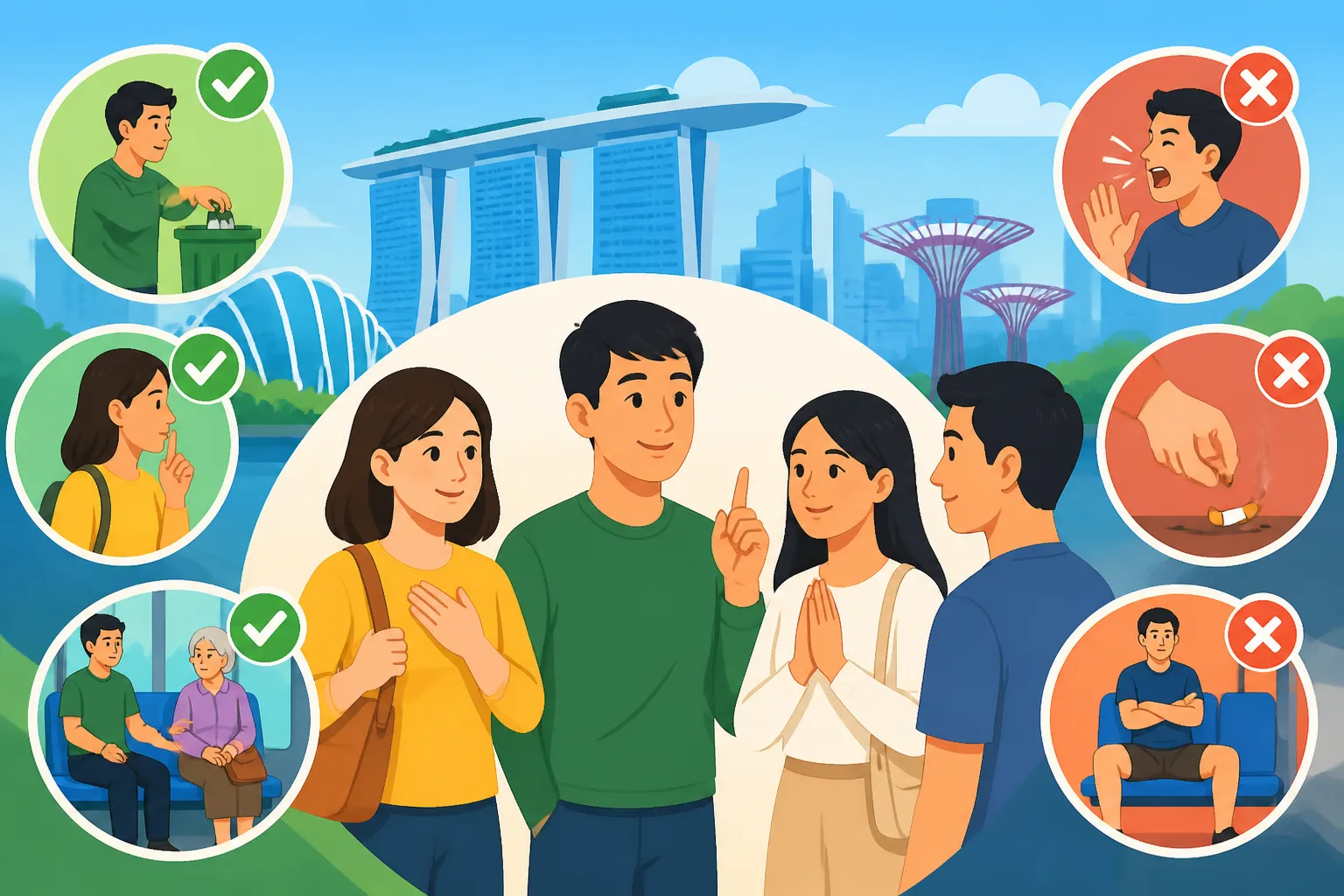
In terms of personal space, Singapore is a dense city, and you’ll find yourself in close proximity to others quite often, especially on public transport. However, there’s still an expectation of respecting others’ personal bubbles where possible. Avoid overly loud conversations on your phone, especially on the MRT or bus. Don't spread your belongings across multiple seats when others are standing. If you're carrying a backpack on a crowded train, it’s good etiquette to take it off and hold it in front of you to free up space. These small considerations contribute to a smoother experience for everyone.
Dining Etiquette: Hawker Centres to Fine Dining
Singapore’s food scene is legendary, from bustling hawker centres to Michelin-starred restaurants. While the culinary experiences vary wildly, there are some consistent threads of dining etiquette. At hawker centres, the atmosphere is generally casual and communal. Sharing tables, especially during peak hours, is common and perfectly acceptable. Don’t be surprised if you’re asked, "Is this seat taken?" or if someone gestures to an empty spot at your table. A nod is usually enough to signal it’s free.
When it comes to paying, remember Tipping in Singapore: Why the 10% Service Charge Covers It. Unlike many Western countries, tipping is generally not expected, and in many places, it’s even discouraged. Most restaurants include a 10% service charge and 8% Goods and Services Tax (GST) in the bill, and that’s considered sufficient. Attempting to leave an extra cash tip might even cause confusion or embarrassment for the staff. At hawker centres, it's simply unheard of; you pay for your food and go.
Table manners are generally refined. While slurping noodles might be acceptable in some Asian cultures, it’s generally not here in a formal setting. Chewing with your mouth open or talking loudly with food in your mouth is definitely frowned upon. Using your phone at the table is common, but try not to be completely engrossed if you're dining with others. If you're at a more formal dinner, wait for the host to indicate when it’s appropriate to start eating. These little things show respect for your dining companions and the effort put into the meal.
Noise Levels and Community Harmony
Living in a densely populated urban environment like Singapore means that maintaining a sense of peace and quiet is highly valued, especially in residential areas. This is why noise complaints can be taken quite seriously. If you're hosting a party, be mindful of the volume, especially after 10 PM. Loud music, boisterous conversations, or even excessive renovation noise can quickly lead to disgruntled neighbours and, potentially, an official complaint. You might think, "It's just a bit of noise," but in high-rise living, sound travels, and continuous disturbances can significantly impact others.
Construction and renovation work in residential buildings usually have designated hours, often stopping by early evening. If you’re planning any home improvements, it’s good practice to inform your neighbours beforehand, perhaps with a simple note, to manage expectations. Similarly, if you have young children, be aware of their noise levels, especially during quiet hours. While neighbours are generally understanding, prolonged loud play or crying can become an issue. This often comes up in discussions about Noise Complaints and Neighbor Etiquette: Dealing with Renovation Noise. The key here is proactive communication and being considerate of your shared living space.
It extends to public spaces too. While hawker centres are buzzing and lively, you won't find people shouting across tables. On public transport, as mentioned, keeping your phone conversations quiet is expected. It's about collective harmony – not disturbing the peace that everyone values. This applies even to seemingly minor things like children running wildly through quiet indoor spaces or loud music from headphones bleeding into others' personal space. A quiet, unobtrusive presence is generally preferred in most public settings.
Keeping Singapore Clean and Green: Environmental Laws and Norms
Singapore's reputation for cleanliness isn't accidental; it's a testament to rigorous environmental laws and a pervasive culture of civic responsibility. As an expat, you’ll quickly learn that contributing to this pristine environment isn’t just encouraged, it’s often legally mandated. Embracing these norms helps you become a more responsible resident and, frankly, avoids costly fines.
Littering, Chewing Gum, and Smoking Regulations
Let's address the elephant in the room: the strict anti-littering laws. Throwing even a tiny candy wrapper on the ground is a no-no. You'll struggle to find litter anywhere, and this is because there are substantial fines for littering, which increase with subsequent offences. The message is clear: put your rubbish in a bin. If there isn't one immediately available, hold onto it until you find one. This is one of the most visible aspects of Singapore's "fine city" culture, and it’s something you’ll adapt to very quickly. This strict approach is a core reason for the city's pristine appearance.
The infamous chewing gum ban still perplexes many newcomers. While it’s not illegal to possess or consume chewing gum (there are therapeutic dental gums available by prescription), it is strictly prohibited to import or sell gum, and certainly to discard it improperly. Trying to discreetly chew gum and spit it out will likely land you in trouble. It’s a classic example covered by Strict Laws: Chewing Gum, Littering, Jaywalking, and Smoking Zones. My advice? Just skip the gum while you're here; it's easier and prevents any accidental slip-ups.
Smoking regulations have become increasingly stringent. Smoking is prohibited in most indoor public places, including shopping malls, cinemas, offices, and even common corridors of HDB flats. Increasingly, outdoor public areas are also designated as smoke-free, such as covered walkways, bus stops, and within 5 meters of bus stops. Designated smoking areas are usually clearly marked, often with yellow boxes on the ground. Be extremely careful about where you light up; smoking outside these areas can lead to a hefty fine. Also, be aware that even if you live in a condo, there might be rules about smoking on balconies. The question of Can You Smoke on Your Own Condo Balcony in Singapore? is a common one, and the answer often depends on your specific condo's by-laws and whether smoke drifts to neighbours. Always check with your management or be considerate.
Recycling and Waste Disposal Practices
While Singapore is incredibly clean, its recycling efforts are still evolving, and the system might differ from what you’re used to back home. Generally, HDB flats and condominiums have dedicated recycling bins or chutes. Blue recycling bins are typically found at the ground level of HDB blocks or within condo estates for residents to deposit their recyclables. The general rule of thumb is that these bins accept paper, plastic, glass, and metal, but it’s always best to rinse food containers before depositing them.
For general waste, most HDB flats have a refuse chute either within the apartment (for newer flats) or on each floor in the common corridor. Condominiums usually have a central refuse collection point or a chute system. It's important to bag your rubbish properly to prevent pests and odours. For bulky items like old furniture, you can’t just leave them by the refuse chute. HDB residents can contact their Town Council for bulky item removal services, often free or for a nominal fee. Condo residents should check with their management for their specific disposal procedures. Understanding these practices is key to contributing to the city's overall cleanliness and hygiene.
There's also a strong emphasis on not littering even in nature parks or beaches. The idea is to leave no trace. If you pack a picnic to East Coast Park, be sure to pack out all your rubbish. This collective effort ensures that Singapore's green spaces remain beautiful and enjoyable for everyone. It's a fundamental part of living here, and one that most expats quickly come to appreciate and embrace.
Transport Etiquette and Road Rules: Getting Around Respectfully
Singapore’s public transport system is a marvel of efficiency and cleanliness, and that’s largely due to a combination of excellent infrastructure and strict rules about passenger conduct. Whether you're commuting on the MRT or navigating the roads in a car, understanding and adhering to these guidelines ensures a smooth and respectful experience for all.
MRT and Bus Rules: Eating, Drinking, and Personal Conduct
One of the first rules you’ll likely learn when you step onto an MRT train or bus is the absolute prohibition against eating and drinking. This isn't just a polite suggestion; it's a strict rule enforced with fines. A stray crumb or a spilled drink can attract pests and create an unpleasant environment for other commuters, so the authorities take it very seriously. Even chewing gum (if you managed to bring some in) falls under this rule. This stricture is explicitly detailed in information like Why You Should Never Eat or Drink on the MRT (Fines Explained). So, finish your coffee or snack before you board, and definitely don't try to sneak a sip or a bite during your journey.
Beyond eating and drinking, general conduct on public transport is also important. Keep your conversations at a reasonable volume, and if you're listening to music or watching videos, use headphones, ensuring the volume doesn't disturb those around you. Offering your seat to the elderly, pregnant women, or those with disabilities is not just polite; it's a deeply ingrained social norm. You’ll often see locals automatically vacating priority seats or even regular seats for those who need them more. It’s a quiet act of kindness that speaks volumes about the collective consideration in Singaporean society.
When getting on and off trains or buses, remember to queue orderly and allow passengers to alight before attempting to board. Stand clear of the train doors, especially when they're closing, and don't block the aisles or doorways. Utilising systems like SimplyGo: Tapping Your Credit Card or Phone for Bus and Train Fares makes payment seamless, further contributing to the efficiency of the system. Overall, public transport is seen as a shared space that requires mutual respect and consideration to function optimally.
Driving in Singapore: Road Rules and Parking Fines
If you decide to drive in Singapore, prepare for a system that is incredibly efficient, but also rigorously enforced and financially demanding. Road rules are clear, often with heavy penalties for infractions. Speeding, illegal U-turns, and running red lights are all met with significant fines and demerit points, which can quickly lead to license suspension. Cameras are everywhere, so assume you're being monitored. Defensive driving is key, and adhering to speed limits (which are often lower than in many Western countries) is paramount.
Parking is another area where strict adherence to rules is essential. Parking illegally, even for a few minutes, can result in a fine or even your car being towed. Parking lots often require payment via coupon systems (found at convenience stores), apps like Parking.sg, or Electronic Road Pricing (ERP) gantries for certain city areas during peak hours. Always double-check the signs and ensure your payment is properly displayed or registered. The costs associated with driving, from the Certificate of Entitlement (COE) to road tax and insurance, are astronomical, as detailed in articles like The Costs of Maintaining a Car: Road Tax, Insurance, and Petrol. So, getting a fine on top of all that is certainly something you'll want to avoid.
Jaywalking, while not car-related, is also a serious offense in Singapore and can result in a fine. Always use designated pedestrian crossings, overhead bridges, or underpasses. The logic is simple: keep pedestrians and vehicles separated to ensure safety. Trying to dash across a busy road might save you a minute, but it could cost you a fine, or worse, an accident. The entire transport ecosystem is designed for order and safety, and every rule plays a part in that grand design.
Online and Digital Etiquette: Navigating the Virtual Space
In an increasingly digital world, Singapore extends its emphasis on public order and respect into the virtual realm. The laws governing online conduct are robust, and it's crucial for expats to understand these to avoid inadvertently landing in trouble or causing offense. The internet here is not a free-for-all; it's an extension of public space where civility is expected.
Cyberbullying and Defamation Laws
Singapore has comprehensive laws against cyberbullying and defamation, particularly under the Protection from Harassment Act (POHA). This act makes it an offence to harass, alarm, or distress another person through communication of any kind, including online. This means that engaging in online arguments, making threatening comments, or even repeatedly sending unwanted messages can have legal consequences. For expats, it’s a stark reminder that what might be considered "trolling" or heated debate in other countries can be taken much more seriously here.
Defamation laws are also quite strict. Spreading false or malicious information about an individual or an entity (like a company or even the government) online can lead to legal action. This includes comments made on social media, forums, or even private messaging groups that become public. The threshold for what constitutes defamation can be lower than in some Western jurisdictions. My advice? Think twice before posting anything negative or critical about individuals or organisations, especially if it's not verifiable fact. It's better to err on the side of caution and maintain a respectful tone in your online interactions. Remember, digital footprints are permanent, and what you post online can impact your reputation and legal standing.
Social Media and Freedom of Speech
While Singapore values freedom of speech, it’s important to understand that this freedom is not absolute and is often balanced against societal harmony and public order. Laws like the Sedition Act, the Maintenance of Religious Harmony Act, and the Protection from Online Falsehoods and Manipulation Act (POFMA) regulate online content. This means that posting content that is deemed seditious, promotes religious or racial hatred, or spreads deliberate falsehoods can lead to severe penalties.
For expats, this is particularly pertinent. It's easy to forget that what you post on your private social media accounts could still be seen and interpreted differently in a Singaporean context. Public criticism of the government, religious institutions, or racial groups, even if intended as commentary or satire, can be viewed as undermining social cohesion. You may have strong political opinions from your home country, but expressing them too vocally or critically about Singaporean affairs online can be problematic. This means exercising discretion and being mindful of the local context. If you want to discuss local issues, engage respectfully and constructively, avoiding inflammatory language. It's about being a responsible digital citizen and understanding that online actions have real-world consequences in Singapore.
When it comes to communication, many people rely heavily on apps. If you're using a local SIM, services are cheap and fast. If you’re often travelling outside Singapore but want to stay connected on your main number, consider getting an eSIM from a provider like Airalo, which helps you avoid roaming charges but keep your local WhatsApp number active.
Cultural Sensitivities and Harmony: Respecting Singapore's Multicultural Fabric
Singapore is a vibrant melting pot of cultures, religions, and ethnicities. This diversity is celebrated, but it also means that cultural sensitivity is paramount. As an expat, showing respect for the local traditions and beliefs of others isn't just polite; it's essential for harmonious living and demonstrates your commitment to being a good resident.
Religious and Racial Harmony Laws
One of Singapore's foundational pillars is its commitment to racial and religious harmony. The government actively fosters an environment where different communities coexist peacefully, and any acts that incite hatred, discrimination, or cause offence to any racial or religious group are taken very seriously. The Maintenance of Religious Harmony Act and various other laws are in place to ensure this.
What does this mean for you as an expat? It means being incredibly mindful of your words and actions, both online and offline. Making derogatory jokes about race or religion, spreading stereotypes, or engaging in any form of discrimination is completely unacceptable and can have severe legal consequences, including fines and imprisonment, or even deportation. Even seemingly innocent comments can be misinterpreted or cause unintended offence. This includes comments made in casual conversation or even via private messages if they lead to wider dissemination.
When interacting with people from different backgrounds, try to be open-minded and respectful. If you're unsure about a particular custom or tradition, it's better to observe quietly or politely ask questions than to make assumptions or inadvertently cause offence. The beauty of Singapore lies in its diversity, and embracing this means actively contributing to a respectful and inclusive environment. It's a common point of discussion, much like Dealing with Micromanagement: Cultural Adjustments for Western Expats, which highlights the broader need for cultural adaptation.
Dress Codes for Temples, Mosques, and Formal Occasions
Visiting places of worship, such as temples, mosques, or churches, often requires specific dress codes as a sign of respect. For mosques, women typically need to cover their heads, shoulders, and knees, and men should wear long trousers and a shirt. Many mosques provide cloaks and headscarves for visitors at the entrance. Buddhist and Hindu temples usually require modest attire – shoulders and knees covered – and often ask you to remove your shoes before entering certain areas. While not strictly enforced for tourists at all times, adopting conservative attire demonstrates respect for the sanctity of the place.
For formal occasions, Singaporeans generally dress smartly. If an invitation says "smart casual," it usually means more polished than jeans and a t-shirt. For men, a collared shirt with trousers is typically appropriate, and for women, a smart dress or blouse with a skirt/trousers. Dressing in an air-conditioned office might even involve a blazer. If you're unsure, it’s always better to overdress slightly than to be underdressed. You can get a better sense of this by looking into resources like What Does "Smart Casual" Mean in Singapore?.
In day-to-day life, dress is generally casual and comfortable due to the tropical climate, but public decency is still expected. Wearing overly revealing clothing in family-friendly public spaces might draw stares, though it's not illegal. Singapore is a fairly conservative society, and while it's becoming more open, modesty is generally appreciated in public settings.
Alcohol and Public Order: Understanding the Rules
While Singapore offers a vibrant nightlife, the consumption of alcohol, particularly in public spaces, is subject to specific regulations aimed at maintaining public order and safety. It's crucial for expats to be aware of these rules to avoid any unwelcome encounters with the law.
Public Drinking Restrictions and Designated Areas
The Liquor Control (Supply and Consumption) Act implemented in 2015 significantly tightened regulations around public drinking. Under this act, there are designated "no-go" areas and specific time restrictions for alcohol consumption in public places. Generally, it is prohibited to consume alcohol in public places between 10:30 PM and 7:00 AM. This includes parks, HDB void decks, open fields, and even along the street.
The Geylang and Little India areas are designated as Liquor Control Zones and have even stricter rules, with public drinking generally prohibited from 7:00 PM on Saturdays to 7:00 AM on Mondays, and from 7:00 PM on the eve of public holidays to 7:00 AM the day after the public holiday. These zones are usually clearly marked with signs.
What does this mean for your Friday night drinks? If you're purchasing alcohol from a shop or convenience store, it's prohibited to sell it for takeaway after 10:30 PM. If you're enjoying drinks with friends, ensure you're doing so within a licensed premise like a bar, restaurant, or within the privacy of your own home. Having an outdoor picnic with a bottle of wine after 10:30 PM in a public park could land you in trouble, so it's best to wrap up before the cut-off time.
Penalties for Disorderly Conduct and Drunkenness
Beyond the time restrictions, simply being drunk in public and behaving in a disorderly manner can lead to serious consequences. Singapore has laws against public nuisance and behaving in a manner that causes annoyance, harassment, or distress. This applies whether you've been drinking or not, but alcohol often exacerbates such behaviour.
Engaging in fights, shouting, causing disturbances, or any form of anti-social behaviour while intoxicated can lead to arrest, fines, or even imprisonment. The police take public order very seriously, and maintaining a peaceful environment is a high priority. Even seemingly minor incidents like arguing loudly with a friend could attract police attention if it escalates or disturbs others.
My advice is always to drink responsibly. If you're out having a good time, ensure you're aware of your surroundings and your behaviour. Know your limits, and if you’ve had a few too many, it’s always best to head home via a taxi or ride-hailing service rather than risking a public incident. The penalties for such offences are not light, and as an expat, any brushes with the law could also impact your visa status. Enjoy the vibrant nightlife, but always keep public decorum in mind.
Dealing with Minor Infringements and Seeking Clarity
Even with the best intentions, it's possible for expats to accidentally fall foul of a minor rule or social norm in Singapore. The key is knowing how to respond and where to seek accurate information, rather than panicking or making the situation worse. Transparency in regulations is generally high, so resources are available.
How to Pay Fines and Lodge Appeals
Let's face it, getting a fine is never fun, especially in a new country. However, if you do receive a summons for an offence (e.g., littering, traffic violation, public transport infraction), the process for payment is usually quite straightforward. Most fines can be paid online via the respective government agency's portal (e.g., National Environment Agency for littering, Traffic Police for road offences, Land Transport Authority for MRT/bus issues). The summons typically includes instructions on how and by when to pay. Prompt payment is advised, as late payments can incur higher penalties or further action.
In some cases, you might feel that a fine was issued unfairly or that there were mitigating circumstances. You generally have the right to lodge an appeal. This process is also usually detailed on the summons or the agency's website. You'll typically need to submit a written explanation, providing any relevant evidence or context. Be polite, factual, and concise in your appeal. Avoid emotional language or accusations. While appeals are not guaranteed to be successful, they are reviewed on a case-by-case basis. It's important to remember that during the appeal process, the fine payment deadline might still apply, so clarify this with the agency. For matters that involve larger disputes, there are also avenues like the Small Claims Tribunal, but for minor fines, an appeal to the issuing agency is the first step.
Where to Find Official Information and Legal Aid
Navigating Singapore's rules and regulations can feel overwhelming, but there's a wealth of official information readily available. For legal matters, the Singapore Statutes Online website provides access to all acts of Parliament, giving you the official text of any law. Government agency websites (e.g., Ministry of Manpower, Immigration and Checkpoints Authority, National Environment Agency) are excellent resources for specific regulations pertinent to their areas. Always rely on these official sources rather than unverified information from social media or unofficial forums.
If you find yourself in a more complex situation that might require legal advice, there are several avenues for assistance. The Law Society of Singapore offers a referral scheme to connect individuals with lawyers specializing in various fields. For minor issues or initial consultations, community legal clinics or pro bono services might be available, particularly for those who meet certain income criteria. As an expat, if the issue is related to your visa or employment, consulting with an immigration lawyer or your company's HR department might be the first port of call. When considering bigger life changes, like moving from Singapore, resources like Sirelo can help you compare removal services, but for legal advice, always stick to verified legal professionals.
For those simply looking for general guidance on living in Singapore, official government portals like the Singapore Government Agency Directory can point you to the right department for various queries, from municipal services to lifestyle advice. It's all about knowing where to look and being proactive in your search for accurate, reliable information.
| Offence/Violation | Common Consequence (Approx.) | Social Perception |
|---|---|---|
| Littering (small items) | S$300 fine (first offence) | Highly frowned upon, seen as disrespectful to public. |
| Spitting in public | S$300-S$1000 fine | Unhygienic, deeply disliked. |
| Eating/Drinking on MRT/Bus | S$500 fine | Ignorant of local rules, can annoy fellow commuters. |
| Public drinking (after 10:30 PM) | Up to S$1,000 fine | Disruptive, disrespectful of public order. |
| Jaywalking | S$50 fine, up to S$1,000 | Reckless, dangerous, can cause traffic accidents. |
| Not flushing public toilet | Up to S$150 fine | Very unhygienic, inconsiderate. |
| Smoking in prohibited area | S$200-S$1,000 fine | Disregard for public health, can lead to complaints. |
| Queue cutting | Social disapproval | Rude, impatient, disrupts fairness. |
| Disrespecting "Chope" | Social disapproval | Rude, inconsiderate, especially in hawker centres. |
| Loud noise in residential area | Verbal warning, police visit | Disrespectful to neighbours, disrupts harmony. |
| Public nudity / Indecent exposure | Fine/Imprisonment | Extremely offensive, highly illegal. |
Disclaimer
The information provided in this guide is for general informational purposes only and does not constitute legal, financial, or professional advice. While every effort has been made to ensure accuracy and relevance, laws and regulations in Singapore can change, and individual circumstances may vary. Expats are strongly encouraged to consult official government websites, legal professionals, or relevant authorities for the most current and specific information pertaining to their situation. Reliance on any information in this guide is solely at your own risk.