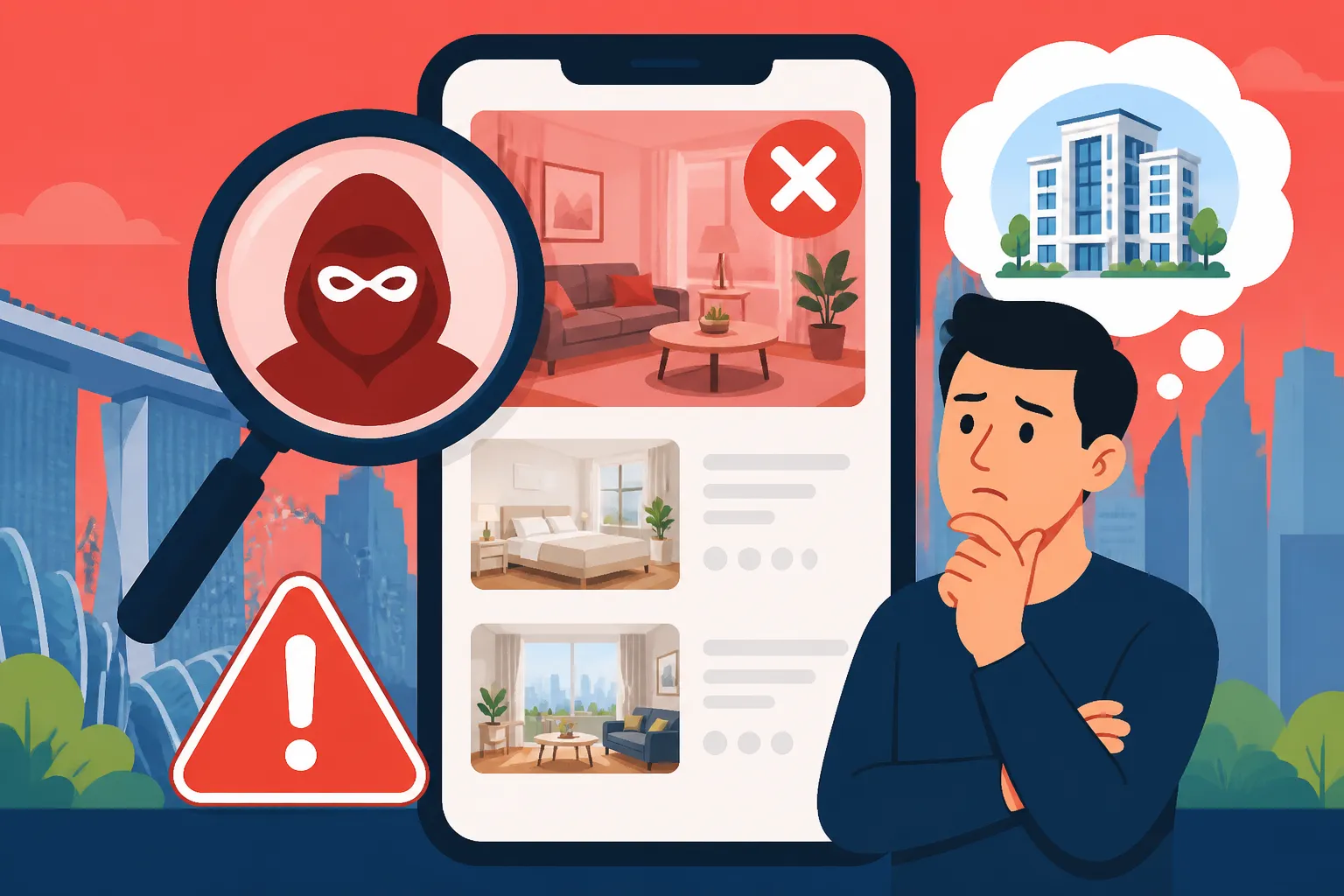
How to Spot Fake Rental Listings on PropertyGuru or 99.co
Landing in Singapore, you're hit with a mix of excitement and, let's be honest, a good dose of anxiety, especially when it comes to finding a place to live. The rental market here is notorious for its speed, its competitiveness, and unfortunately, its traps. This guide is dedicated to helping fellow expats navigate the tricky waters of online rental listings on platforms like PropertyGuru and 99.co, arming you with the knowledge to spot fake listings and protect yourself from rental scams.
The Allure of a "Steal" and How Scammers Exploit It
It's no secret that accommodation in Singapore can be eye-wateringly expensive. You arrive with a budget, a dream, and maybe a little bit of desperation, especially if you're trying to secure a place while still overseas. This very vulnerability is what scammers prey on. They understand the pressure you're under to find something decent, affordable, and in a good location, making those "too-good-to-be-true" listings incredibly tempting.
Think about it: you've been scrolling for hours, comparing prices, and everything seems to hover around a certain (high) baseline. Then, suddenly, you see a stunning condo in a prime district like Orchard or River Valley, with gorgeous furnishings, modern amenities, and the rent is somehow significantly lower than anything comparable. Your heart leaps. Your brain, already tired from endless searching and converting SGD to your home currency, wants to believe it. This is exactly the moment to put your guard up. Scammers know that the promise of significant savings on something seemingly perfect is a powerful motivator that can override common sense. They're playing on your desire for a smooth, affordable transition, turning it into an opportunity to defraud.
The psychological game is subtle but effective. You might think, "Maybe I just got lucky!" or "Perhaps the landlord is a really nice person who just wants a reliable tenant and isn't greedy." This narrative is carefully constructed by fraudsters who mimic legitimate listings, often stealing photos and details from real properties that were once on the market. They tap into that deep-seated expat frustration about the cost of living here, offering a seemingly easy way out of the financial squeeze. Before you get swept away by the dream, remember that in Singapore's competitive rental landscape, genuine bargains are rare, and suspiciously low prices are almost always a major red flag.
Dissecting the Fake Listing: Key Red Flags to Watch For
When you're sifting through hundreds of listings on PropertyGuru or 99.co, it's easy to get overwhelmed. But training your eye to spot inconsistencies and outright falsehoods is crucial. Many fake listings share common traits that, once you know what to look for, become glaringly obvious.
Unbelievable Prices and Prime Locations
As discussed, this is often the most significant red flag. If you see a fully furnished, spacious condo unit in a highly desirable area like Marina Bay, Newton, or the East Coast, priced at a rate that's 20-30% lower than similar properties in the vicinity, something is definitely amiss. Singapore's rental market, while dynamic, doesn't typically offer such drastic "discounts" without a very clear, legitimate reason (e.g., a short lease remaining, specific clauses, or a very undesirable unit characteristic which would usually be disclosed).
Scammers capitalize on the expat's lack of familiarity with local market rates. They'll pull beautiful photos from an actual luxury condo and attach an absurdly low price tag to it, knowing that many newcomers won't instantly recognize it as a scam. It's often a trap designed to quickly get your attention and draw you into further communication. Always cross-reference the advertised price with other listings in the same building or immediate neighborhood. If it stands out too much, consider it highly suspect.
Vague Descriptions and Generic Photos
A legitimate landlord or property agent wants to showcase the specific features of their unit. This means detailed descriptions of the layout, amenities, nearby conveniences, and sometimes even quirks of the property. Fake listings, however, tend to be vague and generic. They might use boilerplate language like "luxurious living," "convenient location," or "spacious unit" without providing specific details. They often avoid mentioning the floor number, unit number, or specific interior features that would allow you to distinguish it from other units in the same building.
The photos are another critical giveaway. Sometimes they are excessively high-quality, almost like magazine spreads, but then upon closer inspection, they might show architectural styles that don't quite match Singapore's typical housing, or they might be inconsistent in terms of furniture or lighting across different rooms. In other cases, they might be blurry, low-resolution, or clearly Photoshopped. A common trick is to use stock photos or images stolen from hotel websites, presenting a pristine but ultimately generic living space. If you feel like the photos don't quite match the description or seem too perfect, try a reverse image search (more on that later). Also, beware if the photos are limited, perhaps just one or two exterior shots, or only wide-angle shots that hide details.
Pressure Tactics and Urgent Demands
Scammers thrive on urgency. They want to rush you into making a decision before you have time to think critically or perform due diligence. You might encounter phrases like "landlord relocating urgently," "last unit available," or "many interested parties, act now!" These tactics are designed to make you believe you'll miss out on a fantastic deal if you don't commit immediately. They might demand a "holding deposit" or "admin fee" to secure the unit for you, even before you've had a chance to view it or sign a proper Tenancy Agreement.
This pressure often comes with a refusal to meet in person or allow a physical viewing of the property. They'll give excuses like "I'm currently overseas," "my tenant is still living there and doesn't want viewings," or "I'll send the keys once the payment is made." Any resistance to a physical viewing, especially when combined with demands for upfront payment, should set off blaring alarm bells. A legitimate rental process in Singapore always involves a viewing, drafting a proper Letter of Intent (LOI), and then a Tenancy Agreement, with money only changing hands after these steps, not before. Remember to be cautious when learning How to Negotiate Rent in Singapore's Current Landlord Market and always ensure legitimate communication channels.
Communication Quirks and Payment Preferences
Pay close attention to how the "agent" or "landlord" communicates with you. Are their emails full of grammatical errors or unusual phrasing? Do they insist on communicating only through platforms like WhatsApp or Telegram, avoiding phone calls or video calls? While WhatsApp is very common in Singapore for professional communication, an outright refusal to speak over the phone or conduct a video call for verification is suspicious. Their "local" phone number might even turn out to be an international number, or a virtual number.
Crucially, observe their payment instructions. Scammers will often request payment via unusual methods that are hard to trace or reverse, such as Western Union, cryptocurrency, or direct bank transfers to a personal account that doesn't match the purported landlord's name, or even an overseas account. They might even try to get you to download a shady app or click on a suspicious link. A legitimate rental transaction in Singapore involves payment to a verified bank account, typically after the Tenancy Agreement has been signed and all due diligence completed. Be wary of any requests for payment that deviate from standard banking practices in Singapore.
Your Detective Toolkit: Verifying Before You Commit
It's easy to feel helpless when you're caught between desperation and suspicion. But you're not! You have powerful tools at your disposal to verify listings and protect yourself. Don't let scammers intimidate you.
Verify the Agent and Landlord Identity
This is paramount. If you're dealing with an agent, ask for their full name and their CEA (Council for Estate Agencies) registration number. You can then cross-check this information on the CEA Public Register website. Every legitimate property agent in Singapore must be registered and will have a unique registration number. If they can't provide one, or if the number doesn't check out, walk away immediately. It's truly a no-brainer, and yet many expats overlook this crucial step. For more details, read about Engaging a Property Agent: Do You Have to Pay Commission?.
If you're supposedly dealing directly with the landlord, verify their identity. Ask for their NRIC (for Singaporeans/PRs) or FIN (for foreigners) and compare it with the details that would appear on the Tenancy Agreement. You can also ask for proof of ownership – typically a property tax bill or a recent utility bill in their name at the address they are renting out. A genuine landlord will not hesitate to provide these details to a serious prospective tenant. Any reluctance or excuse here is a massive red flag.
Insist on a Physical Viewing (or a Live Video Tour)
Never, ever commit to a property you haven't seen in person. This is the golden rule of renting anywhere, but especially in Singapore where scams are unfortunately prevalent. If you're still overseas, arrange for a trusted friend, colleague, or a verified property agent to conduct a live video tour for you. Ask them to pan the camera around, open cupboards, check water pressure, and show you specific details you're interested in.
A scammer will always find excuses to avoid a viewing. They might say the current tenant is uncooperative, they're overseas, or the keys are with someone else who isn't available. Do not fall for it. No amount of "holding deposit" is worth the risk of losing thousands of dollars to a phantom property. If they absolutely cannot facilitate a physical viewing, it’s a scam. Plain and simple. This process also ties into the importance of Moving In: Conducting the Handover Inventory and Defect Check once you actually secure a place.
Utilize Reverse Image Search
Those beautiful, pristine photos from the listing? They might be stolen. Copy the image and paste it into a reverse image search engine like Google Images or TinEye. If the photos pop up in multiple listings, on different property portals, or even on hotel websites or interior design blogs, you've likely spotted a fake. Scammers are lazy; they'll just grab professional photos off the internet to make their fake listings look appealing.
It’s a simple but incredibly effective way to uncover deceit. This is also where having a reliable mobile connection comes in handy. While you're on the go, perhaps looking at a few listings, having a local SIM with good data coverage means you can do these checks instantly. Consider a travel eSIM from a provider like Airalo when you first arrive to ensure you're always connected and can perform these vital checks.
Scrutinize the Tenancy Agreement and Payment Schedule
A legitimate Tenancy Agreement (TA) in Singapore is a comprehensive legal document. It will clearly outline the landlord's and tenant's responsibilities, the rental period, payment schedule, diplomatic clause (if applicable), security deposit details, and clauses for maintenance (like aircon servicing clauses where tenants pay for minor repairs). Do not sign anything that looks overly simplified, contains unusual clauses, or is riddled with errors.
Before signing, ensure you understand every clause. If you're unsure, seek independent legal advice. Furthermore, clarify the payment schedule. Standard practice involves an initial "good faith deposit" (often equivalent to one month's rent for a one-year lease, or two months for a two-year lease) which then converts into the security deposit. This is paid after the Letter of Intent (LOI) is signed, not before. Subsequent rent is paid monthly. Never pay large sums upfront, especially not for multiple months of rent, unless it's explicitly stated in a verified, legally sound TA, and even then, proceed with extreme caution. Understand the nuances of Initial Rental Costs: Security Deposits, Stamp Duty, and Advance Rent to avoid pitfalls.
Here's a quick comparison of common legitimate practices versus scam indicators:
| Feature | Legitimate Practice | Red Flag (Potential Scam) |
|---|---|---|
| Rent Price | Market rate, comparable to similar properties. | Significantly lower than market rate, "too good to be true." |
| Photos | Clear, consistent, specific to the unit, diverse angles. | Blurry, generic, stock photos, inconsistent, too perfect. |
| Description | Detailed, specific unit features, amenities, nearby. | Vague, generic, boilerplate language, lacks specifics. |
| Agent/Landlord ID | CEA-registered agent, NRIC/FIN of landlord, proof of ownership. | Refusal to provide, fake numbers, inconsistent details. |
| Viewing | Physical viewing easily arranged, or live video tour. | Constant excuses, refusal to show property in person. |
| Communication | Professional, responsive, willing to talk on phone/video. | Poor grammar, evasive, only communicates via text/email. |
| Payment Method | Bank transfer to verified local account after TA signing. | Requests for Western Union, crypto, overseas accounts, or early "holding fees." |
| Urgency | Reasonable negotiation, time for due diligence. | High-pressure tactics, "act now or lose it" messages. |
| Tenancy Agreement | Comprehensive legal document, standard clauses. | Simplified, vague, many errors, unusual clauses. |
What to Do If You Suspect a Scam
Even with all your precautions, you might stumble upon a listing that just feels wrong, or worse, realize you've engaged with a scammer. Don't panic, but do take immediate action.
Report the Listing and the User
The first step is to report the suspicious listing directly on the platform where you found it. Both PropertyGuru and 99.co have mechanisms for users to flag fraudulent or misleading content. Provide as much detail as possible, including screenshots of conversations, the listing ID, and any contact information the scammer provided. This helps the platforms take down the fake listing and prevent others from falling victim.
Beyond the platforms, consider reporting the incident to the Singapore Police Force. You can do this online through their "I-Witness" portal or by visiting a Neighbourhood Police Centre. Even if you haven't lost money, reporting helps the authorities track patterns and potentially prevent future crimes. If you have unfortunately lost money, file a police report immediately and provide all transaction details to your bank. They might be able to intercept the funds, especially if it was a bank transfer to a local account. This can be a distressing time, and understanding your rights or how to address potential financial issues is crucial. Should you face any disputes later, be aware of options like How to Fight an Unfair Deposit Deduction at the Small Claims Tribunal.
Cease All Communication
Once you suspect a scam, cut off all contact with the individual or party involved. Do not respond to their emails, texts, or calls. Block their numbers and email addresses. Engaging further only gives them more opportunities to manipulate you or extract more information. They might try to create new identities or use different numbers to reach you, so remain vigilant.
Remember, these individuals are professional manipulators. They will use every trick in the book to keep you engaged, from threats to false promises. Your best defense is a complete radio silence.
Inform Your Bank and Secure Your Information
If you've made any payments, however small, contact your bank immediately to report the fraudulent transaction. They can advise you on potential recovery steps and help you secure your accounts. If you've shared any personal information beyond what's typical for a rental application (e.g., bank account details, NRIC scan without proper context), monitor your financial accounts and credit report closely for any unusual activity.
Furthermore, if you are planning an international move and have been unfortunate enough to deal with a scammer, take extra care to safeguard your personal data. When choosing international moving services, make sure to vet them thoroughly. A reliable platform like Sirelo can help you find legitimate and reputable moving companies, ensuring that your relocation process is smooth and secure, unlike a scam rental.
Final Thoughts: Stay Alert, Stay Safe
Navigating the rental market in Singapore as an expat can be a rollercoaster of emotions. The excitement of finding your new home should never be overshadowed by the fear of falling victim to a scam. By being aware of the common red flags, meticulously verifying every detail, and trusting your gut feeling, you can significantly reduce your risk.
Always remember that legitimate landlords and agents are professionals who understand the process. They won't pressure you, they won't make unreasonable demands, and they will always facilitate a proper viewing and a clear, legal Tenancy Agreement. Use the available tools, consult official sources like CEA, and don't hesitate to seek advice from trusted expat networks or local friends if something feels off. Your peace of mind is worth more than any "bargain" on a fake listing. When you do find your perfect place, also ensure you know How to Open an SP Group Utilities Account Online as a Foreigner to get settled in without a hitch.
Disclaimer
The information provided in this guide is for general informational purposes only and does not constitute legal, financial, or real estate advice. While every effort has been made to ensure accuracy, the Singapore rental market and its regulations can change rapidly. Always consult with qualified professionals for specific advice tailored to your situation. The author and publisher are not liable for any loss or damage arising from reliance on the information contained herein.