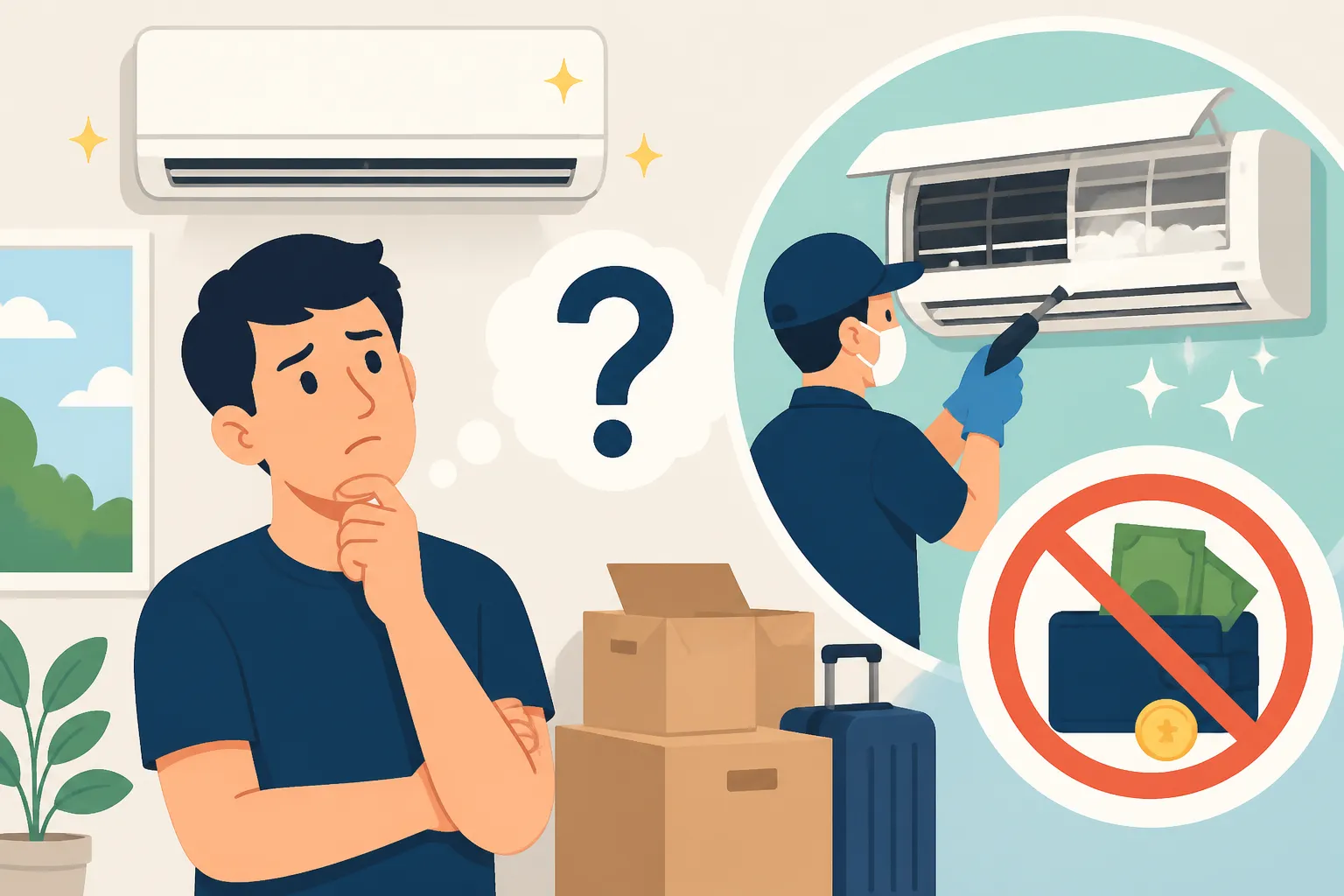
Do I Need to Pay for Chemical Cleaning of the Aircon When I Move Out?
Oh, the dreaded move-out checklist! As if packing up your life in a tropical climate isn't enough, you’re suddenly faced with a laundry list of potential deductions from your security deposit. One of the most common, and often contentious, items is the aircon – specifically, whether you, the tenant, are on the hook for a chemical cleaning when you finally hand over the keys. This guide is here to shed some light on this murky topic, drawing from years of expat experience and the realities of renting in Singapore, so you can navigate your exit with confidence and keep more of your hard-earned cash.
Understanding Your Tenancy Agreement (TA) First and Foremost
Let's be real, most of us expats get handed a hefty Tenancy Agreement (TA) and, in the rush of moving in, probably just skim the fine print. But when it comes to move-out costs, your TA is your bible. It's the primary document that dictates your responsibilities as a tenant, and it's where you'll find the answers to those nagging questions about aircon cleaning. Before you even think about scheduling a chemical wash, pull out that agreement and give it a thorough read.
The "Minor Repair Clause" and Its Ambiguity
Many, many tenancy agreements in Singapore contain a "minor repair clause." This little gem usually states that the tenant is responsible for the first S$100, S$150, or S$200 of any repair or maintenance work during the tenancy. Landlords and agents often try to stretch this clause to cover routine aircon servicing, which is generally acceptable as it's about regular upkeep. You’ll usually find this under sections pertaining to general maintenance.
However, where it gets tricky is applying this to chemical cleaning. A chemical wash is a much more intensive, and expensive, procedure than routine servicing. Unless your aircon unit has significantly deteriorated due to your neglect (like never servicing it at all), stretching the minor repair clause to cover a full chemical cleaning is often an overreach. It's a preventative measure, yes, but also a deeper form of maintenance that arguably falls outside the scope of what most would consider a "minor repair" in the tenant's purview, especially if it's needed purely due to general wear and tear over a long tenancy.
Specific Aircon Servicing Clauses
Beyond the general minor repair clause, most TAs will have specific clauses pertaining to air conditioning maintenance. These usually stipulate that the tenant must arrange for professional servicing of all air-conditioning units once every three months (quarterly) or sometimes every six months. This routine servicing typically includes cleaning filters, checking refrigerant levels, and ensuring the drainage pipes are clear.
What these clauses don't explicitly state is usually the key. If your TA only mentions routine servicing, then performing those regular services and keeping records should be sufficient to demonstrate you've met your obligations. A chemical cleaning, which is a much more comprehensive and less frequent service, is rarely explicitly mentioned unless the landlord is specifically trying to pass on the cost to the tenant – and this should be scrutinised carefully. If it's not in the TA, it’s not automatically your responsibility, plain and simple.
What If Your TA Is Silent on Chemical Cleaning?
This is where many expats find themselves in a bind. If your tenancy agreement doesn't explicitly mention "chemical cleaning" or "overhaul service" for the aircon at move-out, then generally, it's not your contractual obligation. The default position under common law for rental properties is that a tenant is responsible for returning the property in the same condition as received, allowing for "fair wear and tear." This is a crucial distinction.
A certain amount of degradation in appliance performance, including air conditioning units, is expected over time with normal usage. Unless you've actively misused or neglected the units to the point of causing damage that a routine service couldn't fix, demanding a chemical cleaning could be seen as an attempt by the landlord to upgrade the unit at your expense for the next tenant. It’s always good practice to refer back to the clauses discussed in Aircon Servicing and Minor Repair Clauses: What Tenants Must Pay to ensure you are clear on your contractual obligations.
The Difference Between Routine Servicing and Chemical Cleaning
To effectively argue your case (or understand why a chemical cleaning might be justified), you need to know the fundamental difference between standard aircon maintenance and a full chemical wash. These are two very different beasts, with different purposes, frequencies, and costs.
Routine Aircon Servicing: What It Entails (and What It Doesn't)
Think of routine aircon servicing as your car's oil change – regular, essential, and preventative. Typically, a technician will visit every three to six months. During this visit, they'll clean the air filters, check the cooling coil for dust, clear any minor blockages in the drainage pipe, check the refrigerant gas pressure, and generally inspect the unit's performance. The goal is to ensure efficient operation, prevent minor issues from escalating, and maintain air quality. This usually involves a basic cleaning with water and sometimes a mild cleaning agent.
Crucially, routine servicing doesn't involve dismantling the entire unit or soaking components in strong chemicals. It's a surface-level clean combined with functional checks. If you've diligently arranged for these services throughout your tenancy and kept the records, you've fulfilled your part in maintaining the units, demonstrating responsible tenancy. These records are vital, so make sure your technicians provide them.
Chemical Cleaning: A Deeper Dive and Its Purpose
Now, chemical cleaning, or a "chemical overhaul," is a much more intensive procedure. Imagine it as taking your car engine apart and scrubbing every component. During a chemical wash, the technician will often dismantle parts of the indoor unit (like the fancoil and evaporator coils) and sometimes even the outdoor compressor unit. These components are then thoroughly washed with a powerful chemical solution designed to strip away stubborn grime, mold, mildew, and accumulated dirt that routine servicing can't reach.
The purpose of a chemical wash is to restore the unit's efficiency when it's significantly compromised. This could be due to years of neglect, excessive usage in dusty environments, or a build-up of biological contaminants causing foul odours. It's an intervention rather than a routine check-up, often needed only every few years, if at all, for a well-maintained unit. The process is more time-consuming, requires specialized equipment, and is consequently much more expensive.
When Chemical Cleaning Becomes Necessary
So, when is a chemical cleaning genuinely necessary, and when might you be responsible for it? A chemical cleaning is typically recommended when:
- The unit is not cooling effectively: Despite regular servicing, the aircon struggles to cool the room, indicating deep-seated dirt restricting airflow or heat exchange.
- Foul odours: A persistent musty or damp smell emanates from the unit, suggesting mold or bacterial growth within the coils.
- Excessive water leakage: If drainage pipes are severely clogged with sludge and mold, causing water to overflow even after routine flushing.
- Visible heavy grime: You can see significant dirt, mold, or mildew coating the internal components that simple wiping can't remove.
If these issues arise during your tenancy and can be directly attributed to your failure to conduct routine servicing, then yes, your landlord might have a legitimate claim for you to cover the chemical cleaning. However, if you've been a diligent tenant, ensuring quarterly servicing, and these issues appear due to the age of the unit or normal operational wear and tear, then it usually falls under the landlord's responsibility. This is especially true if the unit was already showing signs of age or reduced performance when you first moved in, which is why proper documentation during Moving In: Conducting the Handover Inventory and Defect Check is absolutely crucial.
Navigating Landlord Expectations and Deposit Disputes
This is often the trickiest part of moving out: managing expectations versus actual responsibilities. Landlords want their property back in pristine condition, and sometimes, they push the boundaries of what's fair when it comes to deducting from your security deposit.
The Landlord's Expectation vs. Tenant's Responsibility
Many landlords, or their agents, will try to recoup costs by insisting on a chemical cleaning at the end of a tenancy, even if it's not explicitly in the agreement or truly warranted. Their logic is often that a 'fresh' unit will attract the next tenant, or that any perceived decrease in efficiency must be the tenant's fault. This is where your preparedness and knowledge become your best defence.
It’s important to remember that they cannot simply deduct for a chemical cleaning without justification or a clause in the TA. You are only responsible for damage or excessive depreciation beyond what's considered What Constitutes "Fair Wear and Tear" in a Singapore Apartment?. A unit that's several years old will naturally not perform like a brand-new one, and that's not your fault. It's the landlord's responsibility to maintain their capital assets.
Documenting Aircon Condition Upon Move-In
I cannot stress this enough: document, document, document! When you first move into a property, take detailed photos and videos of everything, especially the aircon units. Photograph the vents, the filters, any visible grime, and note down their working condition. Does it cool effectively? Are there any strange smells? Get this documented in your inventory checklist and ensure both you and the landlord/agent sign off on it.
This initial documentation is your strongest evidence against claims of damage or neglect later on. If the landlord claims the unit is dirty and requires chemical cleaning upon move-out, but your move-in photos show it was already dusty or had minor issues, you have a solid defence. This is critical for protecting your Initial Rental Costs: Security Deposits, Stamp Duty, and Advance Rent at the end of your lease.
Negotiating with Your Landlord or Agent
When the inevitable discussion about deductions arises, approach it calmly but firmly. If your landlord or agent demands a chemical cleaning without it being in the TA, or without clear evidence of tenant-caused damage/neglect:
- Refer to your TA: Point them to the specific clauses (or lack thereof) regarding aircon servicing.
- Provide servicing records: Show them all the receipts and records of your quarterly (or bi-annual) routine servicing throughout your tenancy. This demonstrates you fulfilled your contractual duties.
- Refer to move-in condition: Present your move-in photos and inventory list to show the condition of the aircon at the start of your lease.
- Discuss "fair wear and tear": Explain that general degradation is expected over time and isn't your responsibility.
Sometimes, a partial deduction might be a fair compromise if there's some evidence of neglect, but don't automatically agree to the full cost of a chemical cleaning if it's not justified. Be prepared to negotiate. For general advice on these kinds of negotiations, resources like Sirelo often provide tips on handling move-out disputes with landlords.
When to Consider the Small Claims Tribunal
If negotiations hit a wall and your landlord insists on withholding a significant portion of your deposit for unjustified chemical cleaning or other arbitrary reasons, you have recourse. The Small Claims Tribunals (SCT) in Singapore handle disputes between landlords and tenants for claims up to S$20,000 (or S$30,000 with mutual consent).
While it can feel daunting to go through a legal process, the SCT is designed to be accessible and relatively informal. You would need to submit your claim, attend mediation, and if no agreement is reached, present your case to a Magistrate. This is where all your documentation – TA, servicing records, photos, communication with the landlord – becomes invaluable. For detailed steps on escalating such a dispute, check out How to Fight an Unfair Deposit Deduction at the Small Claims Tribunal.
Practical Steps for Exiting Your Rental with Peace of Mind
Moving out can be a whirlwind, but a little foresight can save you a lot of grief (and money) when it comes to those aircon discussions. Here are some actionable steps to ensure a smooth transition.
Regular Servicing is Your Best Defense
Seriously, don't skip those quarterly or bi-annual aircon servicing appointments. Not only does it keep your unit running efficiently and your utility bills in check (nobody likes a struggling aircon in Singapore's heat!), but it also builds a strong paper trail. Always get a receipt or a service report from the technician, noting the date, the work done, and the condition of the unit. These records are your golden tickets if your landlord tries to claim you neglected the aircon.
Even if your TA is vague, being proactive in maintenance shows due care and responsibility, making it harder for a landlord to pin major issues on you. Think of it as an investment in protecting your security deposit.
Pre-Move-Out Inspection and Communication
Before the actual handover date, try to arrange a pre-move-out inspection with your landlord or their agent. This is a chance to walk through the property together and identify any potential issues early on. Address any concerns they raise about the aircon during this inspection. If they suggest a chemical cleaning, ask for their reasoning and refer back to your TA and servicing records.
This proactive communication can prevent last-minute surprises and gives you time to rectify any actual issues or gather further evidence for your arguments. It also shows you are a reasonable tenant, which can sometimes de-escalate potential conflicts.
Obtaining Professional Quotes
If, after reviewing your TA and exhausting negotiations, you decide (or are compelled) to pay for a chemical cleaning, make sure you get quotes from at least two reputable aircon servicing companies. This helps you understand the market rate and ensures you're not overcharged. Some landlords might try to get you to pay for their preferred (and potentially more expensive) service provider. You have the right to choose your own contractor, as long as they are certified and do a proper job.
Remember, even if you end up footing the bill, doing your due diligence on pricing is crucial. Companies like Daikin or Panasonic have accredited service partners who can provide official quotes, ensuring transparency.
Routine Aircon Servicing vs. Chemical Cleaning: A Quick Comparison
To help clarify the differences and manage expectations, here’s a handy table outlining the key distinctions between routine servicing and a full chemical cleaning for air conditioning units in Singapore:
| Feature | Routine Aircon Servicing | Chemical Cleaning (Overhaul) |
|---|---|---|
| Purpose | Preventative maintenance, maintains efficiency, improves air quality, prevents minor issues. | Deep cleaning to restore efficiency, remove stubborn grime, mold, and severe blockages. |
| Frequency | Quarterly (every 3 months) or bi-annually (every 6 months) as per TA. | Every 1-3 years, or when performance significantly deteriorates despite routine servicing. |
| Process | Cleaning filters, checking gas levels, minor drain pipe flushing, general unit inspection. | Dismantling of indoor (and sometimes outdoor) unit components, chemical wash of coils, extensive flushing. |
| Cost (Estimated) | S$30 – S$80 per unit per session. | S$100 – S$250 per unit (can be more for large or complex units). |
| Time Taken | 30-60 minutes per unit. | 1.5 – 3 hours per unit. |
| Tenant Responsibility | Generally Yes (as per TA, usually covered under minor repair clause or specific aircon clause). Keep records! | Generally No, unless explicitly stated in TA or due to clear tenant neglect/damage. |
| Key Indicator | Unit generally works well, but needs upkeep. | Unit struggling to cool, foul smells, frequent leaks, visible heavy dirt/mold. |
Disclaimer
The information provided in this guide is for general informational purposes only and does not constitute legal advice. While every effort has been made to ensure accuracy, tenancy laws and specific interpretations can vary. It is always advisable to consult with a legal professional or the relevant Singapore authorities (like the Small Claims Tribunal) for advice pertaining to your specific situation and tenancy agreement.