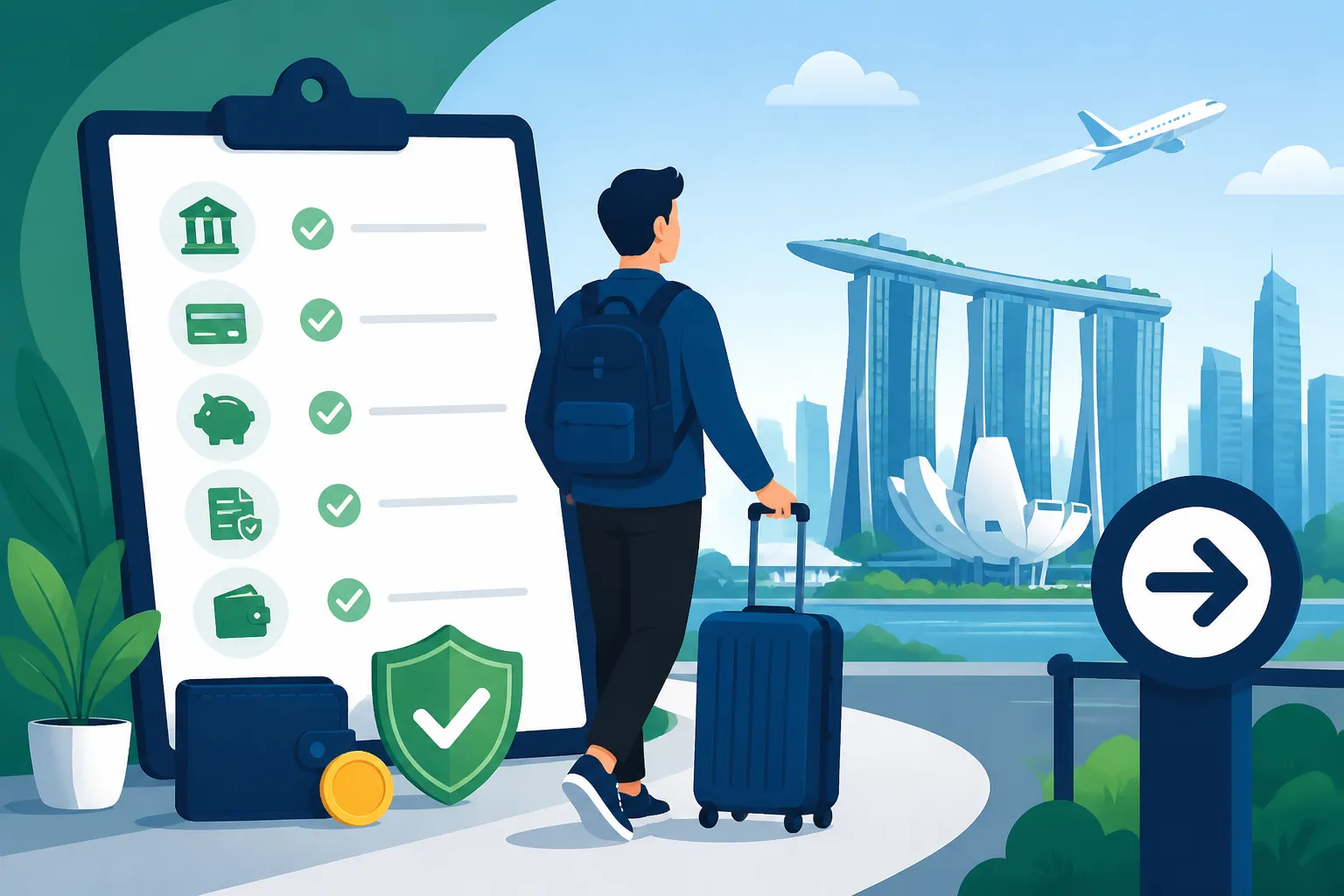
Leaving Singapore: A Step-by-Step Financial Departure Checklist
Deciding to leave Singapore is often a bittersweet cocktail of emotions, but the administrative reality of "de-registering" your life can quickly turn into a logistical nightmare. Between tax clearance, security deposit battles, and closing out accounts, the financial exit is far more complex than just packing a suitcase. This guide provides a meticulous, step-by-step financial departure checklist to ensure you leave the Little Red Dot with your savings intact and your reputation clean.
The Critical First Step: IRAS Tax Clearance and the IR21 Process
In many countries, you simply file your taxes at the end of the year and move on. Singapore is different. The moment you resign or your employment pass is set to be cancelled, the Inland Revenue Authority of Singapore (IRAS) requires a formal "tax clearance." This is legally mandated for all non-Singapore citizen employees. If you don't handle this correctly, you might find yourself stuck at Changi Airport or facing heavy fines later.
The process begins with your employer filing a Form IR21. This must be done at least one month before you cease employment. The most jarring part of this for many expats is the "withholding" phase. By law, your employer is required to withhold all monies due to you—including your final month's salary, any bonuses, and even your unused leave encashment—until IRAS gives the "Green Directive." This directive confirms that you have paid all your taxes and the employer can release the remaining funds. If you are unprepared for this, you may find yourself without a paycheck for several weeks right when you have high moving costs. It is vital to understand The Tax Clearance Process When You Resign and Leave Singapore to avoid a cash flow crisis in your final month.
Beyond the basic salary, you must consider equity. If you were granted stock options or unvested shares during your time in Singapore, these are often subject to a "deemed exercise" rule upon departure. IRAS essentially treats these as if they have vested or been exercised on the day you leave, and you will be taxed on the gain immediately, even if you haven't actually seen a cent from the stocks yet. This can lead to a massive, unexpected tax bill. Consulting a specialist firm like Taxes for Expats can be incredibly helpful here, especially if you are a US citizen who needs to balance these Singaporean "deemed" gains against your home country’s IRS reporting requirements.
Lastly, don't forget to check if you qualify for any final deductions. If you are leaving mid-way through the year, you might still be able to claim reliefs for your spouse or children, or perhaps for course fees you paid earlier in the year. Navigating the Singapore Income Tax for Foreigners: IRAS Rules and Filing (2026) can help you identify these last-minute savings before you submit your final declaration.
Managing Bank Accounts and International Remittance
Once your tax clearance is settled and your final salary is released, the next big question is what to do with your local bank accounts. Many expats make the mistake of closing everything the day they fly out. This is a recipe for disaster. You will likely have final utility bills, credit card statements, or even a security deposit refund that will only arrive weeks or months after you’ve left.
It is generally advisable to keep at least one local account open for 6 to 12 months. This allows you to receive your rental deposit and handle any trailing payments. However, you must update your contact details to an international number or ensure your digital token is working, as you won’t be able to receive local SMS OTPs once you cancel your Singapore SIM card. You should also check Keeping Your Singapore Bank Account Open After Relocating Abroad to see which banks are most "expat-friendly" for long-distance management.
Moving your accumulated savings out of Singapore is another area where costs can quietly bleed your balance. Traditional banks often offer poor exchange rates and high wire transfer fees. For large transfers of your hard-earned SGD to your home currency, using a specialized service like Wise is often the most cost-effective route. Wise provides the mid-market exchange rate and transparent fees, which can save you thousands compared to a standard bank transfer. This is particularly important if you are moving a significant sum, such as the proceeds from a car sale or a returned security deposit.
Before you go, you must also meticulously close out your credit cards. Simply stopping usage isn't enough; you need to call the bank and formally terminate the account. Ensure you have redeemed all your air miles or reward points, as these are typically forfeited the moment the account is closed. If you have any outstanding personal loans or car financing, these must be settled in full before your EP is cancelled, as most banks will "call in" the loan the moment they see your tax clearance notification.
| Task | Timeline | Priority |
|---|---|---|
| Notify Employer for IR21 | 2-3 Months Before | High |
| Review Tenancy Diplomatic Clause | 2 Months Before | High |
| Consolidate Bank Accounts | 1 Month Before | Medium |
| Terminate Utilities (SP Group) | 2 Weeks Before | Medium |
| Remit Bulk Savings (via Wise) | 1 Week Before | High |
| Collect Medical Records | 1 Week Before | Low |
Housing Settlements and Utility Terminations
For most expats, the single largest financial variable during departure is the return of the security deposit. In Singapore, it is standard for landlords to hold two months of rent as a deposit for a two-year lease. Getting this back in full requires a proactive strategy. You should begin by reviewing your contract for the "Minor Repair" and "Professional Cleaning" clauses.
Most tenancy agreements require you to have the air conditioning units professionally serviced and the curtains dry-cleaned just before you move out. You must keep the receipts for these services, as landlords will often use the absence of a receipt as an excuse to deduct hundreds of dollars from your deposit. It is also worth revisiting Getting Your Deposit Back: Navigating End-of-Lease Cleaning and Disputes to understand your rights if a landlord tries to charge you for "fair wear and tear," such as minor scuffs on the floor or fading paint, which are not legally the tenant's responsibility.
Simultaneously, you need to manage your utility accounts. For electricity, water, and gas, you can schedule a termination date via the SP Group app. They will usually conduct a final meter reading on your move-out day. Any credit remaining on your account (from your initial deposit) will be used to offset the final bill, and the balance is usually sent via cheque or GIRO. If you have moved to an Open Electricity Market (OEM) provider, you must contact them separately to avoid a "contract breakage" fee, especially if you are leaving before your fixed-term plan expires.
Regarding your home internet and mobile lines, be wary of the 24-month lock-in periods common in Singapore. If you are leaving 18 months into a 24-month contract, you will likely face a "pro-rated" early termination charge. Sometimes, it is cheaper to "transfer" the contract to a friend who is staying in Singapore than to pay the cancellation fee. Refer to Terminating SP Group Utilities and Claiming Your Initial Deposit for a detailed breakdown of how to handle these final service handovers.
Long-term Assets: CPF, SRS, and Home Country Tax Ties
If you have been in Singapore as a Permanent Resident (PR), the exit process is significantly more complex. You have to decide whether to maintain your PR status or renounce it. If you choose to renounce your PR, you are entitled to withdraw all your Central Provident Fund (CPF) contributions in a lump sum. This includes the Ordinary, Special, and Medisave accounts. While this can be a massive financial windfall, it is a permanent decision—renouncing your PR makes it significantly harder to ever work or live in Singapore again. You can read more about the implications in Renouncing Singapore PR: Withdrawing CPF Funds and Consequences.
For those who have contributed to the Supplementary Retirement Scheme (SRS) to save on taxes, leaving Singapore creates a dilemma. If you withdraw your SRS funds before the statutory retirement age, you will face a 5% penalty, and 100% of the amount will be taxed as income for that year. However, if you are a foreigner and have held the SRS account for at least 10 years, you may qualify for a one-time penalty-free withdrawal under specific conditions. Managing this correctly can save you tens of thousands in taxes.
Finally, your financial departure isn't complete until you’ve considered the "tax tail" in your home country. Many expats forget that while they are "clear" in Singapore, their home country might still have a claim on their final earnings or the capital gains from the sale of assets. For instance, US citizens are taxed on their worldwide income regardless of where they live. Using a service like Taxes for Expats ensures that your final Singaporean tax return and your home country’s requirements are synchronized, preventing double taxation or expensive audits down the line.
If you have a Foreign Domestic Worker (FDW), her exit is also a financial responsibility. You are responsible for her final salary, her flight home, and ensuring her work permit is cancelled correctly. Failure to do this can lead to your security bond being forfeited. Following the Financial Exit Strategy: Closing Accounts and Tax Clearance checklist will ensure that no small detail, from the maid's levy to the final credit card annual fee, is left to haunt you after you've landed in your new home.
Final Financial Checklist for Your Last 30 Days
The final month is a blur of farewell dinners and packing, but you must stay disciplined with your finances. Make sure you have downloaded all your past bank statements and tax assessments from the IRAS myTax Portal. Once your FIN (Foreign Identification Number) is deactivated and your Singpass access is restricted, retrieving these documents becomes a manual, bureaucratic nightmare.
Ensure all GIRO arrangements (automatic bank deductions) are cancelled. Many expats continue to be billed for gym memberships or magazine subscriptions months after they left because they forgot to stop the GIRO. Also, double-check your Expat Health Insurance Portability: Keeping Coverage When You Relocate options. If you were on a company plan, your coverage usually ends the day your EP is cancelled. You may need a "bridge" policy to cover you and your family during the travel period and the first few weeks in your new destination.
Lastly, do a final "sweep" of your apartment with your agent. Take high-resolution photos and videos of everything. This is your insurance policy against a landlord who claims you broke a tile or stained a countertop. With your tax clearance in hand, your Wise account ready for the final transfer, and your apartment handed over, you can head to Changi with the peace of mind that your Singapore chapter is closing on a high note.
Disclaimer
The information provided in this guide is for informational purposes only and does not constitute financial, legal, or tax advice. Regulations regarding tax clearance, CPF withdrawals, and immigration status are subject to change by the Singapore government. You should consult with a qualified professional, such as a certified tax accountant or a legal expert, regarding your specific financial situation before making any major decisions.