Pharmacies and Medication in Singapore: Prescriptions and OTC Rules
Landing in Singapore with a suitcase full of vitamins is one thing, but realizing your life-essential prescription cannot be refilled at the local corner store is a stressful rite of passage for many. I remember vividly the panic of my first month here, standing at a pharmacy counter in Orchard, being told my European prescription was essentially a piece of scrap paper. This guide solves every mystery regarding the Singaporean pharmaceutical system, from legal imports to local dispensing laws.
Navigating the Singapore Pharmacy Landscape
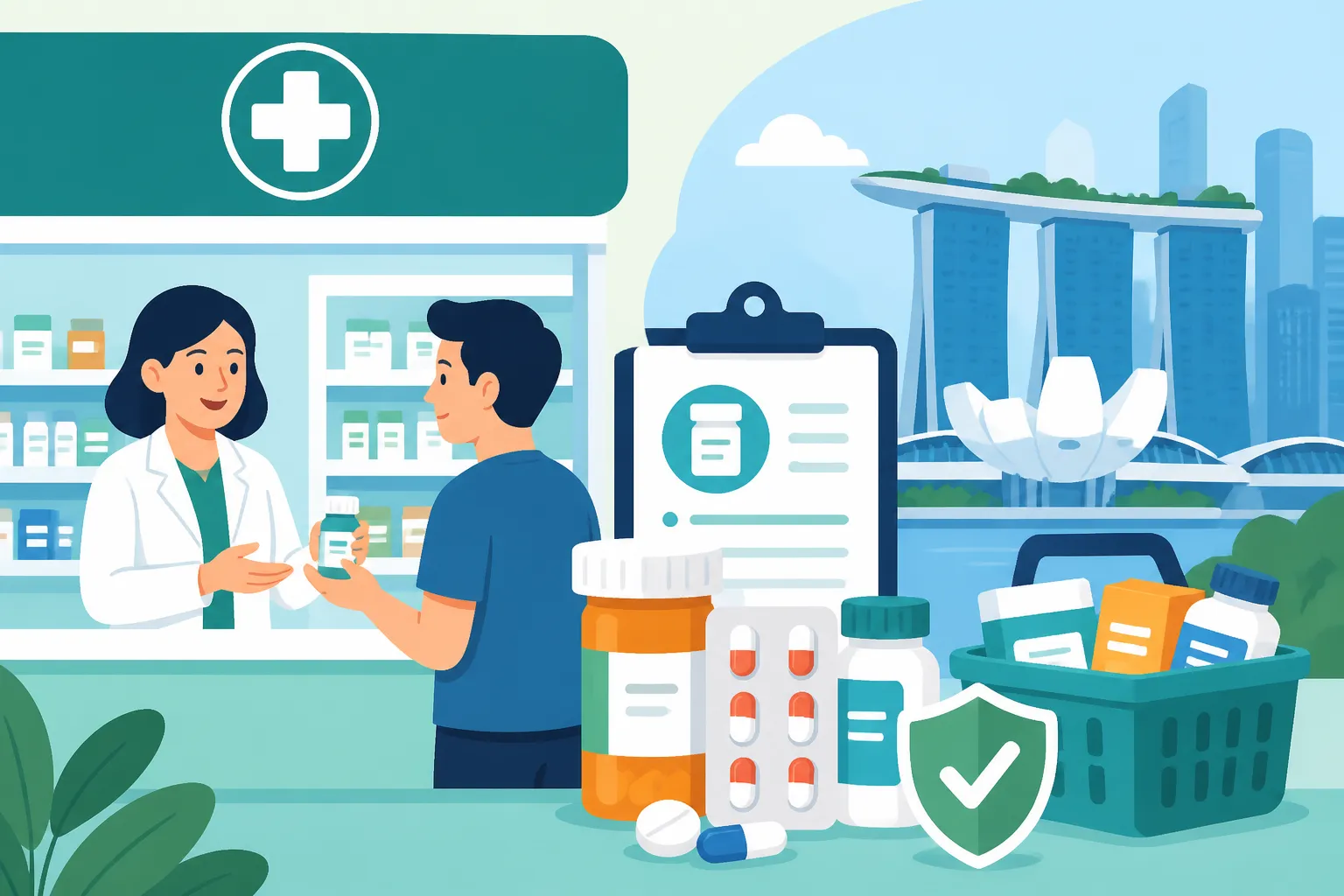
The pharmacy system in Singapore is highly efficient, but it operates under strict regulatory frameworks that might feel restrictive if you are coming from North America or Europe. Here, pharmacies are not just places to pick up a bottle of aspirin; they are tiered medical hubs. You will encounter three main types: retail chains, hospital-based dispensaries, and in-clinic dispensaries managed by General Practitioners (GPs).
Retail Giants vs. Hospital Dispensaries
The two names you will see everywhere are Guardian and Watsons. These are the "big box" retail pharmacies found in almost every shopping mall and MRT station. For an expat, these are your go-to for General Sale List (GSL) items like basic paracetamol, bandages, and skincare. However, not all branches are created equal. Only branches with a "Pharmacist on Duty" sign can dispense "Pharmacy-Only" medicines. If you see the shutters down on a small counter within the store, the pharmacist has likely stepped away, and the staff is legally barred from selling you even a mild decongestant.
Hospital dispensaries, such as those at Mount Elizabeth, Gleneagles, and Raffles: Premium Private Hospitals, operate differently. They carry a much wider range of specialized medications that retail chains simply do not stock. If you require complex biologics, oncology medication, or rare hormone replacement therapies, you will likely spend a fair amount of time at these high-end facilities. The service is impeccably fast, but the price reflects the premium environment. For those on a tighter budget, Singapore General Hospital (SGH) and Public Hospital Access for Expats offers a more cost-effective dispensary, though the wait times can be significant.
In my experience, the most convenient way to get medication is actually through your local GP. Unlike many Western countries where doctors only write scripts, Singaporean GPs often run their own mini-pharmacies. When you finish your consultation, you walk to the front desk, and the clinic assistant hands you your medication directly. This is incredibly convenient for common ailments, but it does mean you might pay a slight markup compared to a public polyclinic.
The Role of the Pharmacist in Singapore
In Singapore, pharmacists are highly respected healthcare professionals who act as a final gatekeeper for patient safety. They are not merely retail clerks. When you present a local prescription, expect a brief but thorough interview. They will ask about your allergies, other medications you are taking, and even your recent diet. This is part of the Health Sciences Authority (HSA) guidelines to prevent adverse drug reactions.
For many expats, the pharmacist is a great first point of contact for non-emergency issues. If you have a mild skin rash or a lingering cough, the pharmacist at a large Guardian branch can recommend "Pharmacy-Only" medications that are more effective than what is on the open shelves. However, they are legally prohibited from "prescribing" anything that falls into the Prescription Only Medicine (POM) category. They cannot "do you a favor" and give you a few days of blood pressure meds while you wait for a doctor's appointment.
One thing that often surprises newcomers is the level of documentation required. If you are purchasing "Pharmacy-Only" medication, such as certain antihistamines or mild codeine-based cough syrups, the pharmacist is required by law to record your FIN (Foreign Identification Number) or Passport number. This is not the store trying to track your shopping habits; it is a mandatory government requirement to prevent the abuse of certain substances.
Understanding Prescription Rules for Foreigners
The most common point of frustration for new arrivals is the invalidity of foreign prescriptions. You might have a signed, stamped letter from your world-renowned specialist back home, but a Singaporean pharmacist cannot legally fulfill it. Singapore law requires a prescription to be issued by a doctor registered with the Singapore Medical Council (SMC).
Why Your Foreign Prescription Is Not Valid
Singapore maintains strict control over its pharmaceutical supply chain to ensure quality and prevent the entry of counterfeit drugs. Because the HSA cannot verify the credentials of every doctor globally or the authenticity of every foreign letterhead, they mandate local oversight. This means a local doctor must take clinical responsibility for the medication you are taking. They need to ensure the dosage is appropriate for the Singaporean context—where factors like heat and humidity might even affect how you store your meds.
When I first arrived, I tried to use a US-issued script for my asthma inhalers. I was politely told that while the pharmacist recognized the drug, they could not dispense it without a local doctor's signature. This is why Finding Medical Care: Hospitals, Polyclinics, and GP Networks should be one of your first tasks upon landing. You need to establish a relationship with a local GP who can "convert" your foreign medical history into a local treatment plan.
This rule also applies to refills. Even if you have an empty bottle with your name and a foreign pharmacy label on it, it serves only as a reference for a local doctor, not as a legal dispensing document. This "double-check" system can feel like a bureaucratic hurdle, but it ensures that your medical records in Singapore are accurate and that you are protected under local medical regulations.
The Process of Getting a Local Prescription
To get a local prescription, you must book a consultation with a GP or a specialist. During this visit, bring your foreign prescriptions, a summary letter from your previous doctor, and any recent lab results. The doctor will review these and, in most cases, issue a local equivalent. It is important to note that the exact brand name you are used to might not be available in Singapore. The doctor will instead prescribe the generic name or a local brand equivalent that has been approved by the HSA.
If you are worried about the cost of these consultations just to get a script, you might want to look into How Much Does a GP Visit Cost for a Foreigner in Singapore?. Generally, a private GP consultation for a simple script renewal will cost between S$30 and S$60, plus the cost of the medicine. If you are using a comprehensive plan from a provider like Cigna Global, these outpatient costs are often covered, which takes the sting out of the mandatory doctor's visit.
Once you have your local prescription, you can choose to buy the medication directly from the clinic or take the paper script to an external pharmacy. If the medication is common, the clinic is usually easiest. However, for chronic conditions, taking the script to a large pharmacy chain or a public polyclinic can sometimes save you 20-30% in the long run. Always ask the doctor for a "carbon copy" or a physical script if you intend to shop around for the best price.
Specialized and Controlled Substances
Singapore has some of the strictest laws in the world regarding controlled substances. This includes many medications that are common elsewhere, such as ADHD treatments (Ritalin, Adderall), strong painkillers (Oxycodone), and certain psychotropic medications (Benzodiazepines). These are classified under the Misuse of Drugs Act and require very specific handling.
If you require these medications, a standard GP might not be able to prescribe them. You will often need to see a specialist, such as a psychiatrist or a pain management expert. These prescriptions are often limited to a 30-day supply, and the pharmacists must keep the original prescription on file, meaning you cannot "reuse" it at different pharmacies.
For those managing mental health conditions, Mental Health in Singapore: Counseling, Psychiatry, and Expat Support is a vital resource. Be prepared for the fact that certain ADHD medications are highly regulated and may require the doctor to apply for a special permit from the HSA specifically for your case. It is a slow process, so never wait until your last pill to seek a refill.
Over-the-Counter (OTC) and Pharmacy-Only Medicines
The way drugs are categorized in Singapore can be a bit confusing. There isn't just a binary "prescription or not" system. Instead, there is a three-tier classification that dictates how you can access medicine.
Understanding GSL, P, and POM Classifications
The first tier is General Sale List (GSL). These are medications deemed safe enough to be sold by anyone, including supermarkets like FairPrice and convenience stores like 7-Eleven. This includes basic paracetamol (Panadol), some throat lozenges, and very mild topical creams. You can grab these off the shelf and head straight to the checkout.
The second tier is Pharmacy-Only (P). These medications do not require a doctor's prescription but must be dispensed by a pharmacist. They are kept behind the counter. This category includes more effective antihistamines (like Zyrtec or Telfast), certain nasal sprays, and "stronger" cough mixtures. The logic here is that these drugs have side effects—like drowsiness or interactions with other meds—that require a professional to explain to you before purchase.
The third tier is Prescription Only Medicine (POM). As the name suggests, you cannot touch these without an SMC-registered doctor’s signature. This includes all antibiotics, most chronic disease medications, and high-strength steroids. In Singapore, there is no such thing as "buying antibiotics over the counter," even if you are certain you have a sinus infection. The government is extremely proactive about preventing antibiotic resistance, so don't expect any flexibility on this rule.
Common OTC Staples and Local Equivalents
If you are looking for your favorite home-country brand, you might need to learn the local lingo. For example, "Tylenol" is virtually non-existent here; instead, you will find "Panadol" everywhere. For ibuprofen, "Advil" is rare, but "Nurofen" or generic Ibuprofen is common.
| Home Country Brand | Singapore Equivalent | Category |
|---|---|---|
| Tylenol | Panadol / Paracetamol | GSL |
| Advil / Motrin | Nurofen / Ibuprofen | GSL / P |
| Benadryl (Diphenhydramine) | Phensedyl (requires pharmacist) | P |
| Claritin / Zyrtec | Claritin / Zyrtec | P |
| Neosporin | Bacitracin / Mupirocin | POM (usually) |
| Pepto-Bismol | Gaviscon / Eno | GSL |
One specific quirk to note: cold and flu medications containing pseudoephedrine (like the original Sudafed) are very strictly controlled. You will not find them on the open shelves. You must ask the pharmacist, provide your ID, and even then, there are limits on how many boxes you can buy in a single transaction. This is to prevent the diversion of these chemicals for illicit manufacturing.
Bringing Medication into Singapore
Many expats choose to bring a "starter pack" of their medications when they first move. This is a smart move, but you must be aware of the HSA's import rules to avoid a very uncomfortable conversation at Changi Airport Customs.
The 3-Month Supply Rule
Generally, the HSA allows travelers to bring up to a three-month supply of personal medications into Singapore without prior approval. This is intended for personal use and should be accompanied by a copy of the prescription or a letter from your doctor. The medication must be in its original packaging with the dispensed label clearly showing your name.
However, "up to three months" is a limit, not a right. If you arrive with a massive suitcase filled with nothing but vitamins and supplements, customs might suspect you are planning to resell them. I always advise my fellow expats to stick to the HSA Approval for Personal Medications: The 3-Month Supply Rule guidelines. If you are on an Employment Pass and planning a long-term stay, use that three-month window to get your local GP sorted rather than trying to ship in meds from home.
High-Risk Medications and HSA Approval
The 3-month rule does not apply to everything. If your medication contains controlled substances (like those for ADHD, strong painkillers, or some sleep aids), you must apply for prior approval from the HSA before you fly. This is done through an online portal and usually takes about 10 working days to process.
If you land without this approval and are carrying controlled drugs, you risk having the medication confiscated, or worse, facing legal charges under the Misuse of Drugs Act. It sounds scary, and it can be, but the HSA is actually quite helpful if you reach out in advance. They simply want to ensure that the medication is legitimate and for your personal use. For more details on what you can and cannot bring, check out Traveling with Controlled Substances: What You Cannot Bring to Singapore.
Costs, Insurance, and Budgeting for Meds
Singapore's healthcare system is world-class, but it operates on a "user-pays" principle for foreigners. Unlike citizens who get heavy subsidies, expats pay the full market rate for their pills.
Price Disparity: Public vs. Private
There is a significant difference in medication pricing between public and private sectors. Public polyclinics and hospitals have a standardized list of medications (the Standard Drug List) which are purchased in bulk by the government. Even without subsidies, the "full price" at a polyclinic is often lower than the retail price at a high-end private clinic in Orchard.
For example, a common cholesterol medication might cost S$1.50 per pill at a private specialist clinic but only S$0.80 per pill at a public hospital dispensary. If you are managing a chronic condition, these cents add up to hundreds of dollars over a year. If you find your medication costs are spiraling, consult Healthcare Budgeting in Singapore: Managing Out-of-Pocket Costs for tips on how to optimize your spending.
Insurance Coverage for Medication
This is where your choice of insurance becomes critical. Most basic corporate plans provided by employers in Singapore have very low limits for outpatient "clinical" costs, often capped at S$500 to S$1,000 per year. This barely covers a few rounds of antibiotics and some flu meds. If you have a chronic condition, you will blow through this limit in weeks.
This is why many veteran expats opt for private "International" plans. Providers like Cigna Global or SafetyWing (especially for those on more flexible or remote arrangements) often offer much higher outpatient limits or even specific riders for chronic condition management. When reviewing your policy, look specifically for the "Pharmacy" or "Outpatient Prescriptions" section. If you are unsure about your current coverage, read Understanding Corporate Health Insurance vs Personal Medical Plans to see if you have a gap that needs filling.
Specialized Medical Needs and Support
If you are moving with a family or have specific health requirements, the pharmacy experience shifts again.
Finding Pediatric and Women’s Health Meds
For parents, Singapore is a dream because pediatric care is exceptionally high-quality. However, Pediatric Clinics: Childhood Vaccinations and School Medical Forms will be your primary source for children's meds. While you can buy Panadol for children at Watsons, anything like specialized eczema creams or nebulizer solutions will usually be dispensed directly by your pediatrician.
Women’s health is also very well-regulated. You can access birth control pills at any pharmacy, but again, you need a local prescription. Many expats are surprised that they need to see a gynecologist or a GP just to get their regular pill refill. For a deeper dive into these options, check out Access to Birth Control Pills and IUD Insertions for Foreigners.
Chronic Disease Management
Managing conditions like diabetes or hypertension in Singapore requires a bit of strategy. Because of the heat, medications like insulin must be handled with extreme care. Most pharmacies and clinics will provide you with cool bags for transport, but you need to ensure your home setup (and your office fridge!) is ready.
If you are on a long-term treatment plan, ask your doctor about "long-term prescriptions." Some doctors can issue a script that is valid for 6 or 12 months, allowing you to collect your meds in smaller batches from a pharmacy like Guardian, rather than visiting the clinic every single month. This saves you the consultation fee and a lot of time. For more on this, see Managing Chronic Conditions: Diabetes and Hypertension Care for Expats.
Digital Health and Convenience
In the last few years, Singapore has embraced health-tech, making it much easier to skip the pharmacy queues entirely.
Telehealth and Online Deliveries
If you have a common ailment—like a cold, a simple skin rash, or you just need a refill of a non-controlled medication you’ve been taking for years—telehealth apps are a lifesaver. Apps like ManaDr, Doctor Anywhere, and WhiteCoat allow you to have a video consultation with a Singapore-registered doctor from your living room.
The best part? After the call, the medication is delivered to your door, usually within 3 to 4 hours. This has revolutionized the expat experience. No more dragging yourself to a clinic when you have a fever just to get a Medical Certificate (MC) and some cough syrup. If you are tech-savvy, Telehealth in Singapore: Using Apps for Consultations and Prescriptions will be your most-read guide.
However, a word of caution: telehealth cannot dispense controlled substances or "high-risk" medications. For those, you still need to make the trip to a physical clinic for a face-to-face assessment. But for everything else, the convenience of digital delivery is hard to beat, and many international insurance plans are now starting to integrate these apps directly into their claims process.
Important Considerations for Expats
As you settle in, remember that Singapore is a "fine city"—both in quality and in the literal sense of the word. Regulations are not suggestions here. Always keep your medications in their original packaging, always have a digital copy of your local prescription on your phone, and never attempt to "import" meds via mail without checking HSA rules first. Packages of pills arriving by courier are frequently intercepted by ICA (Immigration and Checkpoints Authority) and can lead to significant delays or legal inquiries.
If you are ever in doubt, the HSA website has a very handy "Personal Medication" checker tool. Alternatively, walk into any large hospital pharmacy and ask to speak with the pharmacist on duty. They are incredibly knowledgeable and are usually happy to help an expat navigate the local equivalent of their home-country treatment.
Disclaimer
This guide is intended for informational purposes only and does not constitute professional medical or legal advice. Regulations regarding medication and healthcare in Singapore are subject to change by the Health Sciences Authority (HSA) and the Ministry of Health (MOH). Always consult with a qualified medical professional registered in Singapore and refer to official government sources for the most up-to-date rules and requirements.