Reserving a Seat with a Tissue Packet: Understanding “Chope” Culture
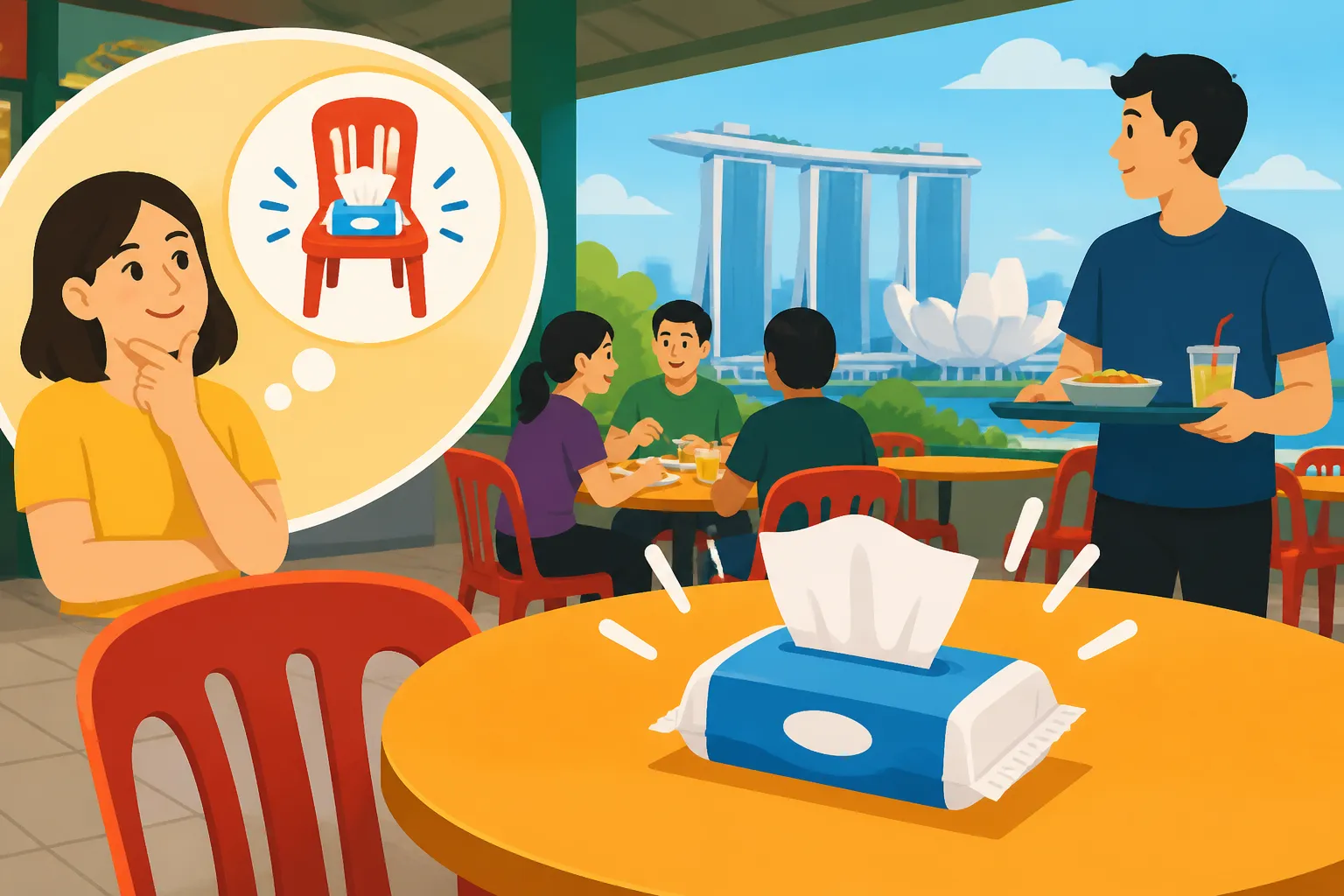
You've just arrived in a bustling hawker centre, the tantalising smells of char kway teow and chicken rice filling the air, and your stomach is rumbling. But then you spot it: a sea of empty tables, each with a lonely pack of tissues, an umbrella, or even a single water bottle sitting squarely in the middle. Your immediate thought might be, "Is this table free? Why are people leaving their belongings unattended?" This guide will demystify "chope" culture, a uniquely Singaporean phenomenon, helping you navigate the local dining scene like a seasoned expat.
What Exactly is "Chope" Culture?
The first time you encounter it, "chope" culture can be utterly perplexing. You’re scanning a packed hawker centre, desperately seeking a spot to perch your weary self and enjoy that delicious meal you’ve just ordered, only to find every seemingly vacant table "occupied" by a packet of tissues. It feels counter-intuitive, almost rude by Western standards, where an empty seat means an available seat. But here in Singapore, it’s an unspoken, universally understood rule, a silent agreement amongst diners.
The Unwritten Rule of Seat Reservation
At its heart, "chope" is the practice of reserving a table or seat, usually in a public dining area like a hawker centre or food court, by placing a non-valuable item on it. That little packet of tissues isn't lost or forgotten; it's a declaration: "This spot is taken, I'll be back!" It’s a brilliant, if slightly chaotic, system that allows people to secure a table before they brave the long queues for their favourite hawker dish. Imagine queueing for 20 minutes for laksa, only to find nowhere to sit when you finally get your piping hot bowl. "Chope" solves that problem by letting you reverse the order.
This practice stems from the sheer reality of high-density urban living and the immense popularity of Singapore's hawker culture. During peak lunch and dinner hours, especially in popular spots like Lau Pa Sat or Maxwell Food Centre, finding a table can be a competitive sport. Without "chope," the entire system would grind to a halt, with people either standing awkwardly with their food or simply giving up. For newcomers, it often feels alien, a breach of personal space or an assumption of entitlement, but in Singapore, it's a communal understanding. Understanding these everyday rules and etiquette is crucial for living comfortably here.
Why Tissue Packets Are the Item of Choice
Why a tissue packet, specifically? Well, it’s an ingenious choice for several reasons. Firstly, tissue packets are ubiquitous in Singapore. Everyone carries them, not just for sneezes but for wiping down a table, drying hands, or even fanning oneself in the humidity. So, they’re readily available and often already on hand. They’re also relatively inexpensive and disposable, meaning if one gets misplaced or accidentally taken, it’s not a significant loss. This makes them ideal for temporary claims.
Contrast this with leaving something valuable like your phone, wallet, or even a designer bag. While Singapore is famously safe, leaving highly valuable items unattended, even for a few minutes, is never advisable. The tissue packet perfectly balances visibility with minimal risk. It's visible enough to signal occupancy but holds no intrinsic value that would attract theft. It’s also small and doesn't clutter the table for other patrons walking by. It's truly a multi-purpose item in the Singaporean context, evolving from just hygiene to a vital tool in the dining ecosystem.
Navigating the Hawker Centre: How to "Chope" and Not to "Chope"
Learning the art of "chope-ing" is a rite of passage for any expat in Singapore. Get it right, and you'll smoothly secure your dining spot; get it wrong, and you might find yourself in an awkward staring contest with a local or, worse, without a seat. It's about understanding the subtle cues and respecting the unwritten code that governs these bustling public spaces.
The Right Way to "Chope" a Table
Alright, so you've walked into a packed hawker centre during lunch rush. Here’s the standard operating procedure for a successful chope:
- Spot a Potential Table: First, quickly scan the area for an empty or nearly empty table that fits the size of your dining party. Don't linger too long, as another chope-master might beat you to it!
- Place Your Item: Once you’ve identified your target, swiftly walk over and place your chosen item (preferably a tissue packet) firmly on the table. If it's a shared long table, place it clearly in front of your intended seat(s). For a standalone table, placing it in the centre is common. Make sure it's visible.
- Mentally Note Your Table: Take a quick mental snapshot or note a distinguishing feature – maybe it's next to the drinks stall or under a specific fan. You’ll be navigating through crowds, so you need to remember where you're coming back to!
- Go Order Your Food: Now, and only now, should you head off to queue for your meal. You can relax knowing your spot is secured. If you're with a group, one person can chope while others queue, an efficient team effort that embodies Singapore’s fast-paced culture.
This system might seem rudimentary, but it allows for an efficient flow in an environment where speed and space are at a premium. Having a reliable data plan, perhaps with an eSIM from Airalo, can even help you quickly coordinate with friends to decide which hawker stall to hit up after you've secured your chope!
When "Chope" Etiquette Breaks Down
While "chope" culture is widely accepted, there are definite do's and don'ts that separate a savvy local from a confused tourist. Ignoring these can lead to dirty looks or, at worst, a minor confrontation.
- Don't Chope When It's Empty: If a hawker centre is half-empty, especially during off-peak hours, there’s really no need to chope. It looks a bit silly and isn’t in the spirit of shared scarcity. Just grab a seat!
- Don't Chope a Huge Table for One: While technically allowed, if you’re alone and chope a large table meant for six or more people during a busy lunch hour, you might draw silent judgment. It's considered inconsiderate, especially when smaller tables are available. Try to match your table size to your group size.
- Never Use Valuable Items: We touched on this, but it bears repeating: do not use your phone, wallet, keys, or any other valuable personal item to chope. While Singapore is generally very safe, why tempt fate? The tissue packet is the preferred item for a reason.
- Don't Disappear Forever: Choping is for immediate use while you're getting food. It's not for reserving a table for an hour while you run errands. If you chope a table and then wander off for more than 10-15 minutes, especially when it's busy, someone else might legitimately assume it's abandoned and take your spot. There’s an unwritten time limit, and exceeding it is considered poor form.
- Respect the "Chope": If you see a table with a chope item, even if it looks empty, assume it's taken. Do not remove the item, and do not sit there. It’s a clear signal, and disrespecting it is considered very rude. If you accidentally sit down, apologise and move immediately. You wouldn't want someone to take your table after you've queued for your favourite bowl of laksa, would you? This level of unspoken social contract, like many aspects of Singaporean life, is based on mutual respect and efficiency.
Here’s a quick guide to "chope" etiquette:
| Action | Do's | Don'ts |
|---|---|---|
| When to Chope | During peak hours (lunch/dinner), crowded venues. | When the venue is mostly empty, off-peak. |
| What to Use | Tissue packet, business card, umbrella, water bottle. | Mobile phone, wallet, handbag, passport, laptop. |
| Table Size | Chope a table appropriate for your group size. | Chope a large 6-seater table for just one person during peak hours. |
| Time Limit | For immediate use while ordering food (5-15 minutes). | Chope and then leave for an extended period (more than 20 minutes). |
| If a Table is Choped | Look for another table; respect the existing reservation. | Remove the item and sit down; assume it's abandoned unless clearly so. |
| If Your Chope is Taken | Politely inform the person, or simply find another spot to avoid confrontation. | Get angry or confrontational; it's rare but misunderstandings can happen. |
The Broader Implications of "Chope" in Singaporean Life
Understanding "chope" is more than just knowing where to put your tissue packet; it’s a small but significant window into the broader cultural nuances of Singapore. It reflects how a society adapts to its unique challenges and prioritises efficiency and order, even if it feels a little strange at first glance.
Beyond Hawker Centres: Other Contexts for "Chope"
While "chope" is most famously associated with hawker centres and food courts, the underlying principle of reserving space or indicating intent permeates other aspects of Singaporean life, albeit in less formal ways these days. You might occasionally see it in a less direct form, like someone standing very close to a specific ATM or queue position, silently indicating they're next. In the past, it was common to see people "chope" seats at free public performances or even tables at busy kopitiams (coffee shops). While less prevalent in formal settings, the "kiasu" (a Hokkien term meaning "fear of losing out") mentality that underpins "chope" is a strong current in Singaporean society.
This cultural trait extends to things like queuing for the latest iPhone, reserving a spot for a child in a sought-after preschool, or even the rush to get into the MRT during peak hours. It’s about being prepared, being resourceful, and ensuring you don't miss out on an opportunity in a highly competitive environment. Learning to "chope" successfully is a small victory in navigating these daily competitive landscapes, much like mastering the public transport in Singapore: MRT, Buses, and Commuting Hacks.
Bridging the Cultural Divide
For expats, this can be one of those endearing, yet initially frustrating, cultural adjustments. It's easy to dismiss it as quirky or inefficient, but once you understand the context – limited space, high demand, and a collective desire for efficiency – it begins to make sense. It’s not an act of rudeness; it’s a system born of necessity and maintained by mutual understanding. Embracing "chope" is part of truly settling into Singaporean life. Companies like Sirelo, which help expats with international moves, often highlight the importance of adapting to local customs and practicalities – and "chope" culture is definitely one of them.
My advice to any newcomer is to observe, learn, and then participate. Don't be afraid to pull out your own pack of tissues and chope a spot. It's a small but significant gesture that shows you're engaging with the local culture and adapting to the rhythm of life here. It makes the daily ritual of enjoying a meal at a hawker centre so much smoother. And trust me, once you've successfully chope-d your first table and sat down to a delicious plate of char kway teow, you'll feel like you've unlocked a secret level of expat living. It’s just one of the many unique social norms you'll encounter and, perhaps, even grow to love during your time here. This understanding helps in broader cultural adjustments, like surviving culture shock: directness, kiasu culture, and fast pacing.
Disclaimer
The information provided in this guide is intended for general informational purposes only and does not constitute legal, financial, or professional advice. While we strive to provide accurate and up-to-date information, local regulations, customs, and practices in Singapore can change. Always exercise common sense and verify information with official sources or local authorities when necessary.