Can You Smoke on Your Own Condo Balcony in Singapore?
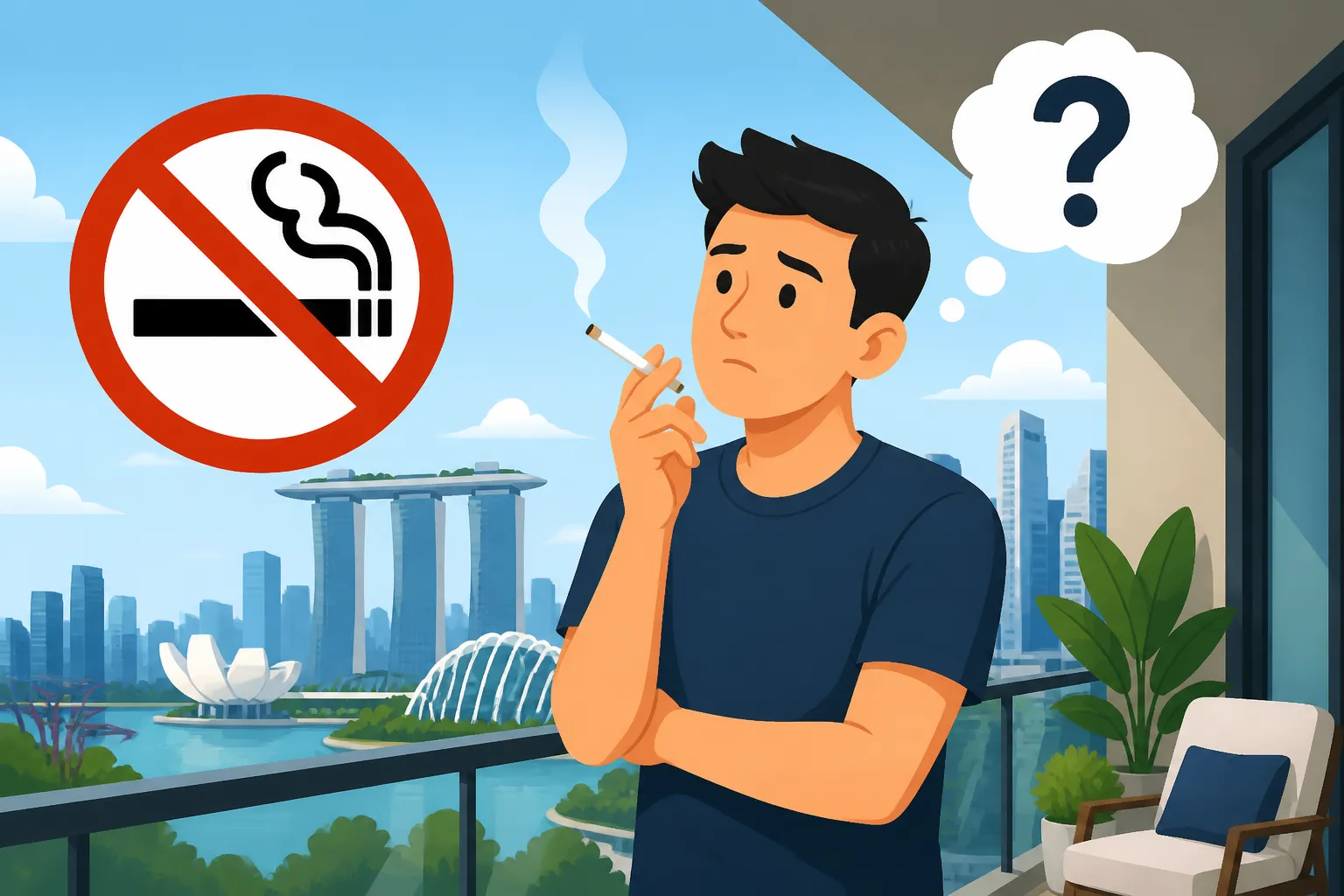
You’ve just finished a long day, you step out onto your private condo balcony, light up a cigarette, and suddenly you're met with glaring eyes or, worse, a formal complaint. The idea of "my home, my rules" often clashes with the intricate web of communal living and strict regulations in Singapore, leaving many expats utterly confused and frustrated. This guide will meticulously break down the realities of smoking on your own condo balcony, helping you navigate the unwritten rules, official bylaws, and potential pitfalls in a country where personal space often takes a back seat to collective harmony.
The Murky Legal Waters: Public Bans vs. Private Spaces
This is where it gets interesting, and often frustrating, for expats. Singapore is well-known globally for its stringent anti-smoking laws, and rightly so. You'll find yourself reaching for your phone to check for designated smoking areas with your Airalo eSIM more often than you think. There are visible "No Smoking" signs everywhere, especially in public indoor spaces, sheltered walkways, bus stops, and even within five meters of bus stops. The list of prohibited areas is constantly expanding, pushing smokers into ever-smaller, designated zones.
However, when it comes to your private residence, particularly a condo balcony, the line blurs considerably. Unlike public housing (HDB flats) where a proposed ban on smoking near windows and balconies has been debated but not yet fully implemented due to enforcement complexities, private condos operate under a different framework. There's no blanket governmental law that explicitly forbids smoking on your private balcony. This lack of a clear-cut "no" from the state is often what catches expats off guard, making them assume it's perfectly acceptable, only to face resistance from neighbours.
The key here lies not in a direct smoking ban, but in existing laws regarding public nuisance. The Environmental Public Health Act (EPHA) is a broad piece of legislation that essentially makes it an offense to cause any "nuisance" that is "injurious or dangerous to health." While it doesn't mention cigarette smoke specifically from a balcony, complaints about persistent smoke drifting into a neighbour's unit could potentially be investigated under this act. This is usually a last resort, but it’s the legal backbone many non-smokers lean on when disputes escalate beyond verbal disagreements or condo management intervention. It’s a classic Singaporean approach: manage social issues through broad legislation that encourages self-regulation and neighbourly consideration, but provides a legal avenue if things go south.
Navigating Condo By-Laws and Management Committees
While the government might not explicitly ban smoking on your private balcony, your condo’s own management corporation (MCST) often fills that void with specific by-laws. When you first moved in, maybe with the help of a reputable mover like Sirelo, you probably signed a tenancy agreement that referenced the condo's by-laws. It's crucial to revisit these documents, as they are your first line of defense – or offense, depending on which side of the smoke you're on. Many expats quickly realise that understanding their rental agreement and condo rules is just as important as reading up on the wider Singapore Healthcare System for Expats: Complete 2026 Guide for peace of mind.
Many modern condominiums in Singapore, especially those built in recent years or those with proactive MCSTs, have adopted by-laws that restrict or outright prohibit smoking on balconies or near common areas that could affect other residents. These by-laws are legally binding on all residents, including tenants. Typically, they fall under general clauses about "causing nuisance" or "disturbing peace and quiet," but some are increasingly explicit about smoke. It's not uncommon to see phrases like "no emission of smoke or noxious fumes that may affect other units" or "smoking is permitted only in designated areas within the common property."
The challenge, however, comes with enforcement. While an MCST can issue warnings, fines, or even take legal action for breaches of by-laws, the practicalities of proving that smoke from your balcony is causing a nuisance to that specific neighbour can be incredibly difficult. Neighbors often have to document incidents, take photos, or even write down times and dates when smoke is detected. The MCST typically acts as a mediator first, urging residents to resolve disputes amicably. But if the problem persists, they can indeed escalate, potentially leading to formal warnings and, in extreme cases, seeking an injunction from the Strata Titles Board. This is a journey you don't want to embark on, as it's emotionally taxing and can sour your living experience, pushing you to consider looking for a new place to Renting in Singapore: The Ultimate Guide for Expats (2026).
The Inconvenient Truth: The "Nuisance" Factor and Neighborly Disputes
This is where the real human element, and often the biggest headaches, come into play. In Singapore, communal living is highly valued, and personal freedoms are often balanced against the collective well-being. What you perceive as harmless relaxation on your balcony, your neighbour might perceive as an unbearable invasion of their personal space and health. This often leads to heated discussions, passive-aggressive notes, or direct complaints to the condo management, which are common sources of conflict, similar to those discussed in Noise Complaints and Neighbor Etiquette: Dealing with Renovation Noise.
Expats often struggle with the "kiasu" (fear of losing out) culture and the directness, or sometimes indirectness, of Singaporean communication when it comes to disputes. A neighbour might initially avoid direct confrontation, instead choosing to complain to the management, who then contacts you. This can feel disorienting and unfair, but it's often the preferred route to avoid direct conflict. Validating this frustration, it’s not always easy to read between the lines, and what might seem like an overreaction in your home country is a genuine concern here, particularly around health and air quality.
The concept of "nuisance" is subjective, but in the context of cigarette smoke, it often boils down to:
- Frequency and Duration: Are you smoking occasionally, or chain-smoking for hours every day? If you constantly need to check your phone for distractions while waiting for your cigarette to finish, having reliable data with your Airalo eSIM is useful.
- Time of Day: Are you smoking late at night when neighbours have their windows open for a breeze?
- Impact on Neighbours: Does the smoke genuinely drift into their living areas, affecting children, people with respiratory issues, or just generally making their home smell unpleasant?
Consider a scenario: you smoke a cigarette after dinner. Your upstairs neighbour, a parent with a young child who has asthma, keeps their balcony door open for ventilation. The smoke drifts directly upwards into their child's room. For them, this isn't just an annoyance; it's a serious health concern. This is the kind of situation that quickly escalates from a minor inconvenience to a full-blown dispute, potentially even affecting your security deposit if smoke damage is considered when Getting Your Deposit Back: Navigating End-of-Lease Cleaning and Disputes. This is also tied into the broader theme of Surviving Culture Shock: Directness, Kiasu Culture, and Fast Pacing that many foreigners experience.
Practical Strategies for Coexistence and Conflict Avoidance
Given the complexities, what’s an expat to do? Whether you're a smoker looking to enjoy your home or a non-smoker seeking peace, proactive communication and understanding are paramount. It's not about being "right," but about finding a way to coexist in a high-density urban environment like Singapore.
First, know your condo's specific by-laws inside out. Don't just assume. Get a copy from your MCST or landlord. When you move into a new place, perhaps after a smooth transition using Sirelo's services, take the time to review the rules for everything, including common areas and balconies, and perform a thorough defect check as covered in Moving In: Conducting the Handover Inventory and Defect Check. If the by-laws are vague, consider approaching the MCST for clarification before a dispute arises. This diligence is part of understanding Everyday Rules and Etiquette: Fines, Laws, and Social Norms.
For smokers, consider designated smoking areas within the condo common property, if they exist. Even if your balcony isn’t explicitly banned, showing consideration goes a long way. If you must smoke on your balcony, try to do it when your neighbours are less likely to be affected – perhaps when their windows are closed, or during less common hours for them to be enjoying their own balcony. Using air purifiers in your own unit might help mitigate the lingering smell for your internal space, but it won't stop smoke drift. Some smokers even resort to purchasing small, portable smoke extractors, though their effectiveness in open-air conditions is limited. This proactive approach might even mitigate issues like Dealing with Humidity-Induced Skin Issues (Eczema and Heat Rash) that can be exacerbated by poor air quality.
For non-smokers, start with polite communication. A friendly chat with your neighbour (if you feel comfortable) or a polite note can sometimes resolve the issue before it becomes a formal complaint. Frame it empathetically: "We've noticed smoke drifting up/down, and my child has asthma. Would you mind considering smoking in a different area or at a different time?" If direct communication isn't feasible or doesn't work, then engaging the MCST is the next step. Documenting instances (dates, times, impact) can significantly strengthen your case.
Ultimately, this issue often boils down to consideration and the ability to adapt. Singapore is a dense, high-rise living environment, and what might be acceptable in a detached house in your home country simply doesn't fly here. If smoking is an absolute deal-breaker for you, either as a smoker wanting the freedom or a non-smoker needing clean air, then considering your location is key, as discussed in Where to Live in Singapore: Top Neighborhoods for Expats. This choice, along with understanding the differences between HDB vs Condo vs Landed: Choosing Your Singapore Home Type, can make a significant difference in your daily quality of life and reduce potential conflicts.
| Aspect | General Singapore Law (Public) | Private Condo By-Laws (Internal) | Neighborly Expectations (Unofficial) |
|---|---|---|---|
| Direct Ban on Balcony Smoking | No explicit government ban on private balconies. | Varies greatly by condo. Some explicitly ban, others use "nuisance" clauses. | Often expected, especially by non-smokers and families. |
| Legal Basis for Action | Environmental Public Health Act (EPHA) – general nuisance. | Condo by-laws (Strata Titles Act), contractual agreement. | Social norms, expectation of considerate living, health concerns. |
| Enforcement Body | National Environment Agency (NEA), if EPHA applies. | Management Corporation Strata Title (MCST), Strata Titles Board. | Self-policing, direct communication, then MCST. |
| Consequences | Fines (EPHA), court orders. | Warnings, fines (by MCST), legal action (Strata Titles Board). | Disputes, strained relations, formal complaints, potential forced moves. |
| Proof Required | Evidence of persistent nuisance, impact on health. | Documented breaches, witness statements, pattern of disturbance. | Personal discomfort, visible smoke, smell. |
Disclaimer
Please note that the information provided in this guide is for general informational purposes only and does not constitute legal advice. Laws and regulations in Singapore, as well as specific condo by-laws, can change. Always consult with the relevant authorities, your condo management, or legal professionals for the most accurate and up-to-date information regarding your specific situation.