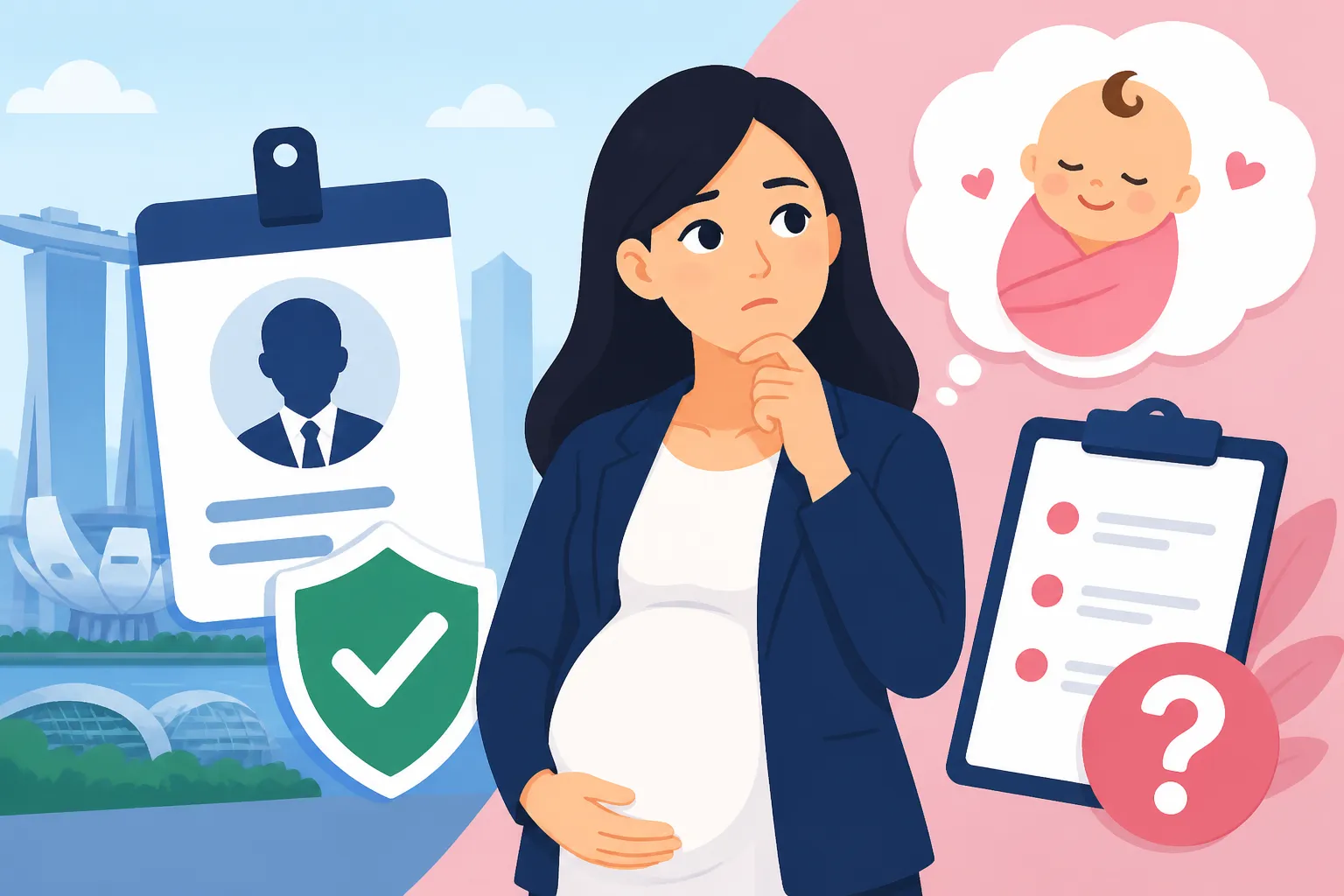
What Happens If You Get Pregnant While on an Employment Pass?
Finding out you're expecting when you're an expat on an Employment Pass in Singapore can bring a unique mix of excitement and anxiety. Beyond the joy of welcoming a new life, the practicalities of navigating immigration rules, understanding your workplace rights, and accessing quality healthcare in a foreign land can feel incredibly daunting. This guide is here to walk you through everything you need to know about pregnancy while on an Employment Pass, from what it means for your visa status to bringing your precious newborn home.
Your Employment Pass Status and Pregnancy
A common initial worry for many expat women upon discovering they are pregnant in Singapore is how it might impact their Employment Pass (EP). Rest assured, your Employment Pass is generally not directly affected by your pregnancy itself. It's tied to your employment with a sponsoring company, not your marital or family status. However, there are several practical considerations you'll need to navigate.
Your EP remains valid as long as you continue to be employed and meet the eligibility criteria set by the Ministry of Manpower (MOM). This means you can continue working throughout your pregnancy, subject to your doctor's advice and your comfort levels. The key is to maintain your employment. Should you decide to resign or your employment contract ends while pregnant, your EP will naturally be cancelled, and you would typically be given a short grace period (often 30 days via a Short-Term Visit Pass) to make arrangements to either find new employment, apply for a Dependant's Pass (DP) if your spouse holds a valid work pass and meets the salary requirements, or leave Singapore. This is a critical point that often causes stress for expats, as stability is paramount when expecting.
If your EP is due for renewal during your pregnancy, the process should generally proceed as normal, based on your current employment and the new COMPASS framework guidelines. Your pregnancy status is not a disqualifying factor for renewal. However, if there are changes in your employment terms, such as a temporary reduction in salary during maternity leave, ensure your employer accurately reflects this with MOM. Always keep open communication with your HR department regarding your plans and any potential changes. Transparency helps ensure a smooth process for all parties. For a deeper dive into how your work pass might be affected by different life events, you might find our guide on Switching Jobs on an EP: Do You Need to Leave Singapore? insightful.
Maternity Leave, Benefits, and Workplace Rights
Singapore has robust provisions for maternity leave and benefits, even for foreign workers on Employment Passes, though the specifics can sometimes differ slightly from those for Singaporean citizens or Permanent Residents. Understanding your entitlements is crucial to planning your pregnancy and postpartum period.
Entitlements Under the Child Development Co-Savings Act
The main legislation governing maternity leave in Singapore is the Child Development Co-Savings Act (CDCA). Under this act, eligible working mothers are entitled to 16 weeks of paid maternity leave. For expats on an EP, the key criteria typically involve having worked for your employer for at least three continuous months before giving birth and giving your employer at least one week's notice before starting your leave. You also need to ensure that your child is a Singapore citizen at birth for full government-paid benefits, or if not, then the employer-paid portions still apply. If your child is not a Singapore citizen, you are entitled to 12 weeks of paid maternity leave, with the first 8 weeks paid by your employer and the last 4 weeks unpaid. This can be a significant difference, so it’s something to clarify early on.
The government pays for a portion of the leave, capped at a certain amount per day, while your employer covers the rest, up to your gross monthly salary. It’s important to clarify with your HR department what your specific pay structure will be during this period. For example, if your child is a Singapore citizen, the government will co-fund the 9th to 16th week of your maternity leave, subject to caps. For non-citizen children, only the first 8 weeks are typically employer-paid. This difference can impact your overall financial planning, so it’s wise to understand the nuances of Maternity and Childcare Leave for Foreign Workers Under MOM Guidelines.
Other Important Workplace Considerations
Beyond the leave itself, several other aspects need your attention. You are protected from dismissal without sufficient cause during your pregnancy and maternity leave. This means your employer cannot terminate your employment simply because you are pregnant, assuming you meet your employment obligations. Any dismissal must be for a valid reason unrelated to your pregnancy and follow proper MOM guidelines.
It's also worth noting that upon your return to work, your employer is generally expected to reinstate you to your former position or an equivalent one with no loss of seniority or benefits. This ensures that taking maternity leave does not put your career progression at a disadvantage. If you plan to breastfeed, discuss flexible working arrangements or suitable facilities with your employer, as many companies in Singapore are becoming more supportive of nursing mothers.
Understanding how your maternity benefits impact your income and, consequently, your tax obligations is also important. While maternity benefits are generally exempt from income tax in Singapore, especially the government-funded portions, it's always prudent to review your specific situation. Services like Taxes for Expats can provide clarity on how your maternity pay might be viewed for tax purposes, particularly if you have financial ties to your home country. Planning your finances properly during this time will save you headaches later.
Here's a quick overview of maternity leave entitlements:
| Criteria | Singapore Citizen Child (Mother worked for employer for 3+ months) | Non-Citizen Child (Mother worked for employer for 3+ months) |
|---|---|---|
| Total Weeks of Leave | 16 weeks | 12 weeks |
| Employer Paid (First Portion) | 8 weeks | 8 weeks |
| Government Paid (Second Portion) | 8 weeks (capped) | 0 weeks |
| Government Co-funded (9th to 16th Week) | Yes, if eligible | No |
| Total Paid Weeks | 16 weeks (Employer + Government) | 8 weeks (Employer) |
(Note: Eligibility criteria apply, and government-paid portions are capped. Always confirm your specific entitlements with MOM and your HR department.)
Navigating Healthcare During Pregnancy and Birth
Singapore's healthcare system is world-class, but as an expat, understanding how to access it, and more importantly, how to pay for it, requires careful planning. You won't be eligible for the heavily subsidised rates that citizens and Permanent Residents receive, so private healthcare or comprehensive expat health insurance will be your primary avenues.
Choosing Your Medical Pathway
Many expat women opt for private hospitals and clinics for prenatal care and delivery due to shorter waiting times, more personalized care, and the availability of English-speaking doctors from diverse international backgrounds. Hospitals like Mount Elizabeth, Gleneagles, and Raffles Hospital are popular choices, offering comprehensive maternity packages. These packages can vary widely in cost depending on the type of room, doctor, and whether it's a natural birth or C-section. It's highly recommended to start researching Maternity Care: Prenatal Packages, Birth Options, and Hospital Stays early in your pregnancy.
Public hospitals, such as Singapore General Hospital (SGH) or National University Hospital (NUH), also offer excellent maternity services. While they might be slightly less expensive than private options even for unsubsidized foreigners, they often come with longer waiting times and less flexibility in choosing your preferred doctor. Regardless of your choice, expect to pay significantly more out-of-pocket if you don't have adequate insurance.
The Role of Health Insurance
This is where your expat health insurance becomes your best friend. Most comprehensive expat health insurance plans in Singapore offer maternity benefits, but these often come with specific waiting periods (typically 10-12 months) before you can claim. This means if you get pregnant shortly after arriving or switching insurance plans, you might not be covered. It's absolutely crucial to check your policy's fine print, including waiting periods, sub-limits for normal delivery vs. C-section, and any co-payments or deductibles. Our guide on Expat Health Insurance in Singapore: Public vs Private Coverage can help you understand the different options available.
Without proper insurance, the Cost of Giving Birth in Singapore: Natural vs C-Section Estimates can run into tens of thousands of dollars, easily becoming one of the largest expenses of your expat life. Don't underestimate this. Ensure you understand your policy or consider upgrading it if necessary. Early communication with your insurer is key.
Throughout your pregnancy, you'll engage with various healthcare professionals. From obstetricians to lactation consultants, having a good rapport is essential. Many clinics have internationally trained doctors, making communication easier. However, if you're keen to immerse yourself more in local culture or just want to pick up some conversational phrases for interacting with nurses or support staff, platforms like iTalki could be a fun way to learn some basic Malay or Mandarin phrases. It might seem small, but connecting in even a small way can make the experience feel a little more personal. For a comprehensive overview of the healthcare landscape, consider reading Singapore Healthcare System for Expats: Complete 2027 Guide.
Bringing Your Baby Home: Registration and Passes
Once your little one arrives, the excitement continues, but so does the administrative legwork. Registering your baby's birth and securing their immigration pass are immediate priorities.
Birth Registration
The hospital where your baby is born will guide you through the birth registration process. In Singapore, all births must be registered within 14 days. You’ll typically receive a Notification of Live Birth from the hospital, which you then use to register the birth online via the Immigration & Checkpoints Authority (ICA) website or in person at the Registry of Births and Deaths. You’ll need your NRIC (if you’re a PR) or your passport, your spouse’s passport, and your marriage certificate.
Upon successful registration, your baby will be issued a birth certificate. This document is crucial for all subsequent steps, including applying for your baby’s passport from your home country and their Dependant's Pass (DP) in Singapore. For more detailed instructions, refer to our article on Registering Your Baby’s Birth with ICA and Your Embassy.
Securing Your Baby's Immigration Pass
This is a critical step for expat parents. Your newborn will not automatically have the right to reside in Singapore just because they were born here. They will typically be granted a Short-Term Visit Pass (STVP) upon birth, which needs to be converted to a more permanent immigration status within a specific timeframe (usually around 42 days).
As an Employment Pass holder, the most common route is to apply for a Dependant's Pass for your baby. To be eligible to sponsor a DP for your child, you generally need to meet a minimum qualifying salary, which is currently S$6,000 per month. If you meet this criterion, you can submit the DP application to MOM, usually through your employer. You'll need documents like your baby's birth certificate, passport, and sometimes your employment details.
If your salary falls below the minimum, or if you are on an S Pass or Work Permit, applying for a DP for your child might not be straightforward. In such cases, alternative options like a Long-Term Visit Pass (LTVP) might be considered, though these have different eligibility criteria. It's essential to check the latest MOM guidelines for Dependant's Pass (DP) Eligibility: Salary Minimums for Sponsoring Family and Bringing a Foreign-Born Baby Back to Singapore: Visa Procedures to avoid any issues. Applying promptly is vital to ensure your baby has legal residency status in Singapore and avoids any overstaying issues.
In some situations, if one parent is a Singaporean Citizen or Permanent Resident, the child might be eligible for citizenship or PR status, which simplifies things considerably. However, for most expat couples on EPs, the Dependant's Pass is the standard route. Remember, navigating these bureaucratic hurdles can be tiring, especially with a newborn, so gathering all necessary documents and understanding the process beforehand can save you a lot of stress.
Financial Planning and Beyond
Pregnancy and a new baby undoubtedly bring significant financial considerations. From medical bills to everyday baby expenses, being an expat adds layers of complexity, especially when you factor in out-of-pocket costs and potential tax implications.
Budgeting for Your New Arrival
Beyond the immediate costs of delivery, you'll need to budget for pediatrician visits, vaccinations, baby supplies, and potentially increased utility bills (hello, air conditioning for the baby!). Many expat parents also consider hiring additional help, such as a confinement nanny or a live-in foreign domestic worker, which adds another substantial cost. Our guide on Healthcare Budgeting in Singapore: Managing Out-of-Pocket Costs offers some general tips that can be adapted for a new family member.
It’s prudent to create a detailed budget that accounts for these new expenses. Don’t forget to factor in potential income adjustments if your maternity leave is partially unpaid or if you decide to take a longer break. Consulting with a financial advisor who understands expat finances in Singapore can be incredibly beneficial. They can help you plan for both short-term expenses and long-term goals, like your child's education.
Long-Term Planning and Family Health
Looking ahead, you'll also want to consider ongoing family health needs. This includes finding a pediatrician you trust and understanding the local childhood vaccination schedule. Accessing Pediatric Clinics: Childhood Vaccinations and School Medical Forms is crucial for your child's well-being. Furthermore, as a new mother, remember to prioritize your own post-natal health. Women’s Health in Singapore: Gynecology, Screenings, and Contraception remains important after childbirth.
Should your family decide to move on from Singapore in the future, remember that you’ll need to manage the Financial Exit Strategy: Closing Accounts and Tax Clearance for both yourself and your child. Always keep meticulous records of all medical and immigration documents, as these will be invaluable for future applications or when repatriating.
Navigating pregnancy on an Employment Pass in Singapore is certainly a journey with its unique set of challenges, but with careful planning and an understanding of the local regulations, it can be a truly rewarding experience. Don't be afraid to seek advice from fellow expat parents, join online communities, and lean on your support network.
Disclaimer
Please note that immigration and employment regulations in Singapore can change. While this guide provides comprehensive and up-to-date information as of June 2026, it is always advisable to consult the official websites of the Ministry of Manpower (MOM) and the Immigration & Checkpoints Authority (ICA) or seek professional advice for your specific situation. This article is for informational purposes only and does not constitute legal or financial advice.