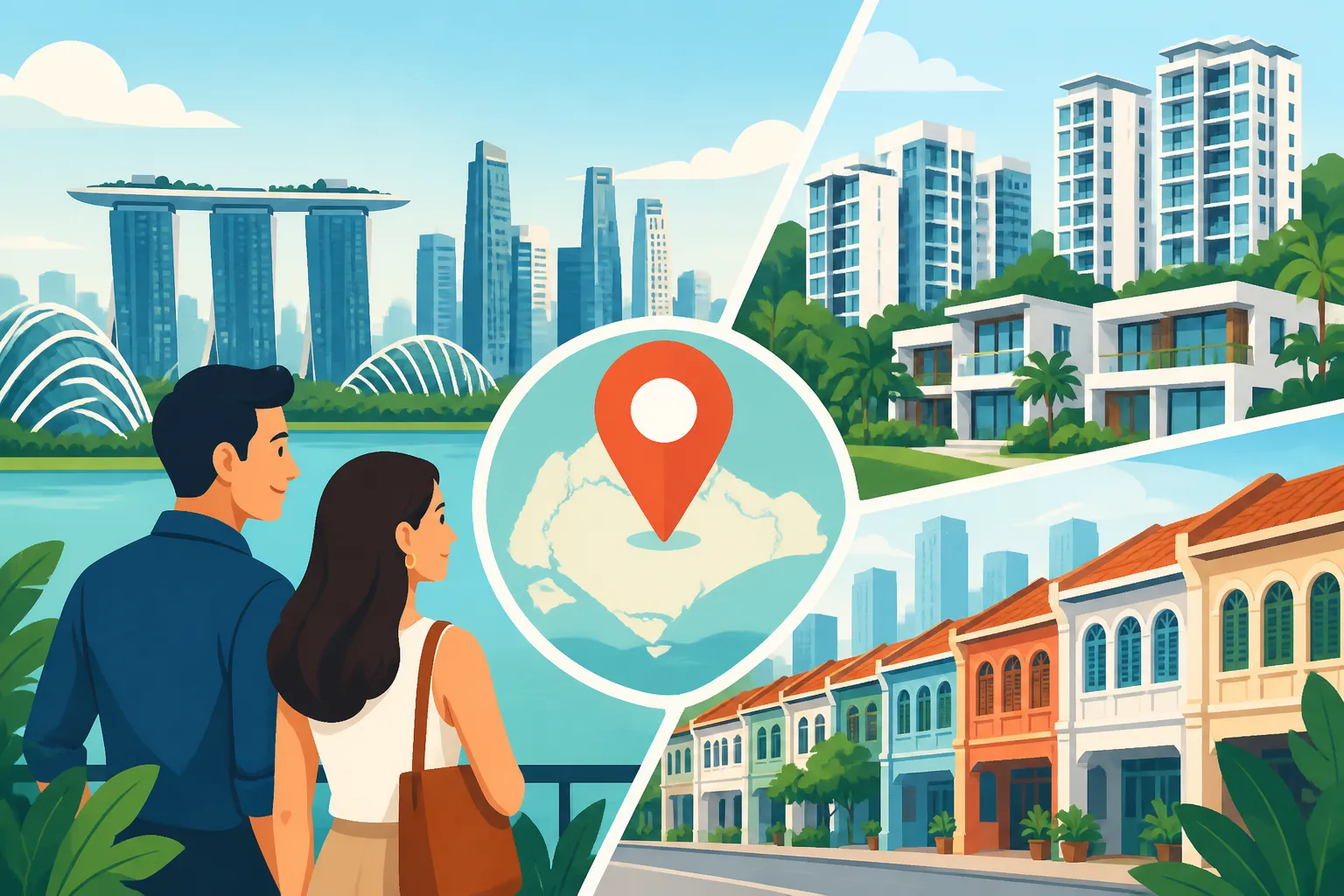
Where to Live in Singapore: Top Neighborhoods for Expats
One of the biggest anxieties for any expat landing in Singapore is often the housing hunt. It's not just about finding a roof over your head; it's about finding a home in a city that can feel both excitingly new and bewilderingly different. This comprehensive guide will help you navigate Singapore's diverse neighborhoods, offering realistic insights and personal anecdotes to ease your search for the perfect expat abode.
The Expat Housing Puzzle: Beyond the Brochure
Stepping off the plane, you'll quickly realize that Singapore's housing market isn't a one-size-fits-all affair. Unlike some cities where "expat areas" are clearly delineated, the Lion City offers a fascinating mix of options, each with its own quirks and charms. Your ideal spot will depend heavily on your personal priorities – whether that’s proximity to work, a family-friendly environment, or a vibrant social scene.
Understanding Singapore’s Housing Types
Before we dive into specific locations, let's briefly touch upon the main types of housing you'll encounter. It’s crucial to understand these because they profoundly impact your lifestyle and budget.
Most expats typically gravitate towards condominiums (condos). These are privately owned apartment complexes, often featuring fantastic facilities like swimming pools, gyms, tennis courts, and 24-hour security. They offer a comfortable, convenient lifestyle, often with a community feel, and come in a vast range of sizes and luxury levels. You'll find everything from compact one-bedroom units perfect for singles to sprawling penthouses designed for large families. The price, as you can imagine, varies wildly with size, age, and location.
Then there are Housing and Development Board (HDB) flats. These are public housing, but don't let that fool you into thinking they're basic. Many HDB estates are well-maintained, offer excellent connectivity, and house the vast majority of Singaporeans. While expats primarily rent private property, some choose HDBs for their affordability and larger living spaces, especially if they are looking for a taste of local life. However, there are rules, like the Minimum Rental Periods: 6 Months for HDB vs 3 Months for Private Condos, that apply.
Finally, you have landed property – bungalows, semi-detached houses, and terrace houses. These are the pinnacle of private living, offering private gardens, more space, and a sense of exclusivity. Naturally, they come with a hefty price tag, making them largely inaccessible for most expats unless they have a very generous housing allowance or are high-net-worth individuals exploring property ownership.
The Allure and Reality of Location
Choosing a location isn't just about pretty pictures; it’s about making a trade-off. Do you prioritize a short commute, even if it means a smaller apartment and a higher price tag? Or are you willing to travel a bit further for more space, a greener environment, or a more local experience? This is the eternal expat dilemma, and there’s no right or wrong answer.
The "ideal" location often balances commute times to work and international schools with access to amenities and social hubs. For example, living in the CBD might mean a 10-minute walk to the office, but you could be paying a premium for a shoebox apartment with no green space. Conversely, a spacious condo further out might mean an hour-long commute on the MRT, but you could have a sprawling apartment, lush surroundings, and a lower rent.
It’s about defining your non-negotiables. Is it walking distance to a specific school? Proximity to an MRT station? A vibrant dining scene? Or perhaps a quiet, suburban feel? Think about your lifestyle back home and what aspects you value most, then see how they translate into Singapore’s unique geography. Understanding these trade-offs early on will save you a lot of headache during your property search.
Central & Prime Districts: The Glamour and the Grind
For many newcomers, the image of Singapore is synonymous with its gleaming skyscrapers and bustling city center. These central districts are undeniably convenient, but they come with their own set of considerations for expats.
Orchard, River Valley, and Tanglin: The Classic Expat Haunts
Let's be real, if you’re fresh off the plane and want to feel like you haven’t left your international bubble, these are often the first places you’ll be told to look. Orchard Road is Singapore’s famous shopping belt, brimming with luxury malls, high-end restaurants, and buzzing nightlife. Living here puts you right in the thick of it. River Valley, just a stone's throw away, offers a slightly more residential feel while maintaining excellent connectivity and a wealth of amenities. Tanglin, known for its embassies and sprawling colonial bungalows, is the epitome of quiet luxury.
The pros of these areas are obvious: unparalleled convenience, a plethora of international dining options, proximity to major international schools like the Tanglin Trust School, and excellent public transport links. You’re never far from anything, and taxis or ride-shares are plentiful. Plus, the sheer number of fellow expats means finding your community can feel a little easier, especially if you're new to the expat scene. Many condos here boast top-notch facilities, and you’ll often find them fully furnished, making for an easier move-in process.
However, this convenience comes at a significant cost. Rents in Orchard, River Valley, and Tanglin are among the highest in Singapore. You'll often pay a premium for smaller living spaces compared to what you might find further out. Traffic can be a nightmare during peak hours, and while there are parks, green spaces can feel limited compared to other districts. If your budget is tight, or if you crave a more authentically local experience, these areas might feel a bit too much like a gilded cage. You might want to consider the overall Cost of Living for an Expat Family with Kids: School, Housing, and Car if you're looking at these areas.
City Fringe Gems: Tiong Bahru, Outram Park, and Holland Village
If you want the buzz of city living without being right in the heart of the concrete jungle, the city fringe offers some truly appealing alternatives. These neighborhoods strike a delightful balance between accessibility and a more unique, local flavor.
Tiong Bahru, for instance, is a charming, historic estate known for its pre-war Art Deco architecture, independent cafes, and quirky boutiques. It has a hip, bohemian vibe that attracts a younger crowd and those who appreciate a blend of old-world charm and modern cool. The MRT station connects you directly to the CBD in minutes, and the Tiong Bahru Market and Food Centre is a fantastic spot for local hawker fare and fresh produce. While still central, it offers a distinct character that feels a world away from the gleaming malls of Orchard.
Outram Park is another area that has seen significant gentrification, blending heritage shophouses with new developments. It’s well-connected via the MRT interchange and is close to the Singapore General Hospital (SGH) campus. This area offers a more understated charm, with a growing number of cafes and eateries, appealing to those who want convenience without the overt buzz of prime districts.
Holland Village, affectionately known as "Holland V," is often described as an expat enclave with a village-like atmosphere. It’s famous for its vibrant F&B scene, with numerous restaurants, bars, and cafes. While not directly on an MRT line for years, the opening of the Holland Village MRT station on the Circle Line has vastly improved its connectivity. It’s incredibly popular with families and singles alike, offering a laid-back international vibe, local wet markets, and a good selection of supermarkets. Rents here are still high, but generally slightly less eye-watering than Orchard or River Valley, and you often get a bit more space for your money. It’s a great spot if you appreciate a lively social scene right on your doorstep.
East Coast: Family-Friendly Charm and Beachside Living
Moving towards the eastern part of the island, you'll discover a different pace of life. The East Coast is renowned for its laid-back vibe, heritage-rich neighborhoods, and enviable proximity to the sea. It's particularly popular with families who crave more space and a strong sense of community.
Katong and Joo Chiat: Heritage, Food, and Community
Katong and Joo Chiat are two vibrant, intertwined neighborhoods that exude Peranakan charm. Here, you'll find beautifully preserved shophouses painted in pastel hues, housing traditional eateries, boutique shops, and a thriving cafe scene. The area is a foodie paradise, famous for its Laksa, Prawn Mee, and Chicken Rice. Exploring the backstreets reveals stunning architecture and a strong sense of history that contrasts sharply with the modern city center.
For expats, the appeal is multifaceted. You get a taste of authentic Singaporean culture without sacrificing modern conveniences. There are excellent local and international schools nearby, a plethora of dining options from hawker centers to trendy restaurants, and a more relaxed, communal atmosphere. East Coast Park is just a short drive or bike ride away, offering vast stretches of beach, cycling paths, and outdoor recreational activities. The housing stock here often includes charming walk-up apartments in renovated shophouses, as well as modern condos.
The main "con" for some is the commute. While getting to the CBD is manageable by bus and MRT (via the East-West Line at Eunos or Dakota), it's not as instantaneous as living in River Valley. Public transport can sometimes require a bus connection to an MRT station, which adds to travel time. However, for those who prioritize character, community, and culinary adventures over a super-short commute, Katong and Joo Chiat offer an incredibly rich living experience.
Siglap and Marine Parade: Coastal Lifestyle and Green Spaces
Further along the East Coast, you'll find the quieter, more residential areas of Siglap and Marine Parade. These neighborhoods are perfect for those who dream of living close to the beach and having easy access to vast green spaces. Marine Parade is particularly popular for its proximity to East Coast Park, where families spend weekends cycling, picnicking, and enjoying the sea breeze.
Housing in these areas tends to be a mix of older, more spacious condos and some landed properties. You'll find a good selection of amenities, including local supermarkets like FairPrice and Cold Storage, as well as a variety of dining options, though perhaps less trendy than Katong. The vibe is decidedly more suburban, making it a peaceful retreat from the city's hustle and bustle. The new Thomson-East Coast Line (TEL) has significantly improved connectivity to the CBD and other parts of Singapore, making these areas much more desirable for commuters.
The pros are clear: more space for your buck, a relaxed coastal lifestyle, excellent recreational opportunities, and a strong sense of community, particularly among families. The primary consideration might still be the commute time, especially if your workplace is in the far west of Singapore. While the TEL is a game-changer, cross-island commutes can still be a significant factor. However, if your vision of expat life involves morning runs along the beach and weekend BBQs in a spacious condo, Siglap and Marine Parade might just be your perfect match.
West & North: Space, Serenity, and Schools
Venturing further out from the central core, Singapore's west and north offer different benefits, often catering to families seeking larger homes, quieter surroundings, and specific school access. These areas generally provide more bang for your buck in terms of space.
Woodlands and Sembawang: North for American & Australian Schools
If you're a family specifically targeting the Singapore American School (SAS) or the Australian International School (AIS) (which is technically in Lorong Chuan but draws families from the North), Woodlands often comes up as a prime consideration. Located in the northernmost part of Singapore, right next to the Causeway leading to Malaysia, Woodlands offers a more suburban feel and typically larger housing units compared to central areas.
Many expats here are drawn by the promise of bigger homes, often landed properties or spacious condos, at a more affordable price point. The area is greener, with fewer high-rises and a generally slower pace of life. It’s designed with families in mind, offering community parks, sports facilities, and a range of local amenities. For students attending SAS, the commute is often a quick bus ride, freeing up significant family time. The Woodlands Regional Centre is also developing rapidly, bringing more jobs and amenities to the area.
The obvious downside is the distance from the CBD. Commuting from Woodlands can easily take 45 minutes to over an hour by MRT, which is a deal-breaker for some. While the Thomson-East Coast Line (TEL) has improved connectivity, it's still a significant journey. The social scene is quieter and less diverse than in central districts, often centered around family activities or school communities. If you're a single expat or a couple without children, Woodlands might feel too isolated. However, for families who prioritize space, specific international schools, and a tight-knit community, it’s a very practical choice. Sirelo, a moving service, might come in handy for families moving their entire household to these larger spaces.
Queenstown, Buona Vista, and Clementi: West for Education & Business Hubs
The western corridor of Singapore, particularly Queenstown, Buona Vista, and Clementi, is an increasingly attractive area for expats, especially those working in the tech, biomedical, or education sectors. This region is home to major educational institutions like the National University of Singapore (NUS) and business parks like one-north, which houses companies like Google, Grab, and multiple biomedical research facilities.
Queenstown, one of Singapore's oldest satellite towns, is undergoing revitalization, blending heritage with modern HDBs and condos. It offers excellent MRT connectivity and is a stone's throw from the city center, yet maintains a slightly more local and relaxed vibe. Buona Vista and one-north are vibrant innovation hubs, attracting a young, dynamic expat demographic. You'll find a mix of housing here, from older condos to newer, more upscale developments catering to professionals.
The pros include fantastic connectivity, proximity to major employment hubs, and a wealth of amenities driven by the student and professional population. There are plenty of food options, from hawker centers to cafes, and good sports facilities. Rents are generally more affordable than the prime central districts, offering better value for space. It’s also a good choice for those who appreciate green lungs like Kent Ridge Park and Southern Ridges.
On the flip side, while increasingly expat-friendly, these areas still have a stronger local flavor, which might not appeal to everyone. Some parts can be very busy with student traffic, and while new condos are popping up, you won't find the same concentration of "expat-specific" amenities (like certain international supermarkets or niche expat clubs) as in Orchard or Holland Village. However, for those seeking a more integrated experience with a strong professional network, these western districts are definitely worth considering.
Unique & Up-and-Coming Nooks: For the Adventurous
Singapore is constantly evolving, and beyond the well-trodden expat paths, there are burgeoning neighborhoods offering different experiences, often at more accessible price points. These are for the expats who want to explore beyond the usual.
Punggol and Sengkang: New Towns, Nature, and Affordability
If you're seeking modernity, space, and a strong connection to nature without breaking the bank, look towards the northeast — specifically Punggol and Sengkang. These are relatively new residential towns, characterized by their contemporary HDB flats and condominiums, green spaces, and planned waterways. Punggol, in particular, has been developed with a focus on sustainable living and family-centric amenities, featuring the picturesque Punggol Waterway Park and a vibrant Punggol Settlement for dining by the sea.
These areas are perfect for young families or couples who prioritize a clean, new living environment with plenty of outdoor activities. You’ll find community clubs, large supermarkets, and new shopping malls, all designed for convenience. The housing options here often offer significantly more space for the price than comparable units in central Singapore, making them very attractive for those on a tighter budget. The LRT (Light Rail Transit) systems connect residents directly to the North-East Line (NEL) MRT, providing a relatively smooth commute to the city, albeit a longer one.
The primary challenge here is the distance from the city center. While well-connected by public transport, the commute can take upwards of an hour to the CBD. The expat community is smaller and less established, meaning you might have to work a bit harder to find your niche if you're looking for a traditional "expat bubble." However, if you're open to a more local, modern, and green living experience, and don't mind the longer travel times, Punggol and Sengkang offer a refreshing alternative and a chance to truly embed yourself in a burgeoning Singaporean community.
Geylang and Little India: Cultural Immersion and Budget-Friendly Options
For those craving an authentic, vibrant, and budget-friendly experience, Geylang and Little India offer a stark contrast to Singapore's polished facade. These are neighborhoods bursting with character, history, and incredible food, appealing to expats who are adventurous and want a truly immersive cultural experience.
Little India is a sensory feast – vibrant colors, aromatic spices, intricate temples, and bustling markets. It’s home to Mustafa Centre, a famous 24-hour department store where you can find almost anything. The food scene is legendary, with countless Indian restaurants serving up delicious, affordable meals. Housing here often consists of shophouse apartments or older condos, generally offering some of the most competitive rental prices in central Singapore. It’s incredibly well-connected by MRT, providing easy access to all parts of the island.
Geylang, on the other hand, is one of Singapore's oldest Malay settlements, renowned for its incredible local food scene, particularly supper spots that stay open late. It’s a bit rougher around the edges than other districts, known for its red-light district, but it also offers a genuine slice of old Singapore. You'll find unique shophouses, traditional businesses, and a palpable energy. Rental prices here are also very attractive, especially for those prioritizing affordability.
The pros are immense cultural immersion, fantastic food at incredible prices, and unbeatable affordability. The cons, however, need to be considered realistically. These areas can be noisy, bustling, and might not offer the same level of "polish" or perceived safety as other districts, especially in parts of Geylang. They might not be the first choice for families with young children due to the general atmosphere and lack of specific child-friendly amenities. However, for single expats, couples, or those on a tighter budget who value authenticity and a lively street life, these neighborhoods offer a truly unique and memorable Singaporean experience.
Factors to Consider Beyond Location: Lifestyle and Logistics
Choosing a neighborhood isn't just about pinning a spot on a map; it's about evaluating how that location integrates into your daily life. Singapore's efficiency means many things are accessible, but subtle differences can significantly impact your quality of life.
Commute Times and Public Transportation Access
One of the biggest factors that will influence your daily life is your commute. Singapore boasts an excellent Public Transport in Singapore: MRT, Buses, and Commuting Hacks, but even with its efficiency, travel times can add up. Living right next to an MRT station, especially on a direct line to your workplace or your child's school, can be a game-changer. The convenience of simply tapping your credit card or phone for bus and train fares using SimplyGo is a huge plus.
Consider your work location. Is it in the CBD, Jurong East, or one-north? Plot your potential commute using Google Maps during peak hours. A 30-minute commute by MRT can quickly become a 45-minute journey with bus transfers and walking. If you’re sending kids to an international school, factor in their commute as well. Many schools offer bus services, but pick-up and drop-off times can be early. Some expats find that even a short 20-minute drive can feel much longer due to traffic. Being strategic about transport links can genuinely enhance your work-life balance.
Don't forget the importance of convenience beyond work. How easy is it to get to your favorite weekend spots, or to Changi Airport for those regional getaways? While Singapore is small, being stuck on a slow bus route when you could be on a fast MRT line makes a difference. Ensure you have good mobile network coverage for using navigation apps and staying connected, which a local eSIM from brands like Airalo can help with right from arrival.
Amenities, Groceries, and Social Scene
Beyond work and school, your quality of life will be heavily influenced by what's available in your immediate vicinity. Think about your daily habits. Do you prefer large supermarkets like FairPrice Finest or Cold Storage, or do you enjoy the hustle and bustle of a wet market for fresh produce? Do you need a gym, a yoga studio, or specific sports facilities nearby?
Singapore's hawker centers are legendary for their affordable and delicious food, and having one within walking distance is a huge bonus. But if you prefer international cuisine or fine dining, ensure your chosen neighborhood has those options, or at least easy access to them. For families, playgrounds, parks, and kid-friendly activities are crucial. For singles, a vibrant nightlife or proximity to expat clubs and social meetups might be a higher priority.
Consider the general vibe. Do you want a quiet, suburban feel, or the constant buzz of a city? Some neighborhoods, like Holland Village or Katong, have a very distinct social scene and community feel, making it easier to meet people. Others are more residential, requiring a bit more effort to venture out for social activities. Think about how you like to spend your free time and choose a location that supports that lifestyle.
Proximity to Schools and Workplaces
For expat families, school proximity often trumps all other considerations. Singapore has a plethora of excellent international schools, but they are scattered across the island. The daily school run, especially with Singapore's heat and humidity, can become a major drain on time and energy if not managed well. Choosing a neighborhood that minimizes this commute can significantly reduce family stress.
Similarly, for working professionals, being close to your workplace means more time for yourself, your family, or your hobbies. Singapore's economic hubs are spread out – from the CBD to Jurong East, one-north, and Changi Business Park. Trying to commute from Woodlands to Changi every day, for instance, would quickly become tiresome.
While some companies offer shuttle services or generous transport allowances, relying on these can still mean adhering to fixed schedules. Carefully weigh the benefits of a shorter commute against other factors like rent, space, and amenities. Sometimes, a slightly higher rent for a significantly reduced commute is a worthwhile investment in your overall well-being. It's all about finding that sweet spot where convenience, comfort, and budget align.
Navigating Your Search: Agents, Viewings, and Red Flags
The Singapore rental market can be competitive and move quickly. Arming yourself with knowledge and managing expectations will make the process much smoother.
Working with Property Agents: Friend or Foe?
For most expats, a property agent is almost essential for navigating the rental market. They have access to listings, understand market dynamics, and can help with negotiations. However, it's crucial to understand how they operate. In Singapore, it's common for agents to represent either the landlord or the tenant, or sometimes both (dual agency).
If you engage an agent to find you a property, you will typically pay them a commission if the monthly rent is above a certain threshold (often S$3,500). Below that, the landlord usually covers both agents' fees. Always clarify these terms upfront. While they can be invaluable, remember that agents are paid based on closed deals, so their incentives are aligned with finding you a place quickly. Don't be pressured into a decision you're not comfortable with. For more details on this, you can read our guide on Engaging a Property Agent: Do You Have to Pay Commission?.
When choosing an agent, look for someone who listens to your needs, is responsive, and has good reviews. Don't hesitate to interview a few before committing. A good agent will save you time by filtering out unsuitable properties and will guide you through the paperwork, which can be daunting. Remember, you're hiring them for a service, so don't be afraid to ask questions and push for what you want.
The Viewing Process: What to Look For
Viewings in Singapore can be a whirlwind, especially in a fast-moving market. Be prepared to see multiple units in a short span. Don't just look at the aesthetics; pay close attention to the practicalities. Check the air conditioning units – do they look well-maintained? Mold is a common issue in Singapore’s humid climate, so look for any signs of it, especially in bathrooms and closets. Test the water pressure in the showers, check for working appliances, and make sure there are enough power outlets.
Think about natural light and ventilation. Is the apartment too dark? Does it get direct afternoon sun, making it excessively hot? Look at the condition of the flooring, paint, and fixtures. Will the landlord address any minor repairs before you move in? Always ask about any ongoing construction in the vicinity; the noise can be a real nuisance. If you're using an eSIM like Airalo for connectivity, test the mobile signal inside the unit, especially in bedrooms, as dead spots can be frustrating.
It’s also wise to visit the neighborhood at different times of the day. A quiet street during a weekday viewing might be bustling and noisy in the evenings or on weekends. Check out the nearest MRT station, bus stops, and grocery stores. This reconnaissance will give you a much more realistic picture of what living there will truly be like.
Lease Agreements and Security Deposits
Once you've found a place you love, the paperwork begins. The Letter of Intent (LOI) is usually the first step, outlining the key terms of the rental, like rental price, lease duration, and any specific requests. This is followed by the Tenancy Agreement (TA), a legally binding contract. It's crucial to read this document carefully, especially clauses related to maintenance, repairs, and breaking the lease. Our guide, The Letter of Intent (LOI): Do You Need It Before the Tenancy Agreement?, offers a deeper dive into this.
A diplomatic clause is essential for expats. This allows you to break the lease early without penalty if you are unexpectedly transferred out of Singapore or lose your job. Typically, it comes with a minimum stay period (e.g., 12 months) and requires a certain notice period (e.g., two months). Always ensure this is explicitly stated in your TA.
Security deposits are standard, usually equivalent to one or two months' rent, held by the landlord throughout your tenancy. This deposit is returned to you at the end of the lease, minus any deductions for damages beyond fair wear and tear or outstanding utility bills. Documenting the condition of the property with photos and videos during your move-in inspection is paramount to Getting Your Deposit Back: Navigating End-of-Lease Cleaning and Disputes when you eventually move out. Don't assume anything; clarify all terms in writing before you sign.
Making the Final Call: What Truly Matters
The housing search in Singapore can be a marathon, not a sprint. You'll likely see dozens of properties, deal with agent quirks, and feel the pressure of a fast-moving market. But remember, the ultimate decision is about finding a place where you can thrive.
Balancing Wants vs. Needs
It's easy to get caught up in the glossy images online or the promises of a property agent. Take a step back and revisit your initial priorities. Did you want a pool? Is a specific school zone non-negotiable? Or is staying within budget your absolute top concern? Singapore's property market often forces compromise, so identify what you can't live without versus what would be nice to have.
Perhaps you dreamt of a spacious apartment, but the reality of central Singapore rents means a smaller unit is more feasible. Or maybe you wanted to be right in the CBD, but discover that a 15-minute MRT ride from a city-fringe area gives you more space and a better community feel for the same price. Be flexible, but don't settle for something that will make your daily life miserable. The "perfect" home might not exist, but the "perfect for you" home certainly does.
Consider the long-term. While a place might seem fine for a few months, what about a year or two down the line? Will a cramped space start to feel suffocating? Will the long commute drain your energy? Talk to other expats, gather insights, and trust your gut feeling. This is a significant investment, both financially and emotionally, so make an informed decision that aligns with your lifestyle and aspirations.
Settling In and Building Community
Once you've signed that lease and moved in, the real work of making Singapore home begins. Your chosen neighborhood will play a significant role in how quickly and easily you settle in. Proximity to amenities, parks, and potential social circles can make a huge difference.
If you're moving with family, think about playgrounds, community centers, and expat groups. If you're single, consider areas with active nightlife, sports leagues, or co-working spaces. Singapore is incredibly diverse, and there are communities for every interest and background. Don't be afraid to step out of your comfort zone and explore. Attending local events, joining clubs, or simply frequenting local cafes can help you build connections.
Remember that relocating, especially internationally, can be stressful. Services like Sirelo, which helps compare international moving companies, can ease the physical burden of moving, leaving you more energy to focus on settling into your new neighborhood. Embrace the journey, be patient with yourself, and enjoy discovering the unique charms of your new Singaporean home.
| Neighborhood Type | Vibe | Typical Housing | Pros for Expats | Cons for Expats | Indicative Monthly Rent (2-BR Condo) |
|---|---|---|---|---|---|
| Central & Prime (Orchard, River Valley, Tanglin) | Upscale, convenient, bustling | Modern Condos, some Landed | Excellent amenities, short commutes, established expat communities | High cost, smaller spaces, traffic | S$6,000 – S$10,000+ |
| City Fringe (Tiong Bahru, Holland Village, Outram Park) | Trendy, cultural, vibrant | Renovated Shophouses, Condos | Unique character, good F&B, decent connectivity, slightly better value | Still pricey, some areas can be noisy | S$5,000 – S$8,000 |
| East Coast (Katong, Joo Chiat, Marine Parade) | Laid-back, heritage, family-friendly | Condos, some Landed & Shophouses | Strong community, near beach/parks, great food, cultural richness | Longer commute to CBD, fewer direct MRT lines (historically) | S$4,500 – S$7,500 |
| West & North (Woodlands, Buona Vista, Queenstown) | Suburban, green, education/tech hubs | Spacious Condos, Landed, HDBs | More space, specific school access (North), business park proximity (West) | Longer commute to CBD, quieter social scene (North) | S$3,800 – S$6,500 |
| New & Emerging (Punggol, Sengkang, Jurong East) | Modern, planned, nature-focused | New HDBs, Condos | Affordability, modern facilities, green spaces, family-centric | Significant commute to CBD, less established expat amenities | S$3,200 – S$5,500 |
Note: Rental prices are indicative as of early 2026 and subject to market fluctuations, unit size, age, and specific facilities.
Disclaimer
The information provided in this guide is intended for general informational purposes only and does not constitute professional advice. While we strive to ensure accuracy, the Singapore housing market and immigration policies are subject to change. Readers are encouraged to conduct their own research, consult with property agents, and seek professional advice before making any housing decisions.