Strict Laws: Chewing Gum, Littering, Jaywalking, and Smoking Zones
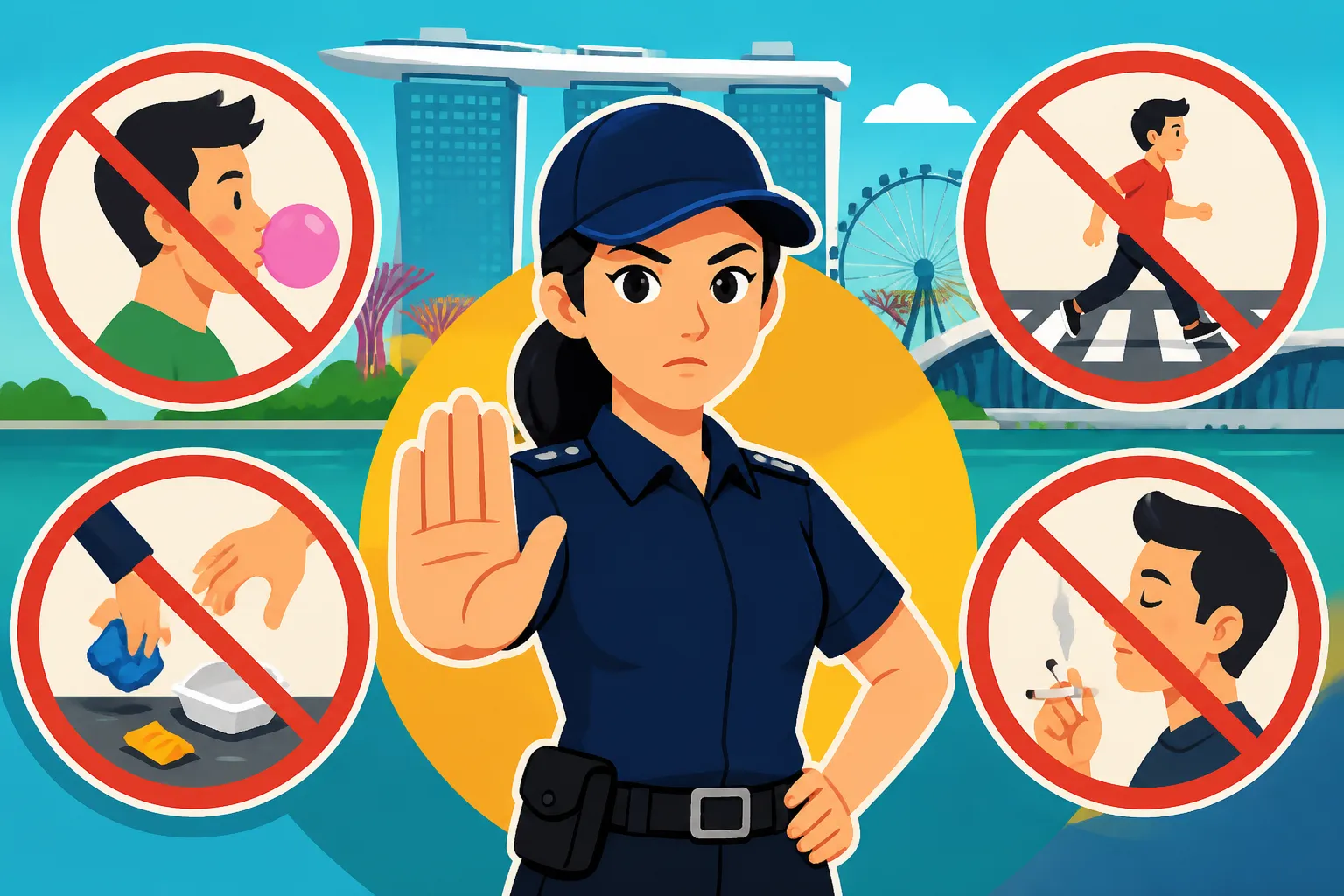
So you've heard the whispers, haven't you? The ones about Singapore being a "fine city," literally. It's true, some of the rules here can feel a bit… surprising, even draconian, when you first arrive from a more relaxed corner of the world. It’s not just about avoiding trouble; it’s about understanding the unique social contract here. This guide will walk you through the nitty-gritty of Singapore's strict laws regarding chewing gum, littering, jaywalking, and smoking, helping you avoid hefty fines and navigate the local culture with a bit more grace and understanding.
The "Fine City" Reputation: An Overview for Expats
Singapore prides itself on being one of the cleanest, safest, and most orderly cities in the world, and this reputation isn't accidental. It's the result of decades of consistent enforcement of laws that might seem trivial in other countries but are taken very seriously here. For an expat, this can be a significant culture shock. You might come from a place where a bit of gum on the sidewalk or a quick dash across the street is no big deal, but here, these actions can lead to a stern talking-to, or worse, a hefty fine.
Why Singapore is So Strict with Petty Offenses
It really boils down to a vision of collective responsibility and national pride. The government's philosophy is that maintaining a high quality of life for everyone requires strict adherence to rules, fostering a sense of shared ownership over public spaces. This isn't just about cleanliness; it's about order, health, and social harmony. From the moment you land and navigate Changi Airport, you’ll notice an almost pristine environment, and that level of meticulousness extends to every corner of the island. It’s part of the fabric that makes Singapore, well, Singapore. You might grumble about it, but you'll also likely appreciate the tangible results – spotless streets, efficient public services, and an overall sense of calm.
The Enforcement: How Rules Are Upheld
Enforcement here isn't just about police officers catching you in the act. Singapore employs a multi-pronged approach, combining visible patrols with ubiquitous CCTV cameras, and even public education campaigns. You'll often see signs detailing specific fines for offenses, serving as clear reminders. For those new to the country, ignorance of the law is absolutely no excuse. Imagine you've just arrived, perhaps used an eSIM from a service like Airalo to get connected, and you're busy navigating new streets. It’s easy to make a mistake, but it's essential to be aware. Penalties are typically issued on the spot by enforcement officers, sometimes from agencies like the National Environment Agency (NEA) for cleanliness-related offenses. These fines are digitally logged and must be paid promptly, often through your Singpass account or at designated payment kiosks.
The Great Chewing Gum Ban: More Than Just Sticky Situations
This is perhaps the most famous — or infamous — of Singapore's strict laws. The chewing gum ban has achieved almost legendary status globally, often cited as the epitome of the "fine city" ethos. It’s true: selling chewing gum in Singapore is illegal, and importing it for personal use is heavily restricted. I know, it sounds wild when you first hear it, especially if you’re a lifelong gum chewer.
A Bit of History: Why Gum Was Banned
The story goes that chewing gum became a public nuisance in the early 1990s. People were sticking it everywhere: on public transport seats, in keyholes, and perhaps most famously, interfering with the sensors on the then-new MRT train doors. The government saw it as an affront to public hygiene and a costly problem to clean up. After much debate, a full ban on the import and sale of chewing gum was implemented in 1992. It wasn’t about being fun police; it was about maintaining public infrastructure and cleanliness.
What Expats Need to Know About Chewing Gum
For expats, the main takeaway is simple: don't bring it in, don't chew it, and certainly don't try to buy it here. If you arrive at Changi Airport with a pack of gum in your bag, it will likely be confiscated. While the official stance is strict, a small, reasonable amount for personal consumption might be overlooked, but it's a risk you really shouldn't take. The law was slightly relaxed in 2004 to allow for therapeutic chewing gum (e.g., nicotine gum, dental gum) to be sold by pharmacists with a doctor's prescription, but even then, it's tightly regulated. So, if you're planning your relocation with a service like Sirelo, make sure chewing gum isn't on your packing list. The penalty for importing or selling gum illegally can be severe, including fines and even imprisonment for repeat offenders.
Littering and Public Cleanliness: Keeping the Lion City Pristine
Singapore’s cleanliness is often the first thing visitors notice, and it's something residents fiercely protect. Littering, even a small cigarette butt or a candy wrapper, is not merely frowned upon; it's a prosecutable offense. This is where the concept of "broken windows theory" meets real-world application – maintaining an impeccable environment deters more serious crimes and fosters civic pride.
The Definition of Litter and Penalties
What constitutes litter? Essentially, anything you discard that isn't in a designated bin. This includes a tissue, a dropped receipt, a fruit peel, or even a splash of drink. The National Environment Agency (NEA) is the primary enforcement body, and they don't mess around. The fines start at S$300 for a first-time offense. Repeat offenders face much higher penalties, including Corrective Work Orders (CWOs), where offenders are made to clean public areas in distinctive vests, often in full public view, as a form of public shaming and deterrence. These CWOs can be quite a humbling experience and are certainly something you want to avoid. You can find more details about these kinds of rules in guides like Everyday Rules and Etiquette: Fines, Laws, and Social Norms.
The Role of Public Cameras and Vigilant Citizens
It's not just visible patrols that keep the city clean. Singapore has an extensive network of surveillance cameras in public areas, and these are actively monitored. It's not uncommon for someone caught littering on CCTV to receive a letter and fine in the mail weeks later. Moreover, many Singaporeans are quite vigilant and won't hesitate to report litterbugs to the authorities. This isn't being a "tattle-tale" in the local culture; it's seen as upholding the collective standard of cleanliness. So, when you're out and about, whether enjoying a hawker meal or exploring a park, always hold onto your rubbish until you find a bin.
Jaywalking: Don't Rush, Wait for the Green Man
Walking in Singapore is generally a pleasant experience, with well-maintained footpaths and pedestrian-friendly infrastructure. However, the order extends to how you cross the road. Jaywalking, which might be a common occurrence in many Western cities, is taken seriously here and can lead to fines and even accidents.
Legal Definition and Safe Crossing Habits
Jaywalking in Singapore means crossing a road within 50 meters of a designated pedestrian crossing (like a zebra crossing or traffic light) without using it. If there's no designated crossing within that 50-meter radius, you are allowed to cross, but you must still exercise caution and ensure traffic is clear. However, it's always safest to use a designated crossing when available. The "Green Man" is your best friend here – wait for it, and then cross confidently. This emphasis on order extends to all forms of public movement, even down to public transport in Singapore: MRT, Buses, and Commuting Hacks.
Penalties and the Underlying Rationale
The penalty for jaywalking can be a fine of S$50 for a first-time offense, increasing for repeat offenders. While S$50 might not seem like a massive sum, it's an unnecessary expense and a clear indication you've disregarded local norms. The rationale behind this strictness is primarily safety and traffic flow. With Singapore's dense population and efficient traffic management, unpredictable pedestrian movements can disrupt the smooth flow of vehicles and significantly increase the risk of accidents. It's about respecting the road rules and ensuring everyone's safety, whether you're a pedestrian, cyclist, or driver.
Smoking Regulations: Where You Can and Cannot Light Up
Singapore has progressively tightened its smoking regulations over the years, aiming to promote public health and keep public spaces smoke-free. If you're a smoker, understanding these rules is crucial, as lighting up in the wrong place can lead to significant fines. Vaping, on the other hand, is an entirely different (and much stricter) story.
Designated Smoking Areas and No-Smoking Zones
Smoking is generally prohibited in most indoor public places, including shopping malls, restaurants, offices, and even common corridors of HDB flats and condominiums. The no-smoking rule extends to many outdoor public spaces as well, such as bus stops, covered walkways, overhead bridges, and within 5 meters of bus stops. You'll also find that specific areas like hawker centers, which used to have more lenient rules, are now largely smoke-free, with designated smoking corners often located away from dining areas.
The key is to look for clearly marked "Smoking Area" zones. These are typically small, enclosed, or designated outdoor spaces. If you don't see one, assume smoking is prohibited. Fines for smoking in prohibited areas can be substantial, often starting at S$200 and going up to S$1,000 for repeat offenders or serious breaches. It's worth keeping a local SIM or eSIM from a provider like Airalo handy to quickly check regulations if you're unsure about a specific location, perhaps with a quick search on the NEA website.
The Complete Ban on Vaping and Other E-Cigarettes
Here’s a crucial point for anyone who vapes: the import, distribution, sale, or use of vaporisers and other electronic nicotine delivery systems (ENDS) is strictly prohibited in Singapore. This includes e-cigarettes, e-pipes, and e-cigars. The ban is comprehensive, covering all forms of these devices, even those containing no nicotine.
What does this mean for you? If you're caught using a vape, you could face a fine of up to S$2,000. If you’re caught importing, selling, or even possessing these items, the penalties are far more severe, including fines of up to S$10,000 and/or imprisonment. Customs officials at the airport are well-versed in detecting these devices, and they are regularly confiscated. It’s one of those laws where there is absolutely no wiggle room. For those undertaking a major move and shipping belongings, ensure your moving service, like Sirelo, is aware of these prohibitions to avoid any complications at customs.
The Broader Implications: Fines, Enforcement, and Social Norms
Living in Singapore means adapting to a level of order and adherence to rules that might be unfamiliar. These aren't just arbitrary laws; they reflect a collective aspiration for a well-managed, harmonious society.
Impact on Your Record and Visa Status
While a single minor offense like a jaywalking ticket is unlikely to jeopardize your Employment Pass or Permanent Residency application, repeated infractions or more serious offenses (e.g., significant littering leading to CWO, or offenses related to prohibited items like vapes) could be viewed negatively by the authorities. The Ministry of Manpower (MOM) and Immigration and Checkpoints Authority (ICA) do consider an applicant's overall conduct and respect for local laws. Maintaining a clean record is always advisable, especially if you're planning to apply for Permanent Residency (PR) in Singapore: Paths, Points, and Processes or Singapore Citizenship Journey: Naturalization Process and Reality.
Understanding the "Kiasu" Culture and Public Discourse
You might wonder why Singaporeans seem so compliant. Part of it is the ingrained respect for authority, and another part is a cultural trait known as "kiasu," which loosely translates to a fear of losing out. This isn't just about getting ahead; it's also about avoiding negative consequences. The collective understanding is that adherence to rules benefits everyone. While expats might initially find some of the laws frustrating, many come to appreciate the tangible benefits: a clean environment, safe streets, and an efficient system.
A Quick Reference for Common Fines
To give you a clearer picture, here's a simplified table of some common fines related to public order and cleanliness. Please remember these are general guidelines and can change, and repeat offenses usually incur much higher penalties and potentially other forms of punishment.
| Offense | First-Time Fine (Approx.) | Notes |
|---|---|---|
| Minor Littering (e.g., cigarette butt, tissue) | S$300 | May be accompanied by a Corrective Work Order (CWO) for habitual offenders. |
| Jaywalking | S$50 | Crossing within 50m of a designated crossing. |
| Smoking in Prohibited Area | S$200 – S$1,000 | Varies by location and severity. |
| Import/Sale of Chewing Gum | Up to S$10,000 / 3 months jail | Sale or import. Personal consumption often confiscation. |
| Possession/Use of Vapes | Up to S$2,000 | Import/Sale carries higher penalties. |
| Spitting in Public | S$300 | Considered a public health offense. |
| Public Urination | Up to S$1,000 | Taken very seriously as a public nuisance. |
| Vandalism/Graffiti | S$2,000 and/or Imprisonment | Very severe penalties, potentially including caning. |
This isn't an exhaustive list, but it gives you a taste of the seriousness with which Singapore approaches public order. Embracing these rules isn't just about avoiding fines; it's about integrating into the societal fabric and contributing to the harmonious environment that makes Singapore such a unique place to live.
Disclaimer
The information provided in this guide is intended for general informational purposes only and does not constitute legal advice. Laws and regulations in Singapore are subject to change, and specific situations may require professional consultation. While we strive to keep the information accurate and up-to-date, we cannot guarantee its completeness or applicability to every individual circumstance. Always refer to official government sources for the most current legal requirements.