Garbage Disposal in HDBs and Condos: Trash Chutes and Recycling Bins
Moving to Singapore, you're quickly struck by its cleanliness, and that doesn't happen by accident. However, many of us expats arrive, look around our HDB flat or condo, and wonder, "Okay, where exactly does the trash go? And what about recycling?" This guide is here to demystify Singapore’s waste management system, from those mysterious trash chutes to the brightly colored recycling bins, ensuring you navigate daily disposal with confidence and avoid any accidental faux pas.
Navigating Daily Waste Disposal in Your Singapore Home
One of the first things you'll notice about Singapore's residential areas is how incredibly tidy they are. This isn't just magic; it's the result of a highly structured and efficient waste management system that every resident, including us expats, needs to understand. Whether you're living in a towering HDB block or a swanky condominium, the approach to daily garbage disposal has its own set of rules and nuances. Getting this right isn't just about cleanliness; it's about being a good neighbor and respecting the local environment.
The Inner Workings of HDB Trash Chutes
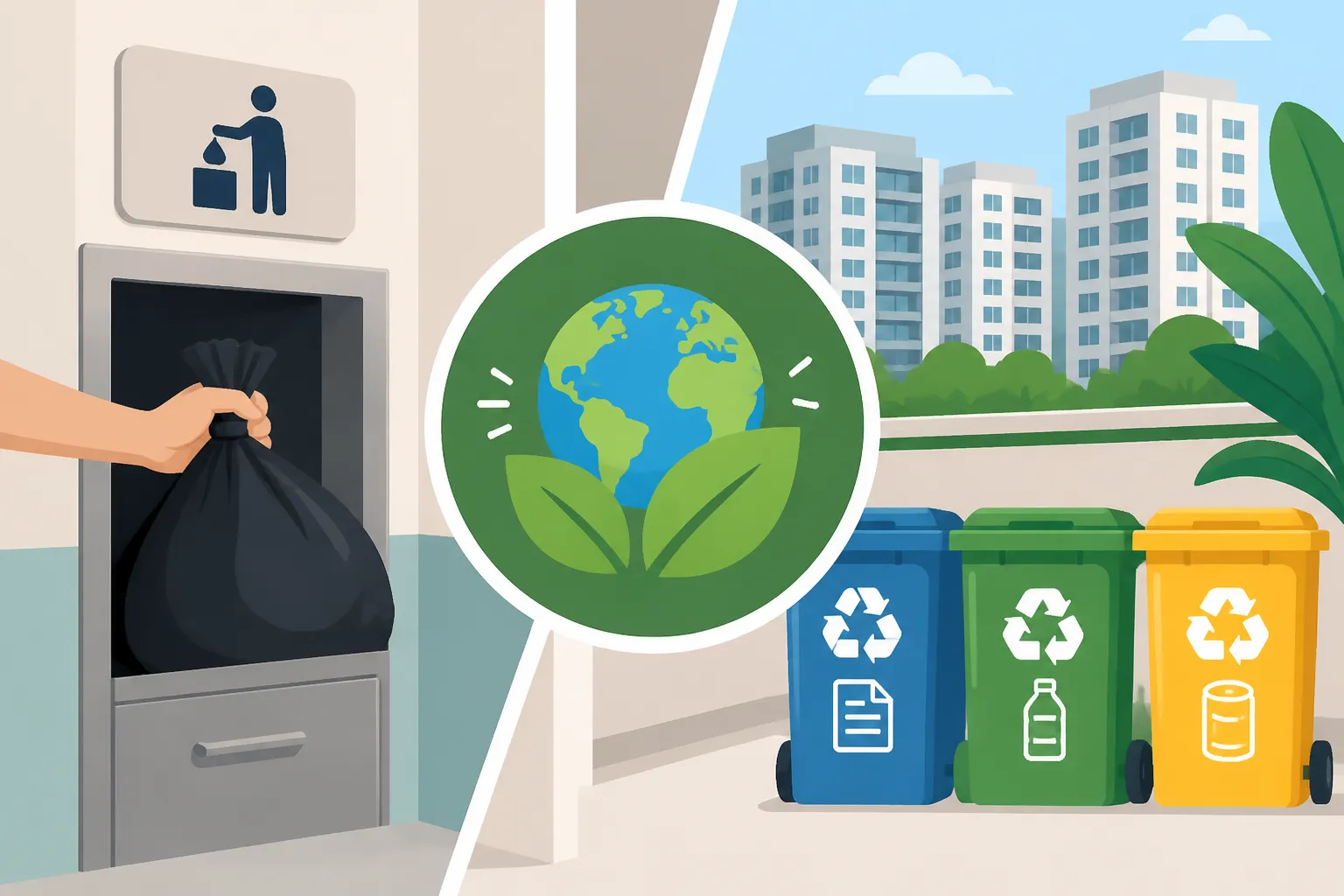
For those of you in HDB flats, the trash chute is your primary gateway for daily refuse. These chutes are typically located within your apartment, often in the kitchen or utility area, usually behind a small, unassuming door. It’s incredibly convenient – a quick flick of the wrist and your garbage is gone, whisked away to a central bin at the bottom of the block. This system is a marvel of urban planning, designed to keep public corridors clean and minimize the sight and smell of trash.
However, convenience comes with responsibility. The golden rule for HDB chutes is: bag all your trash tightly. Loose items can get stuck, attract pests like cockroaches, or create blockages, leading to unpleasant odors for everyone on your stack. Furthermore, avoid throwing liquids down the chute; these can leak and cause staining or structural issues in the long run. Use sturdy, sealed bags, especially for food waste, to maintain hygiene and prevent attracting unwanted critters. Remember, these chutes are a shared resource, and proper usage benefits the entire community.
Condo Centralized Bins and Refuse Chambers
If you're residing in a condominium, your daily waste disposal system might vary slightly, but it generally revolves around centralized refuse chambers or designated bin areas. Some older condos might have communal chutes on each floor, similar to HDBs, while newer developments often feature a dedicated refuse room or centralized bins in the basement or ground floor. It's crucial to check with your building management or fellow residents when you first move in, as the exact location and protocol can differ significantly from one condo to another.
These centralized areas are typically well-maintained, but again, bagging your trash thoroughly is paramount. Condos, with their more diverse resident mix, sometimes see a wider range of waste, making proper segregation and bagging even more important to prevent cross-contamination or pest issues. You'll often find separate bins for general waste and recyclables within these refuse rooms, which brings us to the next crucial topic: recycling. Getting familiar with your condo's specific system is part of managing your Singapore household effectively, along with things like setting up your utilities, Wi-Fi, and other essentials.
Understanding Singapore’s Recycling System
One of the most common questions I get from new arrivals is about recycling. In many Western countries, recycling is a multi-bin, color-coded, item-specific affair that can be quite complicated. Singapore aims for simplicity, but that simplicity sometimes leads to confusion, particularly the "single-stream" approach. Don't let anyone tell you Singapore doesn't recycle; we absolutely do, and understanding how it works is key to reducing your environmental footprint here.
What Goes Into the Recycling Bin and What Doesn’t
Singapore operates on a single-stream recycling system. This means that all your recyclables – paper, plastics, glass, and metals – generally go into the same designated blue recycling bin. It sounds incredibly easy, and in theory, it is! You don’t need to sort by material type at home, which is a huge convenience. However, there are crucial caveats that often lead to contamination.
The biggest mistake people make is placing food-stained items or non-recyclables into the blue bin. Here’s a quick rundown of what should and shouldn't go in:
| Category | What Goes In (Clean & Dry) | What Doesn't Go In (General Waste) |
|---|---|---|
| Paper | Newspapers, magazines, cardboard boxes (flattened), junk mail, office paper. | Tissues, paper towels, greasy pizza boxes, wet paper, waxed paper. |
| Plastics | Plastic bottles (rinsed), food containers (rinsed, no food residue), plastic bags (bundled), plastic packaging. | Styrofoam (food containers, packaging), plastic toys, CDs/DVDs, plastic cutlery, toothbrushes, cling wrap. |
| Glass | Glass bottles (rinsed), jars (rinsed). | Broken glass (dangerous), ceramics, mirrors, light bulbs, Pyrex dishes, spectacles. |
| Metals | Aluminum cans (rinsed), tin cans (rinsed), metal containers. | Aerosol cans (unless empty and punctured), pots and pans, electronics, batteries, metal parts from appliances. |
The "clean and dry" rule is paramount. If a plastic container still has food residue, it will contaminate the entire batch of recyclables, rendering them unusable. A quick rinse is often all that's needed. This diligent effort on your part ensures that the recyclables collected can actually be processed and given a new life, rather than ending up in the incinerator with general waste.
Locating Your Nearest Recycling Bins
For residents in HDB estates, you'll typically find large, communal blue recycling bins located at the foot of your block or within designated refuse collection points. These bins are emptied regularly by appointed public waste collectors. It's a good idea to scout out the exact location when you first move in, especially if you plan to diligently sort your waste. Sometimes they are a bit hidden, or behind a block, so keep an eye out.
In condominiums, as mentioned earlier, recycling bins are usually integrated into the centralized refuse rooms or designated collection areas. They might be smaller, but they operate on the same single-stream principle. Additionally, you'll often see public recycling bins in shopping malls, community centers, and even some schools. These are particularly useful for recycling on the go. Always look for the iconic blue bin with the recycling logo. Knowing your way around these collection points is part of settling into your new neighborhood, much like figuring out the Public Transport in Singapore: MRT, Buses, and Commuting Hacks. Every little bit of effort helps Singapore achieve its ambitious environmental goals.
Specialized Disposal: Beyond the Blue Bin
While daily general waste and common recyclables are straightforward, Singapore's waste management system also accounts for items that require special handling. These include bulky furniture, electronic waste (e-waste), and hazardous materials. Ignoring these categories can not only lead to fines (Singapore has strict laws against littering and improper disposal) but also cause environmental harm. So, let’s dive into how to responsibly dispose of those less common, but equally important, waste items.
Disposing of Electronic Waste E-Waste
E-waste is a growing concern globally, and Singapore has a comprehensive Extended Producer Responsibility (EPR) scheme in place to manage it. This scheme ensures that manufacturers and retailers are responsible for the proper collection and treatment of e-waste. You can't just toss your old laptop, defunct hairdryer, or broken microwave down the trash chute. Doing so can release harmful chemicals into the environment and clog up the waste stream.
Instead, look for designated e-waste collection points. These are typically found in major shopping malls, community centers, and often at electronic retail stores. Companies like StarHub, Singtel, and even major retailers like Courts and Harvey Norman participate, offering bins or take-back services for old electronics. The National Environment Agency (NEA) also provides a map of all e-waste collection points on their website, making it easy to find one near you. For larger appliances like refrigerators or washing machines, some retailers offer free old appliance removal services when you purchase a new one. It's an easy win for both convenience and the environment.
Bulky Item Disposal for Moving Out or Renovating
Moving homes or doing a bit of spring cleaning often means getting rid of large, unwieldy items like old sofas, mattresses, or broken wardrobes. You absolutely cannot leave these by the communal bins or in your corridor – that’s a quick way to incur a fine from the Town Council. This is where the local Town Councils become your best friend. Most Town Councils offer a service for bulky item removal for HDB residents, often for free or a minimal fee, usually once a month.
The process typically involves calling your Town Council in advance to schedule a collection. They will usually ask you to place the items at a designated point (like the ground floor void deck) on a specific day for their team to pick up. For condo dwellers, your Management Corporation Strata Title (MCST) often has similar arrangements or can advise you on approved contractors. If you're moving house, professional moving companies, such as Sirelo listed on various expat guides, often offer disposal services as part of their package, or you might need to arrange a separate junk removal service. Being proactive about this, especially when you're preparing to move out and ensure Getting Your Deposit Back: Navigating End-of-Lease Cleaning and Disputes, can save you a lot of hassle and potential penalties. Make sure to check the specific guidelines of your Town Council or condo management well in advance.
Hazardous and Chemical Waste
This category includes items like expired medications, batteries, paint, solvents, and certain cleaning agents. These materials cannot be simply thrown into general waste or flushed down the drain due to their potential to harm the environment and public health. For household batteries, you’ll find dedicated battery recycling bins at many community centers and shopping malls.
Expired medications should be returned to polyclinics or hospitals, where they have proper disposal protocols. For other chemical waste, the NEA occasionally organizes specific collection drives, so it’s worth keeping an eye on their announcements. For businesses or larger quantities, specialized hazardous waste disposal companies are available. While rare for individual expats, it's crucial to be aware of the proper channels should you find yourself with such waste. Improper disposal of these items can pose significant risks to both sanitation workers and the environment, underscoring why Singapore enforces Strict Laws: Chewing Gum, Littering, Jaywalking, and Smoking Zones and other regulations so diligently.
Common Misconceptions and Expat Challenges
Despite Singapore's reputation for efficiency and clear rules, expats often encounter a few head-scratching moments when it comes to waste management. It's easy to bring assumptions from our home countries, only to find that things work a little differently here. Addressing these common challenges can help you avoid frustration and integrate more smoothly into local practices.
The "No Recycling" Myth and Why It Persists
One persistent rumor circulating among expats is that "Singapore doesn't really recycle" or that "all recyclables just go to the incinerator anyway." This is a significant misconception, and it's simply not true. While Singapore does rely heavily on incineration for general waste due to land scarcity, the recycling program is very real and actively supported by the government and various organizations. The myth likely stems from a few sources: the single-stream system (which can look less "serious" than multi-bin sorting), contamination issues from improper disposal, and perhaps a general lack of visibility on where the collected recyclables actually go.
The truth is, items placed in the blue recycling bins are collected and sent to Material Recovery Facilities (MRFs), where they are sorted, processed, and then either sold to local or international recycling plants. Contamination is a challenge – items with food residue, for example, can indeed render an entire batch unrecyclable. But this doesn't mean the system is a sham; it means individual effort is crucial. Each time you rinse a plastic bottle or flatten a cardboard box before putting it in the blue bin, you're directly contributing to Singapore's recycling efforts. It's about being mindful and doing your part to make the system work as intended.
Language Barriers and Information Access
For many new expats, the sheer volume of new information, often presented in Singlish or government-speak, can be overwhelming. While English is an official language and widely spoken, detailed guidelines on waste management might be found on Town Council websites that are not always the most user-friendly, or in public notices that you might overlook. This can make it tricky to figure out the exact protocols for your specific HDB block or condo.
My advice? Don’t be afraid to ask! Your neighbors, the building management, or your property agent are often excellent sources of localized information. There are also numerous online expat forums and social media groups where you can pose questions and get practical advice from others who have navigated the same learning curve. Websites like the National Environment Agency (NEA) and your specific Town Council website (for HDB residents) are also invaluable resources for official guidelines. It's a bit like when you're trying to figure out your internet providers in Singapore or understand your utility bills – sometimes a quick chat with a local can clarify things faster than sifting through official documents. Taking the time to understand these local nuances will not only ensure proper waste disposal but also help you prevent issues like Preventing Cockroaches, Ants, and Lizards in a Tropical Home which can be linked to improper waste management.
Singapore's Zero Waste Vision and Your Role
Singapore is a small island nation with limited land for landfills. This geographic reality has pushed the country to adopt highly innovative and ambitious waste management strategies, culminating in its "Zero Waste Masterplan." As an expat living here, understanding this broader context helps you appreciate the rationale behind the strict rules and encourages you to play an active role in these efforts.
Singapore's Zero Waste Masterplan: Goals and Initiatives
The Singapore's Zero Waste Masterplan: Goals and initiatives outlines the nation's vision to transform from a "throwaway" society into a circular economy. The ambitious goal is to reduce the amount of waste sent to Semakau Landfill (Singapore's only offshore landfill) by 30% per capita per day by 2030. This involves a multi-pronged approach focusing on reducing, reusing, and recycling. From encouraging businesses to minimize packaging to implementing schemes for specific waste streams like e-waste, the plan is comprehensive.
As residents, our role is crucial. Reducing consumption, choosing reusable options, and diligently separating our waste for recycling or proper disposal all contribute to this national goal. Every effort, no matter how small it seems, collectively helps to extend the lifespan of Semakau Landfill and reduce Singapore's carbon footprint. It’s a collective responsibility that aligns with the nation’s commitment to sustainability and environmental stewardship. This isn’t just about keeping the city clean; it’s about ensuring a livable future for everyone here.
Food Waste Management: Digesters and Separate Collection
Food waste constitutes a significant portion of Singapore's general waste. To tackle this, various initiatives are being rolled out, especially in hawker centers, larger F&B establishments, and increasingly in residential areas. Some large condo developments have even installed food waste digesters on-site, which convert food scraps into non-potable water or compost, significantly reducing the amount of waste that needs to be collected.
You might also notice separate food waste bins appearing in some HDB estates, as part of pilot programs. If your area introduces such bins, it’s a fantastic opportunity to further segregate your food scraps, preventing them from being incinerated. This diverts valuable organic material from the general waste stream and allows it to be processed in a more environmentally friendly manner. Keeping an eye out for these initiatives in your neighborhood and participating actively is another way to support Singapore’s zero-waste journey. It's all part of the continuous evolution of waste management, a critical aspect of Renting in Singapore: The Ultimate Guide for Expatriates (2026), ensuring that your household operations contribute positively to the environment.
Disclaimer
Please note that waste disposal rules and services can be updated by the National Environment Agency (NEA) or individual Town Councils and condominium managements. While this guide provides general information and best practices, it is always advisable to check the most current guidelines from official sources or your specific building management. This information is for general guidance only and not legal advice.