Finding a Pediatrician Who Speaks Your Native Language
There is nothing quite like the sheer, unadulterated panic of a toddler spiking a 40-degree fever at 2 AM in a country where you’ve only just learned how to order coffee. I remember standing in my kitchen in River Valley, heart racing, wondering if I could properly explain my daughter’s history of febrile seizures accurately under stress, even though English is my first language—now imagine doing that in your second or third. This guide solves the high-stakes challenge of finding a pediatrician in Singapore who speaks your native tongue, ensuring your child’s health never gets lost in translation.
The Emotional and Clinical Importance of Language in Pediatric Care
When your child is sick, your brain doesn’t function at its highest cognitive level. You are operating on adrenaline, fear, and likely a massive sleep deficit. In these moments, reverting to your native language isn't just a matter of comfort; it is a matter of clinical safety. While Singapore is a global hub where English is the primary language of administration and medicine, the nuances of "medical English" can be vastly different from the colloquial English used in your home country. Even more critically, if English is not your first language, trying to describe the specific "rhythm" of a cough or the exact shade of a rash can lead to misdiagnosis or unnecessary parental stress.
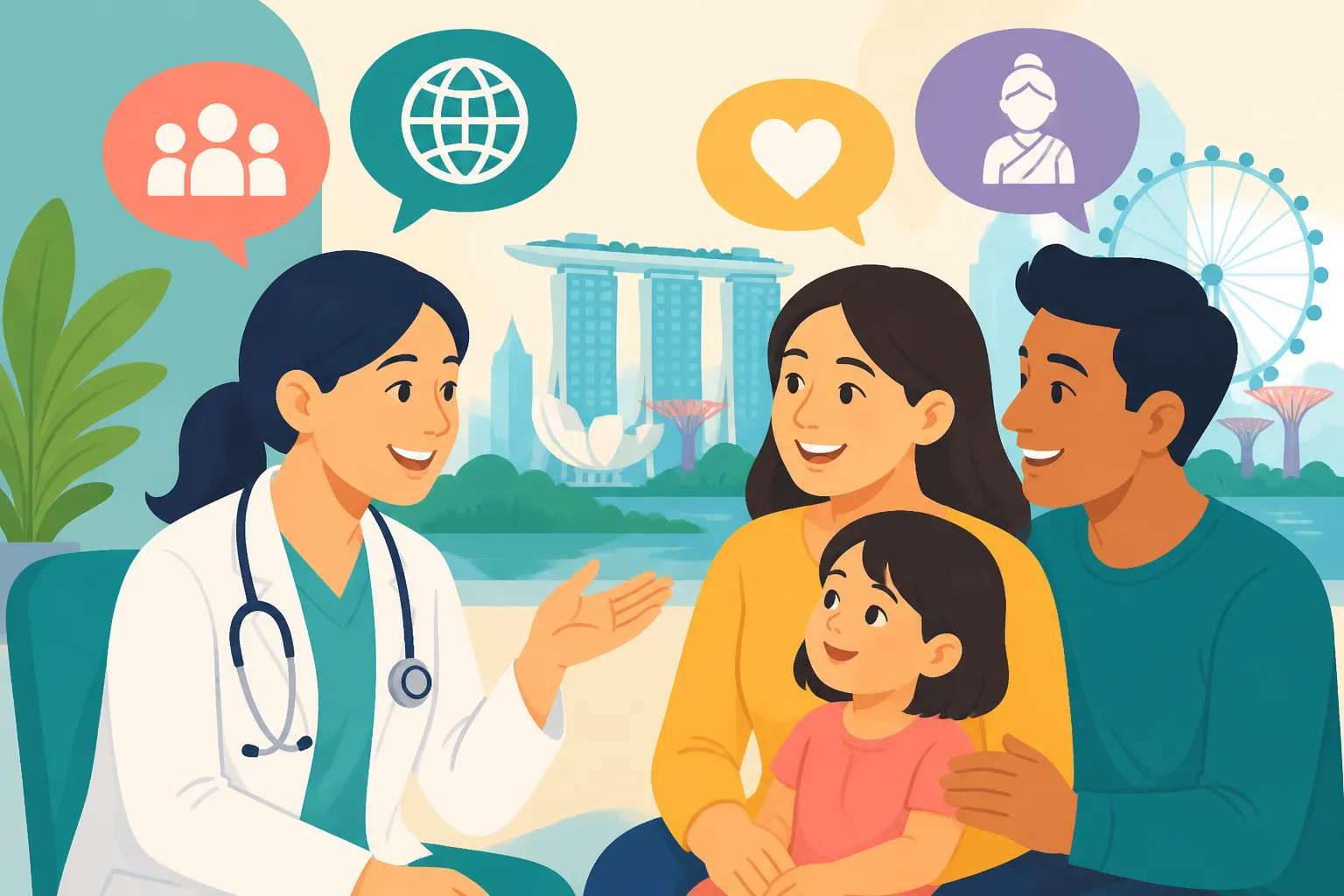
Beyond the technical jargon, there is the "heart" of parenting. Every culture has its own philosophy regarding childhood illnesses, sleep training, weaning, and even the "acceptable" temperature for a room. A pediatrician who shares your language often shares these cultural touchpoints. They understand why a French parent might be concerned about certain digestive issues or why a Japanese parent might have specific expectations regarding developmental milestones. Finding someone who speaks your language often means finding someone who "gets" your parenting context without you having to explain it for twenty minutes.
Furthermore, children themselves are the most vulnerable participants in this process. A child who is already miserable and poked by a stranger in a white coat will feel significantly more at ease if that doctor can soothe them in a language they hear at home. Children can transform from sobbing messes to curious patients just because a doctor used a few familiar nursery rhyme references or greeted them in a way that felt like home. This rapport is essential for building a long-term relationship with a doctor who will guide you through the Family Health Guide: Maternity, Pediatrics, and Child Development.
Strategic Searching for Linguistically Compatible Specialists
Singapore’s medical landscape is incredibly diverse, but it isn't always easy to filter for specific languages on a whim. The first place most expats start—and where I found my first success—is through the private hospital directories. Large groups like IHH Healthcare, which manages Mount Elizabeth, Gleneagles, and Raffles: Premium Private Hospitals, maintain extensive online databases. You can usually filter these by "Language Spoken." Don't just look for "English" and "Mandarin"; many doctors who have trained in Europe or Japan will list French, German, or Japanese as secondary languages.
Another vital resource is the embassy or consulate of your home country. Most embassies in Singapore maintain a "List of Doctors" for their citizens. These lists are goldmines because the doctors included have often been vetted or have a long history of serving that specific expat community. For instance, the German and French communities in Singapore are very well-served by specific clinics in the Bukit Timah and Orchard areas. If you are using a comprehensive plan like Cigna Global, you can also use their member portal to filter for providers who match your linguistic requirements, which saves you the manual labor of calling every clinic in the yellow pages.
Social media and expat forums are your "boots on the ground." However, a word of caution: take everything with a grain of salt. One person’s "fluent" is another person’s "basic conversational." When you see a recommendation on a Facebook group, send a private message to the person who posted it. Ask them specific questions: "Did the doctor explain the prescription in our language?" or "Could they handle a complex medical discussion, or just small talk?" This is particularly important if your child has a chronic condition that requires navigating the National Childhood Immunisation Schedule: What Your Child Must Have or complex developmental tracking.
The Role of Private Insurance Networks
Your insurance provider is more than just a way to pay the bills; they are often the gatekeepers to specialized care. If you are on a high-tier plan like Cigna Global, you likely have access to a dedicated concierge service. They can even help you understand Expat Health Insurance in Singapore: Public vs Private Coverage so you aren't surprised by the bill later.
For those on more flexible or digital-first plans like SafetyWing, which often cater to the "nomadic" expat or the remote worker, the approach might be different. You may have to find the doctor first and then confirm coverage. SafetyWing is excellent for those who might be in Singapore for a shorter stint or are waiting for their corporate coverage to kick in, but you should always verify if the specific private pediatrician is within their "usual and customary" rate.
| Language Group | Common Clinic Locations | Typical Waiting Time |
|---|---|---|
| Japanese | Orchard, Novena | 1-3 Days |
| French | Bukit Timah, Tanglin | 2-5 Days |
| German | Orchard, Central | 2-4 Days |
| Spanish | Novena, River Valley | 3-7 Days |
| Korean | Tanjong Pagar, Novena | 1-3 Days |
Navigating the First Visit and Beyond
Once you have a name, the first visit is essentially an interview. It is wise to book a non-emergency appointment first—perhaps for a routine growth check or to discuss Routine and Travel Vaccinations: Preparing for Regional Asia Travel. This allows you to test the linguistic waters without the pressure of a sick child in your arms. When you call to book, ask specifically for the doctor’s level of proficiency. Some clinics have "International Patient Liaisons" who can act as a bridge, but for pediatrics, you really want that direct line of communication with the doctor.
During this first visit, observe the staff as well. Is the nurse or the receptionist able to communicate in your language? While the doctor is the priority, the administrative side of Singaporean healthcare can be a hurdle. You will need to understand billing, follow-up instructions, and how to use the clinic's portal. If you are struggling to understand Polyclinic vs Private Clinics: Waiting Times and Cost Differences, a staff member who speaks your language can be an absolute lifesaver when it comes to navigating the paperwork.
Don't be afraid to ask about the doctor's training. Many Singaporean doctors have completed fellowships in the UK, USA, Australia, or even non-English speaking countries like Germany or Japan. A doctor who spent five years in your home country will not only speak the language but will also understand the medical culture you are used to. They will know what "Calpol" is if you’re British, or why you’re asking for a specific brand of formula from home. This level of comfort is worth every penny of the private consultation fee.
Preparing Your Records
Before you even step foot in the clinic, you need to have your "medical life" in order. If your child’s records are in a foreign language, it is highly beneficial to have a summary translated into English, even if the doctor speaks your native tongue. Why? Because if there is an emergency and you end up at the Emergency Medical Care in Singapore: Ambulances and A&E Wards, the on-call staff will need to read those records instantly. A bilingual pediatrician can help you bridge this gap by maintaining your child’s local records in English while discussing them with you in your language.
It is wise for new arrivals to keep a digital folder of every vaccination record, birth certificate, and previous specialist report. When you are switching to a new doctor, they will need to verify if your child is up to date with the local requirements. If you're coming from a country with a different vaccination schedule, your bilingual doctor will be the best person to explain why Singapore requires certain jabs that your home country might not, and vice versa. This is a common point of confusion that a good Finding English-Speaking and Internationally Trained Doctors can resolve quickly.
What to Do When Language Fails in an Emergency
Sometimes, despite your best efforts, your "perfect" bilingual pediatrician isn't available. Maybe it’s a public holiday, or maybe it’s 3 AM. In these cases, you will likely find yourself at one of the 24-Hour Clinics in Singapore: After-Hours Medical Care Guide or a major A&E. In an emergency, the priority is clinical stabilization, not linguistic comfort. However, you can still manage.
Keep a "cheat sheet" on your phone in English that lists your child’s name, age, weight (in kilograms!), allergies, current medications, and a brief history of any chronic issues. If your English is limited, use a translation app to have these points ready to show the triage nurse. Most major hospitals in Singapore, such as Raffles or Mount Elizabeth, have access to translation services, but they can take time to mobilize. Being prepared with your own written summary is your best defense.
Remember that after an emergency visit, you can always request the medical report and take it back to your regular, native-speaking pediatrician for a "debrief." They can explain the hospital's findings in your language and ensure the follow-up care is consistent with your preferences. This is where having a plan like SafetyWing or Cigna Global is vital, as they often provide 24/7 helplines that can offer some level of tele-consultation or advice in multiple languages while you are navigating the local hospital system.
Long-Term Healthcare Budgeting for Specialists
Finding a niche specialist like a bilingual pediatrician often comes with a higher price tag. These doctors are usually found in private practices or "premium" medical centers. You aren't just paying for the medical degree; you are paying for the specialized communication and the shorter wait times. It’s important to factor this into your Healthcare Budgeting in Singapore: Managing Out-of-Pocket Costs.
A standard consultation with a private pediatrician can range from S$150 to S$300, excluding medication and tests. If you find a doctor who is in high demand because of their language skills, expect to pay on the higher end of that scale. This is why I always emphasize the need for robust insurance. A plan that covers "outpatient specialist care" is non-negotiable for expat families. If your company-provided plan is thin, you might look at a top-up from Cigna Global to ensure you can see the doctor of your choice, rather than being forced into a crowded waiting room at a clinic where no one understands your concerns.
Summary Table: Language Resources for Families
| Resource Type | Best For | Link/Source Tip |
|---|---|---|
| Embassy Medical List | High-stakes language accuracy | Visit your home country's embassy "Consular Services" page |
| Hospital Find-a-Doctor | Filtering by specific languages | Search "Doctor Finder" on the IHH or Raffles Medical websites |
| Expat FB Groups | Cultural fit and bedside manner | Search "Singapore Your Nationality Expats" |
| Insurance Concierge | Verifying coverage and booking | Call the number on the back of your Cigna Global card |
| HealthHub App | Viewing records and schedules | Requires Singpass; best for PRs and long-term EP holders |
Important Health and Medical Disclaimer
The information provided in this guide is for educational and informational purposes only and does not constitute professional medical advice, diagnosis, or treatment. Always seek the advice of your physician or other qualified health provider with any questions you may have regarding a medical condition. Never disregard professional medical advice or delay in seeking it because of something you have read in this article. If you think you may have a medical emergency, call 995 or go to the nearest emergency room immediately. External links to insurance providers like SafetyWing and Cigna Global are provided for your convenience and do not imply a clinical endorsement of their services. Use of the information on this site is solely at your own risk.