Do Expats Have Access to HDB Housing Loans?
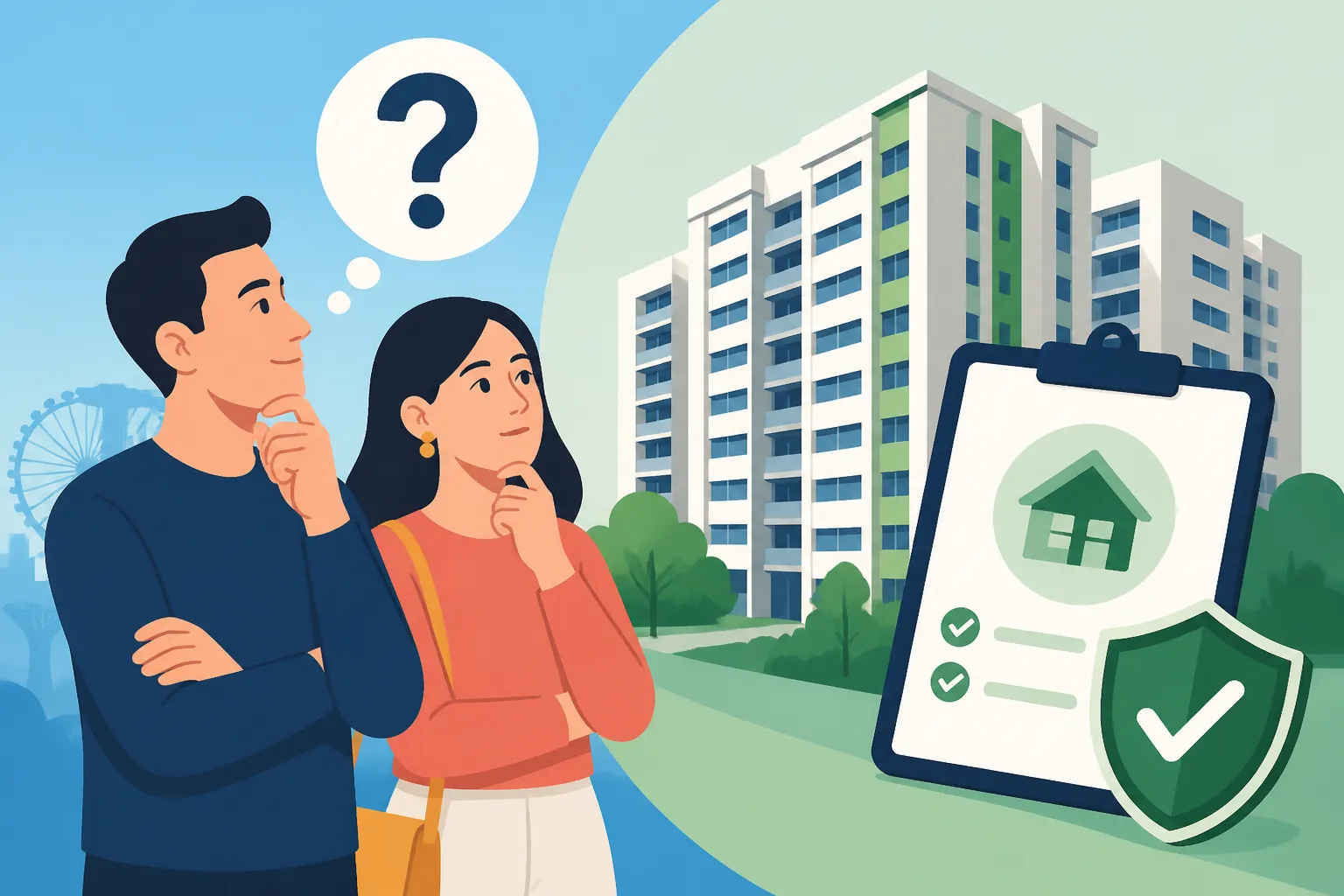
One of the most jarring experiences for any newcomer to the Little Red Dot is the first time you browse property listings and realize that a modest two-bedroom condo costs more than a literal mansion back home. You see the massive, colorful blocks of Housing & Development Board (HDB) flats where the majority of locals live and wonder if that’s your ticket to affordable living. This guide solves the confusion around whether expats can access HDB housing loans, details the strict eligibility criteria for HDB ownership, and outlines the realistic financing alternatives available to you.
The Reality Check: Who Qualifies for HDB Housing Loans
If you have spent any time scrolling through expat forums, you have likely seen the term "HDB concessionary loan" tossed around as if it were a golden ticket. In the world of Singaporean real estate, it practically is. These loans offer a stable interest rate (currently pegged at 0.1% above the prevailing CPF Ordinary Account interest rate) and require a lower downpayment than most private bank options. However, for the vast majority of expats, the door to these loans is not just cracked shut—it is double-locked and bolted.
The Citizenship Barrier
The hardest truth to swallow for most foreigners is that HDB concessionary loans are strictly reserved for Singapore Citizens. Even if you are a high-earning Employment Pass holder who has lived here for a decade, the HDB will not extend a government loan to you. The system is designed as a social safety net to ensure locals can afford a roof over their heads, not as a financial vehicle for the international workforce. This often comes as a shock to those moving from countries where residency alone grants you access to nationalized lending schemes.
Permanent Residents and the PR Quota
If you have successfully navigated the Permanent Residency (PR) in Singapore: Paths, Points, and Processes journey, your options do improve, but only slightly. While a PR can technically buy a resale HDB flat (subject to the 3-year wait rule), they are still ineligible for the HDB concessionary loan. As a PR, you are legally required to source your financing from private financial institutions. This means your "access" to HDB living is limited to the physical structure, not the government-backed financing that makes it so attractive to the local population.
The Income Ceiling Trap
Even for those who might have a local spouse—a common "way in" for many expats—there is the dreaded income ceiling. HDB loans and the ability to buy certain types of flats are restricted based on the combined monthly household income. If you and your partner are both working professional roles, there is a very high probability that you will "bust" the ceiling. For example, the current ceiling for families is often capped at S$14,000. In a city where Expat Salaries in 2026: Local Packages vs Traditional Expat Packages often exceed this for a single earner, you might find yourself ineligible for government housing assistance purely because you are "too successful" by the board’s metrics.
Financing Options for Foreigners and Permanent Residents
Since the government loan is off the table, how do you actually pay for a home here? Whether you are eyeing a resale HDB as a PR or a private condominium as an EP holder, you will be entering the world of private bank mortgages. This is where your financial planning needs to become much more granular.
Bank Loans vs HDB Concessionary Loans
The primary difference you will encounter is the Loan-to-Value (LTV) limit. While HDB loans have historically allowed for higher leverage, bank loans typically cap out at 75% LTV. This means you need to have 25% of the property price ready in cash or CPF (if you are a PR). For an expat, this 25% is a massive hurdle, especially when you factor in the Buying Property: Additional Buyer’s Stamp Duty (ABSD) Rates for Foreigners. You aren't just saving for a house; you are saving for a massive tax bill that the bank will not finance.
Fixed Rate vs Floating Rate (SORA)
When you approach a local bank like DBS, OCBC, or UOB, you will be presented with a dizzying array of options. Most are now pegged to the Singapore Overnight Rate Average (SORA). As an expat, you must decide between the stability of a fixed rate—usually for 2 to 3 years—or the potential savings of a floating rate. Many veteran expats prefer fixed rates because our lives are already subject to so much volatility (visa renewals, global economy shifts). Knowing exactly what your mortgage payment is every month helps when Budgeting in Singapore: Cost of Living Benchmarks for Expats.
The Role of Multi-Currency Accounts for Downpayments
If you are bringing in significant capital from your home country to fund a downpayment, do not simply wire it to a local bank and hope for the best. The "hidden" exchange rate markups can cost you thousands of dollars on a S$500,000 transfer. Using a service like Wise is often the smartest move here. It allows you to hold and convert funds at the mid-market rate, ensuring that more of your hard-earned savings go toward your home equity rather than bank fees. Careless FX transfers can cost the equivalent of a year's worth of maintenance fees.
| Feature | HDB Concessionary Loan | Private Bank Loan |
|---|---|---|
| Eligibility | Singapore Citizens Only | Citizens, PRs, and Foreigners |
| Max LTV | Up to 80% (subject to changes) | Typically 75% |
| Interest Rate | Pegged to CPF OA (currently 2.6%) | Pegged to SORA or Fixed |
| Downpayment | Lower cash requirement | 25% (at least 5% must be cash) |
| Repayment | Deductible from CPF | Deductible from CPF (for PRs) |
Can Expats Buy HDB Flats at All?
Before you even worry about the loan, you have to look at the eligibility to own. This is where many expats get their wires crossed. Buying an HDB flat is not like Renting in Singapore: The Ultimate Guide for Expatriates (2026) where you just sign a lease and move in.
Eligibility for EP and S Pass Holders
If you are on an Employment Pass or an S Pass, the short answer is: No, you cannot buy an HDB flat. You are restricted to the private residential market. This includes condominiums, apartments, and in very rare cases (like Sentosa Cove), landed property. If you try to apply for an HDB as a non-PR foreigner, the system will flag you immediately. This is a common point of frustration for families who want to stay long-term but find the Cost of Living for an Expat Family with Kids: School, Housing, and Car becomes unsustainable due to high private rents.
The PR 3-Year Wait Rule
For those who have just received their blue IC, don't go popping the champagne and calling a property agent just yet. Singaporean law requires a "Permanent Resident Household" (where no one is a citizen) to wait three years from the date of obtaining PR status before they are allowed to buy a resale HDB flat. During those three years, you are still relegated to the rental market or the private purchase market. This rule was implemented to prevent a surge in demand from new PRs and to ensure that people are truly committed to staying in Singapore before they benefit from public housing.
Buying Property: Additional Buyer’s Stamp Duty (ABSD) Rates for Foreigners
This is the "elephant in the room." Even if you find a way to finance a home, the government’s cooling measures are designed to discourage foreign speculation. As of the latest cooling measures, a foreigner buying their first residential property faces a staggering 60% ABSD. If you are a PR, the rate is much lower (5% for your first home), which is a huge incentive to push for residency. If you are an American citizen or a national of certain countries with Free Trade Agreements (like Switzerland or Iceland), you may be eligible for the same tax treatment as a Singapore Citizen, but you must still navigate the Singapore Income Tax for Foreigners: IRAS Rules and Filing (2026) hurdles.
Financial Planning and Hidden Costs
Living in Singapore as an expat requires a high degree of financial literacy. You cannot rely on the same systems you used back home. Owning a property here, especially without access to an HDB loan, means you are playing a high-stakes game.
Budgeting for Downpayments and Legal Fees
When you buy a property, the price tag you see on PropertyGuru is just the beginning. You need to account for:
- Stamp Duty: Both the Buyer’s Stamp Duty (BSD) and the aforementioned ABSD.
- Legal Fees: Expect to pay between S$2,500 and S$5,000 for a conveyancing lawyer.
- Valuation Fees: The bank will require a professional valuation of the property before they approve your Getting an In-Principle Approval for a Singapore Mortgage.
- Agent Commissions: While buyers usually don't pay commissions for private property, the rules are different for HDB resale flats.
Tax Implications of Property Ownership
Owning property in Singapore can complicate your tax situation, especially if you are a US citizen. You will need to consider how your mortgage interest and property taxes are treated in both Singapore and your home country. Consulting with a specialist firm like Taxes for Expats is highly recommended to ensure you aren't accidentally committing tax evasion or missing out on foreign tax credits. The interaction between Singapore’s territorial tax system and the global tax systems of other nations is a minefield for the uninitiated.
Navigating the Bank Account Requirements
To secure a bank loan, you will first need to prove your financial standing. This starts with Opening a Bank Account in Singapore: Required Documents for Foreigners. Banks will want to see at least 3 to 6 months of payslips, your Employment Pass details, and a clear record of your existing debts. If you have significant debt back home—be it student loans or a mortgage on a vacation home—it will affect your Total Debt Servicing Ratio (TDSR) in Singapore, potentially lowering the amount the bank is willing to lend you.
The Emotional Toll of the Housing Search
I want to take a moment to validate the frustration you are likely feeling. It is incredibly demoralizing to realize that the "affordable" housing you see all around you is a "club" you aren't invited to. Many expats spend months researching only to realize they are stuck in the "Condo Cycle"—paying high rents for amenities they might not even use, like a tennis court they never visit or a pool that is always crowded on weekends.
If you are a PR, the wait is long, and the paperwork is exhausting. You might find yourself Registering for Medisave as a Newly Approved Permanent Resident and realizing that every step of integration comes with a new set of rules and a new portal to log into. It is a marathon, not a sprint. The best thing you can do is accept that an HDB loan is not part of your journey and focus on building a robust private financial profile.
Comparing Your Long-Term Options
If you are planning to stay in Singapore for 10+ years, the math often favors buying, even with the high ABSD for PRs. However, if you are an EP holder on a 2-year contract, the 60% ABSD makes buying a private property a mathematical impossibility for most. In that case, your focus should be on HDB vs Condo vs Landed: Choosing Your Singapore Home Type from a rental perspective to maximize your savings.
Don't let the lack of an HDB loan discourage you from making Singapore home. There are many ways to build a life here; it just requires a different set of financial tools than the ones the locals use. Whether it is using Wise to move your seed capital or working with Taxes for Expats to keep your global filings clean, your success depends on your ability to adapt to the local "rules of the game."
Disclaimer
This guide is for informational purposes only and does not constitute financial or legal advice. Regulations regarding HDB eligibility, loan-to-value limits, and stamp duty rates in Singapore are subject to frequent changes by the Ministry of National Development and the Monetary Authority of Singapore. Always consult with a qualified mortgage broker or a legal professional before making any significant property investments.