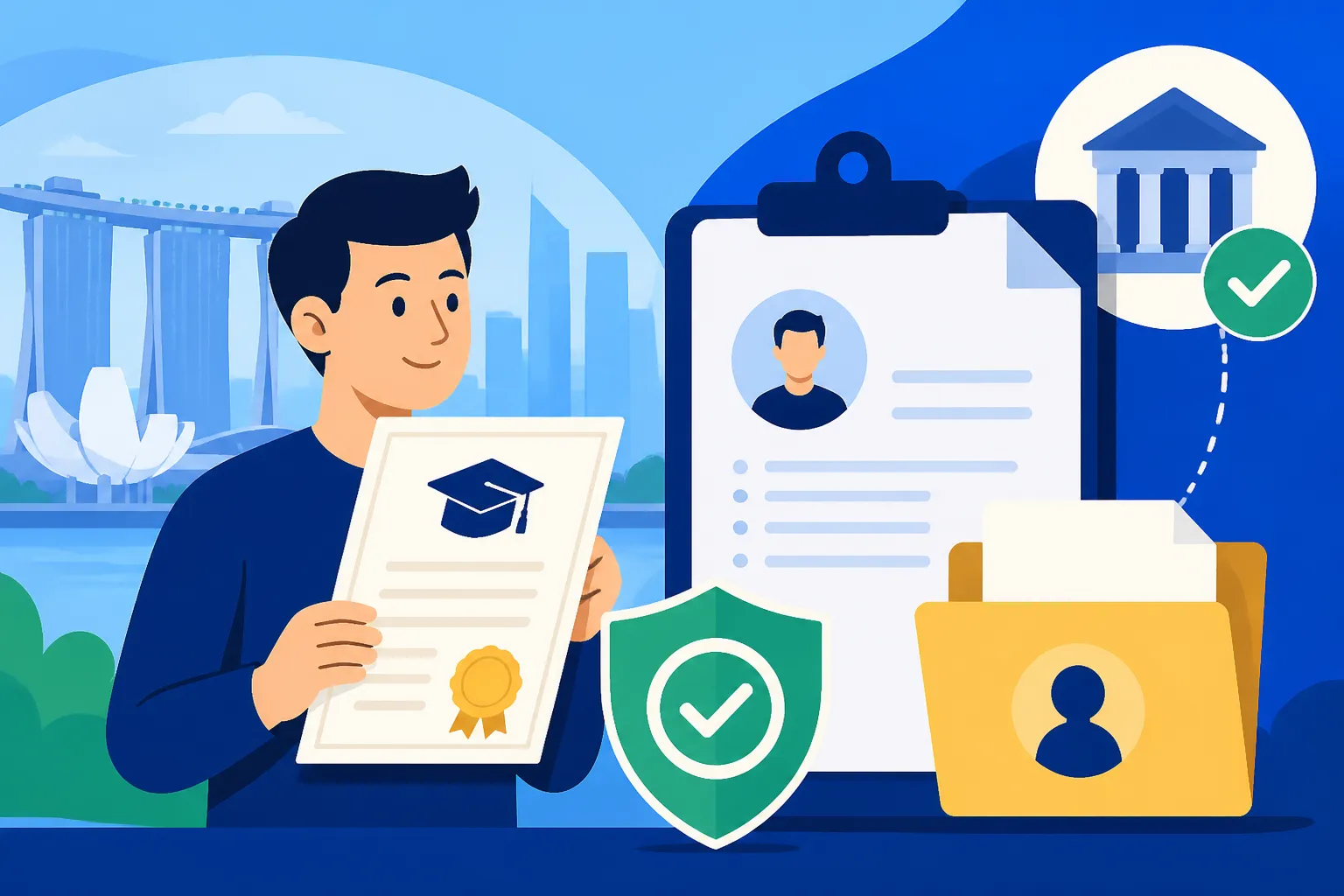
Getting a Degree Verification Certificate for Your EP Application
Landing that dream job in Singapore is thrilling, but the moment you hit the "Employment Pass application" button, a whole new layer of administrative hurdles can appear. One often-underestimated, yet absolutely critical, step is getting your educational qualifications verified. Many hopeful expats get stalled or even rejected because they didn't take this seriously enough. This guide will walk you through exactly what you need to do to ensure your degree verification process is smooth, compliant, and doesn't derail your exciting move to the Lion City.
Why Degree Verification is Absolutely Critical for Your Singapore EP
Navigating the nuances of immigration in Singapore can be a labyrinth, and one of the most non-negotiable aspects is the authenticity of your academic credentials. The Ministry of Manpower (MOM) takes a very firm stance on this, and for good reason. They are not just checking a box; they are safeguarding the integrity of Singapore's workforce and its global reputation.
The MOM's Stance on Authenticity (and Why They're So Strict)
Singapore is renowned for its high standards and low tolerance for fraud. This applies directly to the qualifications of individuals seeking to work here. The MOM’s primary objective is to ensure that all foreign professionals contribute genuinely to Singapore's economy and uphold its professional standards. They operate under a strict philosophy: if it's not verifiable, it's not valid. This approach helps prevent individuals from submitting fabricated degrees or inflated academic records, which could undermine the quality of the talent pool they are trying to attract.
The increasing scrutiny, particularly with the introduction of frameworks like the COMPASS system, means that every aspect of your application, including your educational background, is meticulously evaluated. Your academic qualifications are a key component of your human capital score under COMPASS, and any doubts about their authenticity can significantly impact your eligibility. Imagine going through the entire interview process, getting a fantastic offer, and then having it all fall apart because your degree couldn't be properly verified – it's a gut punch, and one that the MOM is actively working to prevent. They often cross-reference information with educational institutions globally and have systems in place to detect discrepancies.
Avoiding Delays and Rejection: The Cost of Incomplete Applications
The ripple effect of an unverified or poorly verified degree can be devastating. Beyond the emotional toll, there's a significant financial and career cost. Processing delays are common for applications with verification issues. What might seem like a minor oversight, like a missing official seal or an unofficial copy, can easily add weeks or even months to your EP processing time. This delay can put your job offer at risk, especially if your prospective employer has strict start dates or needs you on the ground urgently.
Some applicants have had to turn down job offers because their EP was indefinitely delayed due to verification problems, sometimes losing out on golden opportunities. In the worst-case scenario, an unverified or suspicious degree can lead to outright rejection of your Employment Pass application. A rejection not only means you miss out on the current opportunity but can also impact future applications, as a rejection leaves a mark on your immigration record. It's far better to invest the time and effort upfront to get it right than to face the frustrations and potential consequences later.
Navigating the Degree Verification Process: Your Step-by-Step Guide
So, what exactly does "getting it right" entail? It's about being thorough, proactive, and understanding the official channels. There are typically a few routes to go down, each with its own set of considerations.
Official Transcripts and Certification: Starting at the Source
The golden rule for degree verification is to always go directly to the source: your educational institution. The MOM expects to see official documents, not photocopies you made yourself or unsealed envelopes.
- Official Transcripts: Request official transcripts that are sealed by your university registrar. These usually come directly from the university in an envelope with a tamper-proof seal or are sent via secure digital platforms.
- Degree Certificates: You'll need a clear, high-quality copy of your actual degree certificate. While a photocopy is fine for initial submission, be prepared for the MOM to request direct verification from your university.
- Letters of Completion: If your degree certificate hasn't been issued yet but you've completed all requirements, a formal letter of completion from the registrar's office, on university letterhead and signed, stating your successful completion and degree awarded date, can be a temporary substitute.
Many universities globally use secure digital credentialing services such as Parchment, Digitary, or National Student Clearinghouse. These platforms allow your university to issue digital transcripts and degree verification letters directly to the MOM or to a third-party verification service, ensuring authenticity and often speeding up the process. Always check if your university offers such a service; it's usually the most reliable and efficient method.
Engaging Professional Verification Services: When and Why
For many expats, especially those with degrees from lesser-known institutions or complex academic histories, engaging a professional third-party verification service is highly recommended. These services act as an intermediary, directly contacting your university to confirm the authenticity of your degree and transcripts.
Key Benefits of Professional Verification Services:
- Reliability: They have established protocols and relationships with educational institutions worldwide, often streamlining communication.
- Speed: While not instantaneous, they can often expedite the process compared to individuals trying to navigate different university bureaucracies.
- Compliance: They understand the specific requirements of immigration bodies like Singapore's MOM, ensuring all necessary checks are performed.
- Direct-to-MOM Reports: Many services can provide a comprehensive verification report directly to the MOM or your prospective employer, adding an extra layer of credibility.
Some of the commonly recognized international credential evaluation and verification services include World Education Services (WES), Educational Credential Evaluators (ECE), or similar services recommended by your employer's HR or immigration specialists. Always check if your employer or the MOM has a preferred list of providers. These services typically involve a fee, which can range from S$100 to S$500 or more, depending on the complexity and urgency. The timeline can vary from a few days for quick digital checks to several weeks for more extensive verification processes, especially if international institutions are involved.
Here's a quick comparison of verification methods:
| Feature | Direct from University (Official Transcripts) | Third-Party Verification Service |
|---|---|---|
| Authenticity Level | High, direct from source. | High, verified by independent third party. |
| Cost | Varies (transcript fees, postage). | S$100 – S$500+ (service fees). |
| Processing Time | Varies by university (days to weeks). | Varies (days to several weeks). |
| Convenience | Requires direct interaction with university, mailing. | Handles interaction with university for you. |
| MOM Preference | Accepted, but may require further direct MOM checks. | Often preferred, provides comprehensive report. |
| Complexity Handling | Best for straightforward degrees. | Better for complex cases, foreign systems, or less responsive institutions. |
The Role of Notarization and Apostille (If Required)
For many standard Employment Pass applications, particularly for degrees from well-recognized universities in countries with established educational systems, a simple notarization or apostille might not be explicitly required. However, it's crucial to understand what these are and when they might be needed, as regulations can change, or your specific case might be deemed unusual.
- Notarization: This involves a public notary certifying that a copy of your document is a true copy of the original or that your signature on a document is authentic. It essentially adds a layer of legal credibility.
- Apostille: This is a higher level of certification, required for documents to be recognized in foreign countries that are signatories to the Hague Apostille Convention. It certifies the authenticity of the signature, the capacity in which the person signing the document acted, and where appropriate, the identity of the seal or stamp which the document bears.
Singapore is a signatory to the Hague Apostille Convention. So, if your degree is from a country that is also a signatory, an apostille might be the required form of certification for certain purposes or if specifically requested by the MOM. If your country is not a signatory, you might need embassy legalization instead, which is a more involved process. Always confirm with your employer or the MOM directly if notarization or an apostille is necessary for your particular educational background and nationality. Typically, a direct official verification from your university or a reputable third-party service is sufficient, but it's good to be aware of these extra steps.
Common Pitfalls and How to Avoid Them
Even with the best intentions, it’s easy to stumble if you’re not aware of the common pitfalls in degree verification for Singapore. Avoiding these can save you a world of stress.
The "DIY" Temptation: Why Self-Verification Can Backfire
I get it – you want to save time and maybe a bit of money. You've got your degree certificate in hand, a scanner, and off you go. But resist the urge to do a full "DIY" verification. Simply scanning and emailing your diploma or a non-official transcript is a surefire way to invite scrutiny and delays.
The MOM's processes are designed to be tamper-proof. They often use their own methods to cross-reference the information you provide with databases of educational institutions. If they can't easily and independently verify the information, or if they suspect any unofficial alterations, your application will be flagged. This could lead to them directly contacting your institution, which often takes longer than if you had initiated an official process from the start, or even worse, a request for you to provide further evidence, pushing your application back to square one. Remember, the goal isn't just to submit a document, but to submit a document that the MOM can trust without question.
Navigating Different Educational Systems: Unique Challenges
Educational systems vary wildly across the globe, and what might be standard in your home country might be puzzling to the MOM. This is especially true if you have:
- Non-Standard Degree Names: Some countries have unique degree titles or qualifications that don't directly translate to common Western or Singaporean equivalents (e.g., a "Licenciatura" vs. a "Bachelor's").
- Institutions That No Longer Exist: If your university merged, changed its name, or closed down, tracing official records can be a headache.
- Complex Academic Pathways: Joint degrees, degrees from multiple institutions, or non-traditional accreditation can complicate verification.
In these situations, it’s crucial to provide clear, concise explanations and supplementary documents. This could include course syllabi, official university letters explaining the degree structure, or even official statements from regulatory bodies in your home country that oversee education. This is also where a good third-party verification service can really shine, as they are often experienced in dealing with diverse educational backgrounds and can provide an equivalency report that helps the MOM understand your qualifications in a Singaporean context.
Keeping Records and Communication
Throughout this process, document everything. Keep meticulous records of:
- All communication with your university (emails, phone calls, dates).
- Any tracking numbers for mailed transcripts or digital verification requests.
- Receipts for payments to universities or verification services.
- Copies of all submitted documents and the official verification reports received.
This diligent record-keeping serves two critical purposes: First, if there's a query or a hiccup, you have immediate access to all the necessary information to provide a quick and accurate response. Second, it demonstrates your thoroughness and commitment to transparency, which can subtly reinforce the credibility of your application. Don't be shy about following up with your university or the verification service if you haven't heard back within their stated timeline. A polite but persistent follow-up can often push things along.
What to Do If Your Verification is Delayed or Challenged
Sometimes, despite your best efforts, things can get stuck. It’s part of the expat journey – unexpected bumps in the road are almost guaranteed. When your degree verification hits a snag, it's important to know how to respond effectively without panicking.
Proactive Follow-Up with Your Institution and Employer
If you notice an unusual delay, or if your employer informs you that the MOM has raised a query about your degree, take immediate action.
- Contact Your Educational Institution: Reach out to the registrar's office or the department responsible for alumni records. Politely explain the situation, provide your application details (if applicable to a third-party service), and ask for an update on the verification status. Sometimes a simple email reminder can nudge things along.
- Communicate with Your Employer's HR/Immigration Team: Keep your prospective employer informed. They are your allies in this process and often have direct lines of communication with the MOM or their appointed immigration consultants. They might be able to offer specific advice, escalate queries, or provide additional supporting letters. Transparency is key here – they need to know what's happening so they can manage expectations and potentially intervene on your behalf. Losing a job offer because of poor communication during this critical phase would be a real shame!
Seeking Professional Assistance for Complex Cases
If the verification issues become particularly complex – perhaps your university is unresponsive, or the MOM requires documentation that seems impossible to obtain – it might be time to consider bringing in the cavalry. This is where an experienced immigration consultant can be invaluable.
While I always advocate for doing as much as you can yourself to understand the process, there are times when expert help is worth the investment. An immigration consultant specializing in Singapore visas and passes can:
- Liaise Directly with MOM: They often have a deeper understanding of MOM's internal processes and can communicate more effectively to resolve specific issues.
- Draft Appeal Letters: If your application is rejected due to verification issues, a consultant can help you draft a compelling appeal letter, outlining all efforts made and providing any supplementary evidence.
- Advise on Alternatives: In very rare cases, if a degree cannot be verified through standard channels, they might advise on alternative pathways or documents that could satisfy MOM requirements.
Just as you might seek advice from a specialist on your personal finances, such as the folks at Taxes for Expats when planning your move and understanding your tax obligations in Singapore, engaging a dedicated immigration consultant for complex visa issues is a smart strategic move. It's about protecting your investment in this new chapter of your life. While the focus here is on official documents, remember that settling into a new country also involves cultural immersion; perhaps exploring language learning via platforms like iTalki could be a useful tool as you prepare for your life in Singapore beyond just the paperwork.
The degree verification process for your Singapore Employment Pass application might seem like a daunting administrative task, but approaching it systematically and proactively will set you up for success. Remember, authenticity and thoroughness are paramount.
Disclaimer
Please note that the information provided in this guide is for general informational purposes only and does not constitute legal or immigration advice. Singapore's immigration policies and requirements, particularly for Employment Passes and degree verification, are subject to change. It is always recommended to consult the official Ministry of Manpower (MOM) website, a qualified immigration consultant, or your prospective employer's HR department for the most current and specific advice pertaining to your individual situation.