Preparing Your Apartment for Handover: The Move-Out Checklist
The day you finally move out of your Singapore apartment can feel like a marathon finish line, but before you can truly put your feet up, there’s the final hurdle: the apartment handover. For many expats, this process can be incredibly daunting, loaded with anxieties about security deposits and unexpected charges. This guide will walk you through every critical step, from understanding your lease to ensuring your home is sparkling clean, helping you navigate the handover like a seasoned local.
Decoding Your Tenancy Agreement: Your First and Most Important Step
Alright, let's get real. When you first signed that tenancy agreement, you were probably buzzing with excitement about your new life in Singapore, not meticulously poring over every clause about moving out. But trust me, now is the time to dig it out. This document is your bible for the handover process. Every landlord and agent here has their own quirks, but the contract sets the ground rules. Missing a detail can cost you a hefty chunk of your security deposit, and nobody wants that.
Reviewing Key Clauses: Diplomatic Clause, Minor Repairs, Cleaning Obligations
First things first, find the section on end-of-tenancy obligations. This is where you’ll typically find requirements for professional cleaning, air-conditioning servicing, pest control, and any other specific maintenance tasks. Some agreements are incredibly explicit, right down to the type of cleaning required for curtains or oven hoods. Others are vaguer, which can be a blessing or a curse depending on your landlord.
Pay particular attention to the Diplomatic Clause. This is a godsend for many expats, especially those on employment passes. Essentially, it allows you to break your lease early without severe penalty if your employment is terminated or you're transferred out of Singapore. However, there are usually conditions, like a minimum occupancy period (often 12 or 18 months) and a notice period (typically two months). If you have to invoke it, your landlord might require you to pay a "pro-rata" agent fee, or even find a replacement tenant yourself, so always clarify the exact terms. Understanding this can save you from a major financial headache if unforeseen circumstances arise, which, let's be honest, can happen to any of us here. If you're wondering about the specifics of breaking a lease, you should read more about Tenancy Agreements: The Diplomatic Clause and Breaking Your Lease.
Next, scrutinize the clauses on minor repairs and general maintenance. Many agreements stipulate that tenants are responsible for minor repairs up to a certain amount, say S$100 to S$200 per incident. This often covers things like leaky faucets, clogged drains, or faulty light fixtures that aren't due to structural issues. The key here is to differentiate between actual damage and normal wear and tear. Your landlord can't charge you for faded paint or a slightly scratched floor if it's due to years of regular use. However, a hole in the wall from where you hung a painting, or a huge wine stain on the carpet, that's on you. For a deeper dive into what your responsibilities are, check out Aircon Servicing and Minor Repair Clauses: What Tenants Must Pay and What Constitutes "Fair Wear and Tear" in a Singapore Apartment?.
Finally, the cleaning clauses. This is usually the biggest sticking point. Almost all tenancy agreements in Singapore require professional cleaning at the end of the lease. Don't even think about trying to do it yourself with a mop and bucket; your landlord or agent will spot it a mile off, and they'll likely charge you for professional cleaning anyway, often at a higher rate than if you had arranged it yourself.
Notice Periods and Penalty Clauses
Your tenancy agreement will clearly state the required notice period for vacating the property, usually one or two months before your lease officially ends. Make sure you adhere to this strictly. Sending an email isn't always enough; some landlords require notice in writing, hand-delivered or via registered mail. If you fail to give proper notice, you could be liable for additional rent, sometimes even for the entire remaining lease period, depending on the contract. It’s a harsh reality here, so don't leave it to chance.
Beyond the notice period, be aware of any penalty clauses. These might come into play if you leave prematurely without a diplomatic clause, or if you fail to meet specific handover conditions. These penalties can include forfeiting your entire security deposit, or even paying extra months' rent as compensation. It’s vital to be clear on these financial implications well in advance, so you can plan accordingly or negotiate with your landlord if your situation changes. Trust me, it’s much easier to have these conversations early rather than when you're scrambling to pack.
The Pre-Move Out Inspection: Setting Expectations and Documenting Everything
Once you've given notice, your agent or landlord will likely propose a pre-move out inspection. This isn't the final handover, but a crucial checkpoint to identify potential issues and give you a chance to rectify them. Think of it as a dress rehearsal.
Landlord/Agent Expectations vs. Your Reality
During this inspection, the landlord or their agent will walk through the property, comparing its current state against the initial inventory list and photos taken when you moved in. This is where the inevitable clash between their "brand new" expectations and your "lived-in" reality often happens. They'll be looking for signs of damage beyond normal wear and tear, cleanliness issues, and any missing items.
A common expectation here is that the apartment should be returned in "tenantable and clean condition." What exactly does that mean? For many landlords, it translates to near-spotless, as if no one has lived there for years. They might point out scuff marks on walls, minor chips on furniture, or persistent stains that you thought were insignificant. Be prepared for a detailed critique; it's just how things are often done here.
Documenting the Condition: Photos and Videos are Your Best Friends
This is probably the single most important piece of advice I can give you: document everything. Before the pre-inspection, and especially after you've finished cleaning and packing, take copious photos and videos of every single room, every appliance, every piece of furniture, and every wall. Focus on areas that might be contentious – corners of rooms, bathroom tiles, kitchen counters, aircon units, and especially the floor.
Make sure your photos and videos are timestamped, if possible, or have some way of proving when they were taken. This photographic evidence will be your strongest defense if there’s a dispute about damages or cleanliness when it comes time to fight an unfair deposit deduction. It's not uncommon for landlords to try and charge for pre-existing damage or exaggerate issues, and visual proof is your ultimate protection. Don't be shy; take more than you think you need. Think of it as your insurance policy against unwarranted claims.
Deep Cleaning and Repairs: Beyond the Surface Level
This is where the real work begins. Moving is exhausting enough, but in Singapore, the expectation for end-of-tenancy cleanliness is often very high. Skimping here is a direct path to deposit deductions.
Professional Cleaning Services: The Singapore Standard
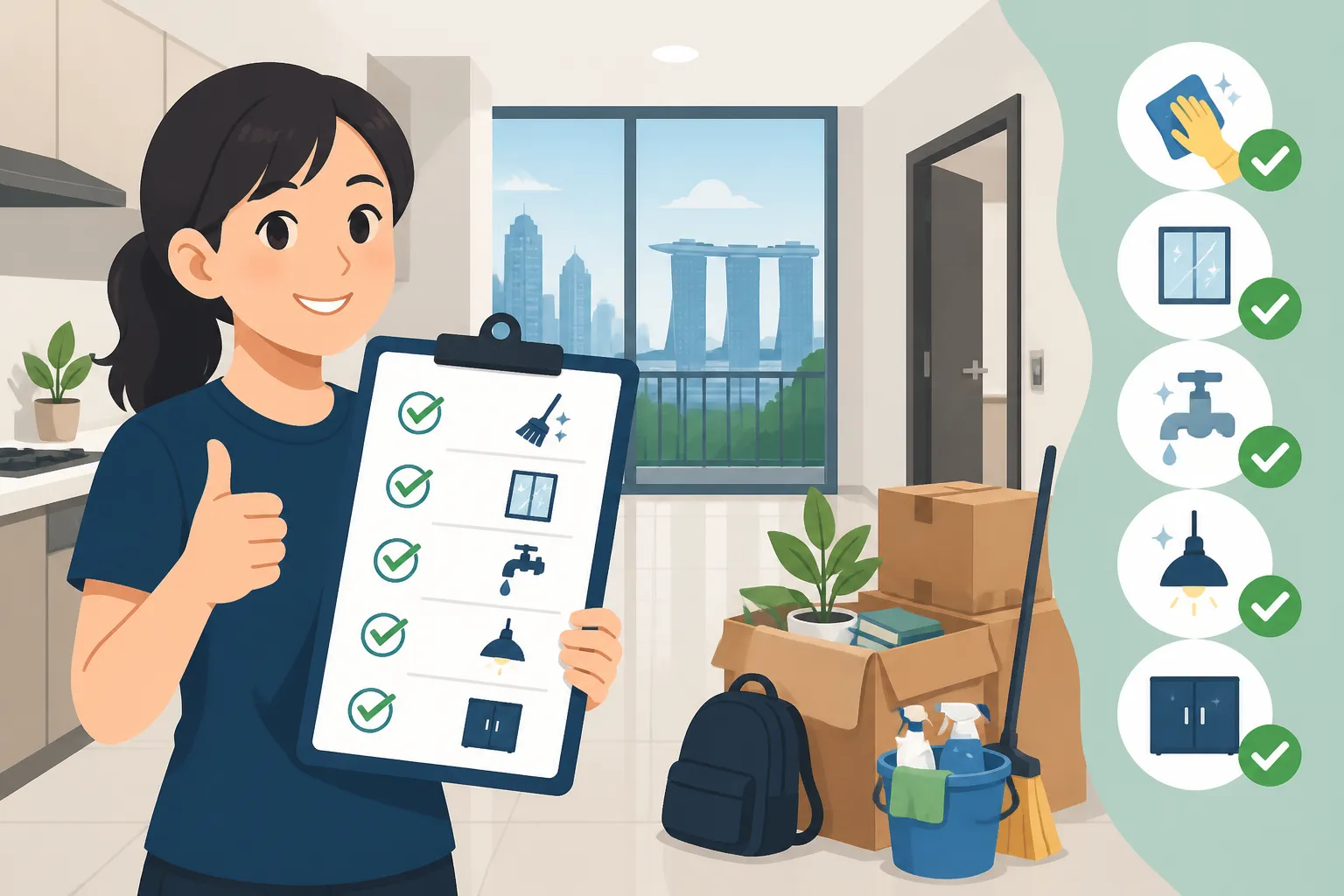
As mentioned, professional cleaning is almost always a contractual requirement. These aren't your typical weekly cleaners; they specialize in deep, move-out cleans. They'll tackle everything from grease traps in the kitchen to scrubbing bathroom grout, dusting ceiling fans, and wiping down all cabinets, inside and out. They'll also typically steam clean curtains and sometimes even carpets.
Expect to pay anywhere from S$250 to S$600+ for a professional deep clean, depending on the size of your apartment and the extent of the work. For a larger 3-bedroom condo, it can easily creep higher. Get quotes from a few different cleaning companies. Many will also offer additional services like mattress cleaning or chemical cleaning for appliances, so clarify exactly what's included. Remember, this isn't just about making it look tidy; it's about meeting a specific standard that agents and landlords are trained to scrutinize.
Aircon Servicing and Pest Control Obligations
These are two common clauses that often catch expats off guard. Many tenancy agreements require tenants to arrange for air-conditioning servicing every few months throughout the lease, and a final chemical wash or servicing before handover. This isn't just a basic filter clean; it involves technicians checking the gas levels, cleaning the condenser coils, and ensuring the units are running efficiently. Neglecting this is a quick way to lose a few hundred dollars from your deposit, as landlords will simply arrange it and bill you.
Pest control is another frequent requirement. Even if you've never seen a pest, some contracts mandate a professional pest control treatment before vacating. This typically involves spraying for cockroaches, ants, and sometimes even fogging for mosquitoes. Singapore is a tropical environment, so pest control is an ongoing battle. Again, clarify what your contract says and book a reputable service. Often, the landlord will prefer to use a specific company they trust, so check with your agent before booking. Taking steps to prevent pests, like those mentioned in Preventing Cockroaches, Ants, and Lizards in a Tropical Home, can also make the final cleanup easier.
Addressing Minor Damages and Wear and Tear
As for repairs, address any noticeable damage that goes beyond normal wear and tear. This could be anything from a chipped tile, a hole from a picture hook that you failed to patch and paint over, or a broken drawer runner. It's almost always cheaper to fix these things yourself or hire a handyman than to let the landlord do it and deduct a hefty amount from your deposit.
You should also check all light fixtures, switches, and power outlets. Ensure all light bulbs are working. If a built-in appliance isn't working, or if there's a serious plumbing issue, you are generally expected to report it and potentially arrange for repair, especially if it was working when you moved in. If you've been proactive in maintaining your home, perhaps by using tips from How to Use Dehumidifiers and "Thirsty Hippos" to Prevent Closet Mold, you'll have fewer issues to deal with at this stage.
Utilities, Internet, and Mail: Tying Up Loose Ends
It's easy to get caught up in the physical act of moving, but don't forget the administrative tasks that need to be done to avoid lingering bills or identity issues.
Terminating SP Group Utilities and Claiming Your Initial Deposit
This is crucial. You'll need to contact SP Group (Singapore Power Group) to terminate your electricity, water, and gas accounts. This can usually be done online through their portal or app. You'll need to provide your final meter readings (or they might estimate it based on your average usage) and a final date for disconnection. Make sure you do this with enough lead time; typically, a few days' notice is sufficient.
Crucially, you'll also need to arrange for the refund of your initial security deposit with SP Group. This is usually sent back to your bank account, so ensure they have your correct details. Don't overlook this! It’s your money, and it's easy to forget about it in the chaos of moving. For more detailed instructions, refer to Terminating SP Group Utilities and Claiming Your Initial Deposit. If you're staying in Singapore, but moving to another apartment, you'll need to open a new account, so you might find How to Open an SP Group Utilities Account Online as a Foreigner helpful.
Transferring a Fiber Internet Contract to a New Tenant to Avoid Penalty
Internet contracts in Singapore often come with 12 or 24-month lock-in periods, and breaking them early can incur significant penalties. If you're leaving Singapore entirely, contact your provider (Singtel, StarHub, MyRepublic, etc.) to understand their termination policy for expats or those leaving the country. You might need to provide proof of your departure.
A common workaround, if you have a decent amount of time left on your contract, is to transfer the contract to the new tenant. This is a win-win: the new tenant gets internet immediately, and you avoid hefty early termination fees. Discuss this with your agent or landlord, as they might be able to facilitate the connection with the incoming tenant. This option is often overlooked but can save you hundreds of dollars. The process usually involves filling out a transfer form with your provider and getting the new tenant's details. You can find more specific guidance on this in Transferring a Fiber Internet Contract to a New Tenant to Avoid Penalty.
Forwarding Mail and Updating Addresses
While physical mail might seem less critical in our digital age, you don't want important documents going to your old address. Set up mail forwarding with SingPost if you're staying in Singapore. If you're moving overseas, ensure all critical institutions (banks, IRAS, ICA, credit card companies, your home country's embassy, etc.) have your new address or a reliable contact method.
Consider using a virtual mailbox service if you need a temporary Singapore address for official correspondence after you leave. Also, remember to update all your online delivery services, e-commerce accounts like Shopee and Lazada, and any subscription boxes. It's a small detail, but forgetting it can lead to confusion and potential security risks down the line. If you're planning on traveling a lot after leaving Singapore or before settling into your next home, an eSIM from a provider like Airalo can be super handy to stay connected without worrying about local SIM cards in different countries while you're sorting out your permanent address.
The Final Handover: Key Exchange and Deposit Retrieval
This is it – the moment of truth. All your hard work culminates in this final inspection. Approaching it with calm and preparedness is key.
Final Walkthrough and Inventory Check
The final handover is typically a meeting with your landlord or agent at the empty, cleaned apartment. They will conduct another thorough inspection, this time checking that all cleaning requirements have been met and that no new damages have appeared since the pre-inspection. They'll also compare the current state against the initial inventory list, ensuring all items initially provided are present and accounted for.
This is your opportunity to politely challenge any unfair claims. Refer to your own photos and videos taken after you cleaned and packed. If they point to a scuff mark, and you have a picture showing it was there before you moved in, or that it’s simply natural wear and tear, present your evidence calmly. Stay firm but respectful. Remember, they are looking to protect their asset, and you are looking to protect your security deposit.
How to Fight an Unfair Deposit Deduction at the Small Claims Tribunal
Despite all your best efforts, sometimes disputes arise, and a landlord might try to make unfair deductions from your security deposit. This is a common frustration for expats, and it can feel like you're fighting an uphill battle. If you cannot reach an amicable agreement, you have recourse.
The first step is typically to send a formal letter or email disputing the proposed deductions, clearly stating your reasons and attaching your photographic evidence. If this doesn't resolve the issue, you can escalate it to the Small Claims Tribunal (SCT) in Singapore. The SCT handles disputes of up to S$20,000 (or S$30,000 if both parties agree). It's designed to be an informal, low-cost process, and you don't need a lawyer. Filing a claim requires a fee, but it's often worth it to recover a significant portion of your deposit. The mere threat of involving the SCT can sometimes prompt landlords to be more reasonable. For comprehensive steps, please read How to Fight an Unfair Deposit Deduction at the Small Claims Tribunal.
Timeline for Security Deposit Return
Your tenancy agreement should specify the timeline for the return of your security deposit. It’s typically within 7 to 14 working days after the lease ends and the keys are returned, but some contracts might state up to 30 days. This period allows the landlord to assess any damages, obtain repair quotes, and confirm all outstanding bills are paid.
If you haven't received your deposit within the stipulated time, follow up promptly in writing. If there are deductions, they should provide an itemized list with supporting invoices or quotes. Remember that your deposit cannot be used to cover normal wear and tear or minor maintenance issues that are not specified in the contract as the tenant's responsibility. As you prepare for your next big move, whether within Singapore or further afield, services like Sirelo can help you find reliable international movers, reducing the stress of finding trusted providers for your relocation journey.
| Handover Checklist Item | Action Required | Estimated Cost (SGD) | Typical Timeline |
|---|---|---|---|
| Review Tenancy Agreement | Understand clauses: diplomatic, repairs, cleaning, notice periods. | S$0 | 2-3 months before move-out |
| Give Official Notice | Submit written notice to landlord/agent as per contract. | S$0 | 1-2 months before move-out |
| Pre-Move Out Inspection | Attend with agent, note issues, take photos/videos. | S$0 | 3-4 weeks before move-out |
| Professional Deep Cleaning | Hire a reputable company (kitchen, bathrooms, floors, windows). | S$250 – S$600+ | 1-3 days before final handover |
| Aircon Servicing/Chemical Wash | Arrange as per contract (often final chemical wash needed). | S$150 – S$300+ | 1-2 weeks before final handover |
| Pest Control Treatment | Book if mandated by lease. | S$80 – S$150 | 1 week before final handover |
| Minor Repairs | Patch holes, fix small damages, replace non-working bulbs. | S$50 – S$200 | Ongoing, before deep cleaning |
| Terminate SP Group Utilities | Contact SP Group to close accounts and arrange deposit refund. | S$0 | 3-5 working days before move-out |
| Manage Internet/TV Contract | Terminate or transfer to new tenant to avoid penalties. | S$0 (or penalty costs) | 2-4 weeks before move-out |
| Forward Mail/Update Address | Set up SingPost forwarding, notify banks, ICA, employer. | S$0 – S$50 | 1-2 weeks before move-out |
| Final Documentation | Take extensive photos/videos of empty, clean apartment. | S$0 | Day of/after cleaning, before handover |
| Final Handover & Key Return | Attend with landlord/agent, politely dispute unfair claims with evidence. | S$0 | Final day of lease |
| Security Deposit Refund | Follow up if not received within contractually agreed timeframe. | S$0 | 7-30 days after handover |
Moving out of an apartment in Singapore doesn't have to be a nightmare. With careful planning, thorough documentation, and a clear understanding of your contractual obligations, you can navigate the handover process smoothly, protect your security deposit, and move on to your next adventure with peace of mind.
Disclaimer
The information provided in this guide is for general informational purposes only and does not constitute legal or financial advice. While we strive to provide accurate and up-to-date information, tenancy laws and regulations in Singapore can change. Always refer to your specific tenancy agreement and consult with a legal professional or property agent for advice tailored to your individual situation.