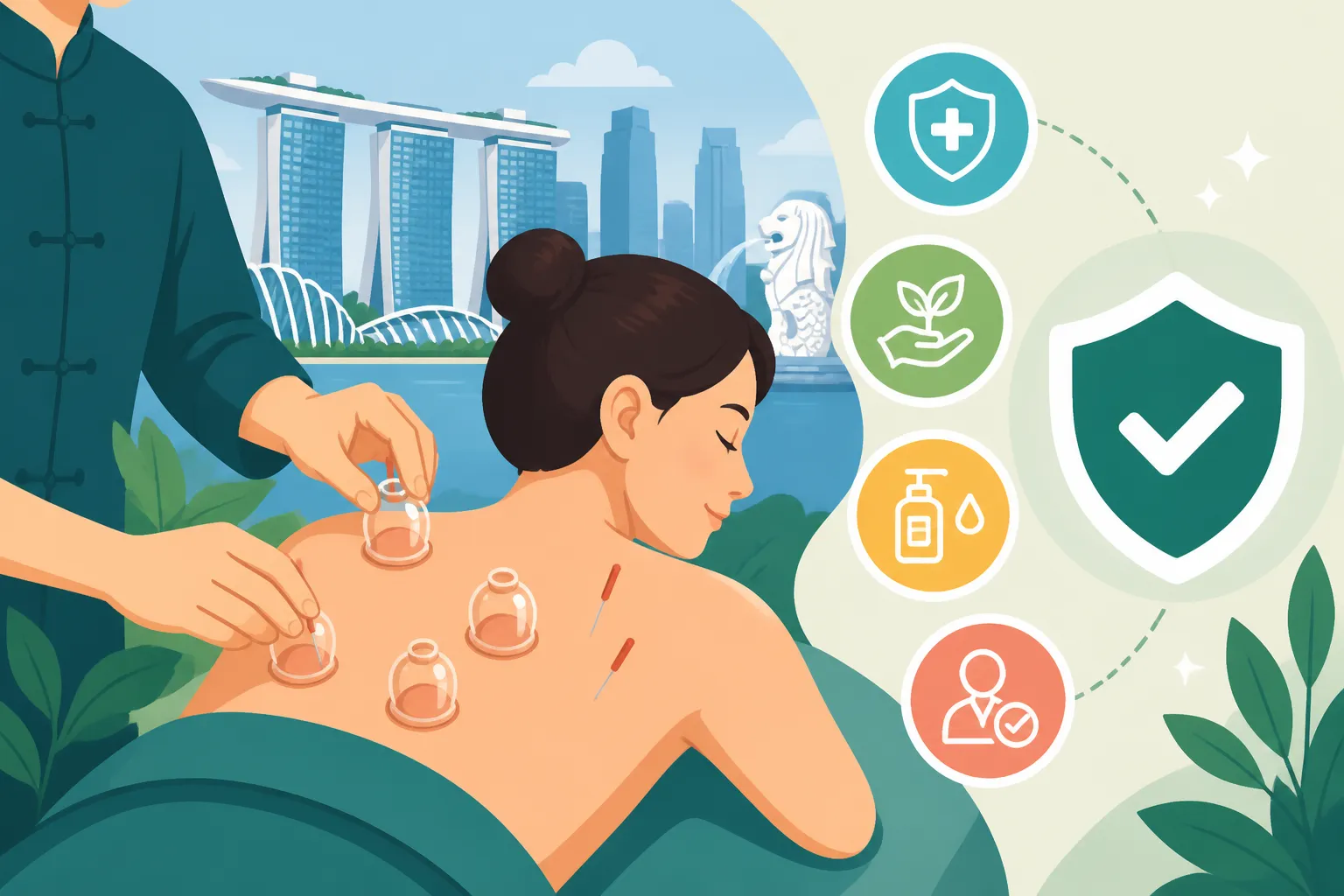
TCM Cupping and Acupuncture: What Expats Need to Know About Safety
Walking into a local mall and seeing a shop window filled with dried herbs, followed by a colleague arriving at the office with perfectly symmetrical purple circles on their neck, is a quintessential Singapore "welcome" moment. When I first landed here, I spent weeks wondering if my neighbor had been in a strange accident before I realized I was looking at the results of a routine cupping session. This guide decodes the world of TCM cupping and acupuncture, ensuring you navigate these ancient therapies with the same safety-first mindset we apply to any other part of the Singapore healthcare system.
The Regulatory Framework: Why Singapore Is Different
One of the first things you realize as an expat is that Singapore doesn’t do "fringe" medicine without a serious amount of oversight. Unlike some countries where Traditional Chinese Medicine (TCM) might exist in a legal grey area, here it is a pillar of the Traditional Chinese Medicine (TCM): Regulation, Clinics, and Integration framework. The Ministry of Health (MOH) takes a very active role in ensuring that if you are being poked with needles, the person doing the poking knows exactly what they are doing.
The governing body you need to know is the TCM Practitioners Board (TCMPB). This is a statutory board under the MOH that registers all TCM physicians and acupuncturists. For an expat, this is your primary safety net. To practice legally in Singapore, a physician must meet strict educational requirements and pass the Singapore TCM Physicians Registration Examination (STRE). I remember feeling a massive sense of relief when I realized I could actually look up my doctor’s license number on a government portal before letting them treat my persistent "tech neck" issues.
This level of regulation extends to the clinics themselves. Whether you are visiting a high-end clinic in Orchard Road or a more traditional setup in a HDB heartland, the standards for hygiene and professional conduct are high. This is a far cry from the unregulated "wellness centers" you might find elsewhere. If you are just starting your journey here, checking the Expat Health Checklist for the First 30 Days in Singapore will remind you that finding a trusted medical network includes both Western and Eastern practitioners.
Acupuncture Safety: What the Expatriate Needs to Know
Acupuncture is perhaps the most widely accepted TCM therapy among the expat community in Singapore. Many of us turn to it for Managing Chronic Conditions: Diabetes and Hypertension Care for Expats or, more commonly, for sports injuries and stress management. However, the safety of acupuncture is entirely dependent on the sterility of the environment and the skill of the practitioner.
In Singapore, the law mandates the use of sterile, single-use disposable needles. If you ever find yourself in a clinic that doesn't open a fresh packet of needles in front of you, leave immediately. But honestly, in over a decade here, I have never seen a licensed clinic violate this. The physicians are trained to avoid major blood vessels and nerves, which is why they spend years studying anatomy from both a TCM and Western perspective.
One thing that surprised me was how acupuncture is integrated into major hospitals. You can find TCM departments at Raffles Hospital or Tan Tock Seng Hospital. This integration is a testament to the safety standards. If you are already navigating the Singapore Healthcare System for Expats: Complete 2027 Guide, you will find that many Western-trained GPs are happy to provide a referral to an acupuncturist for pain management.
When considering safety, it is also worth checking your insurance policy. While many standard corporate plans are restrictive, specialized providers like Cigna Global often have modules that allow for TCM treatments if they are performed by a registered physician. This can significantly lower your out-of-pocket stress.
Understanding Cupping (Baquan) and Those Famous Purple Circles
Cupping, or Baquan, often looks more painful than it is. The process involves creating a vacuum inside glass or plastic cups placed on the skin. The suction pulls the skin and superficial muscle layer upward, which TCM theory suggests improves "Qi" and blood flow while removing "dampness" from the body. Given the humidity here, "dampness" is a term you will hear a lot, especially when Dealing with Humidity-Induced Skin Issues (Eczema and Heat Rash).
From a safety perspective, there are two types of cupping: "Dry" and "Wet."
- Dry Cupping: This is the most common and involves suction only. The main "risk" here is the bruising, which can last from three days to a week.
- Wet Cupping (Hijama): This involves small incisions to draw out a tiny amount of blood.
I generally advise expats to stick to Dry Cupping unless they are under the care of a very senior physician at a reputable institution like the Singapore Thong Chai Medical Institution or a private specialist. The safety concerns with Wet Cupping are much higher due to the risk of infection.
Is it safe for everyone? Absolutely not. If you are on blood thinners, have a skin infection, or are pregnant, you must disclose this. A reputable TCM physician will always conduct a "consultation" (which involves checking your pulse and tongue) before they even bring out the cups. They aren't just looking at your back; they are assessing your overall Expat Health Insurance in Singapore: Public vs Private Coverage needs and general physical state.
Comparison: TCM Settings in Singapore
Choosing where to go can be overwhelming. Here is a breakdown of what you might encounter:
| Clinic Type | Typical Cost (Consult + Treatment) | Vibe & Language | Best For |
|---|---|---|---|
| Public Hospital TCM Dept | S$80 – S$150 | Clinical, bilingual, very "Western" | Chronic pain, post-surgery rehab |
| High-End Private (e.g., Eu Yan Sang) | S$120 – S$250 | Spa-like, English-speaking, premium | General wellness, stress, fertility |
| Heartland/Local Clinics | S$40 – S$80 | Functional, mostly Mandarin/Dialect | Quick sessions, budget-friendly |
| Charity TCM Institutions | Donation-based | Traditional, very busy, local | Simple ailments, budget constraints |
While exploring these options, remember that if you are traveling frequently around the region, having a portable insurance solution like SafetyWing can provide peace of mind for unexpected medical issues, though you should always verify if they cover elective TCM. Most international plans like Cigna Global are more likely to cover TCM when it’s part of a comprehensive outpatient rider.
Risks and Common Misconceptions
The biggest safety risk isn't actually the needles or the cups; it’s the lack of communication. Many expats feel shy about explaining their Western medical history to a TCM physician, or vice versa. This is a mistake. If you are taking Western medication for a heart condition, your TCM doctor needs to know because certain herbs or even the intensity of acupuncture can affect your heart rate or blood pressure.
Another misconception is that TCM is "natural" and therefore has no side effects. Acupuncture can occasionally cause minor fainting (needle shock) if you haven't eaten, and cupping can cause skin irritation if the suction is too strong. Always ensure you have a light meal before your appointment and stay hydrated.
If you are Finding Medical Care: Hospitals, Polyclinics, and GP Networks, you might find that your local GP is actually the best person to ask for a recommendation. Many GPs in Singapore have a list of trusted TCM practitioners they cross-refer to. This "collaborative" medicine is one of the best parts of living in the Little Red Dot.
Choosing the Right Practitioner: A Checklist for Expats
When you are ready to try your first session, don't just walk into the first shop with a neon sign. Follow this veteran expat's checklist to ensure your safety:
- Verify the Registration: Look for the white and green TCMPB certificate on the wall. It should have a photo of the physician.
- Language Comfort: If your Mandarin is non-existent, ensure the physician speaks fluent English. Miscommunicating the level of pain or your medical history is a safety risk. Places like Raffles Chinese Medicine are excellent for English speakers.
- The Consultation: A safe practitioner will always spend 10–15 minutes asking about your sleep, digestion, and energy levels before starting any treatment.
- Hygiene Standards: Look for a clean environment, the use of surgical gloves where necessary, and the disposal of needles in "sharps" containers.
- Insurance Synergy: Check if the clinic can provide a proper receipt with a diagnostic code. Even if you are on a plan like SafetyWing, you will need this documentation for any potential reimbursement or to show your primary doctor later.
It is also vital to understand Can You Use Corporate Insurance for Traditional Chinese Medicine? as many HR departments in Singapore actually include a "TCM cap" in their benefits package. Many people pay out of pocket for years only to realize their company would have covered S$500 a year for acupuncture!
Safety After the Treatment
The period immediately following acupuncture or cupping is just as important for safety as the treatment itself. In the TCM world, your "pores are open" after these treatments. While that sounds a bit mystical, the practical advice is sound: avoid cold showers and direct blasts of air conditioning for at least 6 to 12 hours.
In a tropical climate like Singapore's, where the AC is often set to "Arctic," this can be a challenge. I usually bring a light scarf or a hoodie to my sessions to protect my neck and back afterward. If you feel dizzy, stay seated in the clinic for 15 minutes. A good clinic will offer you a cup of warm ginger tea—drink it. It helps stabilize your blood sugar and "warms" the body according to local tradition.
If you notice any unusual swelling, heat, or persistent pain at the needle sites, don't wait. Use your Emergency Medical Care in Singapore: Ambulances and A&E Wards knowledge if things seem dire, though complications from TCM in Singapore are statistically very rare due to the high regulatory standards we've discussed.
Final Thoughts for the Curious Expat
Integrating TCM into your life in Singapore can be a game-changer for your health. Whether it's using acupuncture to manage the stress of a high-pressure finance job or using cupping to soothe muscles after a humid run at East Coast Park, these therapies are a legitimate part of the healthcare landscape here.
By choosing registered practitioners, maintaining open communication between your Western and Eastern doctors, and ensuring your insurance—whether through Cigna Global or a local provider—is aligned with your choices, you can enjoy these ancient practices with total confidence. Singapore has done the hard work of regulating the industry; your only job is to relax and let the needles (and cups) do their work.
Disclaimer
This guide is for informational purposes only and does not constitute medical advice. Always consult with a qualified healthcare professional or a registered TCM physician before undergoing any new medical treatments. Traditional Chinese Medicine results can vary, and it should not be used as a replacement for conventional medical care in emergency situations or for serious underlying health conditions.