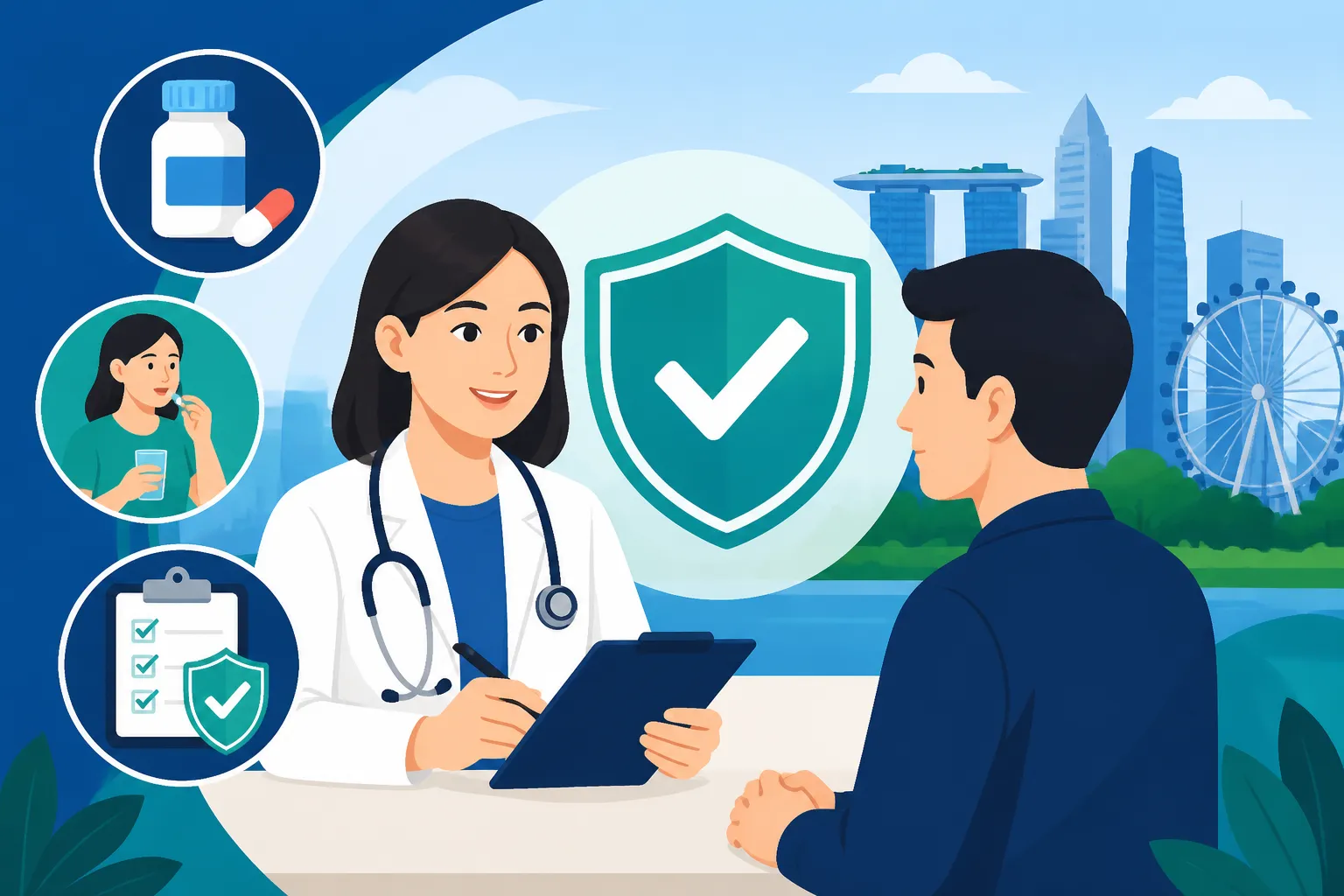
Why You Need a Local Doctor’s Prescription for Your Regular Medication
You land at Changi Airport, breeze through immigration, and settle into your new condo, only to realize your supply of blood pressure or asthma medication is down to the last three days. I’ve been in that exact panic, standing at a pharmacy counter with my neatly printed overseas script, only to be told it was effectively a piece of scrap paper. This guide explains the strict legal framework in Singapore and provides a step-by-step roadmap for securing your essential refills locally without the stress.
The Legal Reality: Why Your Foreign Prescription Fails at the Counter
It is a common misconception among newcomers that a prescription from a world-renowned doctor in London, New York, or Sydney carries weight in a Singaporean pharmacy. In reality, the Health Sciences Authority (HSA) maintains incredibly tight control over the sale of medicinal products. Under the Health Products Act, a pharmacist in Singapore can only legally dispense "Prescription Only Medicines" (POM) if the order is issued by a practitioner registered with the Singapore Medical Council (SMC).
When I first arrived, I assumed my specialist's letter from back home would be enough to bypass the "local doctor" requirement. It wasn't. Pharmacists here face heavy fines and potential loss of license if they dispense regulated drugs based on a foreign signature. This isn't because they doubt your doctor's competence; it is a matter of legal jurisdiction and the HSA's ability to track and regulate the flow of controlled substances within the city-state.
Furthermore, drug classifications in Singapore might differ significantly from your home country. What you might consider a routine, over-the-counter allergy pill elsewhere could be a "Pharmacy Only" or "Prescription Only" medicine here. To stay prepared, you should read up on HSA Approval for Personal Medications: The 3-Month Supply Rule to understand what you can legally bring across the border before you need to enter the local system.
Navigating the Local Consultation: Your Path to a New Script
To get your regular medication, you must establish a relationship with a local doctor. This means a physical or tele-consultation where the doctor assesses your condition and takes over the clinical responsibility for your care. I highly recommend bringing a detailed summary from your previous physician, including the specific chemical names (generic names) of your drugs, as brand names like "Advil" or "Lexapro" can sometimes differ or be unavailable in the local market.
Your first stop will likely be a General Practitioner. When Choosing a Primary Care Physician (GP) in Singapore, look for clinics that are familiar with expat health needs. During your first visit, the doctor will likely perform a basic check-up to confirm the dosage is still appropriate for you in this tropical climate. Humidity and heat can actually affect how some people react to their long-term medications, a detail my first Singaporean GP pointed out during my initial intake.
If your medication is specialized—such as biologics for autoimmune disorders or specific psychiatric meds—a GP might refer you to a specialist. For those needing mental health support, the process is similar but requires finding a psychiatrist registered locally. You can find more detail in our guide on How to Get Prescribed Antidepressants or ADHD Medication to see how the referral process works for sensitive prescriptions.
Cost Considerations and the Role of Insurance
One of the biggest shocks for expats is the cost of private healthcare consultations compared to subsidized systems back home. Since foreigners do not have access to government subsidies, you will be paying the "full freight" for both the doctor's time and the medication itself. For a standard GP visit, you should check How Much Does a GP Visit Cost for a Foreigner in Singapore? to avoid sticker shock.
This is where your insurance coverage becomes vital. If you are on a comprehensive plan from a provider like Cigna Global, your outpatient costs and prescription refills are often covered, provided they are part of a chronic condition management plan. For those who are digital nomads or in-between long-term contracts, SafetyWing offers a flexible alternative that can help cover the costs of unexpected medical visits, though you should always check the specifics regarding pre-existing conditions.
Many expats find that their employer-provided insurance is sufficient for basic flu visits but lacks depth for expensive monthly prescriptions. If you find yourself in this position, it may be worth Understanding Corporate Health Insurance vs Personal Medical Plans to see if you need a "top-up" policy to cover your recurring pharmaceutical needs.
Where to Buy: Clinic Dispensaries vs. Retail Pharmacies
Unlike many Western countries where doctors only write scripts and pharmacies only sell pills, Singapore has a robust "doctor-dispensed" model. Most GPs have a mini-pharmacy right inside their clinic. You often walk out of the consultation room and pick up your meds at the front desk.
However, for long-term chronic medication, the clinic's markup can be significant. You have the right to ask for a physical "paper prescription" from your doctor to take to a retail pharmacy like Guardian, Watsons, or Unity. In many cases, buying in bulk from a hospital pharmacy or a large retail chain can save you 20-30% compared to a small private clinic.
| Pharmacy Type | Best For | Typical Pricing | Convenience |
|---|---|---|---|
| Clinic Dispensary | Acute illness, immediate needs | Highest | Excellent (In-house) |
| Retail (Guardian/Watsons) | Routine chronic meds, OTC | Moderate | High (Every mall) |
| Public Hospital Pharmacy | Bulk refills, specialized drugs | Lower | Low (Long wait times) |
| Private Hospital Pharmacy | Rare or high-end meds | High | Moderate |
If you are Managing Chronic Conditions: Diabetes and Hypertension Care for Expats, I suggest price-shopping between your local GP and the pharmacy at a major hospital like Raffles or Mount Elizabeth. The price difference over a year can be substantial.
Common Obstacles: Brand Availability and Generic Substitutes
It is highly likely that the exact brand name you used back home is not registered for sale in Singapore. For example, if you are looking for a specific brand of painkiller, you might find yourself Panadol vs Paracetamol: Navigating Painkiller Brands in Singapore as you try to find the local equivalent.
When your local doctor writes your new script, they will usually use the generic chemical name. While the active ingredient is identical, the fillers or the release mechanism of the pill might differ slightly. I experienced this with a thyroid medication where the local generic felt slightly "stronger" than my US brand. It is important to monitor how you feel during the first two weeks of switching to a local version and keep your GP informed.
If your specific drug is absolutely not available in Singapore, your doctor can apply for a special import license through the HSA, but this is a slow and expensive process. This is why having an international insurance plan like Cigna Global is a lifesaver, as they often have the infrastructure to help facilitate the reimbursement of these high-cost, specially imported medicines. For those on more budget-conscious plans like SafetyWing, you might need to discuss more common local alternatives with your doctor.
Managing Refills and the HealthHub App
Once you have your local prescription, managing refills becomes much easier. If you have a Singpass (which you should set up as soon as your FIN is issued), you can use the HealthHub app. This government-backed portal allows you to see your prescription history from public institutions and even book appointments.
For those using Singapore Pharmacies: Guardian, Watsons, and Hospital Dispensaries, many now offer delivery services for recurring prescriptions. You can upload your local doctor's script to their portal, pay online, and have your meds delivered to your office in the CBD or your home in Sentosa.
Always remember that prescriptions in Singapore typically have an expiry date—usually one year for chronic meds and much shorter for acute ones. Don't wait until the final day of your last blister pack to book your renewal appointment. I’ve found that the best practice is to schedule a "renewal check-up" with my GP at the 11-month mark to ensure there is never a gap in my treatment.
Handling Emergencies: What to do if You Run Out
If you find yourself in a situation where you have run out of medication and your GP is closed, do not head to a retail pharmacy expecting a "mercy" dispense. They cannot do it. Instead, you will need to visit a 24-hour clinic or a hospital's Accident & Emergency department.
While this is an expensive way to get a prescription, it is the only legal route after hours. If you are concerned about these emergency costs, ensure you have reviewed your Expat Health Insurance in Singapore: Public vs Private Coverage to see which A&E departments are covered by your policy. Most international plans will cover an emergency visit if your medication is life-sustaining, such as insulin or heart medication.
In summary, the transition to the Singaporean medical system requires a bit of proactive legwork. Bring your records, find a local GP early, and understand that the "local script" is the golden ticket to maintaining your health while living in the Lion City. It might feel like a bureaucratic hurdle initially, but the quality of the medication and the professionalism of the local pharmacists are world-class.
Disclaimer
This guide is for informational purposes only and does not constitute professional medical or legal advice. Healthcare regulations in Singapore are subject to change by the Health Sciences Authority (HSA) and the Ministry of Manpower (MOM). Always consult with a registered local medical practitioner regarding your specific health needs and medication requirements. The author and publisher are not responsible for any consequences arising from the use of this information.