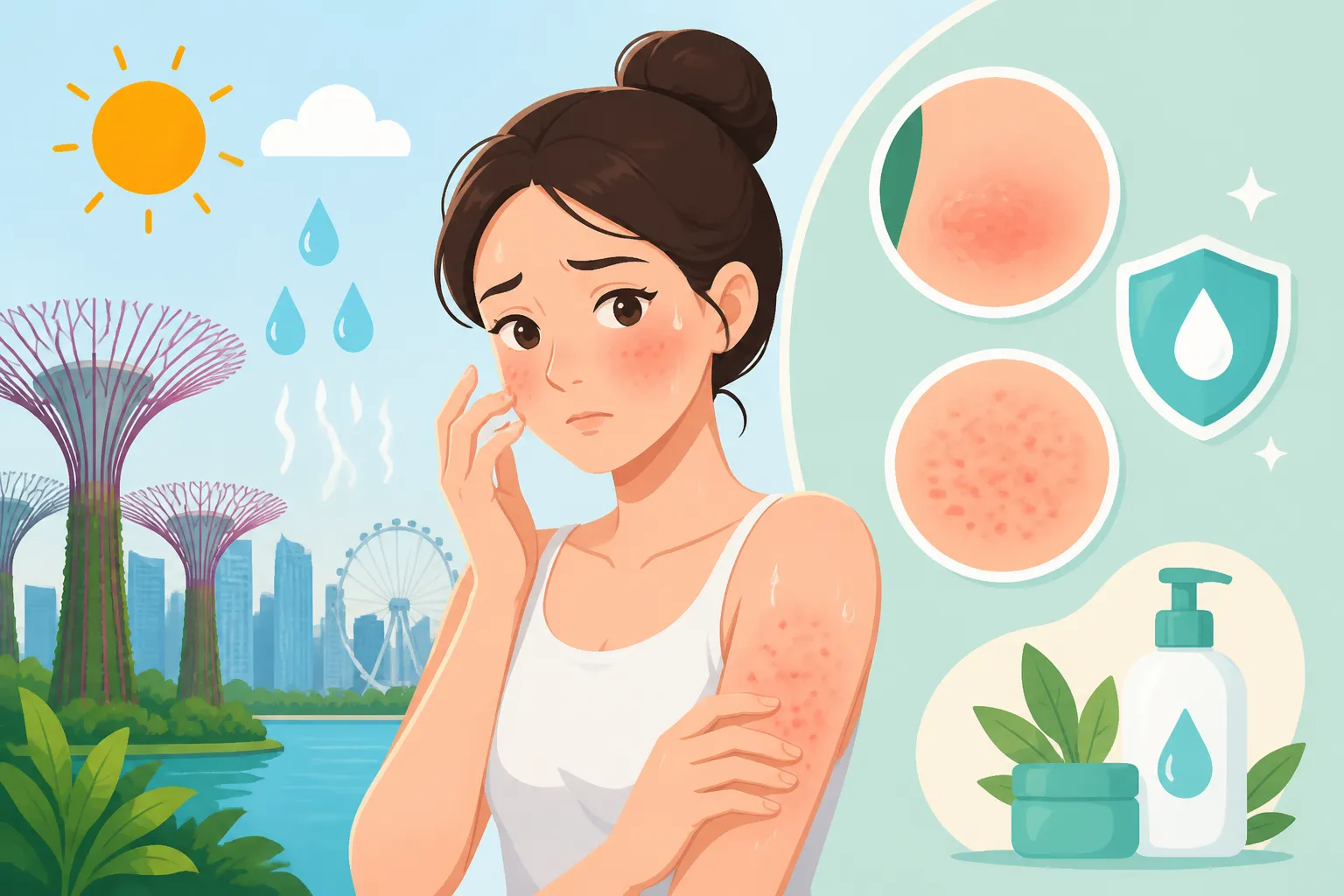
Dealing with Humidity-Induced Skin Issues (Eczema and Heat Rash)
You wake up during your first month in Singapore and, instead of feeling that celebrated tropical glow, your neck is covered in tiny, stinging red bumps that itch with a relentless intensity. I remember sitting under my first condo’s aircon unit in tears, wondering if I was actually allergic to the entire country. This guide provides the realistic, field-tested solutions you need to manage eczema and heat rash in the Lion City.
Why the Tropics Wage War on Your Skin
The primary antagonist in your Singapore skincare journey is the relative humidity, which rarely drops below 80%. In temperate climates, sweat evaporates from your skin, cooling you down. In Singapore, the air is already so saturated with moisture that your sweat has nowhere to go. It sits on your skin, mixing with urban pollutants, sunscreen, and bacteria. This creates a literal greenhouse effect on your epidermis, leading to the two most common complaints: Miliaria (heat rash) and Atopic Dermatitis (eczema).
When I first arrived, I made the mistake of thinking my usual heavy-duty moisturizers from back home would protect me. Instead, they acted like a plastic wrap, trapping heat and oil. The result was a breakout of heat rash so severe I couldn't wear a backpack for a week. Understanding that your skin needs to "breathe" in a way it never had to before is the first step toward survival. You aren't just dealing with heat; you are dealing with a constant state of dampness that compromises your skin barrier.
The environment here is also filled with hidden triggers. Beyond the humidity, we have the "Haze" season, where particulate matter from regional fires can cause massive inflammatory responses. When the air quality dips, those with sensitive skin often find their eczema flaring up seemingly out of nowhere. Navigating Air Quality and Haze in Singapore: Managing Asthma and Allergies is just as much about skin health as it is about respiratory health.
The Sweat-Itch Cycle Explained
The "sweat-itch cycle" is a phenomenon every expat with eczema eventually learns to loathe. It begins the moment you step out of your air-conditioned apartment and into the 32-degree heat. Your body attempts to cool down by producing sweat, but the salt and minerals in that sweat irritate the micro-cracks in an eczematous skin barrier. This irritation causes an itch, which leads to scratching, which further damages the skin, allowing more irritants—and bacteria—to enter.
Breaking this cycle requires a radical shift in how you move through the city. You start planning your routes based on "underground links" and air-conditioned malls rather than walking along the beautiful but sweltering streets. If you are on a short-term assignment or scouting the city, having a plan like SafetyWing can provide peace of mind if a skin infection occurs from excessive scratching, but long-term residents often find they need more robust coverage for chronic management.
Eczema vs. Heat Rash: Knowing Your Enemy
One of the most frustrating aspects of "Singapore Skin" is that heat rash and eczema often look similar to the untrained eye. However, treating one like the other can actually make the situation worse. Heat rash, or "Prickly Heat," is caused by blocked sweat ducts. The sweat is trapped under the skin, causing tiny red bumps or clear blisters. Eczema, on the other hand, is an autoimmune-linked condition where the skin barrier fails to retain moisture and keep out irritants, leading to red, scaly, and often "weeping" patches.
Because the cream was so occlusive, it blocked my pores even further, turning a minor irritation into a painful, blistering mess. Learning the subtle differences is essential. Heat rash usually feels like a "prickling" or stinging sensation and appears in areas where clothes rub, like the waistband or underarms. Eczema is more of an intense, deep itch and typically settles in the "folds" of the body, such as the inner elbows or behind the knees.
| Feature | Heat Rash (Miliaria) | Eczema (Atopic Dermatitis) |
|---|---|---|
| Appearance | Small, uniform red bumps or clear fluid-filled blisters | Red, inflamed, scaly patches; can be thickened (lichenified) |
| Common Areas | Back, chest, neck, and areas with tight clothing | Elbow folds, behind knees, face, and hands |
| Primary Sensation | Prickling, stinging, or "pins and needles" | Intense, deep itching that often worsens at night |
| Trigger | Blocked sweat ducts due to heat and humidity | Immune response, allergens, or broken skin barrier |
| Key Treatment | Cooling the skin, loose fabrics, and calamine | pH-balanced cleansers, ceramide-rich creams, and steroids |
Managing Miliaria in a Professional Setting
For many expats, the challenge is maintaining a professional appearance while battling heat rash. Wearing a suit or heavy polyester blends in the Central Business District (CBD) is a recipe for a dermatological disaster. Many newcomers struggle with "collar rash" because they insist on wearing high-thread-count cotton shirts that trap moisture against the neck.
The trick is to switch to linen or specialized "cool-tech" undershirts that wick moisture away. You also need to be strategic about your commute. If you can, take a Grab or use the MRT's air-conditioned cabins rather than walking the last kilometer to the office. If you do find yourself drenched in sweat after a walk, head straight to the restroom and pat your skin dry with paper towels—never rub. Rubbing creates friction that further inflames the blocked ducts.
The Expat’s Survival Toolkit for Tropical Skin
The most effective tool in your arsenal isn't a cream; it's a dehumidifier. Most Singaporean condos come with air conditioning, but aircons aren't always enough to strip the moisture out of the air to a level that's comfortable for eczema sufferers. I highly recommend investing in a standalone dehumidifier for your bedroom. Keeping your sleeping environment at around 50% humidity can significantly reduce nighttime itching. You should also look into How to Use Dehumidifiers and "Thirsty Hippos" to Prevent Closet Mold to understand how moisture affects your entire living space, including the clothes you put on your sensitive skin.
Your showering routine also needs an overhaul. Back home, you might have enjoyed long, hot showers. In Singapore, that’s a direct ticket to an eczema flare. Hot water strips the natural oils from your skin, which are already under siege from the humidity. Switch to lukewarm or even cool showers, and use soap-free cleansers. Brands like QV, Cetaphil, and Cerave are staples here for a reason. You can find these easily at local shops, but understanding the local regulations in Pharmacies and Medication in Singapore: Prescriptions and OTC Rules will help you navigate what is available over the counter versus what requires a doctor's note.
The Three-Layer Moisturizing Rule
When dealing with tropical eczema, the "three-layer rule" can be a lifesaver. Instead of one thick layer of cream, you apply three very thin layers of different products. First, a hydrating mist or thermal water spray to provide immediate moisture. Second, a serum containing hyaluronic acid or glycerin. Finally, a lightweight, ceramide-dominant moisturizer to seal it all in. This approach provides the barrier protection you need without the "suffocating" feeling of a heavy balm.
I also learned the hard way to be careful with "natural" remedies. Many expats arrive and try to use coconut oil as a moisturizer. While it works for some, in Singapore’s heat, coconut oil is highly comedogenic (pore-clogging). It often leads to "Malassezia Folliculitis," a fungal acne that thrives in hot, sweaty environments. Stick to dermatologically tested, fragrance-free products that are designed for high-humidity climates.
Navigating Medical Care and Insurance
If your skin issues aren't responding to over-the-counter treatments, it's time to see a professional. Singapore has world-class dermatologists, but the cost can vary wildly depending on where you go. For a standard flare-up, start by Choosing a Primary Care Physician (GP) in Singapore. A local GP can prescribe mild steroid creams or antihistamines that are often enough to get things under control. They can also provide referrals if you need to see a specialist.
If you are a Permanent Resident or have a specific type of work pass, you might consider the public route for cost savings. However, be prepared for longer wait times. You can learn more about the trade-offs in Polyclinic vs Private Clinics: Waiting Times and Cost Differences. For those of us who value speed and want to see a top-tier specialist at Mount Elizabeth or Gleneagles immediately, having a private plan is essential.
Why Specialist Insurance Matters
Dermatology is one of those fields where costs can sneak up on you. A single consultation with a private specialist can cost upwards of S$200, and that’s before you even get to the prescriptions. High-end biological treatments for severe eczema can cost thousands per month. This is why many long-term expats opt for comprehensive coverage like Cigna Global, which offers modular plans that specifically include outpatient specialist visits.
For digital nomads or those in Singapore on a 30-day visit pass, a more flexible option like SafetyWing is often the go-to for emergencies, such as an infected rash or an acute allergic reaction. However, if you know you have a pre-existing history of eczema, you need to be very careful about reading the fine print. Most "travel-style" insurances will not cover a flare-up of a pre-existing condition, whereas a robust expat plan like Cigna Global might offer coverage after a waiting period or with a specific premium loading. You can dive deeper into these choices in our guide on Expat Health Insurance in Singapore: Public vs Private Coverage.
Seeking the Experts
When a GP isn't enough, you’ll want to look into Dermatology Clinics: Treating Acne and Sun Damage in the Tropics. Singapore has specialized centers, like the National Skin Centre (NSC), which is the government-run hub for all things skin-related. While the NSC offers incredible expertise, getting an appointment as a non-subsidized foreigner can still take some time. Private clinics in Orchard or Novena offer same-day appointments but at a premium.
Regardless of which path you choose, keep a "skin diary" before your appointment. Note down what you ate, the humidity levels (use a weather app), and whether you were in an air-conditioned environment. This data is gold for a Singaporean dermatologist who is trying to figure out if your trigger is the environment, a new detergent, or the local spicy food.
Managing the Financial Impact of Chronic Skin Issues
It sounds strange to budget for skin issues, but in Singapore, it’s a necessity. Between the cost of specialized detergents, high-quality air purifiers, silk bedsheets (which are cooler for eczema), and regular doctor visits, the "Skin Tax" is real. I recommend reading Healthcare Budgeting in Singapore: Managing Out-of-Pocket Costs to see how these recurring expenses fit into your broader financial plan.
If you are working for a multinational corporation, check your employee benefits carefully. Some corporate plans are very generous with GP visits but have low caps on "specialist outpatient" care, which is exactly where dermatology falls. If your company insurance is lacking, it might be worth supplementing it with a personal plan to ensure you aren't paying out of pocket every time the humidity spikes and your skin reacts.
Final Lifestyle Adjustments
Beyond medicine and insurance, your daily habits will dictate your success. Change your bedsheets twice a week—dust mites thrive in Singapore's humidity and are a major eczema trigger. Switch your laundry detergent to a "sensitive" or "0%" version found at FairPrice or Cold Storage. And perhaps most importantly, give yourself grace.
Moving to a new country is stressful, and stress is a well-documented trigger for skin inflammation. It takes time for your body to acclimate to the "Permanent Summer" of Southeast Asia. I spent my first six months constantly itchy and frustrated, but by adjusting my environment and having the right medical support, my skin eventually settled into a new, manageable baseline.
Medical Disclaimer
This article is for informational purposes only and does not constitute professional medical advice, diagnosis, or treatment. Always seek the advice of your physician or another qualified health provider with any questions you may have regarding a medical condition. Never disregard professional medical advice or delay in seeking it because of something you have read in this guide. The environmental conditions in Singapore can exacerbate skin conditions rapidly; therefore, early intervention by a qualified healthcare professional is strongly recommended.