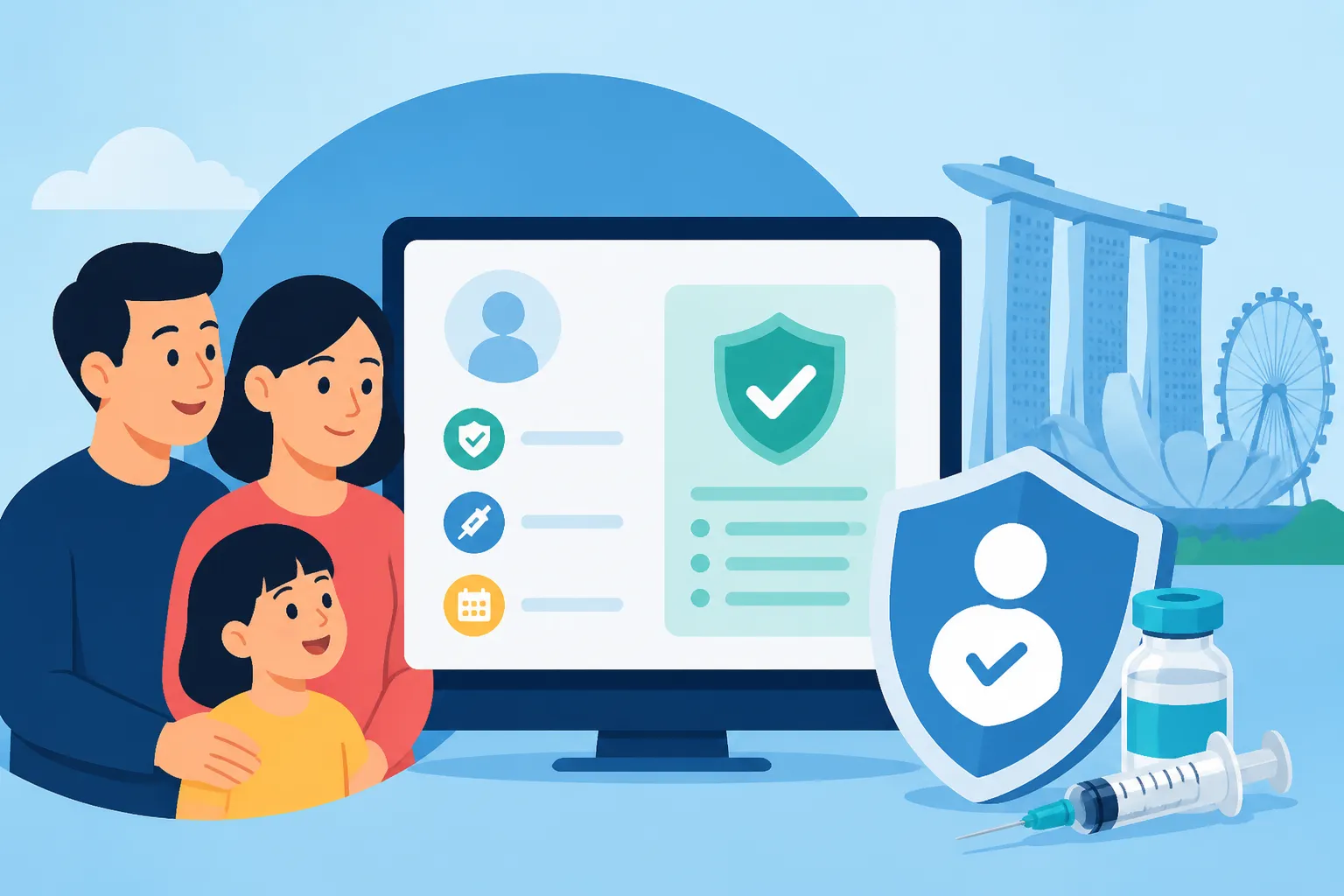
Understanding the National Immunisation Registry (NIR) Online Portal
Moving to Singapore is a whirlwind of logistics, but nothing stops you in your tracks quite like realizing your child's vaccination records are scattered across three different countries and five different doctors. I remember sweating through my shirt at an international school interview because I couldn't find a single stamped document for my daughter's measles shot. This guide explains how to use the National Immunisation Registry (NIR) portal to digitize and verify those records for a stress-free transition.
The Administrative Maze of Singaporean Healthcare
When you first land in the Little Red Dot, your focus is likely on finding a condo in River Valley or figuring out which MRT line gets you to the office fastest. However, the Singaporean government is incredibly meticulous about public health, and as a foreigner, you are entering one of the most sophisticated digital health ecosystems in the world. The National Immunisation Registry, or NIR, is the backbone of this system. It isn't just a "nice-to-have" digital archive; it is a mandatory gatekeeper for school admissions and long-term residency.
For years, parents relied on the "Health Booklet"—a physical yellow book given to every baby born in Singapore. If you moved here from London, New York, or Sydney, you likely have your own version of this, perhaps a tattered folder of pediatric printouts. The NIR was designed to move all of that data into a centralized, cloud-based system managed by the Health Promotion Board (HPB). The challenge for us as expats is that our historical data doesn't automatically exist in this system. We have to proactively "onboard" our medical history, which often feels like a second job during your first month in the country.
I’ve spent countless hours navigating these portals, and the first thing you need to realize is that the NIR is not a DIY platform where you simply upload PDFs and call it a day. It requires a local medical professional to verify your documents before the records are "officially" recognized. This is part of the Expat Health Checklist for the First 30 Days in Singapore that every newcomer should prioritize. If you ignore this, you’ll find yourself in a bind when the Ministry of Education (MOE) or your chosen international school asks for a verified immunization certificate.
Why the NIR is Critical for School Admissions
In Singapore, certain vaccinations are not just recommended; they are legally mandated under the Infectious Diseases Act. This applies to both local and foreign-born children. Specifically, protection against Measles and Diphtheria is a prerequisite for any child seeking a Student’s Pass or enrollment into a school. If your child’s records are not updated in the NIR, the system will effectively "flag" their application. This is where many expat families hit a wall, especially if they are coming from regions with different vaccination schedules.
Most international schools will ask for your NIR records during the enrollment process. They are looking for a specific document called the "Immunisation Certificate." To get this, your child’s history must be entered into the NIR by a Singapore-registered doctor. This process ensures that the dosages and timings align with the National Childhood Immunisation Schedule: What Your Child Must Have. If there is a gap—for example, if your home country doesn't require the BCG vaccine but Singapore does—the NIR portal will clearly highlight what is missing.
While you are navigating these school requirements, it is worth considering how your global health coverage handles these mandatory visits. Companies like Cigna Global often provide comprehensive outpatient benefits that can cover the cost of these verification appointments and any catch-up doses your child might need. Having a robust plan ensures that these administrative hurdles don't turn into a significant out-of-pocket expense.
Accessing the NIR via Singpass and HealthHub
Technically speaking, you don't "log in" to a website called NIR.sg. Instead, the NIR data is accessed through the HealthHub portal or app. This is the consumer-facing side of Singapore’s national health database. To access this, you must have a Singpass account. For new expats, this is often the first hurdle. You cannot get a Singpass until your Employment Pass (EP) or Dependant’s Pass (DP) is fully issued and you have your FIN (Foreign Identification Number).
If you are a digital nomad or currently in the country on a Short-Term Visit Pass while waiting for your EP to be processed, you won't be able to access the portal yet. During this "in-between" phase, it’s a good idea to have a bridge insurance like SafetyWing to cover any immediate medical needs. Once your FIN is active and your Singpass is set up, you can log into HealthHub and navigate to the "Children's Health" or "Immunisation" section.
Under the Using the HealthHub App as a Foreigner with Singpass framework, you will be able to see any records that have been uploaded by local clinics. If you see a blank screen, don't panic. It simply means no local doctor has yet linked your child’s foreign records to their FIN in the national system. This is a common point of confusion for many expats who assume the records they handed to the immigration officer at the airport would magically appear in the portal. That is not how it works; the immigration check and the NIR registry are two separate entities.
The Process of Verifying Foreign Records
To get your records onto the NIR, you must visit a local General Practitioner (GP) or a pediatrician. I highly recommend Choosing a Primary Care Physician (GP) in Singapore who has experience with expat families, as they will be familiar with the various formats of international vaccine cards. When you go to this appointment, you must bring the original copies of all vaccination records. If they are not in English, you will need a certified translation.
The doctor will review the dates, the brand names of the vaccines, and the batch numbers if available. They then manually enter this data into the doctor's portal of the NIR. It usually takes about 3 to 5 working days for the data to sync and appear on your HealthHub app. You should also check the Translating Foreign Vaccine Records for Singapore School Admissions guidelines to ensure your translations meet the High Commission's standards.
During this visit, the doctor will also check if your child needs any boosters. Singapore’s humidity and tropical climate mean that certain risks, like Dengue or specific strains of influenza, are managed more aggressively here. If you are worried about the costs of these extra visits, checking Healthcare Budgeting in Singapore: Managing Out-of-Pocket Costs can help you understand the price difference between a private specialist and a neighborhood GP.
Summary of NIR Requirements for Foreigners
| Requirement | Description | Timeline |
|---|---|---|
| Singpass Access | Required to view records on HealthHub | Once EP/DP is issued |
| Document Translation | Records must be in English | Before your first GP visit |
| GP Verification | A local doctor must enter data into the system | ASAP after arrival |
| Mandatory Vaccines | Measles and Diphtheria are non-negotiable | Before school starts |
| Processing Time | Time for records to show up in the portal | 3-5 business days |
Understanding the "Pending" Status and Common Errors
One of the most frustrating experiences is logging into the portal only to find your child's status listed as "Pending" or "Incomplete." This usually happens when the NIR's automated system detects that the spacing between doses doesn't meet Singapore’s strict medical guidelines. For example, if a second dose was given too close to the first dose according to Singaporean standards—even if it was perfectly legal in your home country—the NIR may reject that dose as invalid.
If you encounter this, you will need to discuss a "catch-up" schedule with your doctor. This is where having a plan from Cigna Global becomes invaluable, as they often cover the costs of these additional consultations. You might feel that your child is already "fully vaccinated," but if the NIR says otherwise, the MOE will usually follow the NIR's lead. It is a classic "computer says no" situation that requires a human (your local GP) to intervene and provide a medical justification or an additional booster shot.
Another common error involves name mismatches. Ensure that the name on your child’s vaccination card matches their passport and FIN exactly. If the card says "Jimmy" but the passport says "James," the NIR system may fail to link the records correctly. Some families have been delayed by weeks just because of a middle name being omitted. If you run into serious issues with the registry, you may need to look into Managing Medical Disputes: Patient Rights and Filing Complaints, though usually, a quick trip back to the clinic can resolve clerical errors.
Adult Records and the NIR
While the focus of the NIR is heavily on children, adults also have records stored there, particularly for vaccines received locally like the flu shot, Hepatitis B, or COVID-19 boosters. For expats, having your adult records in the NIR is useful for Mandatory Medical Examinations for Employment Passes and PR Applications. If you are applying for Permanent Residency (PR) later on, the authorities will look at your integrated health records to ensure you aren't a public health risk.
Adults who frequently travel around Southeast Asia should also use the portal to track their tropical vaccinations. If you’ve visited a clinic for a Yellow Fever or Typhoid shot before a trip to Bali or Thailand, those should appear in your HealthHub history. This is incredibly helpful because, let’s be honest, who can remember the last time they had a Tetanus booster? For those who are still moving between countries or are on short-term assignments, SafetyWing is a great option for maintaining continuous coverage while your local Singaporean records are being established.
Costs of Using the NIR and Clinic Fees
The NIR portal itself is a free government service, but the "service" of getting your records verified and uploaded by a doctor is not. Private clinics typically charge a "Verification of Overseas Immunisation Records" fee, which can range from S$50 to S$200 per child, excluding the cost of the consultation or any new vaccines.
You can save money by going to a Polyclinic, but be prepared for longer wait times. If you choose this route, read up on Polyclinic vs Private Clinics: Waiting Times and Cost Differences to manage your expectations. Most expats find that the convenience of a private clinic like Raffles Medical or Mount Elizabeth is worth the extra cost, especially when trying to coordinate school paperwork on a tight deadline.
Keep in mind that while some corporate insurance plans cover these costs, many do not, viewing them as "administrative" rather than "medical." This is why many veteran expats opt for a personal international plan from providers like Cigna Global, which offers more flexibility for family-related health administrative tasks.
Leaving Singapore: Exporting Your Data
If your time in Singapore comes to an end, don't forget that the NIR is a digital-first system. Before you cancel your Singpass and head to the airport, you should log into HealthHub and download a full PDF summary of all immunizations recorded during your stay. Once your FIN is canceled, accessing these records becomes significantly more difficult.
This exported document will be your "new" yellow booklet for your next destination. Whether you are moving to another expat hub or heading home, having a verified, English-language summary from a world-class health registry like the NIR will make your next transition much smoother. It’s the final step in a responsible Expat Health Checklist for the First 30 Days in Singapore—except this time, it’s for your last 30 days.
Disclaimer
The information provided in this guide is for educational and informational purposes only and does not constitute legal or medical advice. While every effort has been made to ensure the accuracy of the information, healthcare regulations and NIR portal procedures in Singapore are subject to change. Always consult with a qualified medical professional or the Health Promotion Board (HPB) for the most up-to-date requirements regarding vaccinations and registry procedures. Neither the author nor this publication is responsible for any administrative delays or medical issues arising from the use of this guide.