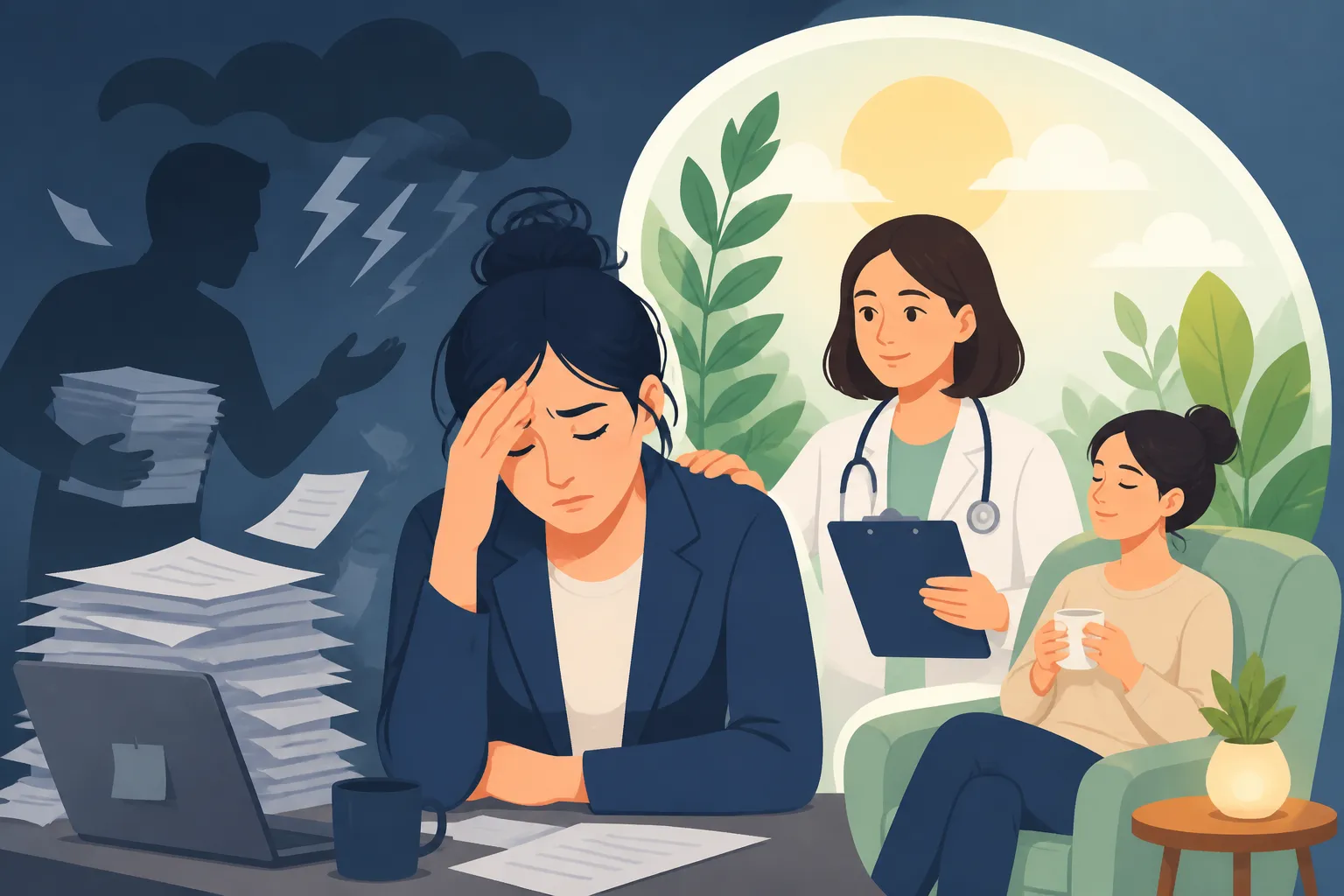
Workplace Burnout and Stress: Seeking Medical Leave for Mental Health
Singapore is a relentless machine that prioritizes efficiency above almost everything else, often leaving expats feeling like a cog that is beginning to grind. I remember sitting in a quiet corner of a Raffles Place cafe three years ago, staring at my laptop with a sense of inexplicable dread that I just couldn't shake. This guide serves as your comprehensive roadmap for navigating workplace burnout, understanding your legal rights to medical leave, and finding the professional support you need without jeopardizing your career.
The Reality of the Singaporean Hustle
Living and working in Singapore often feels like being on a high-speed treadmill that never slows down. For many expats, the pressure to perform is amplified by the fact that our right to remain in the country is tied directly to our Employment Pass. This creates a unique psychological burden where "taking a break" feels like a luxury we cannot afford. The culture of "OT" (overtime) is not just a suggestion; in many local and even multi-national firms, it is an unspoken expectation that you are the first one in and the last one to leave.
The Always-On Digital Culture
In the central business district, the workday rarely ends at 6:00 PM. Thanks to the hyper-connected nature of Singapore’s infrastructure, your boss or clients might expect a WhatsApp response at 10:00 PM on a Tuesday or a Sunday morning. This blurring of boundaries is a primary driver of burnout. When your home is no longer a sanctuary from the office, the cognitive load becomes unsustainable. Many expats find themselves checking Slack while at dinner in Dempsey Hill, unable to truly disconnect because of the fear of being seen as less "hungry" than their colleagues.
This digital tethering is particularly exhausting for those of us who have families. Trying to balance the high-octane demands of a regional role with the desire to be present for your children can lead to a state of chronic fatigue. It is important to recognize that this is not a personal failure; it is a systemic byproduct of a city-state that views human capital as its most valuable natural resource. Understanding Office Politics in Singapore: Navigating Face Culture and Hierarchy is essential to realize that your struggle is often shared by those sitting right next to you, even if they aren't talking about it.
Social Stigma and the Face Factor
In many Asian cultures, and Singapore is no exception, "saving face" is a critical social currency. Admitting that you are struggling with mental health can feel like a public admission of weakness. There is often a fear that if you tell your manager you are burnt out, you will be passed over for the next promotion or labeled as "unreliable" during the next headcount optimization. This stigma prevents many foreigners from seeking help until they reach a breaking point, leading to physical manifestations of stress like chronic migraines or insomnia.
Breaking through this "face" culture requires a shift in perspective. You must realize that maintaining your mental health is a form of professional maintenance. Just as you wouldn't expect a high-performance car to run forever without an oil change, you cannot expect your brain to function at peak capacity without rest. Overcoming the internal barrier of "what will people think?" is often the hardest part of the journey. For many, the first step is realizing that Mental Health in Singapore: Counseling, Psychiatry, and Expat Support is a robust and growing field that exists precisely because so many people are in the same boat.
Your Legal Rights to Mental Health Leave
One of the most common questions I get from newcomers is whether they can actually take a "sick day" for mental health. The short answer is yes. In the eyes of the Ministry of Manpower (MOM) and the Singapore medical system, a doctor’s recommendation for rest is a legal mandate, regardless of whether the ailment is a physical infection or a psychological breakdown. Knowing the law is your best defense against workplace intimidation.
The Employment Act and Sick Leave Entitlement
Under the Singapore Employment Act, employees are entitled to paid outpatient sick leave and paid hospitalization leave if they have served their employer for at least three months. If you have worked for at least six months, you are generally entitled to 14 days of outpatient sick leave and 60 days of hospitalization leave (which includes the 14 days of outpatient leave). It is a common misconception that "hospitalization" means you must be in a ward; in many cases, if a specialist deems your condition severe enough to require extended rest, it can be classified under this category.
Understanding your Annual Leave, Sick Leave, and Hospitalization Leave Minimums is crucial before you have the conversation with your HR department. These are statutory rights. If you have a valid Medical Certificate (MC) from a registered medical practitioner, your employer is legally obligated to recognize it. They cannot deduct this from your annual leave, nor can they legally penalize you for taking it. However, the catch is that the MC must be issued by a doctor registered with the Singapore Medical Council.
Confidentiality and the Medical Certificate
A significant source of anxiety for expats is what exactly is written on the MC. In Singapore, a standard MC usually does not state the specific diagnosis. It typically says that the patient is "unfit for duty" for a certain number of days. This provides a layer of privacy. You are not legally required to tell your boss that you are seeing a psychiatrist or a counselor for burnout; you simply need to provide the digital or physical MC as proof of your medical unfitness.
However, if you are looking for more than a couple of days off, your employer might ask for a more detailed memo. This is where things get tricky. While you have a right to privacy, building a transparent relationship with HR can sometimes be beneficial if you need long-term workplace adjustments. For those who are worried about their local GP knowing too much, many find that Getting a Medical Certificate (MC) for Mental Health Days through a private clinic offers a higher level of perceived discretion and longer consultation times to discuss the root causes of their stress.
The Practical Path to Obtaining an MC
If you feel you are at the end of your rope, the first step is to see a professional. You don't need to walk into a hospital and check yourself in. Singapore has a very efficient network of General Practitioners (GPs) and polyclinics that serve as the frontline for all medical issues, including mental health crises.
Choosing Between Polyclinics and Private GPs
Polyclinics are the subsidized public health option. They are highly efficient but can be very crowded. If you are an Employment Pass holder, you won't receive the same subsidies as a citizen, but the costs are still relatively low. The downside is the waiting time and the often-brief nature of the consultation. If you are experiencing a mental health crisis, a five-minute window might not feel like enough time to explain the complexity of your situation.
On the other hand, private GP clinics, such as those found in Camden Medical Centre or Paragon, offer a more relaxed environment. Doctors here are often more accustomed to dealing with the specific stresses faced by the expat community. They are usually more willing to have a deeper conversation about your work-life balance and can provide a longer-term MC if they see clear signs of clinical burnout. When deciding, consider the Polyclinics vs Private Clinics: Waiting Times and Cost Differences to see which aligns better with your current mental state and budget.
Telehealth: A Discreet Alternative for Expats
In the last few years, telehealth has exploded in Singapore. Apps like Doctor Anywhere, WhiteCoat, and Speedoc allow you to consult with a Singapore-registered doctor via video call from the comfort of your own home. For someone suffering from severe burnout, even the act of getting dressed and taking a Grab to a clinic can feel insurmountable. Telehealth removes that barrier.
These platforms can issue digital MCs that are widely accepted by almost all major employers in Singapore. It is a discreet, fast, and effective way to get the rest you need without having to sit in a waiting room full of people. Many expats find this to be the least stressful way to initiate the process. You can learn more about how to navigate these services in our guide on Telehealth in Singapore: Using Apps for Consultations and Prescriptions. It’s a modern solution for a modern problem, and it’s perfectly legal and regulated.
Managing Your Workplace Reputation
Once you have your MC, the next hurdle is the social and professional fallout. This is where your "expat survival skills" really come into play. How you handle the communication during and after your leave can significantly impact your trajectory within the company.
Communicating with HR and Your Manager
When you submit your MC, you don't need to go into the gory details of your mental state. A simple, professional email or message is usually sufficient: "I have been reviewed by a doctor and issued a medical certificate for the next [X] days as I am currently unfit for work. I will be resting and will check in once my leave is over." This sets a clear boundary.
If your relationship with your manager is strained, it may be better to route your communication through HR. HR professionals in Singapore are increasingly trained to handle mental health issues with sensitivity, as the government has been pushing for better workplace wellness standards through the Tripartite Alliance for Fair and Progressive Employment Practices (TAFEP). Familiarizing yourself with Employment Rights in Singapore: MOM Laws, Contracts, and Leave can give you the confidence to stand your ground if you feel you are being pressured to work during your medical leave.
Navigating the Return to Work
The "return to work" phase is often more stressful than the leave itself. There is the inevitable pile of unread emails and the "What happened to you?" questions from colleagues. The best approach is to stay professional and vague if you aren't comfortable sharing. "I had some health issues that needed immediate attention, but I'm back now and catching up," is a perfectly acceptable response.
To prevent a relapse into burnout, you might need to negotiate a change in your work patterns. This could mean requesting a work-from-home day once a week or setting a hard "no-email" rule after 8:00 PM. In the competitive Singapore environment, this requires a firm but polite communication style. If your current insurance, such as a plan through Cigna Global, covers mental health coaching or therapy, use those resources to develop a strategy for setting boundaries. Cigna Global is particularly well-regarded for its comprehensive international coverage that understands the needs of high-performing professionals in regional hubs.
Financial and Insurance Planning for Mental Wellness
Treating burnout isn't just about taking a few days off; it often involves long-term therapy or psychiatric care, which can be expensive in Singapore. Understanding how to fund this recovery is vital so that you don't add financial stress to your mental burden.
Comparing Corporate and Personal Coverage
Most corporate insurance plans in Singapore are somewhat limited when it comes to mental health. They might cover a GP visit for a "stress-related headache," but they often fall short when it comes to long-term psychotherapy or specialized psychiatric medication. This is a significant gap for many expats. It is essential to review your policy early. You can find more details on this in our breakdown of Understanding Corporate Health Insurance vs Personal Medical Plans.
For those who find their company coverage lacking, supplemental insurance is a lifesaver. SafetyWing offers flexible options that can be particularly useful for digital nomads or younger expats who need a safety net that follows them across borders. For more established professionals, Cigna Global provides premium tiers that specifically include robust outpatient mental health benefits, allowing you to see top-tier specialists at Mount Elizabeth or Gleneagles without worrying about the bill. SafetyWing is often a go-to for those looking for a cost-effective way to ensure they have some level of coverage while they navigate their career transitions.
Out-of-Pocket Costs and Budgeting
If you are paying out of pocket, a session with a private psychologist in Singapore can range from S$180 to S$350 per hour. Psychiatrists, who can prescribe medication, are generally more expensive. It is important to budget for this as part of your "cost of living" in Singapore. While it seems high, the cost of not seeking help—losing your job or having to relocate prematurely—is much higher.
| Provider Type | Estimated Cost (Per Session) | Best For |
|---|---|---|
| Polyclinic (Subsidized) | S$30 – S$60 | Basic diagnosis and referrals |
| Private GP | S$50 – S$120 | Short-term MCs and initial advice |
| Private Psychologist | S$180 – S$350 | Long-term therapy and coping strategies |
| Private Psychiatrist | S$250 – S$500 | Medical management of severe burnout |
| Telehealth App | S$20 – S$50 | Discreet, quick MCs for rest |
Beyond the MC: Long-Term Support Strategies
An MC is a bandage, not a cure. To truly overcome workplace burnout in a city like Singapore, you need a holistic strategy that includes professional help and a supportive community.
Seeking Specialized Counseling and Psychiatry
If your burnout has transitioned into clinical depression or anxiety, a GP might refer you to a specialist. In Singapore, you can choose to go through the public system via a polyclinic referral to institutions like the Institute of Mental Health (IMH) or the psychological medicine departments of public hospitals. However, the wait times can be months.
For faster access, most expats choose the private route. Specialists at places like the Raffles Counselling Centre or various boutique practices in Orchard Road offer much quicker appointments. Before you book, it is helpful to understand if you need a Specialist Referrals: Do You Need a GP Before Seeing an Expert? or if you can go direct. Usually, for private care, you can book directly, which saves time and potentially awkward conversations with a primary physician.
Expat Support Groups and Communities
One of the hardest parts of being an expat in Singapore is the isolation. When you are away from your home support network, every problem feels magnified. Joining a support group can provide the validation you need to realize you aren't "failing" at the expat life. There are several informal and formal groups, ranging from industry-specific networking circles to dedicated mental health support communities.
Connecting with others who have faced similar hurdles can provide practical advice on which companies have the best work culture and which ones to avoid. Being part of a community helps break the cycle of "Kiasu" competition and replaces it with mutual support. Don't be afraid to reach out to resources listed in Accessing Support Groups and Hotlines for Expats in Distress. Sometimes, just hearing someone else say, "I've been there, and it gets better," is the most powerful medicine of all.
Medical Disclaimer
This article is for informational purposes only and does not constitute medical or legal advice. Workplace laws and insurance policies can change, and individual health situations vary significantly. Always consult with a qualified medical professional registered with the Singapore Medical Council for any health concerns, and speak with a legal professional or the Ministry of Manpower regarding specific employment disputes or rights. Inclusion of brands like SafetyWing or Cigna Global does not constitute an endorsement; please review all policy terms and conditions independently before purchasing insurance.