What to Say When Calling 995: Scripts for Non-Native English Speakers
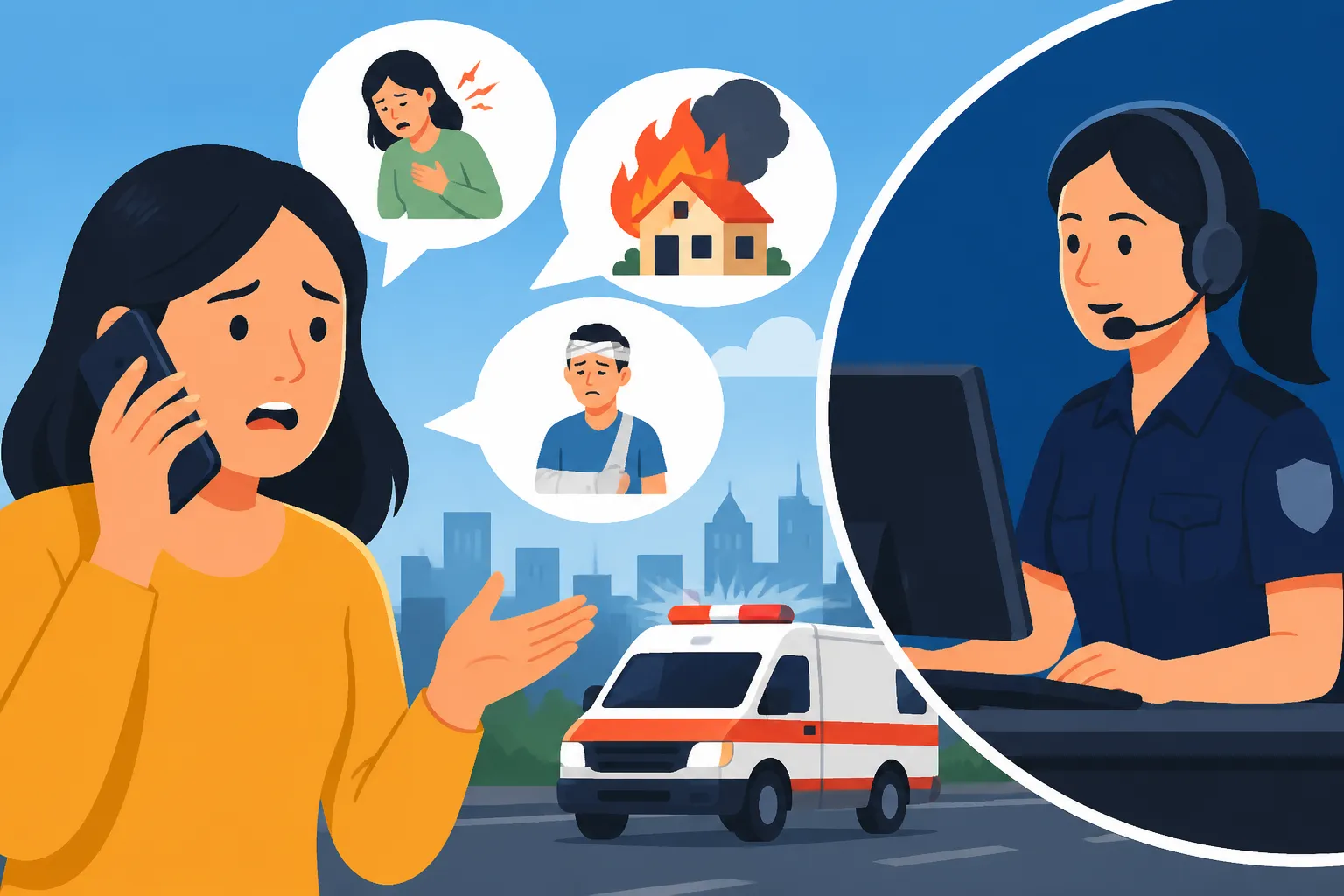
The panic that sets in during a medical emergency is universal, but for those of us living in a foreign country where we aren't native speakers of the local language, that fear is compounded by the worry of not being understood. I remember the absolute dread I felt when a neighbor collapsed in our condo lobby and I realized I had to explain the situation to the authorities using technical terms I hadn't yet mastered. This guide provides the exact scripts and logistical tips you need to navigate calling 995 in Singapore with confidence and clarity.
Navigating the Singapore Emergency Response System
When you pick up the phone to dial for help in Singapore, you are interacting with the Singapore Civil Defence Force (SCDF). The system is highly efficient, but it relies on a specific triage process. It is vital to understand that in Singapore, there is a distinct difference between Emergency Numbers: Calling 995 for Ambulance and 999 for Police. For any medical crisis, 995 is your primary lifeline. If you are a non-native speaker, the most important thing to remember is that the operators are trained to handle various accents and levels of English proficiency, but they need specific data points to help you.
One common mistake many expats make is calling 995 for non-life-threatening issues, such as a high fever or a minor cut that requires stitches. In these cases, you should actually be looking for Non-Emergency Medical Transport: When to Use 1777 Instead of 995. Using the emergency line for minor issues can delay help for someone in a critical state and may lead to a bill for the ambulance service. If the situation is a true emergency, however, the service is generally free of charge at the point of delivery, provided the SCDF deems it a genuine emergency.
The dispatchers use a sophisticated "ProQA" system. This means they will ask a series of structured questions to determine the severity of the case. For a non-native speaker, these questions might feel rapid or overwhelming. However, they are designed to give you instructions on what to do while the ambulance is on the way. Whether you are covered by Expat Health Insurance in Singapore: Public vs Private Coverage or are currently relying on a travel policy like SafetyWing, the immediate priority of the 995 operator is stabilization, not your insurance status.
The Critical Role of the Six-Digit Postal Code
In many countries, you have to describe your location using street names, intersections, and landmarks. While that works in Singapore too, there is a much faster way: the six-digit postal code. Every single building in Singapore has a unique code. If you give the operator this code, they know exactly where you are, down to the specific block or house.
If you are at home, make sure you have your postal code written on a "cheat sheet" near the door or on the fridge. If you are out in public, look for the nearest bus stop or building entrance; the postal code is often displayed on the address board. For expats who have recently moved, learning this six-digit number is arguably more important than learning the name of your street. It saves precious seconds that would otherwise be spent spelling out long, unfamiliar Malay or English road names.
If you are calling from a large condominium, don't just give the postal code. You must also provide the unit number and the specific lobby or tower. Singaporean condos can be massive, and an ambulance crew wandering around a central courtyard looking for "Tower B" is time wasted. Be as specific as possible: "Postal code 123456, Tower B, Unit 10-05."
Identifying the Nature of the Emergency
The operator will ask, "SCDF, what is your emergency?" This is where many non-native speakers struggle. You do not need to use complex medical jargon. In fact, simple, direct English is better. Use "S-V-O" (Subject-Verb-Object) sentences. For example, "My friend is not breathing" is much more effective than trying to explain the sequence of events that led to the collapse.
If the patient is unconscious, say "unconscious." If there is a lot of blood, say "heavy bleeding." If you suspect a heart attack, describe the pain: "chest pain" or "difficulty breathing." The operators are skilled at "translation" on their end, but they need those core keywords to categorize the call correctly within the Singapore Healthcare System for Expats: Complete 2027 Guide.
| Scenario | What to Say (Simple Script) | Key Information Needed |
|---|---|---|
| Heart Attack | "Chest pain. Hard to breathe." | Is the patient conscious? |
| Stroke | "Face is drooping. Cannot speak." | When did the symptoms start? |
| Severe Fall | "Person fell. Cannot move legs." | Are they bleeding from the head? |
| Choking | "Choking on food. Not breathing." | Can they make any sound? |
| Unconscious | "Person collapsed. Not waking up." | Are they still breathing? |
Detailed Scripts for Specific Medical Emergencies
To make the process easier, let's break down exactly what you should say in common high-stress situations. Remember to speak slowly and stay on the line until the operator tells you to hang up. Even if you hear the sirens, the operator might be giving you life-saving instructions like how to perform CPR or how to stop bleeding.
Scenario 1: Suspected Heart Attack or Stroke
If you are with someone who is experiencing sudden numbness or chest pressure, time is the most critical factor. For a stroke, Singapore uses the "FAST" acronym (Face, Arm, Speech, Time), and the 995 operators are trained for this. If your English is limited, focus on these physical signs. You might say: "My husband's face is different. He cannot lift his arm. His words are not clear."
The operator will likely ask if the patient is on any medication. This is a good time to have their ID and a list of medications ready. If you have international coverage through a provider like Cigna Global, you might be worried about which hospital the ambulance will go to. It is important to note that SCDF ambulances will always take the patient to the nearest public hospital's A&E. You generally cannot request a private hospital like Mount Elizabeth or Gleneagles during a 995 emergency call.
Once at the public hospital, the triage team will take over. For more on how this works, see A&E Departments: Triage Systems and Payment at Public vs Private Hospitals. In life-threatening situations, the quality of care in Singapore’s public sector is world-class, so do not let the lack of a private room choice stress you out in the moment of the call.
Scenario 2: Severe Accidents or Uncontrolled Bleeding
If you are witnessing a traffic accident or a household injury with significant blood loss, the operator needs to know the location first and the severity second. A simple script would be: "Accident at junction of Orchard Road and Scotts Road. One man bleeding heavily from the leg. He is awake but very pale."
The operator may ask you to use a clean cloth to apply pressure. If you don't understand an instruction, simply say, "Please repeat slowly." They are used to this. They might also ask if the person is a foreigner or a local. This isn't for discrimination; it’s to help with the registration process at the Emergency Medical Care in Singapore: Ambulances and A&E Wards once they arrive.
If you are an expat on a budget, you might worry about the Ambulance Fees: When Is a Ride Free and When Do You Pay?. In a genuine accident like this, the fee is typically waived. Focus on the patient and the instructions given by the dispatcher. They may stay on the line with you for ten minutes or more until the "red rhinos" (SCDF's specialized fire-medical vehicles) or ambulances arrive.
Managing the Language Barrier and Accents
One of the unique things about Singapore is "Singlish" and the variety of local accents. While 995 operators are professionals who speak standard English, in the heat of a crisis, their speech might become faster or include local inflections. If you are a non-native speaker from Europe, South America, or Northern Asia, you might find certain local pronunciations confusing.
Asking for Clarification
Don't be afraid to be assertive about your need for clarity. Phrases like "I don't understand, please speak standard English" or "Can you say that again slowly?" are perfectly acceptable. The goal is the safe delivery of medical care, not polite conversation. If the operator uses a term like "A&E" and you aren't sure what it means, they are referring to the Accident and Emergency department.
Similarly, if you are struggling to find the right English word, try to use a synonym or describe the action. Instead of "hemorrhage," say "lots of blood." Instead of "respiratory distress," say "cannot breathe." The simpler the better. If you have a friend or a bystander who speaks English more fluently or speaks the local language, put them on the phone, but stay nearby so you can provide the patient's personal details.
Preparing Your Information in Advance
Experts often advise new arrivals that the best way to handle an emergency is to prepare for it when things are calm. Create an "Emergency Card" for everyone in your household. This card should be in English and include:
- Full Name (as per Passport/FIN)
- FIN Number (Essential for hospital records)
- Date of Birth
- Known Allergies (e.g., "Allergic to Penicillin")
- Major Medical Conditions (e.g., "Diabetes," "Heart condition")
- Emergency Contact Number
- Insurance Provider (e.g., SafetyWing or Cigna Global)
Having this card to read from prevents you from having to "think" in English while you are in a state of shock. You can simply read the information directly to the 995 operator. This is also incredibly helpful once you reach the hospital, as the Finding English-Speaking and Internationally Trained Doctors at the facility will need this data immediately to begin treatment.
Logistics: What Happens After You Hang Up?
Once the call is over and the ambulance is dispatched, your job isn't quite done. You need to prepare for the arrival of the paramedics. In Singapore, this often means navigating condo security. If you live in a gated complex, call your security guard immediately and tell them an SCDF ambulance is coming to your block. They will need to open the gates and perhaps hold the elevator for the crew.
Gathering Documents and Essentials
While waiting, grab the patient’s physical FIN card or Passport. The paramedics will ask for this almost immediately. If the patient is an expat, their FIN is the key to their entire medical history in the national database. Also, grab any current medications the person is taking. Don't just list them; put the actual bottles in a bag to show the doctors.
If you are the one being taken to the hospital and you are alone, try to grab your phone charger and your insurance details. Whether you have a local plan or a policy designed for Expat Health Insurance Portability: Keeping Coverage When You Relocate, having your digital or physical insurance card can speed up the administrative part of the admission later on.
The Trip to the Hospital
In Singapore, 995 ambulances will transport you to the nearest "Public" (Restructured) hospital. These include facilities like Singapore General Hospital (SGH), Tan Tock Seng, or National University Hospital (NUH). You cannot ask them to take you to a private hospital because the 995 system is integrated with the public emergency network to ensure the fastest possible stabilization.
If you have a preferred doctor at a private clinic, you will have to wait until the patient is stabilized at the public hospital before arranging a private transfer. For more information on navigating these referrals, check out Specialist Referrals: Do You Need a GP Before Seeing an Expert?. Most expats find that the level of care in the public A&E is so high that they choose to stay there for the duration of the emergency.
Summary Checklist for Non-Native Speakers Calling 995
To keep things as simple as possible, follow this checklist the moment a crisis occurs. Keep a printed copy of this near your phone or saved as a favorite photo on your smartphone.
- Dial 995: Do not dial 911 or 999 for medical emergencies.
- Postal Code First: Say: "My location is postal code [6 digits]."
- State the Problem: Say: "[Name] is [unconscious / bleeding / having chest pain]."
- Provide the FIN: Have the patient's ID card ready to read the number.
- Follow Instructions: Do not hang up. Listen for CPR or first aid steps.
- Clear the Path: Ensure security knows an ambulance is coming and pets are secured in another room.
Living in Singapore is generally very safe, but being prepared for the unexpected is part of being a responsible expat. Whether you have lived here for ten years or ten days, the 995 system is there to protect you. By keeping your English simple, focusing on your postal code, and having your ID ready, you remove the barriers to getting the help you need.
Even if you are just visiting and using a temporary policy like SafetyWing, or if you are a long-term resident with Cigna Global, the emergency response remains the same. Your ability to communicate clearly in those first three minutes can change the entire outcome of a medical emergency. Stay calm, speak slowly, and remember that the person on the other end of the line is there to help you through the worst moments of your stay in the Red Dot.
Disclaimer
The information provided in this guide is for educational and informational purposes only and does not constitute professional medical or legal advice. In any life-threatening situation, always dial 995 immediately. While we strive to keep information current for 2026, emergency protocols and contact numbers in Singapore may change; always refer to official Singapore Civil Defence Force (SCDF) or Ministry of Health (MOH) announcements for the most up-to-date procedures.