Fully Furnished vs Partially Furnished: What to Expect in a Singapore Rental
One of the first bewildering experiences for any expat landing in Singapore and looking for a place to call home is navigating the jargon of rental listings. You’re scrolling through PropertyGuru or 99.co, seeing "fully furnished," "partially furnished," and sometimes even "unfurnished" – but what do these terms actually mean in the local context, and more importantly, which one is right for you? This guide will dive deep into deciphering these options, helping you set realistic expectations and avoid nasty surprises.
The Expat's Initial Rental Dilemma
Stepping into the Singapore rental market can feel like walking into a maze, especially when you're fresh off the plane. The sheer variety of housing, from HDB flats to luxurious condos, is immense, and then you have to contend with the furnishing level. For many, the idea of "fully furnished" sounds like a dream – just drop your bags and settle in. But trust me, it’s rarely that simple, and "partially furnished" can be even more of a head-scratcher. You're trying to picture your life here, wondering if you'll be sleeping on the floor or if the kitchen comes with more than just a sink. It’s a common frustration, and you’re not alone in feeling overwhelmed.
Understanding Local Market Nuances
Singapore's rental market operates on its own unique rhythm and definitions, which often differ significantly from what expats might be used to back home. What's considered standard in London, New York, or Sydney might not apply here. Landlords here can be quite particular, and the market can swing rapidly between tenant-favourable and landlord-favourable conditions, influencing what's included and how much negotiation power you have. Getting a good property agent can definitely help here, and our article on Engaging a Property Agent: Do You Have to Pay Commission? offers some great insights into navigating that process.
Common Pitfalls for Newcomers
New arrivals often fall into traps because of these differing expectations. You might sign a lease for a "partially furnished" unit thinking it means major appliances are included, only to find an empty shell save for the air conditioning. Or you might opt for "fully furnished" expecting modern, tasteful decor, and end up with furniture that looks like it stepped out of a time warp – functional, yes, but far from your personal style. It’s crucial to clarify every detail before committing, and never assume anything based on terms alone. Always ask for a detailed inventory list and photos, and insist on seeing the actual unit.
What "Fully Furnished" Really Means in Singapore
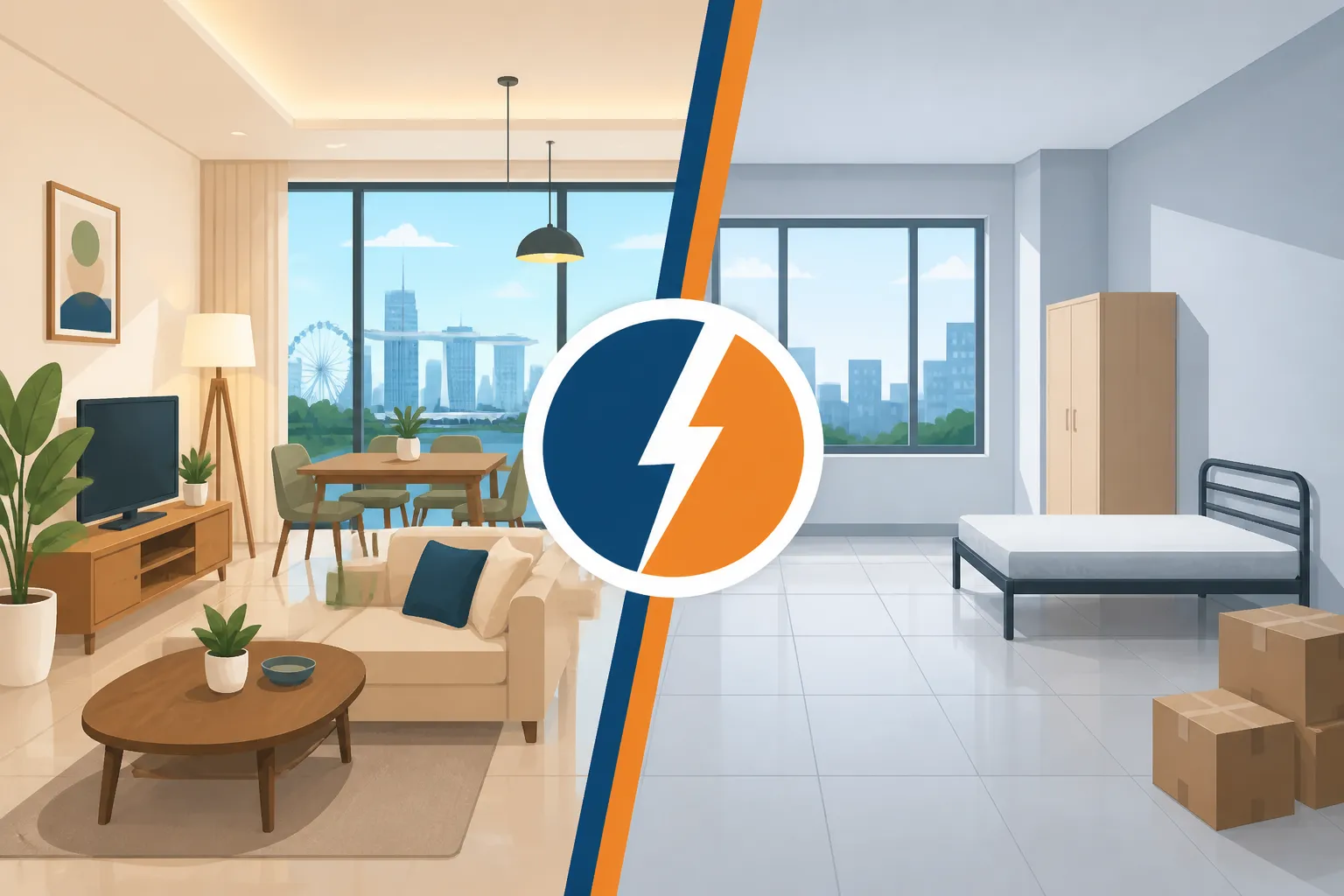
When a listing proudly declares "fully furnished," it generally implies that the apartment is ready for immediate occupancy with most, if not all, essential furniture and appliances in place. This is often the preferred option for expats on shorter assignments, those who want minimal hassle, or individuals who haven't yet committed to shipping their own belongings.
Expected Inclusions and Quality
Typically, a fully furnished apartment will come with major items like a sofa, dining table and chairs, beds and mattresses in all bedrooms, wardrobes, and basic white goods such. This includes a refrigerator, washing machine, dryer, and sometimes even a microwave or an oven. You might also find basic kitchenware like pots, pans, plates, and cutlery, though the quality and quantity can vary wildly. Some higher-end fully furnished units, especially serviced apartments, might even include linens, towels, and a basic TV. However, don't expect a curated, designer-level setup unless the rent explicitly reflects that premium. More often than not, it's functional and durable, chosen for longevity rather than style. It's not uncommon for furniture to be slightly worn or generic, a consequence of years of tenant turnover.
Benefits for Short-Term Stays or Busy Professionals
For those on a tight schedule or planning a shorter stint in Singapore, a fully furnished apartment offers unparalleled convenience. You literally just need to bring your suitcases. This saves you the immense headache of furniture shopping, delivery coordination, and assembly – a significant advantage when you’re also grappling with a new job, adapting to the climate, and finding your way around. It's also ideal for those who aren't ready to invest heavily in furniture, perhaps because they're unsure how long they'll stay or they simply prefer not to deal with logistics. This 'plug-and-play' solution allows you to focus on work and settling into your new environment without the added stress of setting up a household from scratch. Just remember, this convenience usually comes with a higher price tag in rent.
The "Ready to Move In" Premium
The convenience of a fully furnished unit often translates into a higher rental price compared to an equivalent partially furnished or unfurnished property. Landlords factor in the cost of purchasing, maintaining, and replacing furniture and appliances, as well as the potential for wear and tear. This premium can be substantial, sometimes adding hundreds of dollars to your monthly rent. While it might seem like a lot upfront, consider what you're saving in time, effort, and initial outlay for furniture. If your company provides a generous housing allowance, this premium might be easily absorbed. However, for those on a tighter budget, it’s crucial to weigh this convenience against the long-term financial implications. Sometimes, that extra rental cost could actually be more than the cost of buying basic furniture yourself over a two-year lease.
The Realities of a "Partially Furnished" Rental
"Partially furnished" is arguably the most ambiguous term in the Singapore rental lexicon, and it’s where many expats get caught out. It rarely means "some furniture" as you might expect in many Western countries. Instead, it often refers to a very specific set of inclusions.
Unpacking the Bare Essentials
In Singapore, "partially furnished" typically means the apartment comes with "white goods" (refrigerator, washing machine, dryer), built-in wardrobes in the bedrooms, and essential fittings like light fixtures, curtains or blinds, and of course, air conditioning units. Crucially, this generally does not include movable furniture such as sofas, dining tables, beds, or bookshelves. Sometimes, a landlord might throw in a basic oven or microwave, but don't count on it. Essentially, it means the fixed installations are there, and you’re expected to bring or buy everything else that makes a house a home. This can be a shock for those expecting a more 'move-in ready' experience with at least a bed!
The Freedom of Customization
While the initial thought of buying all your furniture might be daunting, a partially furnished apartment offers immense freedom to truly make the space your own. You get to choose your own style, colour schemes, and furniture pieces that reflect your personality and needs. This is particularly appealing for expats planning a longer stay (say, two years or more) who want to feel truly settled. You're not stuck with someone else's aesthetic choices or worn-out pieces. You can create a comfortable, personalised sanctuary that truly feels like home, rather than a temporary stop. This freedom extends to how you set up your living spaces, optimising them for your family's unique lifestyle.
Hidden Costs and Effort
The freedom of customization comes with its own set of challenges, primarily in the form of upfront costs and significant effort. Beyond the rent and security deposit, you'll need a budget for purchasing all your major furniture items, from your sofa to your bed, and all the smaller accessories that fill a home. This can easily run into thousands of dollars, even if you’re shopping at more affordable stores like IKEA or exploring second-hand options on Carousell, as mentioned in our guide on Furniture Shopping in Singapore: IKEA, Courts, and Second-Hand Carousell. Then there's the logistical nightmare: coordinating multiple deliveries, assembly, and disposal of packaging. It can be incredibly time-consuming, especially when you're still navigating other aspects of settling into a new country. Factor in not just the monetary cost, but also the mental and physical energy required.
Making the Choice: Fully vs. Partially Furnished
Deciding between fully and partially furnished really boils down to your specific circumstances, priorities, and how much you're willing to invest – both financially and in terms of effort – into your Singapore home. There’s no universal "best" option; it's deeply personal.
Considering Your Lifestyle and Budget
If you’re a busy professional with demanding hours, a fully furnished apartment might be worth the premium. The time saved on setting up a home can be invaluable, allowing you to focus on your career and personal life without the added stress of furniture procurement. Similarly, if your company covers a significant portion of your housing, the higher rent for a fully furnished unit might be a no-brainer. However, if you’re looking to save money, a partially furnished unit, despite the initial setup costs, can be more economical over a longer lease, as your monthly rent will typically be lower. Consider your lifestyle: do you host often? Do you need specific types of furniture for hobbies or work from home? Your answers will help guide your choice.
Long-Term vs. Short-Term Commitment
Your intended length of stay in Singapore is a significant factor. For short-term assignments (less than 12-18 months), a fully furnished apartment usually makes the most sense. The cost of buying and then selling or disposing of furniture for a brief period often outweighs the savings on rent. You’re also likely to be less invested in personalizing the space. Conversely, if you foresee a longer stay – two years or more – a partially furnished unit becomes much more attractive. The initial investment in furniture can be amortized over a longer period, and you get the satisfaction of creating a home that truly reflects your taste. Plus, you won't have the hassle of packing or moving other people's furniture when you eventually move out.
Family Needs and Space
Families, especially those with young children, often have different priorities. A fully furnished unit can be a blessing for immediate settlement, but the existing furniture might not be child-friendly or suitable for your family's specific needs (e.g., cribs, play areas, robust storage). You might find yourself having to move or store landlord's furniture, which can be an additional hassle and potentially lead to disputes over damages. A partially furnished unit, while requiring more upfront work, allows you to select furniture that is safe, durable, and functional for your family, creating a truly comfortable environment. Consider if the existing beds are the right size or if there's enough space for a study desk for your kids. This flexibility can be a huge advantage for family units.
Here's a quick comparison table to help you visualise the trade-offs:
| Feature | Fully Furnished | Partially Furnished |
|---|---|---|
| Initial Setup | Minimal effort, "ready to move in" | Significant effort, requires furniture purchase |
| Upfront Cost | Primarily security deposit + first month's rent | Security deposit + first month's rent + furniture cost |
| Monthly Rent | Higher, includes furniture premium | Lower, reflects less landlord investment |
| Flexibility | Limited personalization, stuck with existing items | High flexibility, full customization |
| Ideal For | Short-term stays, busy professionals, minimal hassle | Long-term residents, budget-conscious, personal touch |
| Logistics | Easy move-in, easy move-out | Complex sourcing, delivery, and assembly |
| Wear & Tear | Disputes over existing wear & tear possible | Responsible for your own items' condition |
Beyond Furniture: Essential Household Setup Considerations
Regardless of whether you choose a fully or partially furnished rental, there are several other crucial aspects of setting up your Singapore home that you'll need to address. These are often overlooked in the excitement of house hunting but are absolutely vital for a smooth transition.
Setting Up Utilities and Internet
One of the first things you'll need to sort out is your utilities. Singapore Power (SP Group) manages your electricity, water, and gas. You'll need to set up an account, which typically involves a security deposit and linking it to your local bank account for GIRO (interbank direct debit) payments. Our guide on Setting Up SP Group: Electricity, Water, and Refuse Collection Fees delves into the specifics. For internet, you'll choose from major providers like Singtel, StarHub, or MyRepublic. This usually involves signing a contract and arranging for installation. While your home internet is being set up, remember that reliable mobile connectivity is key from day one. Before your local SIM card or home Wi-Fi is fully operational, consider picking up a local eSIM from providers like Airalo to ensure you have data and communication capabilities from the moment you land. This can be a lifesaver for navigating, contacting your agent, or simply staying in touch with family.
Sourcing Appliances and Decor
If you opt for a partially furnished unit, you'll be embarking on a shopping spree for everything from basic kitchen appliances (toaster, kettle) to soft furnishings (rugs, cushions) and decor. Beyond the big furniture stores, Singapore has many smaller shops and online marketplaces. Don't forget the essentials for your kitchen and bathroom! For those who need to fill an empty apartment, exploring options like Courts for electronics or smaller independent stores for unique decor can be rewarding. Also, check out platforms like Carousell for second-hand items, which can be a budget-friendly way to furnish your home, often with surprisingly good quality pieces.
Moving and Logistics
Whether you're moving from a fully furnished unit to another, or from overseas to a partially furnished one, coordinating the actual move can be a significant undertaking. This involves hiring movers, packing (or unpacking), and often navigating condo management rules for move-in times. For international moves, especially, the process is complex. Companies like Sirelo offer comprehensive resources and comparison tools to help you find reputable international moving services, estimate costs, and understand customs regulations for bringing your belongings into Singapore. Even for local moves, booking reliable movers and ensuring your items are insured is crucial. Don't underestimate the effort required for moving, even if it's just a few boxes!
Pros and Cons: A Comparative Look
Let's summarise the key advantages and disadvantages to help you make an informed decision when evaluating fully versus partially furnished rentals in Singapore.
Financial Implications
From a purely financial standpoint, a fully furnished apartment will almost always have a higher monthly rental cost. This premium covers the landlord's investment in furniture and appliances, as well as the depreciation and maintenance associated with them. For a short stay, this might be more cost-effective than buying furniture you'll only use for a year. However, for longer leases (two years or more), the cumulative difference in rent can easily exceed the cost of purchasing your own furniture. A partially furnished unit, with its lower monthly rent, can offer significant long-term savings, despite the initial outlay for furniture. It’s also worth considering that if you purchase your own furniture, you might be able to sell it when you leave, recouping some of your initial investment. Remember to factor in other initial costs like your security deposit and stamp duty, which are covered in more detail in our article on Initial Rental Costs: Security Deposits, Stamp Duty, and Advance Rent.
Convenience vs. Personalization
This is often the core trade-off. Fully furnished offers ultimate convenience: you literally just walk in with your luggage. There's no stress of shopping, delivery, or assembly. This is perfect for those who prioritize ease and speed of settlement. However, this convenience comes at the cost of personalization. You're living with someone else's furniture, which might not be to your taste, might be worn, or simply not functional for your lifestyle. Partially furnished, on the other hand, demands considerable effort and upfront cost, but rewards you with a truly personalized living space. You get to choose every item, curate your home's aesthetic, and ensure everything meets your specific needs and comfort levels. This deep personalization can significantly enhance your feeling of 'home' in a foreign country.
Logistical Headaches
The logistical headaches associated with a fully furnished unit are generally minimal. Your main concern might be the inventory check when you move in and out, to avoid disputes over pre-existing damage – something our guide on Moving In: Conducting the Handover Inventory and Defect Check can help with. When you move out, you simply pack your personal items. For a partially furnished unit, the logistics are much more involved. You need to coordinate furniture purchases, deliveries, and potentially assembly. If you're bringing items from overseas, services like Sirelo can simplify the process of finding international movers, but it's still a complex undertaking. When you eventually leave, you'll face the task of selling, donating, or shipping your furniture, which can be a whole new layer of stress. Always think ahead to the move-out process before committing to a partially furnished lease.
Ultimately, the choice hinges on your personal situation, how long you plan to stay, and what you value more: immediate convenience or the freedom to create a truly bespoke home. Take your time, weigh the pros and cons carefully, and don't hesitate to ask your property agent for clarity on what exactly is included in any given rental.
Disclaimer
The information provided in this guide is for general informational purposes only and does not constitute professional advice. While we strive to provide accurate and up-to-date information, the Singapore rental market, legal regulations, and government policies can change. It is always recommended to consult with a qualified property agent, legal professional, or relevant authorities for advice tailored to your specific situation.