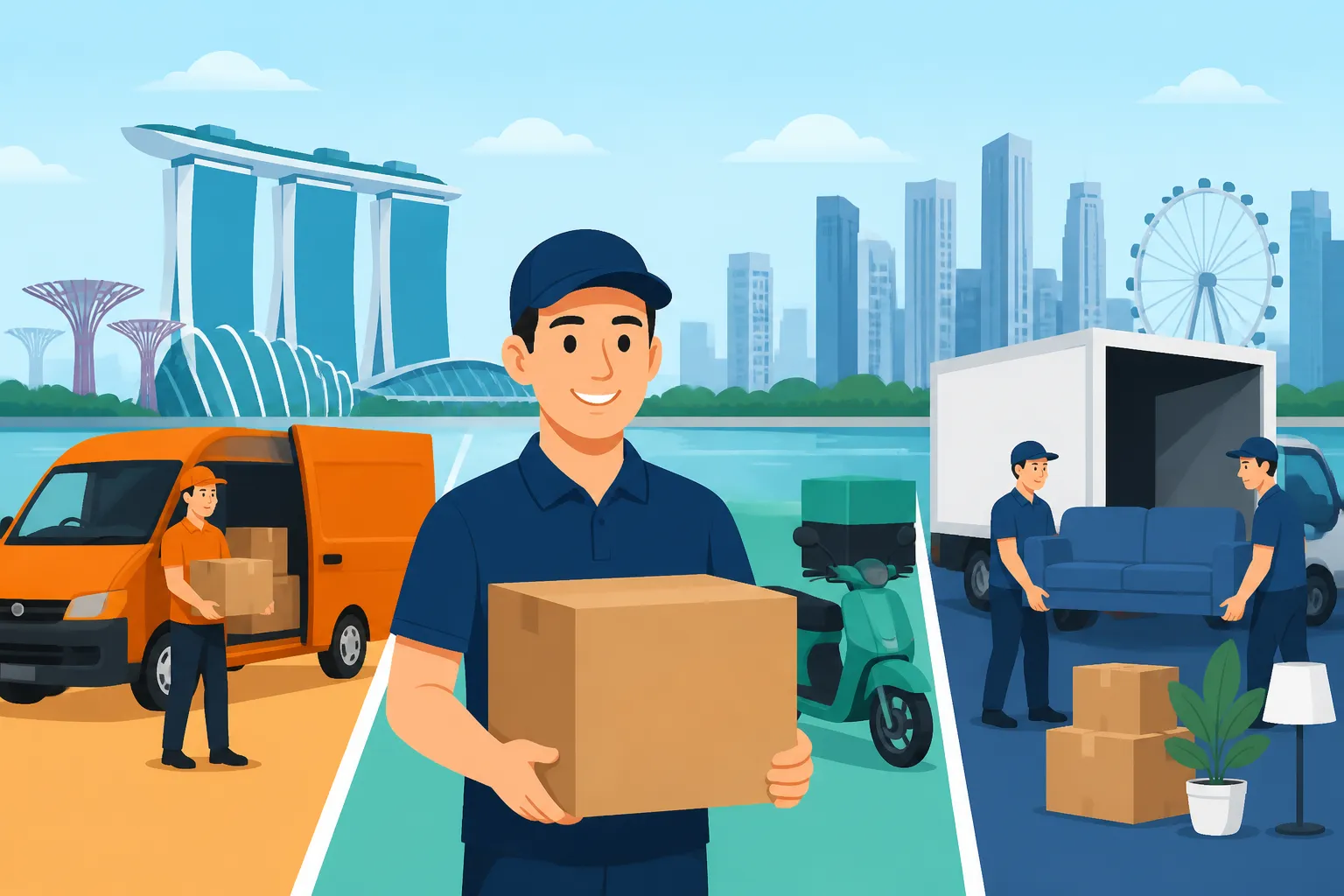
Hiring Movers in Singapore: Lalamove, GoGoX, and Full-Service Companies
Moving to a new place in Singapore, whether it's across town or into the little red dot for the first time, often feels like a Herculean task, laden with unexpected complexities and costs that can easily overwhelm. From navigating dense traffic with oversized furniture to understanding building management rules, the logistical dance of relocating here is unique. This comprehensive guide is designed to cut through the confusion, offering a realistic, expat-friendly roadmap to hiring movers in Singapore, covering everything from budget-conscious platform options like Lalamove and GoGoX to the full-service international moving companies.
The Initial Jolt: Why Moving in Singapore Feels Different
Ah, the excitement of a new place quickly gives way to the dread of the move, right? Singapore, with its unique blend of efficiency and stringent rules, adds several layers to this already stressful process. It's not just about getting your stuff from A to B; it's about doing it the Singapore way.
Space Constraints and Logistics Nightmares
One of the first things you'll notice when looking for a home in Singapore is that space is a premium. Whether you're moving into an HDB flat or a condominium, you'll likely be dealing with more compact living spaces than you might be used to in larger, sprawling countries. This often means narrow corridors, smaller service lifts, and specific loading bay regulations.
Imagine you’ve found that perfect little two-bedroom condo in River Valley. You’re all set to move your beloved L-shaped sofa and king-sized bed. But then, reality hits. Your new building has a specific lift for moving, and it’s only available during certain hours, requiring a booking sometimes weeks in advance. If you don't book, your movers might face hefty fines or simply be turned away, leaving your belongings stranded. For larger items, especially in older buildings, sometimes the only way is via the stairs – and trust me, that comes with extra charges and a lot of sweat. Knowing your building’s specific regulations, including potential restrictions on working hours for contractors, is crucial. It’s a part of the local landscape you’ll quickly learn to respect, or perhaps, begrudgingly adapt to.
Cost Expectations: It's Not Just the Manpower
Singapore's high cost of living extends to logistics, and moving is no exception. Beyond the hourly rate of the movers themselves, there are a myriad of other costs that can quickly add up. You're not just paying for muscle; you're paying for the vehicle, the fuel (which isn't cheap here), the parking, and potentially Electronic Road Pricing (ERP) charges if your route takes you through peak-hour zones.
I remember my first move here; I assumed the quote included everything. Big mistake. I watched in mild horror as the truck driver had to pay multiple ERP charges and then a parking fee at both my old and new condos. These were all eventually billed back to me. When you're asking for quotes, always clarify if these "hidden" costs are incorporated or if they will be added on. The type of vehicle needed also impacts the price significantly. A large 14-foot lorry costs more than a 10-foot one, and a van is cheapest but will only accommodate very small loads. For a deeper dive into financial planning, you might want to read about Healthcare Budgeting in Singapore: Managing Out-of-Pocket Costs which touches on managing various local expenses, or Cost of Living for a Single Expat: Monthly Budget Breakdown if you're trying to figure out overall expenses.
Understanding Your Moving Options: From DIY to Done-For-You
When it comes to moving your belongings in Singapore, you've got a spectrum of choices, each with its own benefits and drawbacks. Your decision will largely hinge on the volume of your items, your budget, your timeline, and your willingness to get your hands dirty.
The Budget-Friendly Brigade: Lalamove, GoGoX, and Similar Platforms
For those with a lighter load or a tighter budget, app-based platforms like Lalamove and GoGoX have become incredibly popular. Think of them as the Grab or Uber for your stuff. You input your pick-up and drop-off locations, select the type of vehicle (van, 10-foot lorry, 14-foot lorry), and potentially add on "helpers" if you need extra hands.
How they work: These platforms connect you directly with drivers. You can specify if you need one helper or two to assist with loading and unloading. The pricing is typically transparent and calculated based on distance and vehicle type, with surcharges for additional services like waiting time, multiple stops, or evening/weekend moves.
Pros:
- Cost-effective for small moves: If you're just moving a few pieces of furniture or a dozen boxes, this can be significantly cheaper than a full-service mover.
- Flexibility and speed: You can often book a driver on demand or schedule for the same day, which is a lifesaver for last-minute changes or spontaneous purchases.
- Direct communication: You communicate directly with the driver, allowing for immediate clarifications (though this can also be a con if there's a language barrier).
Cons:
- Limited insurance: While some platforms offer basic goods-in-transit insurance, it's usually minimal. Don't expect comprehensive coverage for fragile items unless explicitly stated and purchased.
- No packing services: You're fully responsible for packing all your items securely. If you need tips on getting your apartment ready for handover, check out Preparing Your Apartment for Handover: The Move-Out Checklist.
- No disassembly/assembly: Drivers are generally there to move items, not to take apart or put together furniture. If your bed needs disassembling, you'll need to do it yourself or hire a separate handyman.
- Communication barriers: While many drivers speak English, some might have limited proficiency, which can lead to misunderstandings, especially with complex instructions or unforeseen issues.
Real-life scenarios:
- "I'm moving from a co-living space to my first solo apartment, and I only have a mattress, a desk, and a few suitcases. I packed everything myself." In this case, a van from Lalamove with one helper is perfect. You meet the driver, they help load/unload, and off you go.
- "I bought a huge new fridge from Courts, but they don't deliver to my HDB unit on the 10th floor. I need it picked up from the store and brought into my kitchen." Here, a 10-foot lorry with two helpers from GoGoX could solve the problem efficiently.
However, if you're looking at moving an entire two-bedroom apartment, especially one that's fully furnished with delicate items and needs disassembling, trying to piece together a solution with these platforms can quickly become more stressful and potentially more costly than just hiring a proper moving company from the start.
The Middle Ground: Man-and-Van Services
Stepping up from the pure platform models are independent "man-and-van" services. These are typically smaller, owner-operated businesses that offer a slightly more hands-on approach than simply a driver-for-hire. You'll often find them advertised on local expat forums, Carousell, or through word-of-mouth.
How they work: You usually contact them directly via phone or WhatsApp. They often provide their own van or smaller lorry and come with one or two individuals who are experienced in moving. They might offer a slightly more personalised service, perhaps even helping with some minor disassembly if agreed upon in advance.
Pros:
- More hands-on help: Unlike pure app-based drivers, these individuals are often movers by trade, meaning they might have a better grasp of how to handle bulky items and navigate tight spaces.
- Better communication (often): Since you're dealing directly with the business owner or a small team, communication can be clearer, and they might be more accommodating to specific requests.
- Still relatively affordable: While usually more expensive than just a driver from Lalamove, they tend to be cheaper than full-service companies for mid-sized moves.
Cons:
- Limited insurance: Similar to the platforms, comprehensive insurance is rarely standard, so you'd need to clarify this and potentially seek third-party coverage if your items are valuable.
- Scope of work can be ambiguous: Ensure you get everything in writing. What exactly are they helping with? How many trips? What if something breaks? Ambiguity here can lead to disputes.
- Less formal: This can be a pro for flexibility, but a con if you need formal invoices or recourse for issues.
The Full-Service Firms: Sirelo and Other International Movers
For larger homes, valuable possessions, or international relocations, a full-service moving company is often the way to go. These companies handle everything from start to finish, aiming to provide a stress-free experience. If you’re moving your entire life from overseas into Singapore, these are the companies you’ll want to consider. International moving aggregators like Sirelo can help you compare quotes from various full-service movers, taking some of the legwork out of finding a reliable company.
How they work: A full-service move typically begins with a home survey (either virtual or in-person) to assess the volume of your belongings. They'll provide a detailed quote that includes packing materials, professional packing, disassembly and reassembly of furniture, loading, transportation, unloading, and often, comprehensive insurance. Many also offer unpacking services, where they place items in their designated rooms. For those coming from abroad, they also handle customs clearance and shipping logistics.
Pros:
- Stress-free experience: This is their biggest selling point. You literally don't have to lift a finger beyond pointing to what goes where.
- Comprehensive insurance: Reputable firms offer robust insurance options, often "all-risk" coverage, giving you peace of mind for your valuable items.
- Professional handling: Their teams are trained in packing fragile items, handling bulky furniture, and efficiently loading/unloading.
- Dedicated project manager: For larger moves, you'll often have a single point of contact who manages the entire process.
- Suitable for international moves: These are the experts in customs, shipping containers, and cross-border logistics.
Cons:
- Significantly higher cost: This comprehensive service comes at a premium, often several times the cost of a budget option.
- Less flexibility: Due to scheduling and resource allocation, full-service moves require more planning and are less flexible for last-minute changes.
- Minimum volume requirements: Some international movers might have minimum cubic meter requirements, making them less suitable for very small moves.
Real-life scenarios:
- "I'm moving my 3-bedroom HDB flat from Tampines to a landed property in Serangoon. I have a lot of furniture, including antiques and a piano, and I want everything professionally packed and insured." This is a classic case for a full-service mover. They'll come in, pack your kitchen, wrap your furniture, and transport it all safely.
- "My company is relocating me from London to Singapore, and they're providing a relocation package. I need my entire household shipped, including a car." An international moving specialist, perhaps found through a platform like Sirelo, will manage the complex logistics, customs, and delivery right to your door in Singapore.
Key Considerations Before You Hire Movers in Singapore
No matter which type of mover you choose, there are several critical factors you absolutely must consider to avoid headaches, financial surprises, and broken heirlooms.
Insurance: Protecting Your Prized Possessions
This is probably one of the most overlooked aspects of moving until something goes wrong. Trust me, you don't want to be caught in a situation where your cherished coffee table is smashed, and you have no recourse.
Different types of insurance:
- Basic liability: This is often included with budget movers, but it's usually minimal – sometimes just a few dollars per kilogram. This means if a driver drops your 50kg, S$5,000 television, you might only get back S$100. It's better than nothing, but barely.
- All-risk insurance: This is what reputable full-service movers offer, covering against all risks of loss or damage, subject to specific exclusions. You'll typically need to declare the value of your items, and the premium will be a percentage of that declared value. This is highly recommended for high-value or sentimental items.
How to check coverage: Always ask explicitly about insurance coverage before you sign anything. Get it in writing. For app-based services, check their terms and conditions carefully. For full-service companies, review their insurance policy document. A detailed inventory list with declared values is usually a prerequisite for all-risk insurance, so start compiling one early. This also ties into your overall financial planning; protecting your assets is key, just like understanding your Expat Health Insurance in Singapore: Public vs Private Coverage for medical emergencies.
The Quote Conundrum: What's Included and What's Extra?
The initial quote is just that: initial. It’s imperative to scrutinise every line item and ask about potential surcharges. Many expat friends have been stung by "unexpected" fees on moving day.
Common hidden costs:
- Stair carry fees: If your bulky items can’t fit in the lift or if the lift isn't available, movers will charge per flight of stairs. This can add up quickly, especially for heavy items.
- Dismantle/reassemble charges: Unless explicitly included, assume you'll pay extra for movers to take apart and put together furniture.
- Parking fines/ERP: As mentioned, these can be passed on to you. Clarify who is responsible.
- Overtime: If the move runs longer than expected due to unforeseen circumstances (or simply bad planning), you might incur overtime charges, especially for evening or weekend moves.
- Packing materials: Some quotes might not include boxes, tape, and bubble wrap.
- Disposal fees: If you have bulky items you're getting rid of, movers might charge for disposal. Alternatively, you can learn How to Dispose of Bulky Furniture Using the Town Council Service yourself.
Getting multiple quotes: Always get at least three quotes for comparison. Don't just compare the bottom line; compare what each quote includes. This is where a detailed inventory helps – send the same list to every mover so you're comparing apples to apples. For full-service movers, insist on a physical or virtual survey of your home. This allows them to accurately assess volume and potential challenges (e.g., narrow doorways, delicate items), leading to a more accurate quote.
Logistics and Building Management: Navigating Singapore's Rules
This is arguably the most uniquely Singaporean aspect of moving. You simply cannot ignore building rules, or you’ll face delays and potential fines.
Booking lift access: For both HDBs and condos, you must book the service lift in advance. Some require a deposit, others a simple form. Moving without booking can result in being turned away by security or penalties. Many condos have strict rules about moving times, often only allowing it on weekdays during specific hours, sometimes even prohibiting moves on weekends or public holidays.
Parking permits and loading/unloading zones: Ensure your movers know where they can park and unload. Some condos require special permits, which you, as the resident, need to arrange. Getting a parking ticket because your mover blocked a common area is a hassle you don't need.
Restricted timings for moving: Be aware of noise restrictions, especially in residential areas. Movers generally cannot operate very early in the morning or late at night.
Move-in/Move-out fees: Some condominium management corporations (MCSTs) impose a non-refundable "move-in" or "move-out" fee, which covers administrative costs and wear-and-tear on common areas. Always check with your building management or landlord. This is an important detail to be aware of when you are looking at Initial Rental Costs: Security Deposits, Stamp Duty, and Advance Rent.
Tips for a Smooth Moving Day (Because It's Never Completely Smooth)
Even with the best planning, moving day always throws a curveball or two. But with some savvy preparation, you can mitigate most issues and keep your sanity intact.
Packing Like a Pro (Even If You're Not Paying Pros)
If you're opting for a budget-friendly mover, the burden of packing falls squarely on you. Don't underestimate this task!
- Labeling is king: Label every single box with its contents and the room it belongs to. "Kitchen – Plates & Mugs," "Bedroom 2 – Books," "Fragile – Glassware." This will save you endless frustration during unpacking. You might also find it helpful to note what goes on top if you have space-saving hacks, or which side is up for delicate items.
- Fragile items: Don't skimp on bubble wrap, packing paper, and sturdy boxes. Reinforce the bottoms of boxes that hold heavy items. If a full-service mover is packing for you, supervise or at least clearly indicate what needs extra care.
- The essentials box: Pack a separate, clearly labeled box with items you'll need immediately upon arrival. This includes toiletries, a change of clothes, phone chargers, important documents, snacks, basic cleaning supplies, and perhaps a small toolkit. It’s like a mini survival kit for your first night in the new place. While you're at it, make sure you've also initiated services like Setting Up SP Group: Electricity, Water, and Refuse Collection Fees and Internet Providers in Singapore: Singtel, StarHub, and MyRepublic Fiber so you're not left in the dark or disconnected.
Communication is King: Overcoming Language Barriers
Especially with app-based services, language can be a hurdle. Don't assume anything.
- Clear instructions: Provide clear, concise instructions. Use bullet points. If possible, send photos of tricky items or specific entry points.
- Confirm details in writing: If you've agreed on special requests (e.g., waiting time, specific handling of an item), confirm it via WhatsApp or text message. This provides a clear record.
- Share building management details: Make sure your movers have all the necessary contact details for your building management and know about any time restrictions or specific entry points. Being prepared can save you from a major snag.
Post-Move Essentials: Settling In and Checking Off Your List
The boxes are in, the movers are gone. Now what? The next phase is about making your new place feel like home and ensuring everything arrived safely.
- Unpacking wisely: Start with the essentials box! Then, tackle one room at a time. It’s tempting to just rip open everything, but a systematic approach helps prevent items from getting lost or damaged.
- Checking for damages: As you unpack, carefully inspect all items, especially furniture and electronics, for any damage incurred during the move. Take photos of any issues immediately. This is crucial for insurance claims. Refer to our guide on Moving In: Conducting the Handover Inventory and Defect Check to ensure you're thorough.
- Documenting issues: If you do find damage, contact your moving company as soon as possible, ideally within 24-48 hours, providing photos and a detailed description. If you had comprehensive insurance, follow their claims procedure precisely. For issues with your landlord related to your previous apartment, learning about Getting Your Deposit Back: Navigating End-of-Lease Cleaning and Disputes can be very helpful.
Remember to consider your connectivity during this transition. While you're waiting for your home internet to be set up, or if you're travelling between locations, having a reliable eSIM from a provider like Airalo can be a lifesaver for staying connected. It means you won't miss important calls or messages during the moving chaos.
Moving to, or within, Singapore doesn't have to be a nightmare. With careful planning, understanding your options, and knowing what to expect, you can turn a potentially stressful event into a manageable transition to your new life here. Welcome to your new home!
Disclaimer
The information provided in this guide is intended for general informational purposes only and does not constitute professional advice. While we strive to offer accurate and up-to-date information, moving regulations, costs, and company services in Singapore can change rapidly. Always consult directly with moving companies, building management, and relevant authorities (e.g., MOM, ICA) for the most current and specific advice tailored to your individual situation. We recommend obtaining multiple written quotes and thoroughly reviewing all terms and conditions, including insurance policies, before committing to any service.