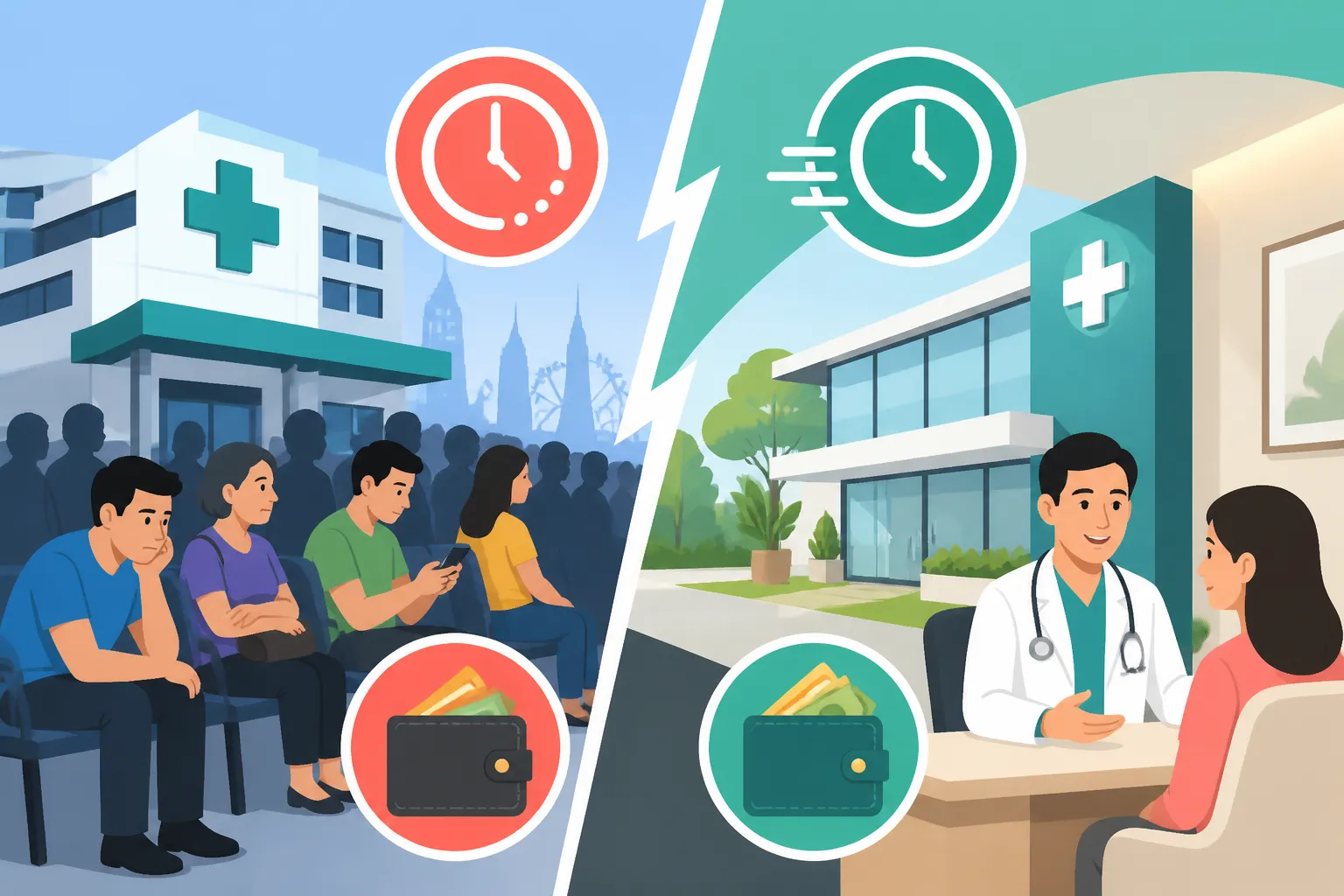
Polyclinics vs Private Clinics: Waiting Times and Cost Differences
Waking up in Singapore with a throbbing fever or a persistent cough often triggers a stressful internal debate: should you head to the nearest polyclinic or find a private GP? I remember my first week in Tiong Bahru, wandering into a clinic without realizing how the subsidy system worked, only to be shocked by the administrative wait. This guide solves that confusion by breaking down the real-world differences in waiting times and costs between polyclinics and private clinics for expats.
The Foundation of Singapore Primary Healthcare
When you first arrive in Singapore, the healthcare system can feel like a highly efficient but complex machine. At the primary care level—where you go for common ailments, vaccinations, or health screenings—there are two main paths. Polyclinics are government-run "one-stop" health centers. They are massive, often multi-story buildings that house everything from general doctors and dentists to pharmacies and X-ray facilities. They are designed to provide affordable, subsidized care to the masses, particularly Singapore Citizens and Permanent Residents.
Private clinics, on the other hand, are the thousands of General Practitioner (GP) offices scattered across the island. You will find them in HDB void decks, posh shopping malls in Orchard, and sleek office towers in the CBD. These are run by private companies or individual doctors. While they lack the massive scale of a polyclinic, they offer a level of convenience and personalized service that many expats find more aligned with what they are used to back home.
Choosing between the two isn't just about the price tag; it is about understanding your specific status as a foreigner. Choosing a Primary Care Physician (GP) in Singapore is often the first step in establishing your "home base" for health. Whether you choose the public or private route will depend heavily on your visa type, your insurance coverage, and how much value you place on your time versus your wallet.
What is a Polyclinic
Polyclinics are managed by three main "clusters" in Singapore: National University Health System (NUHS), National Healthcare Group (NHG), and SingHealth. Because they are government-funded, they operate under strict protocols. For a local, a polyclinic is the holy grail of affordable care. For an expat on an Employment Pass or S-Pass, however, the experience is slightly different. You are technically a "Non-Resident," which means you do not qualify for the heavy subsidies that locals enjoy.
Despite the lack of subsidies, polyclinics remain a popular choice for chronic disease management because they have an all-in-one ecosystem. If you need a blood test, a consultation, and a prescription, you can get all three done without leaving the building. This "one-stop-shop" nature is a significant draw, even if you are paying the higher Non-Resident rates. However, you must be prepared for the atmosphere, which is more "public infrastructure" than "private wellness center."
What is a Private Clinic
Private GP clinics are the backbone of the neighborhood healthcare scene. They range from small, solo-doctor practices like those often found in older residential estates to large corporate chains like Raffles Medical Group, Fullerton Health, or Minmed. The experience here is usually much faster and more intimate. You will likely see the same doctor every time, which helps in building a long-term medical history.
For many expats, private clinics are the default because their corporate insurance often provides a "panel" of clinics where they can enjoy cashless consultations. If you are covered by a plan from Cigna Global, you might find that certain high-end private clinics in the central region are fully integrated with your provider, making the administrative side of a doctor's visit almost invisible.
Comparing Costs for Foreigners and Expats
The most frequent question I get from newcomers is about the price gap. There is a common misconception that polyclinics are "cheap" for everyone. While they are certainly affordable compared to Western healthcare costs, as a foreigner, you are paying the "Non-Resident" rate, which is significantly higher than what your Singaporean colleagues pay. It is vital to look at the total bill, including the consultation, medication, and any diagnostic tests.
In a polyclinic, the pricing is transparent and fixed across the cluster. In a private clinic, the pricing is deregulated. A GP in a neighborhood heartland might charge 30 SGD for a consultation, while a GP in a premium medical center might charge 150 SGD. Understanding these nuances is key to Healthcare Budgeting in Singapore: Managing Out-of-Pocket Costs effectively.
Polyclinic Rates for Non-Residents
As of 2026, a consultation at a polyclinic for a Non-Resident (someone on an Employment Pass, S-Pass, or Dependant's Pass) typically ranges from 55 SGD to 70 SGD. This is just for the doctor's time. While this is higher than the 15 SGD to 25 SGD locals pay, it is often still lower than the "all-in" price at a high-end private clinic. However, you must also factor in the cost of medication. Polyclinics often have a fixed markup on drugs, which can be lower than private clinics for generic brands.
If you are a Permanent Resident (PR), your rates are much lower, usually around 30 SGD to 35 SGD for a consultation. This is Why Expats Are Excluded from MediShield Life and CPF Subsidies is such a critical topic to understand; your status directly dictates your invoice. If you are on a budget and don't mind the wait, the polyclinic remains a predictable, mid-range option for simple ailments.
Private Clinic Pricing Structures
Private clinics offer a wider spectrum of pricing. A standard consultation in a heartland clinic (outside the city center) usually costs between 35 SGD and 50 SGD. However, the total bill often creeps up once medication is added. Private clinics often generate a significant portion of their revenue from pharmaceutical margins. It is not uncommon to walk out of a private clinic with a bill of 100 SGD to 120 SGD for a simple flu once you add in the cough syrup, paracetamol, and perhaps an antihistamine.
For those with international coverage, such as a plan from SafetyWing, these costs are often manageable or reimbursable. How Much Does a GP Visit Cost for a Foreigner in Singapore can vary wildly based on whether the clinic is "premium" or "standard." Premium clinics, particularly those located in Orchard Road or the Raffles Place financial district, can easily charge 100 SGD just for the consultation before a single pill is dispensed.
The Hidden Costs: Meds and Lab Work
One area where polyclinics often win on price is laboratory work. If you need a full blood panel or a chest X-ray, the public system's high volume allows them to keep costs lower than a small private clinic that has to outsource its samples to a third-party lab. In a private setting, you might pay 150 SGD for a blood test that costs 80 SGD in the polyclinic.
However, private clinics offer "packages." For example, many private groups offer "Executive Health Screenings" that bundle consultations, blood tests, and imaging for a flat fee. This can sometimes be more cost-effective than doing everything piecemeal at a polyclinic. For more details on this, you can check out Comprehensive Health Screenings: Annual Medical Packages Explained.
| Feature | Polyclinic (Non-Resident) | Private GP (Standard) | Private GP (Premium) |
|---|---|---|---|
| Consultation Fee | 55 SGD – 70 SGD | 35 SGD – 60 SGD | 80 SGD – 150+ SGD |
| Medication Cost | Moderate (Generics) | Varies (Can be high) | High (Often Branded) |
| Waiting Time | 1 – 4 Hours | 15 – 45 Minutes | 5 – 20 Minutes |
| Appointment | Required (App-based) | Walk-in or Phone | Recommended |
| Direct Billing | Rarely (mostly cash/NETS) | Often (Panel Clinics) | High Integration |
The Time Factor: Navigating Waiting Times
If cost is the biggest variable, time is the biggest deterrent for polyclinics. I’ve had days where I spent four hours in a polyclinic for a five-minute consultation. This is the trade-off for the public system. Private clinics, by contrast, operate on a "speed is service" model. If you are a busy professional on an Employment Pass, the two hours you save by going private might be worth more than the 30 SGD you'd save at the polyclinic.
Understanding Walk-in vs Appointment Clinics: What to Expect at Your Local GP is essential. In Singapore, the concept of "waiting" is ingrained in the culture, but there are ways to hack the system if you know which tools to use.
The Polyclinic "Queue Culture"
Polyclinics have moved almost entirely to an appointment-based system via the HealthHub or OneNUHS apps. You cannot simply walk in and expect to be seen quickly. If you show up without an appointment, you will be triaged, and if your condition isn't urgent, you might be told to come back the next day or wait for an "unfilled slot," which could take hours.
The peak times are Monday mornings and the days following public holidays. If you must use a polyclinic, try to aim for mid-week afternoons (Tuesday to Thursday, 2:00 PM to 4:00 PM). Even with an appointment, the "scheduled" time is more of a suggestion. You will still likely wait 30 to 60 minutes after your scheduled slot because of the high patient load and the complexity of cases the doctors handle. For a step-by-step on the booking process, see How to Book an Appointment at a Singapore Polyclinic Using the App.
Private Clinic Convenience and Speed
Private clinics are the kings of convenience. Many are open until 9:00 PM or 10:00 PM, and some are even 24-Hour Clinics in Singapore: After-Hours Medical Care Guide. For a simple ailment like a minor infection or a skin rash, a private GP will usually have you in and out in under 45 minutes.
The "walk-in" culture is still very much alive in private heartland clinics. You turn up, give your IC or FIN card, and wait in a small lounge. The efficiency is remarkable. In many cases, the doctor will dispense the medication right there at the counter, so you don't have to make a separate trip to a pharmacy. This speed is why private clinics are the preferred choice for those needing a quick Getting a Medical Certificate (MC) for Mental Health Days or a fast recovery path.
Quality of Care and Facilities
A common fear among expats is that "cheaper" means "worse." In Singapore, this is rarely the case. The standard of medical training is exceptionally high across the board. Whether you see a doctor at a SingHealth polyclinic or a private specialist at Mount Elizabeth, the physician likely graduated from the same rigorous local medical schools or recognized international institutions.
The difference lies not in the "quality" of the medicine, but in the "experience" of the care. It’s the difference between flying economy on a world-class airline versus flying private. Both get you to the destination safely, but the level of comfort and personal attention differs.
Medical Expertise and Specializations
Polyclinic doctors are generally excellent at managing chronic, long-term conditions like diabetes, hypertension, and high cholesterol. Because they see such a high volume of patients, they are very experienced in identifying complications. However, you will rarely see the same doctor twice. Your medical records are digitized, so the next doctor can read your history, but that personal rapport is often missing.
Private GPs often act as family doctors. They get to know you and your family over the years. If you have a specific health concern that requires a specialist, a private GP can often provide a faster Specialist Referrals: Do You Need a GP Before Seeing an Expert than a polyclinic. While a polyclinic referral gets you into the subsidized specialist system (if you are eligible), a private GP referral can get you an appointment at a private hospital within 24 to 48 hours.
Facility Standards and Technology
Singapore's polyclinics are surprisingly high-tech. Many now feature automated pharmacy kiosks and seamless app integrations for payments. The facilities are clean, air-conditioned, and organized. However, they can feel crowded and "institutional."
Private clinics vary. Some of the newer boutique clinics look more like Apple Stores or high-end spas, with calming music, premium coffee, and highly attentive staff. For an expat dealing with the stress of relocation, the "premium" feel of a private clinic can provide a much-needed sense of comfort. If you have comprehensive coverage from Cigna Global, utilizing these top-tier facilities is often a "no-brainer" because the out-of-pocket costs are minimized by your policy.
Insurance and Administrative Realities
The "real" cost of healthcare in Singapore is often determined by your insurance policy rather than the clinic's price list. Most Employment Pass holders are provided with corporate insurance, but these plans have limits. Understanding how your plan interacts with public vs. private systems is crucial for your financial health.
Understanding Corporate Health Insurance vs Personal Medical Plans is something every expat should do within their first month. You don't want to find out during a medical emergency that your company insurance only covers "panel" clinics that are far from your home, or that it has a high deductible for polyclinic visits.
Direct Billing vs. Pay-and-Claim
Most polyclinics do not offer direct billing for private insurance. This means you must pay the full amount upfront (usually via credit card, NETS, or the HealthHub app) and then submit the receipt to your insurance provider for reimbursement. This "pay-and-claim" process can be a hassle, especially if you are waiting weeks for the money to return to your account.
Many private clinics, however, are part of "Managed Care" networks. If you have a card from a major insurer or a provider like SafetyWing, you might only have to pay a small co-pay (e.g., 5 SGD or 10 SGD) at the counter, and the clinic handles the rest of the billing directly with the insurer. This is a massive administrative relief. For more on how this works, see Co-pays and Deductibles: How Singapore Medical Billing Works.
Referrals and Specialist Access
The referral system is where the public and private paths diverge most sharply. If you go to a polyclinic and need to see a specialist (e.g., a cardiologist or dermatologist), they will refer you to a public hospital like SGH or NUH. As a Non-Resident, you will be charged the "Private" rate at the public hospital anyway, so you don't actually save much money by going through the polyclinic referral route.
In contrast, a private GP can refer you directly to a specialist in private practice. This bypasses the long waiting lists of the public hospital system. If you have a plan that covers private specialist care, this is almost always the faster and more comfortable route. You can often see a specialist the same day if the GP makes a call for you.
Practical Advice: When to Choose Which?
So, which one should you choose? After living here for years, I’ve developed a mental "rule of thumb" that I share with every new expat friend. It isn’t about one being better than the other; it’s about choosing the right tool for the job.
If you are a digital nomad or someone on a short-term assignment with a plan like SafetyWing, you might find the private clinic's speed more suited to your transient lifestyle. If you are a long-term resident with a family and a limited corporate budget, the polyclinic might become your go-to for routine matters.
Scenarios for Choosing a Polyclinic
- Chronic Condition Management: If you have a condition like hypertension that requires regular blood tests and monthly medication, the polyclinic's integrated system and standardized pricing make it a very efficient choice for long-term management.
- Vaccinations: For routine vaccinations (like the flu shot or travel vaccines), polyclinics are often the most straightforward option. You can see the schedule clearly in the app.
- Budget Sensitivity: If you are currently between jobs or on a visa that doesn't provide robust insurance, the polyclinic offers a price ceiling that protects you from the potentially uncapped costs of premium private care.
Scenarios for Choosing a Private Clinic
- Acute Illness (Flu, Fever, Pain): When you feel terrible, the last thing you want is a two-hour wait. A private clinic in your neighborhood will get you in, out, and back in bed within the hour.
- Medical Certificates (MC): If you just need an MC for a day off work due to a cold, a private GP is the path of least resistance.
- Personalized Care: If you prefer a doctor who remembers your history and takes the time to chat with you for 20 minutes rather than five, private practice is for you.
- Specialist Speed: If you suspect you have a condition that needs an urgent specialist opinion, a private GP referral is the fastest way to get an MRI or a consultation with a top-tier surgeon.
Disclaimer
This guide is for informational purposes only and is based on personal experiences and general market data in Singapore as of 2026. Healthcare regulations, polyclinic fees, and insurance policies change frequently. Always verify current rates via the official Ministry of Health (MOH) website or your specific insurance provider (such as SafetyWing or Cigna Global) before seeking treatment. This content does not constitute professional medical or financial advice.