Can I Ride an Electric Scooter (PMD) on Public Footpaths?
Navigating the myriad of rules and regulations in Singapore can feel like walking through a minefield, especially when it comes to seemingly simple things like how you get around. Many new arrivals, and even some long-term expats, often wonder about the legality and practicality of using personal mobility devices (PMDs) like electric scooters on the city-state’s immaculate footpaths. If you’ve ever found yourself scratching your head, worried about accidentally breaking a rule, or just confused about what’s allowed, this guide is for you. We're diving deep into the current regulations, what they mean for you, and how to safely and legally enjoy your ride in Singapore.
The Evolution of PMD Regulations in Singapore: A Strict Turn
Ah, the electric scooter. Remember those early days when they seemed like such a fun, eco-friendly way to zip around town? For a while, PMDs, particularly electric scooters, surged in popularity among residents and even tourists looking for a quick way to get from point A to B, bypassing crowded buses or long walks. It felt like every other person had one, gliding silently along pavements.
Why the Rules Changed: Safety Concerns and Public Pressure
But here's the thing about Singapore: when an issue arises that impacts public safety or harmony, the authorities tend to act swiftly and decisively. The meteoric rise of PMDs, unfortunately, brought with it a significant increase in accidents. There were far too many instances of collisions between speeding e-scooters and pedestrians, especially the elderly and young children. Imagine a quiet stroll down a footpath, perhaps with your kids, only to have an e-scooter whiz past at high speed, or worse, collide with someone. These incidents, often leading to serious injuries, sparked widespread public concern and calls for stricter controls.
The government listened. There was a palpable shift in public sentiment, moving from curiosity about these new devices to outright frustration and fear. Residents started sharing harrowing experiences, and it became clear that the unregulated use of PMDs was becoming a genuine hazard. The Land Transport Authority (LTA) found itself in a tough spot, balancing the convenience these devices offered with the paramount need for pedestrian safety.
The Current Stance: A Resounding 'No' on Footpaths
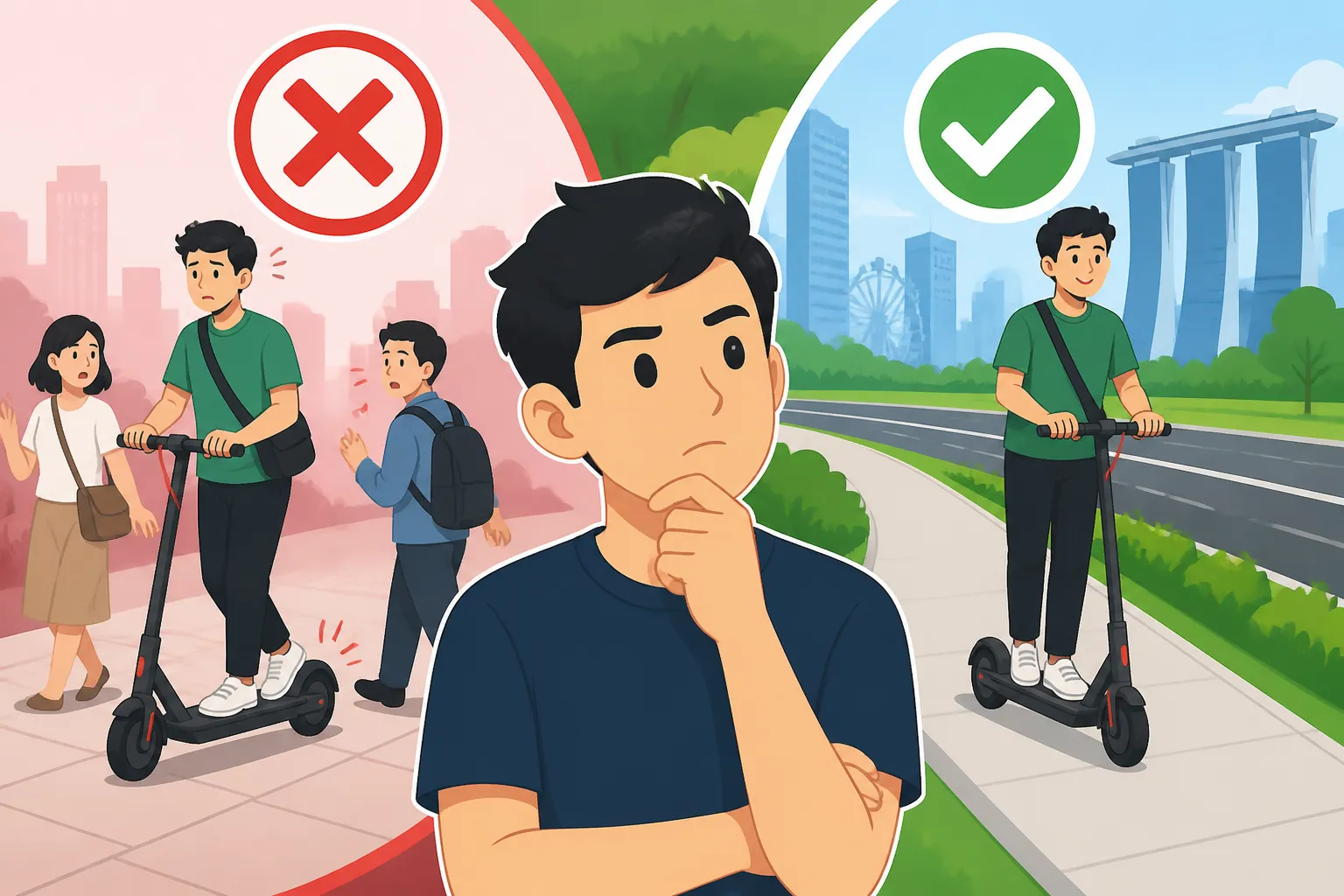
So, let's cut straight to the chase: can you ride an electric scooter (PMD) on public footpaths in Singapore today? The answer, unequivocally, is no. Since November 2019, riding PMDs on footpaths has been explicitly prohibited. This was a significant and immediate policy change designed to curb the rising accident rates.
What does "footpath" mean in Singapore? It's pretty much any path specifically designated for pedestrian use – think sidewalks alongside roads, pathways in residential areas, and general public walkways. The LTA has been very clear about this, implementing a zero-tolerance policy. This isn't a grey area; it's a hard and fast rule, enforced with a firm hand. The goal is to ensure that pedestrians can walk safely and comfortably without the fear of fast-moving devices.
Where You Can Ride Your PMD and Where You Can't
Understanding the specific types of paths in Singapore is crucial, as the rules for PMDs vary depending on where you are. It's not just about avoiding footpaths; it's about knowing the permitted zones.
Cycling Paths and Park Connectors: The Designated Zones
If you own an electric scooter or similar PMD, your options for riding are now limited to designated cycling paths and park connectors. These are purpose-built infrastructure designed to accommodate bicycles, e-scooters, and other active mobility devices safely away from pedestrian traffic and often, away from busy road vehicles.
Cycling paths are typically marked and are often found alongside major roads or within HDB estates. They are distinct from footpaths. Park connectors, managed by the National Parks Board (NParks), are a fantastic network of paths linking various parks and green spaces across the island. These offer a more scenic and often less congested riding experience. Think of pathways through Bishan-Ang Mo Kio Park or along the Eastern Coastal Park Connector Network. These are your playgrounds if you're on a PMD. It's important to differentiate these from pedestrian-only walking trails within parks, where PMDs are generally not allowed. Always look for signage that indicates what types of devices are permitted.
The Forbidden Territories: Footpaths, Roads, and Strict Enforcement
As we've covered, footpaths are strictly off-limits. But what about roads? Absolutely not. PMDs are generally not allowed on roads. They are not considered road-legal vehicles in the same way cars or motorcycles are. Riding an e-scooter on a main road, even if it has a cycling lane, is a serious offense. This separation is critical for safety – for the PMD rider who is vulnerable to larger vehicles, and for drivers who may not anticipate a fast-moving, smaller device.
The LTA and the Traffic Police are very proactive in enforcing these rules. You'll see patrols in areas known for PMD use, and there are even public awareness campaigns detailing the dos and don'ts. Don't assume you can "get away with it" just because you don't see an officer immediately. There are often cameras and vigilant members of the public who are quick to report violations. The consequences are simply not worth the risk.
Here's a quick overview of where different active mobility devices are allowed:
| Path Type | Pedestrians | Bicycles & PMDs (e.g., e-scooters) | E-Bikes (Power-Assisted Bicycles) | Roads (Except Cycling Lanes) |
|---|---|---|---|---|
| Footpaths | Yes | No | No | No |
| Cycling Paths | Yes | Yes | Yes | No |
| Park Connectors | Yes | Yes | Yes | No |
| Roads (General) | No | No | Yes (with road tax/license) | Yes (cars, motorcycles etc.) |
Note: E-bikes (Power-Assisted Bicycles or PABs) have different regulations, requiring LTA approval, registration, and sometimes even road tax, and can be used on roads and cycling paths, but generally not footpaths. Always check the latest LTA guidelines.
Safety, Fines, and Enforcement: What You Need to Know
Singapore doesn't just make rules; it enforces them. The penalties for flouting PMD regulations can be severe, serving as a strong deterrent against unsafe riding practices.
The Consequences of Non-Compliance: Fines and Imprisonment
Riding an e-scooter on a footpath is a serious offense under the Active Mobility Act. For a first-time offender, you could face a fine of up to S$2,000, imprisonment for up to three months, or both. Repeat offenders face even harsher penalties, including fines up to S$5,000 and imprisonment up to six months. Imagine getting a hefty fine or even jail time for what you might consider a minor transgression back home. This is Singapore, and rules are taken very seriously. It’s a stark reminder that ignorance of the law is not an excuse.
Beyond just where you ride, there are also rules about how you ride and the PMD itself. For instance, there are weight and width limits for PMDs, speed limits (10 km/h on footpaths and 25 km/h on cycling paths/park connectors), and requirements for lights and brakes. Remember, these speed limits also apply to other personal mobility devices like unicycles or hoverboards, if they are allowed on these paths. You can find more detailed information by looking into the LTA's "Rules and Code of Conduct for Active Mobility Device Users." It's an important document to review.
The Enforcement Landscape: LTA Officers and Public Reports
The enforcement isn't just left to traffic police. The LTA has its own team of enforcement officers who patrol areas where PMDs are commonly used. These officers are empowered to stop riders, check devices, and issue fines. They often work in plain clothes or unmarked vehicles, so you might not even realize you’re being observed until it’s too late.
Furthermore, the public is often encouraged to report unsafe riding. Singaporeans are generally quite civic-minded, and they won't hesitate to report incidents to the authorities, especially if safety is compromised. Many residents have downloaded apps or know the channels to quickly submit photos or videos of violations. This means there's a collective responsibility and vigilance that acts as another layer of enforcement. Getting caught could happen anytime, anywhere. Don’t take the chance.
Alternatives to PMDs for Getting Around
Given the strict regulations and potential consequences, many expats quickly realize that PMDs aren't the convenient mobility solution they might have hoped for in Singapore. But don't fret! The city-state offers an incredible array of alternative transport options that are efficient, safe, and often quite enjoyable.
Public Transport: Your Best Friend in Singapore
Singapore’s public transport system is truly world-class, making it the preferred mode of transport for most residents. The MRT (Mass Rapid Transit) network is extensive, clean, air-conditioned, and incredibly efficient, connecting virtually every corner of the island. Buses complement the MRT, reaching even more localized areas and providing a scenic way to see the city.
Using the MRT and buses is straightforward. You can use your credit card, debit card, or phone to tap and go with SimplyGo, or get an EZ-Link card. You might find our guide on Public Transport in Singapore: MRT, Buses, and Commuting Hacks particularly useful. Whether you're commuting to work in the CBD, heading to a hawker center, or exploring new neighborhoods, the public transport system is reliable and affordable. It's usually faster than trying to navigate traffic on a PMD or even in a car.
Bicycles and E-Bikes: Different Rules, Different Freedom
If you're still keen on two wheels, bicycles and power-assisted bicycles (PABs), often called e-bikes, offer more flexibility than e-scooters. Regular bicycles are allowed on most cycling paths and park connectors, and also on roads (with certain rules about lights, helmets, and lane usage). PABs, which are essentially bicycles with a motor that only activates when you pedal, have different regulations. They need to be LTA-approved, registered, and often require road tax, but they can be used on roads and cycling paths.
The key distinction is that while PABs can be used on roads, electric scooters generally cannot. If you're considering a bicycle or PAB, make sure to read up on the specific rules for each. You don't want to get caught off guard by the differences. For instance, cycling paths are a great way to explore the island, and if you’re using a navigation app, ensure you have reliable data connectivity. This is where a local eSIM like one from Airalo can be a lifesaver, ensuring you don't get lost or run into data issues while trying to find your way on a park connector.
Ride-Hailing and Taxis: Convenience at Your Fingertips
For those times when public transport isn't convenient or you need door-to-door service, ride-hailing apps like Grab, Gojek, and TADA are ubiquitous. Taxis are also plentiful and reliable. While these options are more expensive than public transport, they offer unparalleled convenience, especially during downpours or late at night.
For new expats, setting up these apps is usually one of the first things you do. They're incredibly user-friendly and integrate seamlessly with cashless payment methods. Remember, Singapore is known for its "Strict Laws: Chewing Gum, Littering, Jaywalking, and Smoking Zones," and these laws extend to responsible use of transport services as well.
Walking: The Original Active Mobility
Let's not forget the simplest and often most underrated mode of transport: walking! Singapore is incredibly pedestrian-friendly, with well-maintained footpaths, overhead bridges, and pedestrian crossings. Many expat enclaves and city centers are highly walkable, allowing you to explore the vibrant streetscapes, discover hidden cafes, and soak in the atmosphere at your own pace.
Walking is also a fantastic way to stay fit and active. With the tropical climate, it’s advisable to dress in light clothing, stay hydrated, and perhaps carry a compact umbrella for unexpected showers or intense sun. Embracing walking not only helps you avoid fines but also allows you to truly immerse yourself in the local environment, perhaps discovering a charming shophouse district or a bustling hawker center that you might have otherwise missed.
Ultimately, while the dream of zipping around on an e-scooter might have brought a momentary thrill, Singapore's comprehensive and well-regulated transport ecosystem ensures you have plenty of safe and efficient ways to get wherever you need to go. If you’re moving to Singapore and thinking about bringing your PMD, it's worth checking out relocation guides from services like Sirelo to understand shipping restrictions and local customs. In most cases, it might be easier and cheaper to leave your e-scooter behind and embrace the fantastic alternatives Singapore offers.
Final Thoughts for Expats on the Go
Living in Singapore means adapting to a highly regulated environment, and that includes how you get around. While the strict rules around PMDs on footpaths might feel a bit stifling if you're used to more lax regulations elsewhere, they are firmly in place for a good reason: public safety. Embrace the fantastic public transport, cycle on designated paths, or simply enjoy the immense walkability of this beautiful city. You'll save yourself a lot of headaches, potential fines, and ensure a safer experience for everyone sharing the paths.
Disclaimer
The information provided in this guide is for general informational purposes only and does not constitute legal advice. While we strive to keep the information accurate and up-to-date, regulations in Singapore can change. It is always advisable to consult official government sources, such as the Land Transport Authority (LTA) or the Ministry of Transport, for the latest and most accurate regulations regarding personal mobility devices.