Singapore Pharmacies: Guardian, Watsons, and Hospital Dispensaries
Standing in the middle of a brightly lit Guardian in Orchard Road, clutching a crumpled prescription from back home only to be told it is not valid here, is a common expat frustration. I remember my first week in Singapore, wandering the aisles for basic antihistamines and feeling utterly confused by why some items were behind a counter while others were next to the shampoo. This guide explains exactly how to navigate Singapore’s pharmacy landscape, from retail chains to hospital dispensaries, ensuring you never face a medical hurdle alone.
The Retail Giants: Guardian, Watsons, and Unity
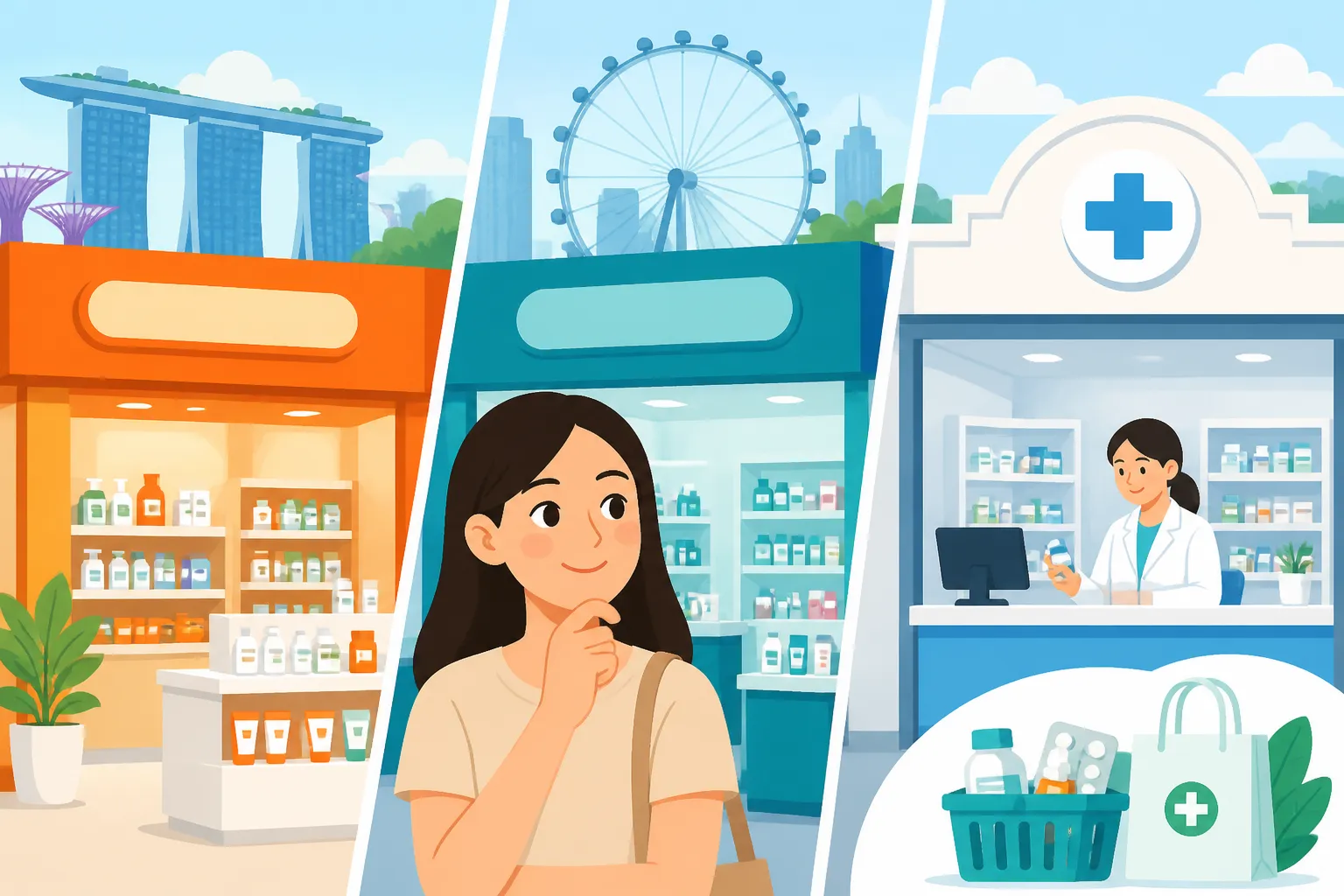
When you first arrive, you will notice that Guardian and Watsons are practically on every corner, often located within a few meters of each other in major shopping malls. These are the primary retail pharmacies in Singapore, and while they look like standard beauty and personal care stores, they house professional pharmaceutical services that are essential for everyday health. Unity is the third major player, often found integrated into NTUC FairPrice supermarkets, making it a convenient stop during your weekly grocery run.
Finding the Pharmacist Behind the Beauty Products
It can be deceptive to walk into a Watsons and see rows of K-beauty face masks and hair dyes, but almost every large outlet has a dedicated pharmacy counter at the back. Look for the "Pharmacist on Duty" sign. This is where the real medical support happens. Unlike some Western countries where the pharmacy is a separate, gated-off section, in Singapore, it is integrated into the retail floor. However, the professional divide is strict; the retail staff cannot give you medical advice or fetch "Pharmacy Only" medicines.
I’ve learned the hard way that you need to specifically seek out the person in the white coat. They handle "Pharmacy Only" (P) medicines—those that don’t require a doctor’s prescription but do require a pharmacist’s consultation. This includes stronger antihistamines, certain decongestants, and high-strength topical creams. If you are using a plan like SafetyWing for your initial transition period, these over-the-counter costs usually come out of pocket, so knowing which retail chain offers the best value is key.
The consultation process is usually brief but thorough. The pharmacist will ask if you have allergies and may request your FIN (Foreign Identification Number) for record-keeping, especially for medicines that are strictly regulated. Don’t be surprised if they ask for your ID; it’s a standard regulatory requirement in the Singapore Healthcare System for Expats: Complete 2027 Guide.
Understanding Pharmacist Operating Hours
One of the most frequent mistakes expats make is assuming that because the store is open until 10:00 PM, the pharmacy service is also available. Retail stores in Singapore have long hours, but the licensed pharmacists usually work a shift that ends earlier, often around 8:00 PM or 9:00 PM. If the pharmacist is not on-duty, the "Pharmacy Only" and "Prescription" sections will be locked or cordoned off with a sign stating "Pharmacist Not on Duty."
I can’t tell you how many times I’ve rushed to a Guardian after work only to find the pharmacist had just left, leaving me unable to buy the specific sinus medication I needed. Always check the specific pharmacy hours on the brand’s website or app before making a trip. If you find yourself in this situation, your only alternative is to find a 24-Hour Clinics in Singapore: After-Hours Medical Care Guide that can dispense medicine directly from their in-house stock.
For those with comprehensive coverage through Cigna Global, you might have access to telehealth services that allow you to bypass the retail wait altogether, but for the physical act of picking up medicine, timing is everything. Most pharmacists start their day at 10:30 AM or 11:00 AM, so early morning runs are often just as fruitless as late-night ones.
Minor Ailment Consultations and Basic Care
The retail pharmacists at Watsons and Guardian are highly trained and can save you a costly trip to a GP for minor issues. In Singapore, they are empowered to provide advice on a range of "minor ailments" such as coughs, colds, skin irritations, and simple digestive issues. This is a huge benefit for Healthcare Budgeting in Singapore: Managing Out-of-Pocket Costs since a pharmacist consultation is free, whereas a GP visit will cost you a consultation fee.
During my first bout of "Singapore Flu" (which is really just a standard viral cold that hits everyone when the humidity changes), the pharmacist at my local Unity was incredibly helpful. They suggested a specific combination of local brands that were much cheaper than the international equivalents I was looking for. They can also provide guidance on Panadol vs Paracetamol: Navigating Painkiller Brands in Singapore and explain the differences between various local formulations.
However, be aware of their limits. A retail pharmacist cannot "prescribe" anything that is classified as a Prescription Only Medicine (POM). If your condition looks serious, they are legally and ethically bound to refer you to a doctor. If you are a digital nomad using SafetyWing, this referral is often the trigger you need to seek formal medical documentation for any potential claims later.
Hospital Dispensaries: For Specialized and High-Stakes Meds
While Guardian and Watsons are great for the basics, you will inevitably find yourself at a hospital dispensary if you require specialized medication, chronic disease management, or drugs that are strictly controlled by the Health Sciences Authority (HSA). Hospital pharmacies operate on a much larger scale and have access to a wider inventory of drugs that retail outlets simply do not stock.
Navigating Public Hospital Pharmacies
Public hospitals like Singapore General Hospital (SGH) or Tan Tock Seng have massive outpatient pharmacies. If you are seeing a specialist at a public hospital, you will usually be directed to the pharmacy within the same building. The system is incredibly efficient but can feel a bit like a factory. You take a queue number, wait for your turn at a dispensing counter, and then wait again for your name to appear on a screen indicating your medicine is ready.
The wait times in public hospital pharmacies can be significant, sometimes upwards of 45 to 60 minutes during peak hours. I usually bring a book or make sure my phone is charged. For many expats, understanding the nuances of Pharmacies and Medication in Singapore: Prescriptions and OTC Rules is vital here, as public hospitals are strict about following Singapore-specific drug brands and dosages.
One thing to note is that public hospitals may offer a delivery service for repeat prescriptions once you are in their system. This is a lifesaver for long-term residents. Even if you are not a PR or citizen, you can often use these services if you have a valid local prescription, though you won't benefit from the subsidies that locals receive. This is one of the main reasons why Expat Health Insurance in Singapore: Public vs Private Coverage is so important, as the "foreigner rate" for specialized medications can be eye-watering.
The Experience at Private Hospital Dispensaries
If you are visiting a private facility like Mount Elizabeth, Gleneagles, or Raffles Hospital, the pharmacy experience is significantly more "premium." The wait times are usually much shorter—often less than 15 minutes—and the environment is quieter. The pharmacists here are very accustomed to dealing with expats and are usually well-versed in the specific brand names used in the US, UK, or Europe.
In private hospitals, the dispensary is often located right next to the main lobby or the specialist clinics. If you have a plan with Cigna Global, these pharmacies often have direct billing arrangements, or at the very least, they provide highly detailed, itemized receipts that make the reimbursement process seamless. I’ve found that while the medicine itself costs the same (as prices are somewhat regulated), the convenience factor of a private hospital pharmacy is worth the visit if you are already there for a Finding Medical Care: Hospitals, Polyclinics, and GP Networks appointment.
Private hospital dispensaries are also more likely to carry "niche" medications that are not commonly used in Singapore but are preferred by international doctors. If you need something very specific for a rare condition, call the pharmacy at Raffles Hospital or Mount Elizabeth Novena first to see if they have it in stock; they are usually very helpful over the phone.
Compounding Pharmacies in Singapore
Sometimes, the standard dosage available at a retail or hospital pharmacy isn't right for you, or you need a medication in a different form (like a liquid instead of a pill). This is where compounding pharmacies come in. There are only a few specialized compounding pharmacies in Singapore, such as those found near the Camden Medical Centre or within the larger private hospital complexes.
The process is more expensive and takes longer—usually 24 to 48 hours to prepare. However, the level of customization is impressive. If you have children who struggle with standard medications, a compounding pharmacist can often add flavors or change the delivery method, which can be a game-changer for parental stress.
Prescription Management for Expats
Navigating the legalities of prescriptions in a new country is one of the most stressful parts of moving. Singapore is very strict about what constitutes a valid prescription, and the rules are enforced with typical Singaporean efficiency.
Why Your Home Country Prescription Might Be Rejected
A common mistake is assuming that a prescription from your doctor in London, New York, or Sydney will be accepted at a Singapore pharmacy. Legally, a pharmacist in Singapore can only dispense Prescription Only Medicine (POM) based on a prescription issued by a doctor registered with the Singapore Medical Council (SMC).
When I first arrived, I walked into a Watsons with my Australian prescription for asthma inhalers, and the pharmacist politely but firmly declined to fill it. To get your meds, you must visit a local GP or specialist to have the foreign prescription "converted"—essentially, the local doctor assesses you and writes a new, local script. You can find out more about this process in our guide on How to Refill a Foreign Prescription at a Singapore Clinic.
If you are using SafetyWing, you might need to show that this local GP visit was necessary to continue a long-term treatment plan. Most local doctors are very understanding of this and will write a local script once they have seen your original documents and perhaps performed a quick check-up.
Controlled Substances and HSA Regulations
Singapore has some of the strictest drug laws in the world, particularly concerning controlled substances. This includes many medications for ADHD (like Ritalin or Adderall), strong painkillers (containing codeine or oxycodone), and certain psychotropic medications. These are monitored heavily by the Health Sciences Authority (HSA).
If you are moving to Singapore with these medications, you must be aware of the Bringing Prescription Medication into Singapore: HSA Approval Rules. Generally, you can bring a three-month supply for personal use, but you must have a doctor’s letter and, in many cases, prior approval from the HSA before you land.
Once you are here, these medicines cannot be found at a regular Guardian or Watsons. You will almost certainly have to get them from a hospital dispensary or a specialist clinic. The pharmacist will keep a strict log of every pill dispensed, and you may be required to show your passport or FIN every single time you collect your refill. It can feel a bit bureaucratic, but it is the standard procedure to prevent drug misuse in the city-state.
Understanding the 3-Month Supply Rule
For almost all medications, pharmacists are restricted in how much they can dispense at one time. Even with a valid local prescription, you are usually limited to a three-month supply. This is designed to ensure that patients are regularly reviewed by their doctors.
For expats who travel frequently, this can be a nuisance. If you are planning a long trip back home or a regional tour of Southeast Asia, you might need to ask your doctor to write a memo explaining why you need a larger quantity dispensed. Some private hospitals are more flexible with this, especially if you can prove your travel dates. For those with international coverage like Cigna Global, make sure your policy covers these larger "bulk" buys, as some insurers have limits on how much they will reimburse in a single transaction.
Comparing Pharmacy Services in Singapore
| Feature | Guardian / Watsons | Public Hospital Pharmacy | Private Hospital Pharmacy | Polyclinic Pharmacy |
|---|---|---|---|---|
| Commonly Found | Every Shopping Mall | Major Medical Hubs | Orchard / Novena Areas | Residential Heartlands |
| Best For | OTC, First Aid, Skincare | Specialist Meds, Chronic Care | Convenience, Foreign Brands | Low-cost basic refills |
| Pharmacist Hours | Usually 11am – 8pm | 24/7 (for A&E) / Office Hours | 24/7 (for A&E) / Long Hours | 8am – 4:30pm (weekdays) |
| Wait Times | Very Short (5-10 mins) | Long (30-60+ mins) | Short (10-20 mins) | Moderate (20-40 mins) |
| Foreign Scripts | Not Accepted | Not Accepted | Not Accepted | Not Accepted |
Logistics: 24-Hour Access and Home Delivery
Singapore never really sleeps, and medical needs don't follow a 9-to-5 schedule. Knowing where to go in the middle of the night can save you a lot of panic.
Where to Find After-Hours Medication
If you need medication after 9:00 PM, your options at retail chains like Guardian are non-existent. Most "24-hour" Watsons stores only keep the retail side open; the pharmacy counter will be closed. In this scenario, your best bet is a 24-hour GP clinic. These clinics function as mini-pharmacies and can dispense a wide range of common medications directly to you after a brief consultation.
Alternatively, the A&E dispensaries at hospitals like Raffles Hospital or Mount Elizabeth are open 24/7. However, be prepared to pay a premium for the "emergency" consultation just to get access to the pharmacy. If it’s not an emergency but you absolutely need the medicine, look for the "Late Night" pharmacies in areas like Holland Village or certain outlets in the CBD, though these are becoming rarer.
Digital Health Apps and Telehealth Refills
The fastest-growing segment of the Singapore pharmacy market is digital. Apps like WhiteCoat, Doctor Anywhere, and Speedoc allow you to have a video consultation with a doctor and have your medication delivered to your doorstep within three hours.
I use these apps almost exclusively now for routine issues like hay fever or recurring prescriptions. The delivery fee is usually around S$10 to S$15, which is often cheaper than a taxi to the mall and back. For expats, this is a lifesaver. These apps also keep a digital record of your Over-the-Counter (OTC) Drugs in Singapore: What Is Legally Available and your prescription history, which is very helpful if you need to provide documentation to your insurance provider like Cigna Global.
Home Delivery for Chronic Meds
If you are managed by a public hospital or a large private group, ask about their home delivery services. SGH, for example, has a very robust delivery system through the HealthHub app. You can upload your prescription, pay online, and choose a delivery slot.
This service is particularly useful because it avoids the long queues at the physical pharmacy. Just note that someone must be home to sign for the delivery, as they cannot leave medications (especially temperature-sensitive ones) at your door or in a riser.
Cost Comparisons and Budgeting
Singapore is an expensive city, and medical costs can add up quickly if you aren't savvy about how you shop.
Generic vs. Brand Name Drugs in Singapore
In retail pharmacies, you will see a lot of familiar Western brands like Advil, Tylenol, or Zyrtec. However, these are often the most expensive options. Ask the pharmacist for the "Generic" or "House Brand" equivalent. For example, Guardian and Watsons have their own labels for basic items like paracetamol, ibuprofen, and saline sprays that cost a fraction of the branded versions.
In hospitals, the default is often the generic version unless the doctor specifically requests the brand name. Don't be alarmed if the packaging looks different than what you are used to; the active ingredients are regulated by the HSA and are identical in quality. This is a major part of Healthcare Budgeting in Singapore: Managing Out-of-Pocket Costs.
Loyalty Programs and Discounts
If you are going to be in Singapore for more than a few months, join the loyalty programs for Guardian and Watsons. Guardian is part of the "yuu" rewards ecosystem, and Watsons has its own membership card. These programs offer significant discounts, especially on "Pharmacy Only" items and health supplements.
I’ve also found that many credit cards in Singapore offer cashback specifically for "Health and Wellness" categories, which includes pharmacies. If you are paying for your own meds because your SafetyWing plan only covers emergencies, these small savings can really take the edge off your monthly budget. Additionally, look out for "Senior Citizen" days (usually mid-week) if you have elderly dependents with you, as they can get an extra 5-10% off.
Specialist Care and Rare Medications
If you require something highly specialized—such as oncology drugs, biologics for autoimmune conditions, or specific hormone therapies—you will likely bypass the retail sector entirely.
Sourcing Medicines for Rare Conditions
For rare conditions, the medication might not even be registered in Singapore yet. In these cases, a specialist can apply for a "Special Access Route" (SAR) to import the drug specifically for you. This is a complex process that can take several weeks and involves significant paperwork.
If you fall into this category, it is vital to have a premium insurance plan like Cigna Global that can handle the high costs and the administrative burden of these imports. You should also maintain a close relationship with the pharmacy manager at a major hospital like SGH or NUH, as they will be the ones physically handling the import and storage of your medication.
Traditional Chinese Medicine (TCM) Integration
You will also notice that many pharmacies, particularly Unity and some larger Watsons, have a section for Traditional Chinese Medicine (TCM). While many expats are skeptical at first, TCM is highly regulated in Singapore and often used alongside Western medicine.
However, be careful about mixing TCM herbs with Western prescriptions. Always inform both your Western doctor and the pharmacist if you are taking any herbal supplements. Many retail pharmacists in Singapore have a basic understanding of TCM interactions and can advise you on what to avoid.
Disclaimer
The information provided in this guide is for educational and informational purposes only and does not constitute medical or legal advice. Healthcare regulations in Singapore, including those managed by the Health Sciences Authority (HSA) and the Ministry of Manpower (MOM), are subject to frequent changes. Always consult with a qualified medical professional or a licensed pharmacist in Singapore before starting any new medication or treatment. Neither the author nor this publication is responsible for any consequences resulting from the use of the information provided herein.