Eye Care Clinics: Optometrists, Glasses, and LASIK Surgery Options
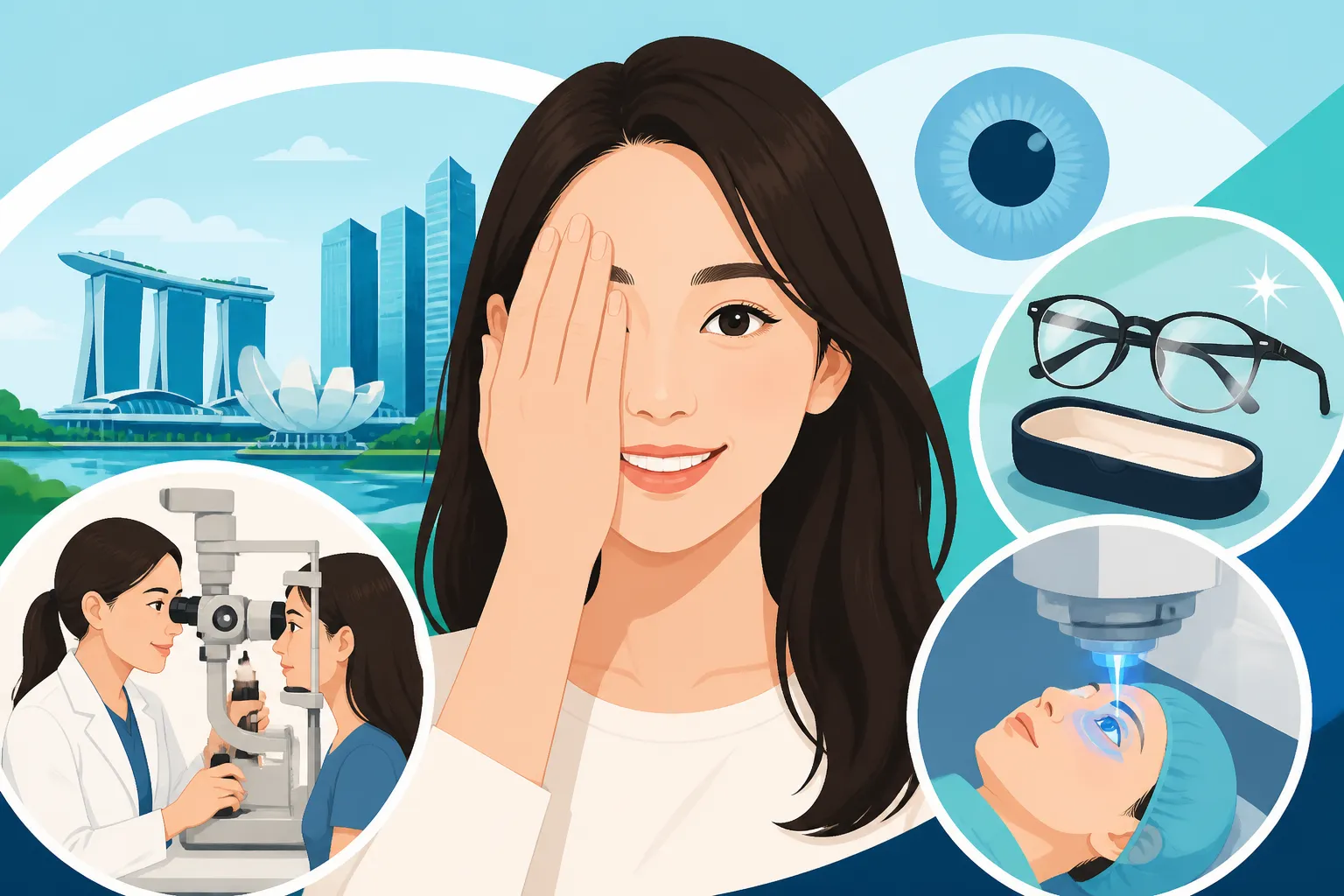
Staring at a laptop screen in a chilled Raffles Place office only to step out into 90% humidity can make your vision feel like a literal fog. I remember my first month in Singapore, constantly wiping condensation off my spectacles and wondering why my eyes felt like they were filled with sand by 3 PM. This guide demystifies Singapore’s eye care landscape, from quick mall optical shops to world-class LASIK centers.
Navigating Optometry vs. Ophthalmology in Singapore
The first hurdle many of us face is knowing who to actually call when our vision gets blurry or our eyes get red. In many countries, the lines are blurred, but in Singapore, the distinction between an optometrist and an ophthalmologist is significant both in terms of medical scope and your wallet. You don't want to show up at a specialist surgeon for a simple contact lens refill, nor do you want to trust a retail shop with a serious corneal infection.
Primary Eye Care: The Local Optometrist
Most of your day-to-day needs will be handled by an optometrist. These are the professionals you find in shops like Owndays, Lenskart, or Capitol Optical. They are highly trained to perform eye examinations, prescribe corrective lenses, and detect signs of common eye diseases. For most expats, a visit to a retail optometrist is the quickest way to address general vision fatigue or to update a prescription that’s a few years old.
When I first arrived, I was surprised by how efficient these shops are. You can walk in without an appointment, get a computerized eye test, and often walk out with new glasses in twenty minutes. However, keep in mind that these retail settings are primarily geared toward sales. If you have a persistent ache or a sudden onset of "floaters," the optometrist will likely perform a preliminary check and then tell you that you need a referral to a specialist. It is always wise to check your coverage via Expat Health Insurance in Singapore: Public vs Private Coverage before assuming a retail eye test is reimbursable, as many basic plans view this as a lifestyle expense rather than a medical one.
Medical Eye Care: When to See an Ophthalmologist
An ophthalmologist is a medical doctor who specializes in the surgical and medical treatment of eye disorders. This is the person you see for cataracts, glaucoma, retinal issues, or if you are considering laser vision correction. In Singapore, these specialists operate out of private clinics in "medical hubs" like Mount Elizabeth Novena or within dedicated departments in public hospitals.
If you wake up with a severely painful, red eye or sudden vision loss, you are moving beyond the realm of a retail shop. You need a medical diagnosis. For expats, the choice usually comes down to speed versus cost. Private ophthalmologists can often see you the same day, but the consultation fees can be steep. If you are navigating the Singapore Healthcare System for Expats: Complete 2027 Guide, you’ll know that private specialist care is world-class but comes with a premium price tag. This is where having a robust international plan from providers like Cigna Global becomes invaluable, as they often cover specialist consultations that local basic plans might exclude.
Specialized Clinics and Hospital Departments
Singapore is home to some of the most advanced eye care facilities in Asia. The Singapore National Eye Centre (SNEC) is the heavy hitter in the public sector, handling everything from routine checks to complex reconstructive surgeries. While SNEC is a public institution, they have a "private" wing where you can pay higher rates to see a specific consultant faster.
On the private side, you have dedicated centers like Eagle Eye Centre or Shinagawa Eye Centre. These facilities are "one-stop shops" where they have both optometrists for the initial screening and surgeons for the procedures. Choosing between these often depends on your insurance network. If you are using a plan like SafetyWing for shorter-term stays or remote work, you might be limited to certain private clinics for emergency treatments. Always verify if you need a Specialist Referrals: Do You Need a GP Before Seeing an Expert? before booking, as some insurers require that paper trail to honor your claim.
Buying Eyewear: Glasses, Contacts, and the Retail Experience
Singapore is an absolute paradise for eyewear lovers, but the price discrepancy between different types of shops can be jarring. You can spend $100 or $2,000 on the exact same prescription depending on where you go. Understanding the retail tiers will save you a lot of frustration when you realize your "designer" frames in Orchard Road are triple the price of the same brand elsewhere.
High-Street Optical Shops vs. Boutique Opticians
The "fast-fashion" optical model has taken over Singapore. Chains like Owndays and Lenskart offer "all-in-one" pricing where the frame and the lenses are a flat fee. This is perfect for the "I broke my glasses at the gym" emergency. I personally keep a pair of $98 glasses from one of these shops as a backup in my laptop bag. They are reliable, quick, and the service is usually very friendly.
On the other end of the spectrum are boutique opticians located in areas like Holland Village or Tanglin. These shops carry high-end European brands and offer more bespoke lens options, such as specialized coatings for blue light or "office lenses" tailored for people who spend ten hours a day on Zoom. While the experience is more personalized, you will pay for it. If you have a complex prescription, such as high astigmatism or a need for progressive lenses, the expertise of a seasoned boutique optician is often worth the extra spend. They take more precise measurements of how the frame sits on your face, which prevents the headaches often associated with poorly aligned progressive lenses.
Understanding Prescriptions and Fast Fashion Glasses
One thing that catches many newcomers off guard is that your prescription from back home might not be "valid" for a purchase here if it’s more than a year old. Singaporean optometrists are required by law to ensure they are dispensing current prescriptions. Most shops will provide a free eye test as part of the purchase, but don't expect them to just give you a copy of that prescription to take away and buy glasses online later. They usually guard that data unless you pay a separate fee for the refraction test.
The "fast fashion" shops use automated refraction machines that are incredibly accurate for 90% of the population. However, if you have a history of eye strain, these machines might over-prescribe the strength of your lenses. If you feel something is off, don't be afraid to ask for a manual check with the "flipping lenses" trial frame. Dealing with Healthcare Budgeting in Singapore: Managing Out-of-Pocket Costs means getting it right the first time so you don't have to pay for a second set of lenses.
Contact Lenses: Brands and Prescription Requirements
If you are a contact lens wearer, Singapore is quite strict. You cannot simply buy contacts off the shelf or online without a valid local prescription. This is a safety measure to prevent corneal ulcers and infections. When you go for a contact lens fitting, the optometrist will check the "base curve" of your eye to ensure the lens isn't too tight.
For those moving here, I highly recommend bringing a 3-month supply from home to give yourself time to find a local provider. Most major brands like Acuvue, Bausch + Lomb, and Alcon are readily available. You can read more about the specifics in Where to Get Contact Lenses: Do You Need an Optometrist Prescription? to understand the legalities. Interestingly, many expats find that the lenses they used in a dry climate (like London or Sydney) don't work as well in Singapore's humidity. You might find yourself switching to a lens with higher oxygen permeability or a different moisture-locking technology to combat the "sticky" feeling that comes with the tropical air.
Corrective Eye Surgery: LASIK, SMILE, and TransPRK
Singapore is often called the "LASIK capital" of the region. Because of the high rates of myopia locally, the surgeons here perform an incredible volume of procedures. This means you are benefiting from a level of expertise that is hard to find elsewhere. If you’ve been thinking about ditching the glasses, this is arguably one of the best places in the world to do it.
Popular LASIK Centers and Surgeon Expertise
When you start researching, names like SNEC, Clearvision, and Shinagawa will keep popping up. These centers use the latest-generation lasers and have streamlined the process into a very efficient assembly line. But don't let the "assembly line" feel put you off; the safety protocols are rigorous. A typical surgeon in a major Singapore center might perform more procedures in a month than a surgeon in a smaller country does in a year.
I’ve had friends go to both the high-end private suites at Mount Elizabeth, Gleneagles, and Raffles: Premium Private Hospitals and the more "economical" clinics in older shopping centers. The results were largely the same, but the "hand-holding" and wait times differed. In a premium clinic, you’ll likely spend more time with the surgeon themselves, whereas in a high-volume center, much of the pre-op work is done by senior optometrists. Both are safe, but your choice depends on your comfort level and your insurance. While LASIK is usually considered elective, some high-tier plans from Cigna Global might offer wellness or vision discounts that can be applied to these centers.
Comparing Procedures: Recovery and Costs
It’s no longer just "LASIK." You now have options like SMILE (Small Incision Lenticule Extraction) and TransPRK.
- LASIK: Involves creating a "flap" in the cornea. Recovery is almost instant—most people see clearly the next day.
- SMILE: A newer, "flap-less" procedure. It’s generally better for people with chronic dry eyes, which is a major factor in Singapore’s air-conditioned environments.
- TransPRK: A "no-touch" procedure where the laser works directly on the surface. It has a longer, more painful recovery (3-5 days of discomfort), but it’s the safest option for people who play contact sports or have thin corneas.
The cost for these procedures generally ranges from $3,500 to $6,000 for both eyes. This usually includes the surgery, the initial medications, and a few follow-up visits. For a detailed breakdown of the current market rates, check How Much Does LASIK Eye Surgery Cost in Singapore?.
Pre-Surgery Assessments and Realistic Expectations
The most important step isn't the surgery itself; it’s the 3-hour pre-assessment. The clinic will dilate your pupils (bringing sunglasses is a must!) and map the thickness and shape of your cornea. About 20-30% of people are actually told they aren't good candidates for LASIK.
One thing the doctors will be very honest about is "presbyopia." If you are over 40, LASIK might fix your distance vision, but you’ll still need reading glasses for your phone. Some expats opt for "monovision," where one eye is corrected for distance and one for near vision. It sounds crazy, but your brain adapts. Always ask your surgeon about the "enhancement" policy—will they do a touch-up for free if your vision isn't 20/20 after six months? Most reputable Singaporean clinics include this in the package.
Managing Common Eye Conditions in the Tropics
Living in the tropics introduces some unique challenges to eye health that you might not have dealt with in a temperate climate. From the constant blast of air conditioning to the seasonal haze, your eyes are under a different kind of environmental stress here.
Dry Eyes and the Impact of Air Conditioning
This is the number one complaint among the expat community. We spend our lives moving from an air-conditioned apartment to an air-conditioned car, into an air-conditioned office. This constant "dry" air saps the moisture from the surface of your eyes. If your eyes feel gritty, red, or watery (ironically, dry eyes often over-produce poor-quality tears), you are likely suffering from Evaporative Dry Eye.
The "quick fix" is preservative-free artificial tears, which you can find at any Guardian or Watsons. However, if it persists, a specialist might recommend "LipiFlow" or "IPL" treatment to unblock the oil glands in your eyelids. I found that simply turning off the AC in my bedroom at night and using a ceiling fan made a massive difference. If your condition is severe, it’s worth checking Finding Medical Care: Hospitals, Polyclinics, and GP Networks to find a specialist who focuses on dry eye syndrome.
Allergic Conjunctivitis and Haze Season
Every so often, Singapore is affected by the "haze"—smoke drift from regional forest fires. During these periods, the PM2.5 levels spike, and many people experience itchy, stinging eyes. This isn't just an annoyance; the fine particles can cause micro-inflammation on the eye's surface.
During haze season, it is vital to switch from contact lenses back to glasses, as the lenses can trap the pollutants against your eye. Using a cold compress at night can also help soothe the inflammation. For more on managing these environmental factors, refer to Air Quality and Haze in Singapore: Managing Asthma and Allergies. If you have an allergic reaction, don't just rub your eyes—that can lead to corneal scarring. See a GP for antihistamine eye drops. Even a basic consultation is usually affordable, as outlined in How Much Does a GP Visit Cost for a Foreigner in Singapore?.
Pediatric Eye Care: Managing Myopia in Singapore Schools
If you have children in the local or international school system, you will quickly hear about the "myopia epidemic." Singapore has one of the highest rates of nearsightedness in the world. The local culture is very proactive about this—schools perform regular screenings, and parents are encouraged to take their kids for annual checks.
The current standard of care here involves "Atropine drops" (low-dose drops that slow down the elongation of the eye) or "Ortho-K" lenses (hard lenses worn at night that reshape the eye). These treatments can be expensive over several years. If you are an expat parent, ensure your family coverage includes pediatric vision, or be prepared to budget for it out-of-pocket. These specialized pediatric checks are usually done at centers like SNEC or private clinics in Orchard. For more on keeping your kids healthy here, see the Family Health Guide: Maternity, Pediatrics, and Child Development.
Costs, Insurance, and Budgeting for Eye Care
Budgeting for eye care in Singapore requires a bit of strategy because the costs are so bifurcated between "routine retail" and "medical specialist."
Typical Costs for Consultation and Procedures
| Service Type | Estimated Cost (SGD) | Notes |
|---|---|---|
| Basic Optometrist Eye Test | $0 – $50 | Usually free with glasses purchase |
| Private Ophthalmologist Consult | $150 – $350 | Excludes tests like scans or dilation |
| Standard LASIK (Both Eyes) | $3,500 – $4,800 | Includes basic follow-ups |
| SMILE / TransPRK | $5,000 – $6,500 | Newer tech, higher price point |
| Box of Daily Contact Lenses | $50 – $70 | For 30 lenses, depends on brand |
| Prescription Glasses (Basic) | $98 – $250 | High-street chains |
| Designer Glasses (Boutique) | $500 – $1,500+ | Includes premium Zeiss/Essilor lenses |
Insurance Coverage: Public vs. Private and Add-ons
Most standard corporate health insurance plans in Singapore are surprisingly lean when it comes to vision. They might cover an emergency (like a detached retina or an infection), but they rarely cover the cost of glasses or contact lenses unless you have a specific "Vision Rider."
When looking at international plans like Cigna Global, you can often add a vision module that covers annual exams and a certain amount toward frames. For those on more flexible or nomadic arrangements using SafetyWing, eye care is typically covered only in the event of a new injury or an acute illness. It’s a good idea to read up on Understanding Corporate Health Insurance vs Personal Medical Plans to see where your gaps might be. If you are paying out-of-pocket, always ask for an itemized receipt, as you might be able to claim the consultation portion even if the lenses aren't covered.
Strategic Planning for Major Procedures
If you are planning to get LASIK or a major eye surgery, the timing matters. If you are a Permanent Resident (PR), you might be wondering if you can use your CPF/MediSave. Generally, MediSave can only be used for procedures that are "medically necessary," such as cataract surgery or if there is a massive difference in vision between your two eyes (anisometropia). Purely cosmetic LASIK is usually not claimable via MediSave.
For those without PR status, your best bet is to look for "package prices" offered during holiday periods like National Day or Chinese New Year, when many private clinics run promotions. Also, consider the tax implications. While medical expenses aren't directly tax-deductible for individuals in Singapore, some high-net-worth expats manage these through their corporate structures. You can learn more about managing these costs in Healthcare Budgeting in Singapore: Managing Out-of-Pocket Costs.
Important Medical Disclaimer
The information provided in this guide is for educational and informational purposes only and is not intended as medical advice. Always seek the advice of a qualified healthcare professional, such as a licensed optometrist or ophthalmologist, regarding any vision concerns or before undergoing any surgical procedures. Medical practices and regulations in Singapore are subject to change, and you should verify all information with the relevant authorities or your healthcare provider. Using international insurance like SafetyWing or Cigna Global requires adherence to their specific policy terms and conditions.