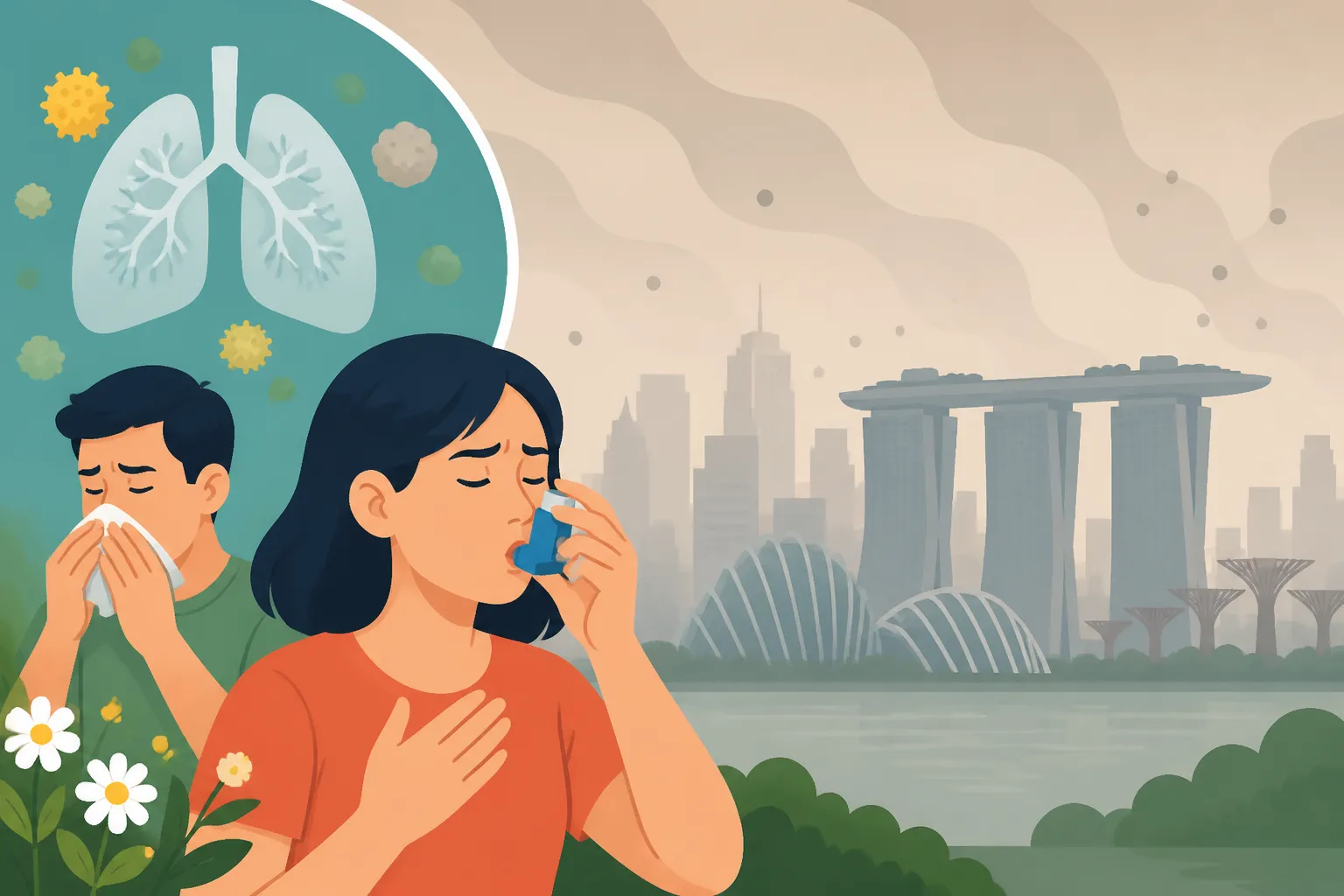
Air Quality and Haze in Singapore: Managing Asthma and Allergies
The first time you wake up in Singapore and smell a faint scent of burning wood, you might think a neighbor is having a barbecue—until you look out the window and see the Marina Bay Sands shrouded in a ghostly, acrid gray veil. I remember my first haze season in 2013; I was completely unprepared, and within 48 hours, my throat felt like I’d swallowed sandpaper. This guide provides the medical and practical strategies you need to protect your lungs, skin, and sanity when the air quality takes a turn for the worse.
Understanding the PSI and PM2.5 in Singapore
Navigating the haze begins with understanding the numbers the government throws at you. In Singapore, the National Environment Agency (NEA) monitors air quality through the Pollutant Standards Index (PSI). This index isn't just a random number; it’s a composite measure of six different pollutants, including sulfur dioxide, nitrogen dioxide, ozone, carbon monoxide, and particulate matter. As an expat, you’ll quickly learn that the most important figure for your health isn't just the overall PSI, but the concentration of PM2.5.
Decoding the NEA Air Quality Portal
The NEA portal and the MyEnv app are your primary tools for survival. However, many newcomers find the data confusing because there are two distinct readings: the 24-hour PSI and the 1-hour PM2.5 concentration. The 24-hour PSI is used by the government to make major policy decisions, such as closing schools or stopping outdoor work. For an individual, however, this 24-hour average can be misleading. If the haze suddenly spikes at 2 PM, the 24-hour average might still look "Moderate," even if the air outside is currently "Very Unhealthy."
When I’m planning my day, I always look at the 1-hour PM2.5 concentrations. These are divided into four bands: Normal, Elevated, High, and Very High. If you see the status shift to "Elevated," it’s time to start closing windows. If it hits "High," you should be staying indoors as much as possible. Understanding these nuances is a key part of the Singapore Healthcare System for Expats: Complete 2027 Guide because preventative care starts with avoiding triggers before they land you in a clinic.
The Science and Danger of PM2.5 Particles
You’ll hear the term "PM2.5" constantly during the hazy months between June and October. These are fine particulate matters that are 2.5 microns or smaller in diameter—roughly 30 times smaller than a human hair. Because they are so tiny, your body’s natural filters, like your nasal hair and mucus, can't stop them. They travel deep into your lungs and can even enter your bloodstream. This is why even healthy individuals might experience headaches, stinging eyes, or a persistent dry cough during the haze.
For those of us with underlying conditions, these particles are an absolute nightmare. They can trigger inflammation in the airways, leading to acute asthma attacks or bronchitis. Even if you’ve never had asthma before, the sheer volume of particulate matter in the air can cause "adult-onset" respiratory sensitivity. It is vital to stay informed about Long-Term Health: Screenings, Vaccinations, and Chronic Care to ensure your baseline health is strong enough to withstand these seasonal environmental stressors.
The Historical Context of the Haze
The haze in Singapore isn't a homegrown problem; it’s an international one. It is primarily caused by "slash-and-burn" agricultural practices in neighboring Sumatra and Kalimantan, Indonesia. When these fires coincide with the dry season and the prevailing winds blow northeast, Singapore gets hit. Some years are "clear," while others, like the El Niño-influenced 2015 season, can last for months.
Knowing this helps you manage the psychological fatigue of the haze. It isn't a permanent fixture of life here, but a seasonal challenge that requires a specific "haze kit" in your storage closet. I’ve learned to keep a stash of N95 masks and ensure my air purifiers are serviced by May every year. This proactive approach is just as essential as Emergency Medical Care in Singapore: Ambulances and A&E Wards when the air quality reaches hazardous levels.
Managing Chronic Respiratory Conditions
If you move to Singapore with a history of asthma, bronchitis, or severe allergies, the haze season is your "red alert" period. The combination of high humidity and fine particulate matter creates a "heavy" air quality that can make breathing feel like a chore. Many expats have found their usual rescue inhalers weren't enough when the PSI crossed 150, requiring a complete overhaul of their medical strategy.
Developing a Haze-Specific Asthma Action Plan
An asthma action plan that works in London or New York might fail you in Singapore. You need to consult with a local doctor to adjust your dosage before the haze hits. Often, GPs will recommend increasing your "preventer" inhaler (corticosteroids) a few weeks before the anticipated haze season to reduce baseline inflammation. If you find yourself reaching for your "reliever" (Ventolin) more than twice a week, your asthma is not well-controlled.
During peak haze, it is also common for doctors to prescribe a short course of oral steroids or montelukast to keep the airways open. Don't wait until you are gasping for air to seek help. Visiting a doctor for a proactive check-up is much cheaper than an emergency room bill. You can find excellent local help by Choosing a Primary Care Physician (GP) in Singapore who understands the local environmental triggers.
Allergy Management and Eczema Flare-ups
The haze doesn't just affect your lungs; it’s an irritant for your skin and eyes. PM2.5 particles can settle on the skin, disrupting the skin barrier and causing "haze-induced eczema." If you already struggle with Dealing with Humidity-Induced Skin Issues (Eczema and Heat Rash), the haze will act as an accelerant. I’ve had many friends who developed unexplained hives or itchy patches during the hazy months simply because they were walking to the MRT.
To manage this, the "wash-off" technique is essential. Every time you come indoors from the haze, you should shower and change your clothes immediately. This prevents the particles trapped in your clothing from continuing to irritate your skin. For your eyes, preservative-free artificial tears can help wash out the grit. If your allergies become unmanageable, look into Finding Medical Care: Hospitals, Polyclinic, and GP Networks for specialist dermatological or allergenic support.
When to Seek Emergency Medical Help
It’s easy to dismiss haze symptoms as "just a cough," but respiratory distress can escalate quickly. If you experience chest tightness, wheezing that doesn't respond to an inhaler, or extreme fatigue, you need to head to the A&E. In Singapore, public hospitals are excellent, but wait times can be grueling during a public health spike like a bad haze week.
Private hospitals like Mount Elizabeth or Gleneagles offer faster service for those with comprehensive insurance. If you are worried about the financial side of an emergency, having a plan like Cigna Global can provide the peace of mind that you can access the best private care without a massive out-of-pocket shock. Be sure you know the Emergency Numbers: Calling 995 for Ambulance and 999 for Police so you aren't fumbling with your phone during a crisis.
Creating a Haze-Proof Home Environment
Your home should be your sanctuary, but in Singapore, many apartments are designed for "natural ventilation," which is exactly what you don't want when the air outside is toxic. From louvre windows in HDBs to the gap under your condo's front door, the haze will find a way in unless you are methodical about sealing your environment.
Choosing the Right Air Purifier
Not all air purifiers are created equal. To fight the haze, you specifically need a machine with a HEPA (High-Efficiency Particulate Air) filter. A simple "ionizer" or "air washer" will not remove PM2.5 particles. When shopping, look for the CADR (Clean Air Delivery Rate), which tells you how much air the machine can clean in an hour. You need a machine that is rated for the specific square footage of your room.
I personally recommend having a large unit for the living room and smaller, quieter units for each bedroom. Remember that HEPA filters are a "consumable" item; during a bad haze year, you may need to replace them every three months instead of the usual six. For more tips on what to buy, check our guide on Buying an Air Purifier in Singapore: HEPA Filters for Haze Season.
Indoor Air Quality Habits
Once you have your purifiers, you must change your lifestyle. This means keeping all windows and doors closed 24/7. This can lead to a "stuffy" house and an increase in indoor humidity, which brings its own problems like mold. To counter this, run your air conditioning in "dry mode" or use a dedicated dehumidifier alongside your air purifier.
Avoid burning candles, incense, or using strong chemical cleaners during the haze, as these contribute to indoor air pollution. If you are a fan of cooking, ensure your kitchen hood is venting properly, or keep the kitchen door closed to prevent cooking fumes from mixing with the haze particles that inevitably leak in. Managing these details is part of Utilities, Wi-Fi, and Setup: Managing Your Singapore Household and ensuring your family stays healthy.
Mask Selection and Usage
If you must go outside, a standard surgical mask or a cloth mask will do almost nothing to filter out PM2.5. You need an N95 respirator. The "95" means it filters 95% of airborne particles. However, these masks only work if they have a tight seal around your face. For men, this often means shaving your beard, as facial hair prevents a proper seal.
N95 masks can be uncomfortable and make it harder to breathe, which is why they aren't recommended for people with severe lung disease or for pregnant women in their third trimester without medical advice. If the PSI is in the "Unhealthy" range, the best "mask" is staying in an air-conditioned building. For visitors or those on short-term stays, having travel-ready insurance like SafetyWing is useful if an unexpected respiratory issue arises from your outdoor excursions.
Navigating the Healthcare System for Haze Relief
Singapore’s healthcare system is incredibly efficient, but for an expat, the costs can add up if you aren't careful. From the local "mom-and-pop" GP clinics to the high-end specialist centers, knowing where to go for haze-related issues will save you both time and money.
Choosing Between a Polyclinic and a Private GP
For minor haze symptoms like a sore throat or itchy eyes, a neighborhood GP is usually your best bet. Most clinics are "walk-in," and you’ll be seen within an hour. If you have a Singpass, you can use the HealthHub app to find clinics near you. Polyclinics are the subsidized public option; they are much cheaper, but the wait times can be several hours, and as a foreigner, you will pay a higher "non-resident" rate anyway.
Many expats prefer private GP networks like Raffles Medical or Fullerton Health because they offer a more seamless experience and often coordinate directly with insurance providers. If you are concerned about the cost of frequent visits during the haze season, check out our breakdown of Polyclinic vs Private Clinics: Waiting Times and Cost Differences to see which fits your budget better.
Insurance Coverage for Haze-Related Illness
Does your insurance cover a haze-induced asthma attack? Most international plans like Cigna Global do, but it’s essential to check the fine print regarding "pre-existing conditions." If you had asthma before moving to Singapore, some lower-tier plans might exclude it unless you’ve declared it and paid an additional premium.
For digital nomads or those in between jobs, SafetyWing provides a flexible safety net, but it’s primarily for "new" acute issues rather than the long-term management of chronic allergies. Understanding Expat Health Insurance in Singapore: Public vs Private Coverage is the most important financial step you can take after arriving. Don't assume your employer’s basic plan will cover expensive specialist visits or specialized lung function tests.
| Symptom Severity | Recommended Action | Typical Cost (SGD) |
|---|---|---|
| Mild (Sore throat, watery eyes) | OTC Meds / Home Rest | $20 – $50 (Pharmacy) |
| Moderate (Persistent cough, wheezing) | Visit a GP Clinic | $60 – $120 (Private GP) |
| Severe (Shortness of breath, chest pain) | A&E Department | $150 – $400 (Public A&E) |
| Chronic (Asthma management) | Specialist (Pulmonologist) | $200 – $500 (Initial Consult) |
Telehealth for Haze Symptoms
One of the best developments in recent years is the rise of telehealth apps like ManaDr or WhiteCoat. If the haze is "Hazardous" outside, the last thing you want to do is commute to a clinic. Through these apps, you can have a video consultation with a doctor who can prescribe inhalers, antihistamines, or eye drops and have them delivered to your door within a few hours. This is a lifesaver when you’re feeling under the weather and want to avoid the very air that made you sick in the first place.
Lifestyle and Outdoor Activity Adjustments
Singaporeans are generally very active, but the haze will force a change in your routine. Jogging through a PSI of 180 is a recipe for long-term lung damage. Learning to pivot your lifestyle is key to surviving the season without losing your fitness—or your health.
Safe Exercise Thresholds
The general medical consensus in Singapore is that when the 24-hour PSI exceeds 100 (the "Unhealthy" range), you should avoid strenuous outdoor exercise. If the PSI hits 200, even a brisk walk to the grocery store should be minimized. This is a great time to explore Singapore’s many indoor "ActiveSG" gyms or utilize your condo’s gym.
If you are a member of a social sports league, don't be surprised if games are canceled last minute. Most organizations follow NEA guidelines strictly to avoid liability. If you find yourself needing a doctor after an ill-advised run in the haze, you’ll want to be familiar with Healthcare Budgeting in Singapore: Managing Out-of-Pocket Costs so you aren't surprised by the consultation fees.
Protecting Vulnerable Family Members
Children and the elderly are at much higher risk during the haze. Children breathe more rapidly than adults, meaning they inhale more pollutants relative to their body weight. Most international schools have strict haze policies, moving all physical education classes indoors once the PSI hits a certain threshold (usually 100-150).
If you have an elderly parent living with you, or if you are managing Senior Expat Healthcare: Managing Costs for Retirees and Older Dependants, be extra vigilant. The haze can put a significant strain on the heart, not just the lungs. Ensure they stay hydrated and that their air-conditioned rooms are properly filtered. During these times, having a comprehensive plan like Cigna Global that covers elderly dependants can be a massive relief.
Mental Health and the "Haze Blues"
Finally, don't underestimate the impact of the haze on your mental well-being. The lack of sunlight, the inability to go outside, and the persistent smell of smoke can lead to a form of seasonal affective disorder. I’ve found that maintaining a social life through indoor meetups and focusing on indoor hobbies is vital. If the isolation starts to get to you, consider Mental Health in Singapore: Counseling, Psychiatry, and Expat Support to talk through the transition.
Disclaimer
This article is for informational purposes only and does not constitute professional medical advice, diagnosis, or treatment. Always seek the advice of your physician or another qualified health provider with any questions you may have regarding a medical condition. The environmental and regulatory landscape in Singapore is subject to change, and readers should verify current air quality guidelines through official National Environment Agency (NEA) channels. The mention of specific insurance brands does not constitute a financial endorsement; always review policy terms and conditions before purchasing coverage.