Can Tourists Use Public Hospitals in Singapore During an Emergency?
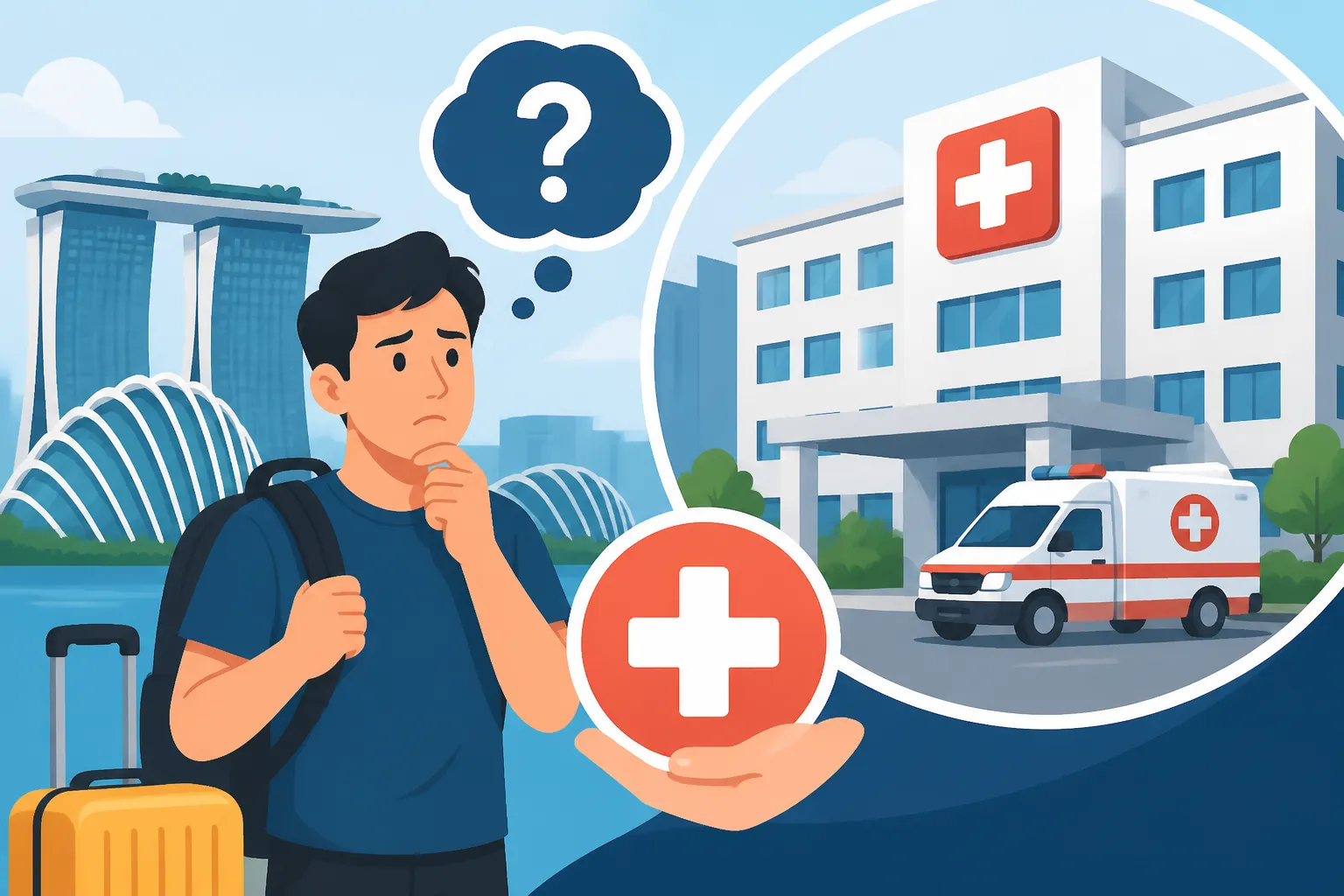
Landing in Changi with a packed itinerary of chili crab and Gardens by the Bay is the dream, but a sudden medical crisis can turn that dream into a stressful nightmare of logistics and bills. I remember when my cousin visited from London and collapsed from heat exhaustion; the panic of not knowing which hospital would take him or how much it would cost was truly paralyzing. This guide breaks down exactly how tourists can navigate the public hospital system in Singapore during an emergency so you are never left guessing.
The Reality of Emergency Care for Tourists in Public Hospitals
One of the most common misconceptions travelers have when they step off the plane is that public hospitals in Singapore are only for citizens or that they operate like a free "NHS" style system. While it is true that Singapore’s healthcare is world-class, it is not free for visitors. However, the first thing you need to know is that Singapore has a strict ethical mandate: no one is turned away from an Accident & Emergency (A&E) department in a life-threatening situation. Whether you are at a world-renowned facility like the Singapore General Hospital (SGH) and Public Hospital Access for Expats or a regional center like Khoo Teck Puat, the priority is stabilization first and administrative paperwork second.
The triage system in these public institutions is incredibly efficient but strictly enforced. When you arrive at a public A&E, you will be assessed by a nurse who assigns you a priority level from P1 (life-threatening) to P3 (non-urgent). If you are a tourist with a minor sprain, be prepared to wait for several hours. The system is designed to save lives, not to provide the fastest service for minor ailments. Understanding A&E Departments: Triage Systems and Payment at Public vs Private Hospitals is crucial because your experience will differ wildly depending on the severity of your condition.
Another layer to consider is the "public" nature of these hospitals. In Singapore, "public" refers to government-restructured hospitals. They are modern, high-tech, and often more specialized than private clinics. For instance, if you suffer a major trauma or a complex cardiac event, many expats and locals actually prefer public hospitals because they have the most robust intensive care units and specialized equipment. If you find yourself in such a dire situation, the public system is arguably the safest place to be, regardless of your residency status.
The Triage Process: What to Expect Upon Arrival
When you enter the A&E, the first person you see is the triage nurse. You will be asked for your passport or a digital copy of your SG Arrival Card. Do not worry if you don't have these on your person during a high-stakes accident; the medical team will prioritize your health. However, as soon as you are stable, the hospital’s business office will require identification to create a patient profile. They will ask about your symptoms, take your vitals, and assign you a category that dictates your wait time.
For tourists, the "P3" category—which covers things like high fevers, minor cuts requiring stitches, or moderate food poisoning—can be a frustrating experience in a public hospital. Since you aren't subsidized, you are paying a premium rate for a service that might involve a four-hour wait in a crowded waiting room. In these non-life-threatening cases, many veteran expats suggest looking for 24-Hour Clinics in Singapore: After-Hours Medical Care Guide instead, as they can provide faster relief for a similar out-of-pocket cost.
Public vs. Private: Making the Split-Second Choice
If you have the luxury of choice during an emergency, you might wonder if you should head to a public hospital or a private one like Mount Elizabeth, Gleneagles, and Raffles: Premium Private Hospitals. For tourists, the cost difference is often narrower than you might think. Because tourists do not receive government subsidies, a visit to a public A&E can easily cost $150 to $300 just for the initial consultation and basic tests.
Private hospitals offer much shorter wait times and more "hotel-like" amenities, which can be a huge comfort when you are far from home. However, for specialized emergencies—like a venomous bite or a major stroke—the public hospitals are often better equipped with specific antidotes and large teams of on-site specialists. If you are using a comprehensive plan like those offered by Cigna Global, you may find that the cost of a private room is fully covered, making the private route much more appealing for your recovery period.
Navigating the Financial Side: Costs for Non-Residents
The most significant "culture shock" for tourists in Singaporean public hospitals is the bill. Unlike citizens who have access to heavy subsidies and the Central Provident Fund, tourists are classified as "Foreigner/Non-Resident" patients. This means you pay the "unsubsidized" rate, which is the full cost of the medical service. It is vital to keep this in mind when Healthcare Budgeting in Singapore: Managing Out-of-Pocket Costs becomes a reality during your trip.
Upon admission, public hospitals will typically ask for a deposit. For a tourist, this deposit can range from $1,000 for a minor observation stay to upwards of $10,000 or more if surgery is required. They accept major credit cards, and this is where having a high credit limit or travel insurance becomes a literal lifesaver. If you cannot provide a deposit, the hospital will still treat an emergency, but they will involve their medical social workers and your embassy to arrange for payment guarantees.
Understanding the Bill: Subsidies and Surcharges
When you receive your final invoice, it will be broken down into various components: ward charges, treatment fees, laboratory tests, and professional fees for the doctors. As a tourist, every single item is charged at the private rate. For example, a simple X-ray that costs a local $30 might cost a tourist $150. If you are hospitalized, the room rates for a "Class A" (single bed) or "Class B1" (4-bed) ward are the only options usually offered to foreigners, and these prices are comparable to mid-range hotels.
Because of these high potential costs, it is wise to advise visitors not to rely solely on the "safety net" of public hospitals. Even a two-day stay for something as common as dengue fever can rack up a bill of $5,000. This is why flexible, short-term coverage like SafetyWing is so popular among the "digital nomad" and tourist crowd; it provides that essential cushion so a hospital visit doesn't drain your entire savings account.
Payment Procedures and Insurance Claims
Most public hospitals in Singapore do not have "direct billing" arrangements with overseas travel insurance providers at the A&E level. This means you will likely have to pay the bill upfront using your credit card and then seek reimbursement from your insurer later. Ensure you ask the hospital’s business office for a "Memorandum of Admission" and a detailed, itemized breakdown of the bill. Without these specific documents, filing a claim with your insurance company back home can become a bureaucratic nightmare.
If your emergency requires a long-term stay or expensive surgery, some international insurers like Cigna Global may be able to issue a "Letter of Guarantee" (LOG) to the hospital. An LOG essentially tells the hospital that the insurer will pay the bill directly. However, getting this approved usually takes 24 to 48 hours, so you should still be prepared to handle the initial emergency expenses out of pocket.
Strategic Emergency Management for Visitors
Knowing who to call and where to go can save precious minutes. In Singapore, the emergency number for a government ambulance is 995. It is important to note that if you call 995, the ambulance is required by law to take you to the nearest public hospital. You cannot request a specific private hospital via the 995 service. If your condition is not life-threatening but you still need transport, you should use Non-Emergency Medical Transport: When to Use 1777 Instead of 995.
When the ambulance arrives, the paramedics will perform an initial assessment. If they deem the case non-emergency, you might be charged a fee for the ambulance ride. Understanding Ambulance Fees: When Is a Ride Free and When Do You Pay is helpful because many tourists are surprised to see a bill for an ambulance they assumed was a free public service. Generally, if it's a genuine emergency (like a heart attack or major trauma), the 995 service is provided as part of the emergency response, but the subsequent hospital treatment is where the costs begin.
| Hospital Name | Location | Primary Specialty | Emergency Contact |
|---|---|---|---|
| Singapore General Hospital (SGH) | Outram Park | General / Major Trauma | +65 6222 3322 |
| National University Hospital (NUH) | Kent Ridge | Pediatrics / General | +65 6779 5555 |
| Tan Tock Seng Hospital (TTSH) | Novena | Infectious Diseases | +65 6256 6011 |
| KK Women's and Children's Hospital | Bukit Timah | Maternity / Pediatrics | +65 6225 5554 |
| Changi General Hospital (CGH) | Simei | Sports Medicine / General | +65 6788 8833 |
Essential Documents to Carry
In the heat of an emergency, the last thing you want to do is scramble for paperwork. Tourists are advised to keep a digital folder on their phone accessible offline. This folder should contain a copy of your passport bio-page, your travel insurance policy (specifically the page showing the "Emergency Medical" limit), and a list of any chronic medications or allergies. If you have been treated in Singapore before, having your FIN (Foreign Identification Number) from a previous work pass can also speed up the registration process.
If you are traveling with children, having their immunization records can be surprisingly helpful at hospitals like KK Women's and Children's. Singaporean doctors are very thorough, and knowing exactly what vaccines a child has had can prevent unnecessary tests or treatments. You should also ensure you have the contact details for your local embassy, as they can provide support if you are hospitalized and unable to communicate with family back home.
Leveraging Professional Support
If you find yourself overwhelmed by the Singaporean medical system, don't hesitate to ask for help from the hospital’s International Patient Liaison office. Most large public hospitals have a dedicated team to help foreigners navigate the billing and communication process. They can assist with arranging translators if English is not your first language and can sometimes help facilitate communication with international insurers.
For those planning to stay in Singapore for an extended period as a tourist or on a long-term visit pass, it is worth looking into Expat Health Insurance in Singapore: Public vs Private Coverage. Even if you aren't a resident, some local "IP" (Integrated Shield) style plans aren't available to you, but international plans will ensure you have access to the best care without the looming fear of a $50,000 bill. Plans from SafetyWing are particularly useful for those who move between countries frequently and need a "catch-all" for emergency accidents.
Managing Minor Emergencies Without the A&E
Not every "emergency" requires a hospital bed. If you have a high fever, a nasty bout of "Bali Belly" (which we just call food poisoning here), or a minor cut, a public hospital A&E is likely the most expensive and slowest place you could go. Singapore is dotted with 24-hour GP clinics that can handle these issues for a fraction of the cost. These clinics can dispense medication, perform minor stitching, and even run basic blood tests.
By choosing a local clinic over a public hospital for minor issues, you help keep the A&E clear for life-threatening cases and save yourself hours of waiting. Most of these clinics are staffed by English-speaking doctors who are used to treating the expat and tourist community. If the GP decides your condition is actually serious, they will call an ambulance and provide a referral letter that can expedite your admission to the public hospital.
Medical Disclaimer
The information provided in this guide is for educational and informational purposes only and does not constitute professional medical or legal advice. While we strive to keep the details accurate and up-to-date for 2026, healthcare policies and costs in Singapore are subject to change by the Ministry of Health (MOH). Always consult with a qualified medical professional in an emergency. If you are experiencing a life-threatening crisis in Singapore, dial 995 immediately. We recommend all travelers secure comprehensive travel insurance before arriving in Singapore to manage potential financial risks.


