What to Do If Your Company Insurance Doesn’t Cover Your Dependants
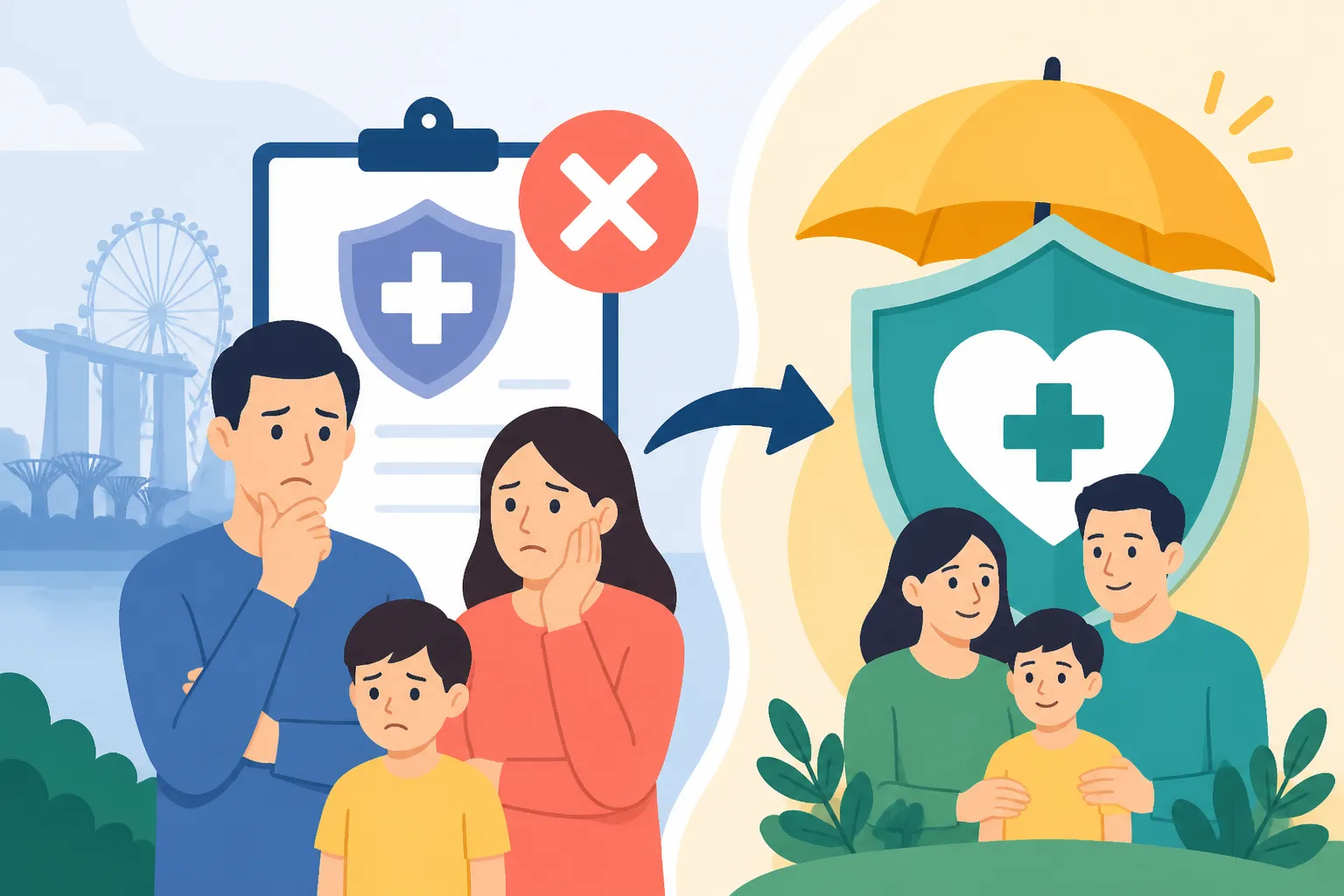
You land in Singapore, Employment Pass in hand, feeling secure because your HR manual mentions health benefits. Then you read the fine print. I remember that sinking feeling when I realized my toddlers' clinic visits and my spouse's specialist appointments weren't covered under my "comprehensive" plan. This guide solves the dilemma of protecting your dependants when your employer's policy stops at the primary cardholder.
The Reality of Corporate Medical Benefits for Expats in Singapore
The Singaporean job market has evolved significantly over the last few years. While high-level executive packages once included full "gold-plated" family coverage as a standard, many companies have shifted toward leaner "local plus" packages. This transition often means the core health insurance benefit is strictly limited to the employee. For a newcomer, this creates a dangerous gap. You might assume that because you have a job, your family is safe, but in the Singapore Healthcare System for Expats: Complete 2027 Guide, the safety net is largely something you have to weave yourself.
Why Some Companies Exclude Dependants
In my experience talking to HR directors and fellow expats, the exclusion usually boils down to cost-containment and the assumption of self-reliance. Many local firms operate on the basis that employees will manage their family’s health through personal savings or private plans. If your company is a mid-sized enterprise or a startup, they might only provide the bare minimum required by the Ministry of Manpower. Understanding the nuances of Understanding Corporate Health Insurance vs Personal Medical Plans is vital because it highlights the disparity between what is "legally required" and what is "practically necessary" for a family living in an expensive global hub.
Understanding Your Current Coverage Limits
Before you panic, get your hands on the actual policy document, not just the HR summary. Look for terms like "Inpatient Only" or "Employee Only." Some policies might offer a small allowance for outpatient visits that you can theoretically share with family, but these are often capped at such low amounts (think S$500 a year) that a single bout of the flu for two kids will wipe it out. You need to know exactly where the boundary lies. Often, expats find that even if a policy allows for Adding Family Dependants to Your Singapore Health Insurance Policy, the premiums the company charges you to do so are actually higher than what you would pay for a superior independent plan on the open market.
Assessing the Risks of Being Uninsured in Singapore
Singapore’s medical facilities are world-class, but they are priced for different tiers of residency. As a foreigner, you do not have access to the same subsidies as citizens or Permanent Residents. Families are often hit with five-figure bills for "minor" surgeries because they assumed they could just "pay as they go." When you are Healthcare Budgeting in Singapore: Managing Out-of-Pocket Costs, you have to account for the fact that a single night in a private hospital ward can cost more than a month's rent in a high-end condo.
The Cost of Pediatric Care and Specialist Visits
If you have children, your most frequent medical interaction will be with a pediatrician. Unlike some Western countries where primary care is heavily subsidized or free at the point of service, every visit here carries a consultation fee, a medication charge, and often a "facility fee." You should check How Much Does a GP Visit Cost for a Foreigner in Singapore to get a baseline, but expect pediatric specialists to charge double or triple those rates. Without insurance, a recurring ear infection or a persistent skin rash can become a significant monthly expense that eats into your relocation allowance.
Public vs Private Hospital Access for Foreigners
There is a common misconception that expats can just use the public system to save money. While public hospitals are excellent, the "foreigner rate" in a public ward is often comparable to private hospital costs for citizens. Furthermore, waiting times in the public system can be grueling. In a Polyclinic vs Private Clinics: Waiting Times and Cost Differences comparison, the private sector wins on speed and comfort every time, but it demands either deep pockets or a very robust insurance policy. If your dependants are not covered by your company, they are essentially "private payers" by default, which is the most expensive way to consume healthcare in Singapore.
Immediate Steps to Bridge the Coverage Gap
Once you realize the gap exists, you cannot afford to wait. Accidents happen—usually on the weekend when the expensive 24-hour clinics are the only option. Your first move should be a "gap analysis." Look at your family’s medical history. Do you have a child with asthma? A spouse who needs regular physiotherapy? These factors will dictate whether you need a high-limit international plan or a more flexible, modular solution like SafetyWing, which can be a lifesaver for families in transition.
Opting for Voluntary Corporate Top-ups
Some multinational corporations allow employees to "opt-in" to the corporate plan for their dependants by deducting the premium from their monthly salary. This can be convenient because there is often no medical underwriting (meaning pre-existing conditions might be covered). However, be wary. These plans are often "bundled" and may not offer the best value. I’ve found that many corporate top-ups lack "portability." If you change jobs, your family's coverage vanishes instantly, which is a massive risk if someone has developed a chronic condition in the meantime.
Exploring Independent Private Medical Insurance
For most of us, the most sustainable path is a standalone policy. This is where you regain control. You can choose the level of coverage that fits your family's specific needs, such as Family Health Guide: Maternity, Pediatrics, and Child Development. Brands like Cigna Global are frequently the go-to for veteran expats because they offer high-limit, modular plans that stay with you even if you move from one Singaporean firm to another. This continuity is the "holy grail" of expat life; it ensures that your spouse and children are never caught in a "waiting period" for coverage because of a career move.
Comparing Personal Health Insurance Solutions
When you start looking at the market, the sheer volume of choices can be overwhelming. You’ll see local "Shield" plans and massive international policies. For foreigners, especially those who travel frequently or might not stay in Singapore forever, the choice usually narrows down to international providers who understand the expat lifestyle.
SafetyWing for Nomadic or Flexible Transitions
If you have just arrived and are still figuring out your long-term plans, or if you are working on a more flexible "digital nomad" style arrangement, SafetyWing offers a compelling solution. Their "Nomad Health" or "Remote Health" products are designed to be "always-on" and globally portable. What I appreciate about SafetyWing is the transparency; you can sign up mid-trip, and their pricing is often more accessible for younger families or those who don't need the extreme "bells and whistles" of a traditional corporate plan but still want high-quality emergency and inpatient protection.
Cigna Global for Comprehensive Long-term Security
For families who are settled and want zero compromises, Cigna Global is often the gold standard. They allow you to build a plan like a Lego set. You can start with a core inpatient module and add outpatient, vision, and dental as needed. This is particularly useful if you are Finding a Pediatrician Who Speaks Your Native Language and want the freedom to visit any private clinic in Orchard or Novena without worrying about "network restrictions." Cigna Global is built for the long haul, offering the peace of mind that comes with a massive global infrastructure.
| Feature | Corporate Top-Up | SafetyWing | Cigna Global |
|---|---|---|---|
| Portability | No (Tied to Job) | High (Worldwide) | High (Worldwide) |
| Underwriting | Often Waived | Required | Full Underwriting |
| Customization | Low | Medium | Very High |
| Best For | Short-term fixes | Flexible/Young families | Long-term/High-limit needs |
| Cost Basis | Group Rate | Subscription-style | Tiered Premium |
Navigating the Singapore Healthcare Landscape as a Family
Even with a great private policy for your dependants, you need to learn the "local hacks" to keep your out-of-pocket costs down. Singapore's system is built on the principle of "co-payment," meaning almost everyone pays something at the point of service. This is designed to prevent over-consumption of medical services, but it can be a shock to those used to the NHS or similar systems.
Using Polyclinics and GP Networks Strategically
You don't always need to go to a high-end private specialist for a common cold. Polyclinics are the backbone of the local system. While the wait times can be long, they are incredibly efficient for routine vaccinations or managing chronic but stable conditions. If your private insurance has a high deductible, using a local GP network for minor ailments can save you hundreds of dollars over a year. It is advisable to find a reliable family doctor in your neighborhood first before jumping straight to a specialist at Mount Elizabeth.
Managing Out-of-Pocket Costs and Budgeting
Always ask for a "pro-forma" invoice or a cost estimate before any procedure. In Singapore, it is perfectly acceptable to discuss money with your doctor. Most private clinics are used to dealing with international insurers and can tell you immediately if they can do "direct billing" or if you need to "pay and claim." For your dependants, direct billing is a massive stress-reducer. Ensure your chosen plan, whether it's through SafetyWing or Cigna Global, has a robust list of direct-billing providers in Singapore so you aren't stuck waiting for a S$5,000 reimbursement while your credit card gathers interest.
Essential Checklist for Insuring Your Dependants
Before you sign any papers, run through this mental checklist that I wish someone had given me five years ago:
- The Maternity Gotcha: If you are planning to expand your family, remember that most private plans have a 10 to 24-month waiting period for maternity benefits. You cannot buy a policy today and claim for a birth next month.
- Pre-existing Conditions: If your child has a known condition, switching to a private plan might result in an "exclusion." This is the one time where a corporate top-up might be better, as group plans sometimes ignore medical history.
- Regional Coverage: Does the plan cover your family when you take that weekend trip to Bali or Phuket? A Expat Health Insurance in Singapore: Public vs Private Coverage plan should ideally cover you across Southeast Asia at the very least.
- The Deductible vs. Premium Trade-off: If you have healthy teenagers, a high deductible (the amount you pay before insurance kicks in) can significantly lower your monthly premium.
- Direct Billing: Does the insurer have a local office or a 24/7 hotline that actually answers? When your spouse is in the A&E at 2 AM, you don't want to be calling a call center in a different time zone to verify coverage.
Securing your family's health is the most important "admin" task you will face as an expat. Don't let the complexity of the Singaporean market deter you. Whether you choose the flexibility of SafetyWing or the comprehensive reach of Cigna Global, the goal is to ensure that your "Singapore Dream" isn't derailed by a medical bill you didn't see coming.
Disclaimer
The information provided in this guide is for informational purposes only and does not constitute financial, legal, or medical advice. Insurance regulations and healthcare costs in Singapore are subject to change. Always consult with a licensed insurance professional or a qualified medical practitioner before making decisions regarding your family's health coverage.


