Non-Emergency Medical Transport: When to Use 1777 Instead of 995
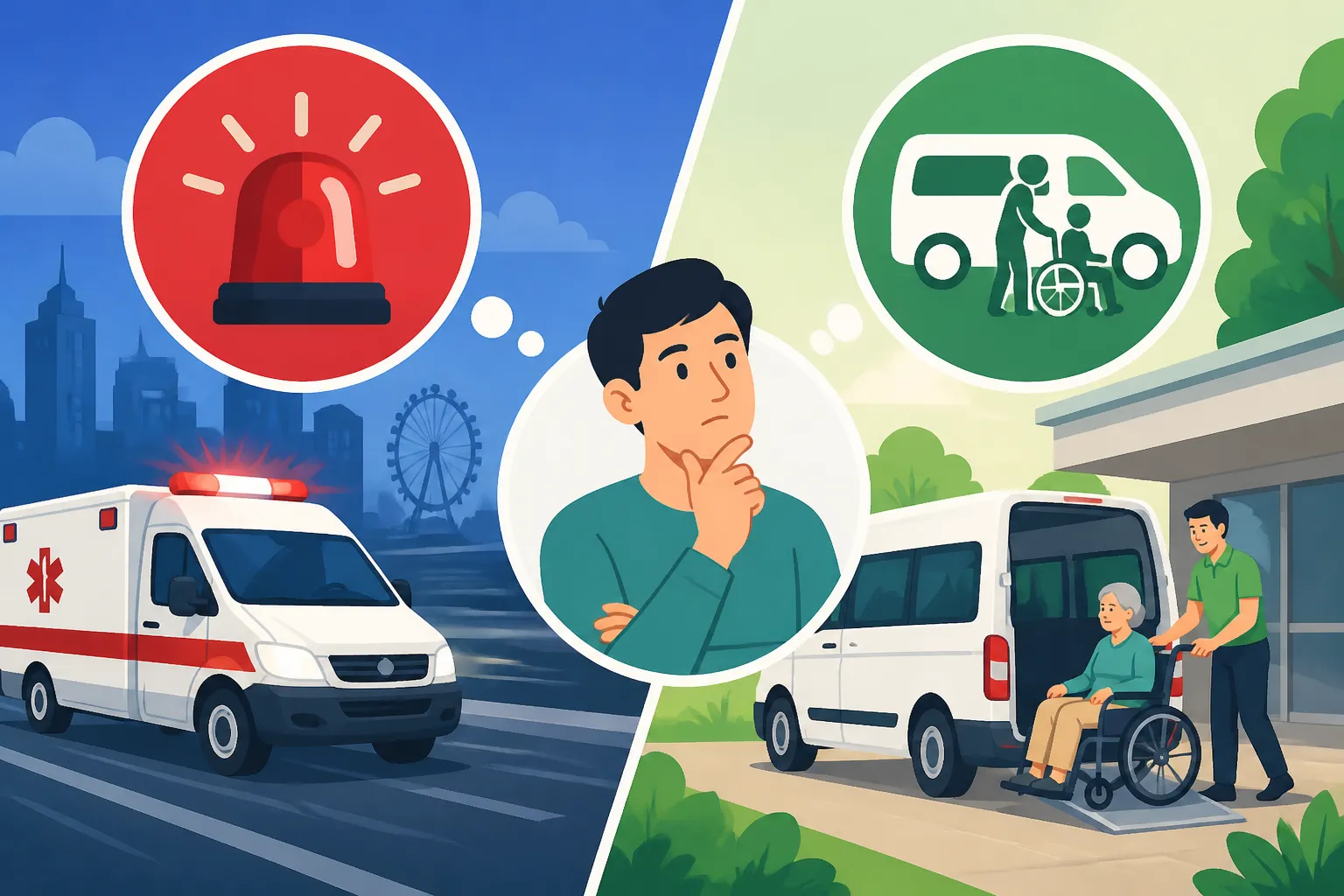
One of the most paralyzing moments for any expat is standing over a sick family member with a phone in hand, unsure if the situation warrants a high-speed siren or a scheduled van. When my daughter developed a sudden, frighteningly high fever during my first month in River Valley, I stared at the keypad, terrified that calling the wrong number would either waste precious time or result in a massive fine for misusing emergency services. This guide resolves that dilemma by explaining exactly when to dial 1777 for non-emergency transport and when you must stick to the 995 emergency line.
The Confusion Between 995 and 1777
In many Western countries, there is only one number to call for any medical situation requiring a stretcher. Singapore, however, operates a bifurcated system designed to keep the emergency lanes clear for life-and-death situations. This is part of the broader Singapore Healthcare System for Expats: Complete 2027 Guide that emphasizes efficiency and resource management. If you are new here, the distinction isn't always intuitive, and the fear of making a mistake is a common topic in expat coffee circles.
Why Expats Often Default to 995
The tendency to default to 995 is rooted in habit and fear. Back home, you might have been taught that if someone can’t walk to a car, you call the paramedics. In Singapore, the 995 service is operated by the Singapore Civil Defence Force (SCDF) and is strictly for emergencies. Because the SCDF is so visible and well-known, many foreigners don't even realize the 1777 number exists until they are already in a situation where they need it.
I remember talking to a fellow expat who called 995 for a broken ankle. While painful, it wasn't life-threatening. The paramedics were professional, but they made it clear that a private ambulance or even a large taxi would have been more appropriate. This distinction is crucial because SCDF ambulances are required to take patients to the nearest designated public hospital, which might not be where your preferred doctor is located.
The Legal and Ethical Implications of Misusing Emergency Services
Singapore takes the "emergency only" rule for 995 very seriously. If you call 995 for a non-emergency, you aren't just potentially delaying care for someone having a heart attack; you also face financial consequences. Currently, the SCDF charges a significant fee—often upwards of S$270—for non-emergency cases that they deem could have been handled via other means.
Beyond the fine, there is the social "face" aspect. Singaporean culture highly values civic responsibility. Misusing a public resource like an emergency ambulance is seen as a major faux pas. By learning the 1777 system, you integrate better into the local framework and ensure that you are using the right level of care for your specific situation. This is an essential part of your Expat Health Checklist for the First 30 Days in Singapore to ensure you don't start your journey here with an unnecessary administrative headache.
Defining a Medical Emergency: When to Dial 995
Understanding what constitutes an "emergency" in the eyes of the SCDF is the first step in deciding which number to dial. The SCDF defines emergencies as life-threatening situations where every second counts. If you are ever in doubt and the person is unconscious or struggling to breathe, always default to 995.
Life-Threatening Scenarios and Immediate Risks
There are several "red flag" symptoms that mandate an immediate call to 995. These include sudden chest pain (potential heart attack), signs of a stroke (facial drooping, arm weakness, speech difficulty), severe breathlessness, or heavy, uncontrollable bleeding. Major trauma, such as a fall from a significant height or a serious road accident, also falls squarely into the 995 category.
In these moments, the SCDF’s priority is stabilization and rapid transport. They are equipped with advanced life-support equipment and can communicate directly with the receiving A&E department. For more on how these units operate, you should consult the guide on Emergency Medical Care in Singapore: Ambulances and A&E Wards. If you have a policy with a provider like Cigna Global, these emergency interventions are typically covered, but the priority is survival, not choosing your favorite ward.
What Happens When the SCDF Ambulance Arrives
When you dial 995, the dispatcher will ask specific questions to triage the situation. Once the ambulance arrives, the paramedics will assess the patient. It is vital to understand that SCDF ambulances will transport the patient to the nearest "Public Hospital Emergency Department" based on their location. You generally cannot request a specific hospital, even if you have a private doctor at Mount Elizabeth, Gleneagles, and Raffles: Premium Private Hospitals.
The paramedics will prioritize the hospital with the necessary specialized facilities (like a stroke center or cardiac unit) that is closest to you. Once at the hospital, the patient will enter a triage system. If the case is deemed non-emergency upon arrival at the A&E, the wait times can be several hours, as life-threatening cases are seen first. For a deeper look at this process, see A&E Departments: Triage Systems and Payment at Public vs Private Hospitals.
Understanding the 1777 Non-Emergency Hotline
The 1777 hotline is the gateway to a network of private ambulance operators. Unlike the centralized SCDF, 1777 connects you to various private firms that provide medical transport for cases that are stable but require medical supervision or specialized equipment during transit.
What Is Non-Emergency Medical Transport (NEMT)?
Non-Emergency Medical Transport (NEMT) is designed for patients who cannot use a standard vehicle but do not require lights-and-sirens urgency. This includes patients who are bedbound and need a stretcher, those who require oxygen during transport, or individuals who are mentally or physically incapacitated and need professional handling.
This is used most effectively for moving elderly parents between a nursing home and a specialist clinic. The 1777 operators are trained in patient handling and can manage wheelchairs and stretchers with ease. It is a paid service, and unlike the "free" (for genuine emergencies) SCDF service, you will be quoted a rate based on the distance and the level of care required. Understanding Ambulance Fees: When Is a Ride Free and When Do You Pay? is essential before you make that call.
Who Operates the 1777 Private Ambulance Network?
The 1777 number is managed by a group of private ambulance operators who meet specific Ministry of Health (MOH) standards. When you call 1777, the dispatcher acts as a coordinator, assigning the request to an available private operator. These companies, such as Comfort Ambulance or Hope Ambulance, operate their own fleets and have their own pricing structures.
One of the major benefits of using a 1777 operator is flexibility. Unlike the SCDF, a private ambulance will take you to the hospital of your choice. If you have a preferred specialist at a private facility or want to be admitted to a specific ward covered by your Expat Health Insurance in Singapore: Public vs Private Coverage, 1777 is the way to get there. It’s a more personalized service, often including assistance with bringing the patient from their bedroom directly into the vehicle.
Practical Scenarios for Using 1777
To make this practical, let's look at real-world situations where you should reach for 1777 instead of the emergency line. These are the "grey area" moments that often trip up new arrivals.
Inter-Hospital Transfers and Specialist Appointments
Suppose you or a family member is currently admitted to a public hospital like SGH but you wish to transfer to a private hospital for surgery. The public hospital will generally not provide an ambulance for this "preference-based" move. You would need to call 1777 to arrange a private ambulance transfer.
Similarly, if a patient is recovering at home but needs to visit a specialist and cannot sit in a regular car due to a spinal injury or a full-leg cast, 1777 is the appropriate choice. They can schedule a pick-up time, ensuring the patient arrives at the clinic exactly when needed. This is much more reliable than trying to fit a stretcher into a standard taxi. If you are managing a long-term recovery, having a plan for these transfers is as important as finding 24-Hour Clinics in Singapore: After-Hours Medical Care Guide for minor ailments.
Discharging Elderly Relatives or Post-Surgery Patients
The day of hospital discharge is often more stressful than the day of admission. If you are bringing home a relative who is still quite weak or requires portable medical equipment, a private ambulance via 1777 provides peace of mind. The staff will not only drive you home but will also help transfer the patient into their bed.
For expats who have parents visiting on a Long-Term Visit Pass, this service is a godsend. If they have an insurance provider like SafetyWing for their travel duration, you should check if NEMT is a reimbursable expense. Usually, these "comfort" or "necessity" transports are out-of-pocket, but they prevent the risk of re-injury that could occur in a standard vehicle.
| Feature | 995 (SCDF Emergency) | 1777 (Private Non-Emergency) |
|---|---|---|
| Case Type | Life-threatening emergencies | Stable, non-life-threatening |
| Hospital Destination | Nearest Public Hospital | Your choice (Public or Private) |
| Response Time | High priority, very fast | Variable, can be pre-booked |
| Cost | S$0 for genuine emergencies; S$270+ for non-emergencies | Paid service (approx. S$80 – S$200+) |
| Staffing | SCDF Paramedics | Private EMTs / Medics |
| Booking | Immediate only | Can be scheduled in advance |
Costs, Insurance, and Logistical Realities
While the medical aspect is the priority, the financial aspect of ambulance transport in Singapore cannot be ignored. The "sticker shock" of medical bills is a real concern for the expat community.
The Price Gap Between Public and Private Transport
The SCDF (995) does not charge for emergency cases for citizens, PRs, or foreigners, provided the case is a legitimate emergency. However, if they decide you didn't actually need them, the bill will arrive later. On the other hand, 1777 is always a paid service.
Expect to pay anywhere from S$80 to S$150 for a standard one-way trip within reasonable hours. If you require oxygen, a nurse escort, or transport during public holidays or late at night, the price can easily double. It is always wise to ask for a quote over the phone when you call 1777. For those without comprehensive plans from Cigna Global, these costs can add up quickly if multiple transfers are required during a long illness.
Navigating Insurance Claims for Ambulance Services
Most international health insurance plans for expats include coverage for "local ambulance services," but the devil is in the details. Often, the policy will specify that the transport must be "medically necessary." A 995 emergency call is almost always covered. A 1777 call for a scheduled specialist visit might be scrutinized.
If you are using 1777 for a transfer between hospitals, ensure you get a referral note or a "medical necessity" letter from the attending physician. This document is the golden ticket for insurance reimbursement. Without it, the insurance company might view the ambulance as a "luxury taxi" rather than a medical requirement. Always keep your receipts and the trip log provided by the private operator.
Alternative Options and Preparedness
Not every situation requires an ambulance, even a non-emergency one. Knowing the alternatives can save you a lot of money and sometimes even time.
When a Taxi or Grab is the Better Choice
If the patient is conscious, can sit up, and isn't in extreme pain, a taxi or a ride-hailing service like Grab is often the fastest way to get to a doctor. In Singapore, many taxi drivers are experienced in helping passengers with limited mobility. If you need more space, you can book a "GrabAssist" which is specifically designed for passengers with mobility devices.
I've used Grab to get to the A&E for things like deep cuts that needed stitches or a suspected broken wrist. It’s significantly cheaper than a 1777 ambulance and often faster than waiting for a private operator to dispatch a vehicle. However, if there is any chance the patient's condition could worsen during the 20-minute drive, do not risk it.
Creating Your Expat Medical Emergency Plan
The best time to learn the difference between 995 and 1777 is not while you are panicked. I recommend every expat household keep a "Medical Cheat Sheet" on the fridge. This should include your FIN numbers, your preferred private hospital, the 1777 number, and a list of any chronic medications.
Being prepared also means knowing your nearest 24-hour clinic. Sometimes, a "non-emergency" can be handled at a local GP without a trip to the hospital at all. By having this plan in place, you reduce the "decision fatigue" that leads to calling the wrong number. It’s part of the peace of mind that comes with living in a city as organized as Singapore—once you know the rules, the system works brilliantly for you.
Disclaimer
The information provided in this article is for educational and informational purposes only and does not constitute professional medical or legal advice. While we strive to keep the information up to date and correct, Singapore’s medical regulations and fees are subject to change by the Ministry of Health (MOH) and the Singapore Civil Defence Force (SCDF). Always consult with a qualified medical professional or contact emergency services immediately if you are facing a life-threatening situation. The author and publisher are not responsible for any actions taken based on the contents of this guide.