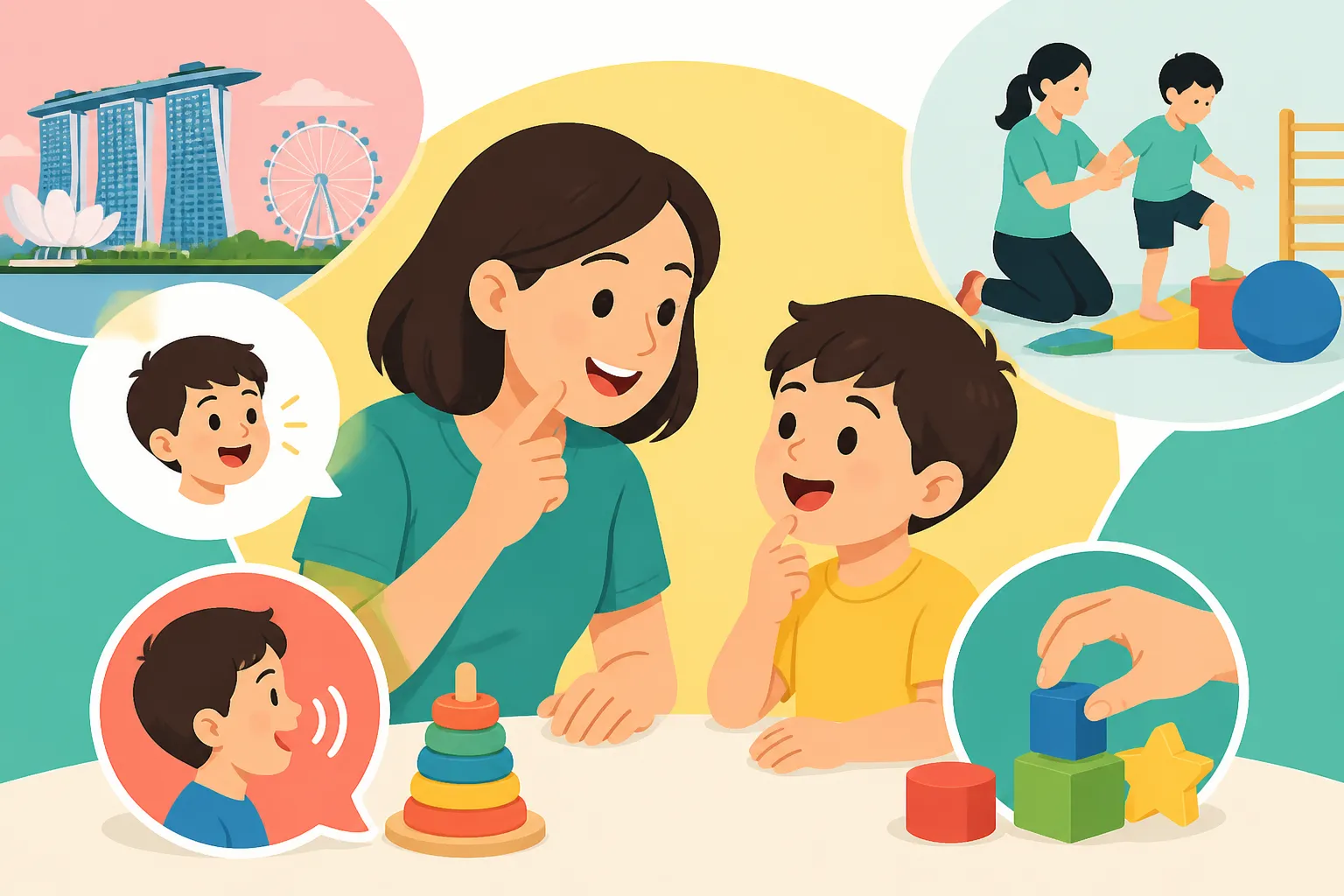
Accessing Speech and Occupational Therapy for Kids
Finding out your child might need developmental support while living thousands of miles from your home country is a heart-wrenching experience. I remember the paralyzing anxiety I felt sitting in a tiny plastic chair at my daughter’s preschool when her teacher gently suggested a speech evaluation. This guide serves as your roadmap for navigating the complex, often overwhelming world of speech and occupational therapy in Singapore.
Recognizing the Need: Cultural Context and Early Signs
In the high-pressure environment of Singapore, the "kiasu" (fear of losing out) culture can often make parents hyper-aware of developmental milestones. However, for expats, this is compounded by the "third-culture kid" experience. Is your child’s speech delay due to a processing issue, or is it simply the result of being in a trilingual household where the helper speaks Tagalog, the teacher speaks Mandarin, and you speak English? Disentangling these factors requires a professional touch.
Occupational Therapy (OT) needs often manifest differently in a dense urban environment like Singapore. Many expat children live in high-rise condos and spend significant time in air-conditioned spaces. This lack of diverse sensory input—like running barefoot on grass or climbing trees—can sometimes mask or exacerbate sensory processing disorders. If you notice your child struggling with the transition from a quiet apartment to a noisy hawker center, or if they have significant trouble with fine motor skills like using chopsticks or safety scissors, it might be time to look into OT.
The first step is always to consult with a trusted professional. Navigating Pediatric Clinics: Childhood Vaccinations and School Medical Forms is usually the starting point, as your pediatrician can provide the initial screening. They understand the local context and can help determine if your child is simply a "late bloomer" or if there is a genuine need for intervention.
The Public vs. Private Healthcare Divide for Therapy
One of the hardest "expat realities" to swallow in Singapore is the disparity in healthcare access. While Singapore has a world-class public system, it is heavily optimized for citizens and Permanent Residents. As an Employment Pass holder, you are essentially looking at two very different paths.
The public route involves major institutions like KK Women's and Children's Hospital (KKH) or National University Hospital (NUH). The quality of care is exceptional, but the wait times for an initial assessment can stretch from six months to a year. For a child with a speech delay, six months is an eternity in developmental terms. Furthermore, as a foreigner, you will not be eligible for the heavy subsidies that locals receive, meaning the price gap between public and private care narrows significantly.
The private route is the choice for most expat families who need immediate results. Clinics like Dynamics Speech, MindChamps Allied Care, or The Speech Practice offer much faster intake, often within a week or two. However, the costs are substantial. A single 45-minute session of Speech Therapy (ST) or OT can range from S$180 to S$280. When you consider that many children require weekly sessions for six months or more, the financial burden becomes a primary concern. This is where having robust coverage from providers like Cigna Global becomes vital, as they often offer modules specifically designed for long-term expatriate family needs.
Navigating the Evaluation and Assessment Process
Once you’ve decided to move forward, the process typically begins with a formal assessment. This is not a standard 15-minute doctor's visit; it is an intensive two- to three-hour evaluation where therapists use standardized tools to measure your child’s performance against age-matched peers.
For speech therapy, the therapist will look at receptive language (what the child understands), expressive language (what they say), and articulation. In a place like Singapore, ensure your therapist is familiar with international benchmarks. You don't want a local therapist correcting a "Western" accent or idiom that is perfectly normal for your home country.
For occupational therapy, the assessment covers gross motor skills, fine motor skills, and sensory processing. If you are covered by an international plan like SafetyWing, check if they require a formal referral from a GP before the assessment to ensure the costs are reimbursable. You can find more details on this by Choosing a Primary Care Physician (GP) in Singapore to act as your "gatekeeper" for specialist referrals.
| Service Type | Public Hospital (Non-Subsidized) | Private Clinic |
|---|---|---|
| Initial Assessment | S$250 – S$450 | S$400 – S$750 |
| Wait Time for Assessment | 4 – 8 Months | 1 – 2 Weeks |
| Therapy Session (per hour) | S$140 – S$200 | S$190 – S$300 |
| Report Writing Fee | S$100 – S$250 | S$150 – S$400 |
| Frequency Recommendation | Often limited by capacity | Flexible based on need |
Managing the Costs and Insurance Claims
The financial aspect of therapy in Singapore is, frankly, one of the biggest stressors for expat parents. Most local "off-the-shelf" insurance plans for foreigners exclude developmental and behavioral therapies. You might find yourself paying out-of-pocket for months before realizing your corporate policy has a tiny sub-limit for "psychological services" that doesn't even cover the initial assessment.
Before committing to a long-term therapy plan, it is essential to sit down and review your documents. If you are currently job hunting or negotiating a move, Understanding Your Employer’s Medical Benefits Package Before Signing is perhaps the most important thing you can do for your family's future "Singapore budget."
Many premium international insurers, such as Cigna Global, offer comprehensive outpatient riders that may cover these therapies if they are deemed "medically necessary" rather than purely educational. On the other hand, if you are a digital nomad or on a shorter-term assignment, a plan like SafetyWing provides a safety net for accidents and urgent care, but you must be careful to check their specific stance on chronic developmental conditions. Always ask the clinic for a "Letter of Medical Necessity" and a detailed breakdown of the procedure codes before you begin, as this will make How to Claim Medical Expenses from International Insurance Providers a much smoother process.
Integration with Schools and Support Networks
Therapy doesn't happen in a vacuum. For it to be effective, the strategies learned in a clinic must be implemented at school and home. Singapore has a range of international schools, but their level of "Learning Support" varies wildly. Some schools have "in-house" OTs and speech therapists who can see your child during school hours, which is a massive relief for working parents. Others may require you to pull your child out of class to attend private appointments.
When researching schools, ask specifically about their "Individualized Education Plan" (IEP) process. For children with more significant needs, you may want to look into Special Needs Children: Accessing Therapy and Inclusive Support Networks to find schools that are truly inclusive rather than just "tolerant" of developmental differences.
Don't forget the emotional toll on yourself as a parent. Being an expat parent of a child with extra needs can feel incredibly isolating. Your friends back home might not understand why you're paying hundreds of dollars for someone to "teach your kid how to play with blocks," and the local Singaporean parents might be focused on academic tutoring rather than developmental therapy. Finding a local support group—often found through the various expat clubs or Facebook groups like "Expat Moms in Singapore"—can be a lifeline.
Practical Tips for Your First 30 Days of Therapy
The logistics of therapy in Singapore can be a headache. If you are using a private clinic in the Central Business District (CBD) or Orchard Road area, factor in the "Electronic Road Pricing" (ERP) and parking costs, which can add S$20 to every visit. Many parents find it easier to use the MRT, provided the clinic is near a station like Novena or Orchard.
If your child is prescribed occupational therapy, the therapist will likely suggest "home homework." In Singapore's smaller apartments, finding space for a sensory swing or a weighted crash pad is a challenge. Get creative—use the condo’s playground during off-peak hours or utilize the "void decks" of HDB buildings for gross motor practice.
Lastly, stay organized. Keep a dedicated folder for all therapist reports, as you will need these if you ever apply for Permanent Residency or if you move to another country. For those looking at the long-term horizon, it is worth Understanding Your Health Checkup Results: Local Medical Jargon as these reports will become a permanent part of your child's medical history in Singapore.
Disclaimer
This guide is for informational purposes only and is based on personal experience and current market research. It does not constitute medical or legal advice. Healthcare regulations and insurance policies in Singapore change frequently; always verify details with the Ministry of Manpower (MOM), the Ministry of Health (MOH), and your specific insurance provider.