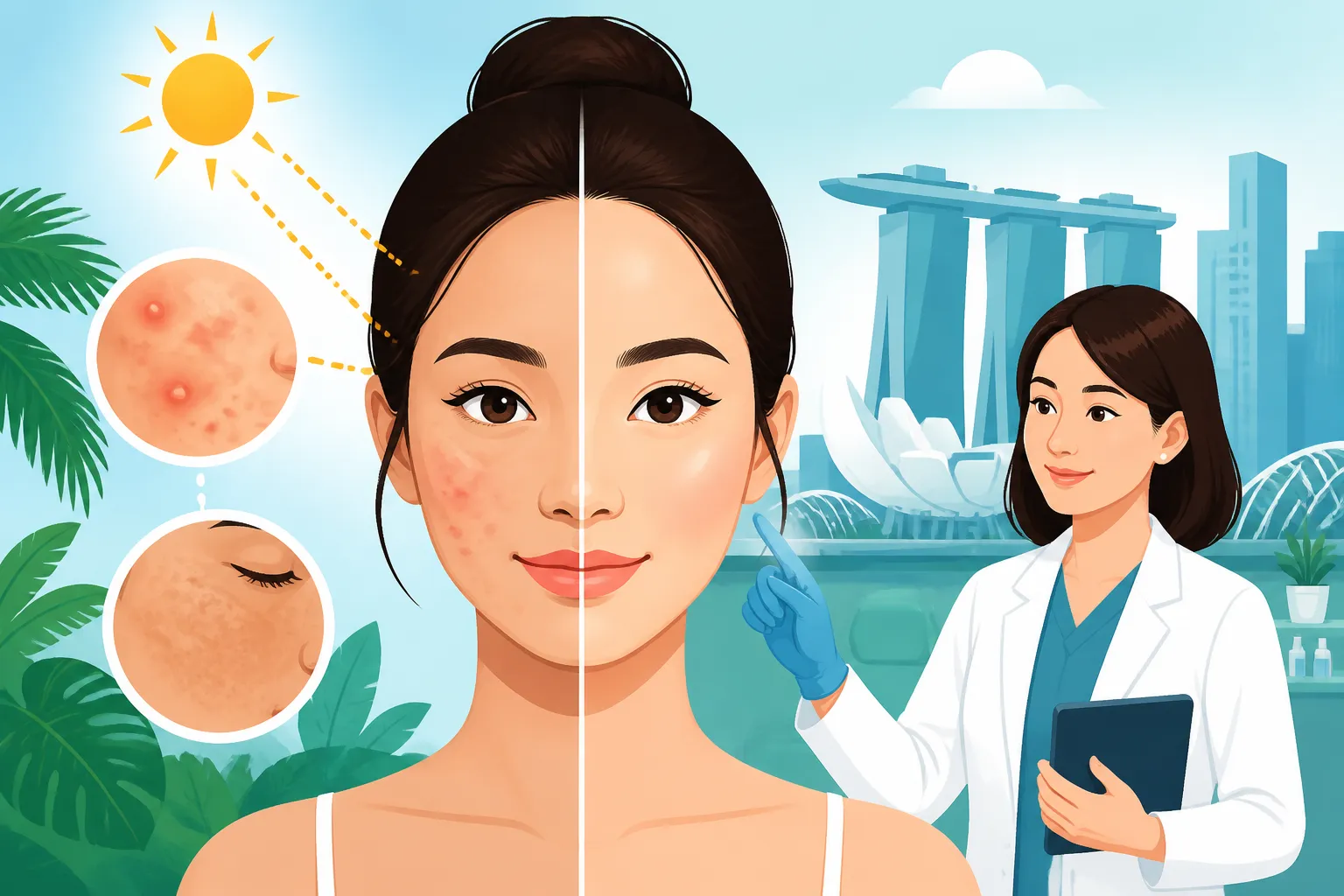
Dermatology Clinics: Treating Acne and Sun Damage in the Tropics
Moving to the tropics often triggers a "skin shock" where the combination of 90% humidity and constant air conditioning leaves your face simultaneously oily and dehydrated. I distinctly remember my own first month in Singapore, standing in front of the mirror in a Clarke Quay bathroom wondering why I was suddenly breaking out like a teenager again despite being well into my thirties. This guide provides an honest, veteran's perspective on navigating Singapore’s dermatology clinics, managing the relentless heat-induced acne, and repairing sun damage in a land where the UV index is perpetually in the extreme zone.
The Reality of Tropical Acne and Humidity Induced Skin Issues
In Singapore, the heat isn't just a physical discomfort; it is a biological trigger for your skin. When the temperature rises, your sebaceous glands go into overdrive. Combine this with the fine particulate matter often found in urban environments, and you have a recipe for clogged pores and cystic acne. Many expats find that the products that worked perfectly in London, New York, or Sydney suddenly feel heavy and "suffocating" here. This leads to a specific type of frustration where you feel like you are constantly washing your face, yet the congestion never clears.
Beyond simple breakouts, the humidity is a prime breeding ground for fungal acne and heat rashes. If you notice small, itchy red bumps that don't respond to traditional salicylic acid, you might actually be dealing with Pityrosporum Folliculitis. This is why many newcomers find themselves searching for professional help within their first six months. Understanding Dealing with Humidity-Induced Skin Issues (Eczema and Heat Rash) is a crucial part of the transition. It isn't just about vanity; it’s about maintaining the health of your skin barrier in an environment that is constantly trying to strip it or overwhelm it.
When you first arrive, it’s worth adding a skin consultation to your Expat Health Checklist for the First 30 Days in Singapore. A local dermatologist can help you pivot your skincare routine to lighter, water-based formulations that won't trap heat against your skin. I found that switching from heavy creams to hyaluronic acid serums made a world of difference in preventing the mid-afternoon "grease-slick" look that plagues so many professionals in the CBD.
Navigating the National Skin Centre vs Private Clinics
Singapore offers two distinct paths for dermatological care: the public system, centered around the National Skin Centre (NSC) in Novena, and a vast array of private clinics located primarily in the Orchard and Novena medical hubs. The choice between them usually comes down to your budget, your timeline, and your insurance coverage. The NSC is a world-class facility, but as a foreigner, you will likely be paying the "unsubsidized" rate unless you have Permanent Residency, and even then, the subsidies are specific.
Private clinics offer a much more bespoke, high-end experience. You can often get a same-day appointment, and the waiting rooms feel more like spas than hospitals. If you are looking for specific aesthetic treatments for sun damage, such as Pico lasers or chemical peels, private clinics like those in the Expat Guide to Navigating the Mount Elizabeth Novena Campus are the standard choice. These specialists often have more time to discuss long-term skincare "journeys" rather than just treating an acute flare-up.
For those on international plans like Cigna Global, private specialist visits are often covered if the condition is medical (like severe cystic acne or suspicious moles) rather than purely cosmetic. It is always wise to check your policy before booking, as some insurers require a referral from a General Practitioner. Understanding the nuances of Specialist Referrals: Do You Need a GP Before Seeing an Expert? can save you a significant amount of out-of-pocket expenditure.
The Referral Process and Making Appointments
If you decide to go the public route to manage costs, you will likely start at a neighborhood polyclinic. These are the government’s primary care hubs. You can find out How to Book an Appointment at a Singapore Polyclinic Using the App to save yourself hours of waiting in line. During your polyclinic visit, the GP will assess your skin. If the condition is deemed complex—such as chronic psoriasis, severe dermatitis, or suspected skin cancer—they will issue a referral to the National Skin Centre.
For expats, the public route is excellent for serious medical conditions, but the wait times for non-urgent appointments can stretch into weeks or even months. If you are in the middle of a painful acne flare-up or need an urgent mole check, a private clinic is almost always the better option. Private clinics do not require a referral; you simply call and book. Many of these clinics are located in the Gleneagles or Mount Elizabeth hospitals, where the level of care is exceptionally high.
When considering the financial aspect, it is helpful to look at Polyclinics vs Private Clinics: Waiting Times and Cost Differences. While the public system is cheaper, the convenience of private care is often worth the premium for busy professionals. If you are a digital nomad or someone who travels frequently through Southeast Asia, having a flexible plan like SafetyWing can provide a safety net for emergency skin issues that might arise while you are away from your home base in Singapore.
Treatment Options for Acne and Sun Damage
The dermatology scene in Singapore is incredibly advanced, with a heavy focus on laser technology. Because of the high prevalence of pigmentation issues among the local and expat population, Singaporean dermatologists are some of the best in the world at treating melasma and sunspots.
Acne Management
For acne, treatments often involve a combination of topical retinoids, oral antibiotics, or Isotretinoin (commonly known as Roaccutane). It’s important to note that Singapore has strict regulations on these medications. You cannot simply refill a foreign prescription; you will need a local doctor to monitor your progress, especially with Isotretinoin, which requires regular blood tests to check liver function. This is often handled during a Medical Checkup for EP Application: X-Rays and Blood Tests Explained or a dedicated skin-related follow-up.
Sun Damage and Pigmentation
The UV index in Singapore frequently hits 11 or 12 by noon. Even if you wear a hat, the reflection of UV rays off the pavement can cause significant sun damage. Clinics here specialize in "lunchtime" procedures that have minimal downtime. Common treatments include:
- Pico Laser: Targeted pulses that break down pigmentation without damaging the surrounding skin.
- Chemical Peels: Using AHAs or BHAs to exfoliate the surface and encourage cell turnover.
- BroadBand Light (BBL) Therapy: Excellent for reversing redness and age spots caused by sun exposure.
| Treatment Type | Average Private Cost (SGD) | Recommended Frequency | Best For |
|---|---|---|---|
| Basic Extraction Facial | $150 – $300 | Monthly | Congested Pores / Blackheads |
| Pico Laser Session | $400 – $800 | Every 4-6 Weeks | Sun Damage / Pigmentation |
| Chemical Peel | $200 – $450 | Every 2-4 Weeks | Surface Texture / Minor Acne |
| Dermatologist Consult | $150 – $350 | As Needed | Medical Diagnosis / Prescriptions |
Sun Protection Strategies for the Tropics
Prevention is the cornerstone of skincare in Singapore. I learned the hard way that the "beach" sunscreen I used back home was far too greasy for daily wear in the humidity. Most dermatologists in Singapore recommend physical sunscreens (containing Zinc Oxide or Titanium Dioxide) because they reflect heat away from the skin, whereas chemical sunscreens can sometimes trap heat, exacerbating issues like rosacea or heat rash.
You should be looking for "Non-Comedogenic" and "Oil-Free" labels. Furthermore, because you will likely sweat through your first layer of protection by midday, many expats carry "sun sticks" or mineral powder sunscreens for touch-ups. If you spend a lot of time outdoors—perhaps hiking the Southern Ridges or visiting the Botanic Gardens—you need to be vigilant. Serious sun damage can lead to skin cancer, and while Singapore’s Singapore Healthcare System for Expats: Complete 2027 Guide is excellent at treating it, the goal is always to avoid the scalpel.
For those who are frequently on the move or perhaps here on a shorter work stint, ensure your coverage is robust. Plans from SafetyWing are particularly popular with younger expats who need high-limit coverage for accidents and emergencies, while more permanent residents often opt for Cigna Global to cover chronic dermatological needs.
Why Quality Coverage Matters for Skin Care
While many view dermatology as "elective" or "cosmetic," the line is very thin in a tropical environment. A simple case of acne can quickly turn into a staph infection in the heat, and a small mole can change rapidly under the intense equator sun. Having a comprehensive medical plan means you won't hesitate to see a specialist the moment you notice something wrong.
Comprehensive plans like those offered by Cigna Global provide the peace of mind that you can access the best private dermatologists in Orchard Road without draining your savings. These plans often cover diagnostic biopsies and the removal of precancerous lesions, which are vital in this climate. If you find yourself needing urgent care after hours for a severe allergic reaction or skin infection, you might even need to visit one of the 24-Hour Clinics in Singapore: After-Hours Medical Care Guide before following up with your dermatologist.
Additionally, for those who are still weighing their insurance options, it is helpful to read through Expat Health Insurance in Singapore: Public vs Private Coverage to understand exactly what is typically included. Skin treatments can be surprisingly expensive when you add up the consultation fees, the procedure costs, and the medical-grade skincare products that private clinics often prescribe.
Tips for Maintaining Your Skin Barrier
Living in Singapore means your skin is in a constant state of "thermal shock." You go from 32-degree heat and 90% humidity into a 19-degree, bone-dry air-conditioned office or mall. This constant fluctuation wreaks havoc on your skin’s ability to regulate moisture.
To combat this, veteran expats follow a few "unwritten" skin rules:
- Double Cleanse: Use an oil-based cleanser at night to remove the mixture of sunscreen, sweat, and urban grime, followed by a gentle water-based cleanser.
- Hydrate Internally: The humidity makes you feel "wet," but you are actually losing significant fluids through sweat.
- Use a Dehumidifier: This might sound counter-intuitive, but keeping your bedroom at a steady 50-60% humidity helps prevent the growth of mold and dust mites that can trigger skin allergies.
- Check Your Water: Some expats find the tap water in older buildings can be "hard" on their skin. A simple shower filter can sometimes resolve mysterious breakouts.
Navigating the skin struggles of the tropics is a journey of trial and error. By utilizing the expert dermatologists available in Singapore and ensuring you have the right insurance support from providers like Cigna Global or SafetyWing, you can move past the "breakout phase" and finally enjoy that tropical glow you were promised.
Disclaimer
The information provided in this guide is for educational and informational purposes only and does not constitute medical advice, diagnosis, or treatment. Always seek the advice of a qualified healthcare provider with any questions you may have regarding a medical condition. Relying on any information provided in this article is solely at your own risk. Prices and regulations mentioned are based on 2026 data and are subject to change without notice.