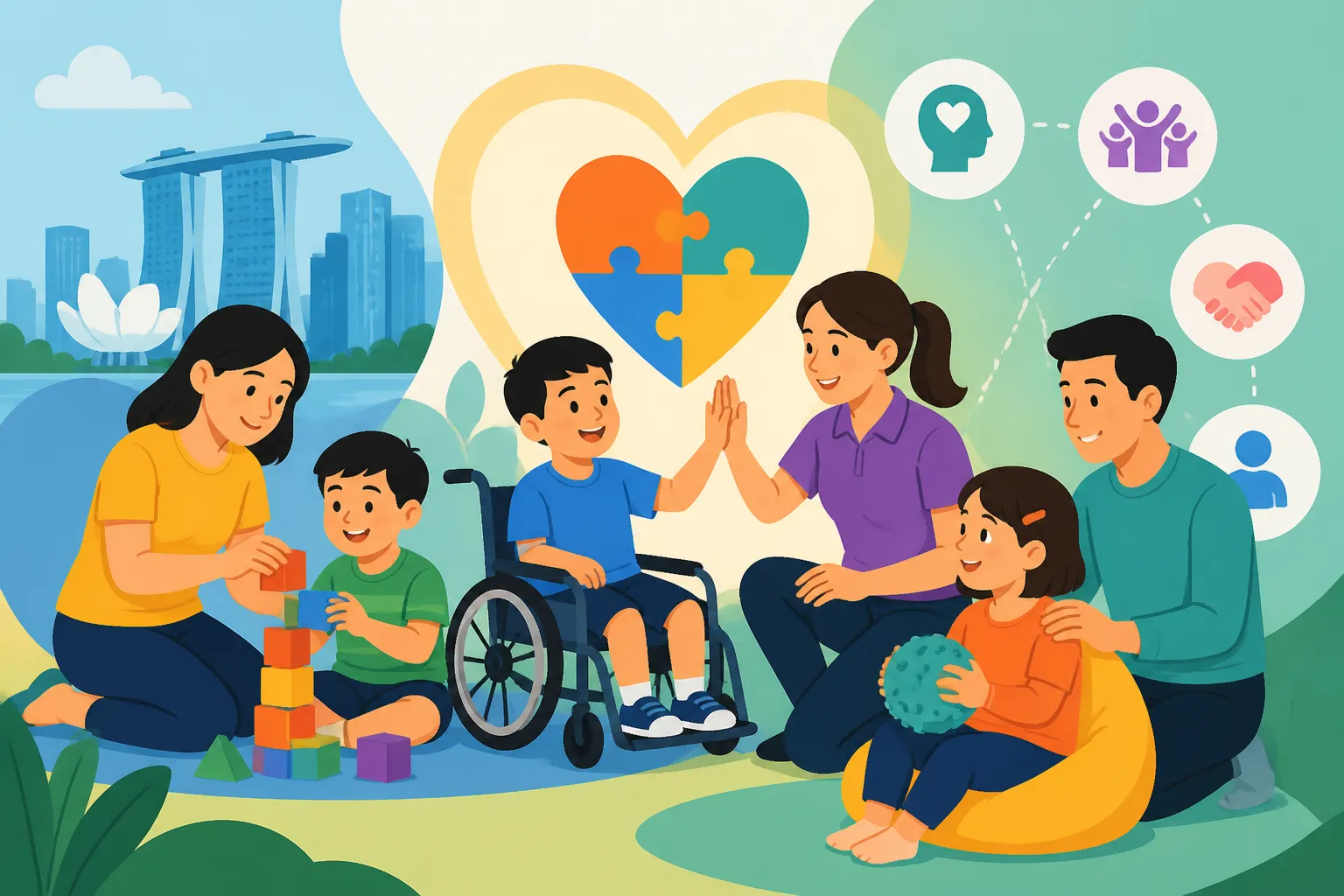
Special Needs Children: Accessing Therapy and Inclusive Support Networks
Moving to Singapore with a child who needs extra support feels like trying to assemble a puzzle where half the pieces are hidden in different government buildings. I remember the sheer panic I felt when we first arrived, realizing that the support systems I relied on back home didn't have a direct equivalent here. This guide solves the confusion by mapping out the therapy landscape, schooling, and inclusive support systems available for special needs children in Singapore.
Navigating the Initial Diagnosis and Assessment Process
One of the first hurdles you will face is securing a formal diagnosis that is recognized by Singaporean institutions. Whether you are looking for an assessment for Autism Spectrum Disorder (ASD), ADHD, Global Developmental Delay (GDD), or dyslexia, the path you choose—public or private—will drastically change your experience in terms of time and cost.
The Public Hospital Route for Expats
In Singapore, the main public hubs for developmental assessments are the Department of Child Development (DCD) at KK Women’s and Children’s Hospital (KKH) and the Child Development Unit (CDU) at the National University Hospital (NUH). For expats, the public route is often a test of patience. Even if you have a referral from a local polyclinic, you will be classified as a "private patient" if you are on an Employment Pass, meaning you pay higher rates and still face the same long waitlists as everyone else.
Families can wait six to nine months just for an initial consult at KKH. While the multidisciplinary teams there are world-class, the bureaucracy can be draining. If your child is struggling and you need an assessment to secure a spot in a school, this wait time might be unacceptable. You can learn more about how the general system works in our Singapore Healthcare System for Expats: Complete 2027 Guide.
Private Developmental Pediatricians and Psychologists
If time is of the essence, the private sector is where most expats land. Clinics like Dynamics, Psychology Partnership, or The Little Company offer comprehensive assessments within weeks rather than months. These assessments are vital because they provide the "Educational Psychologist Report" that most international schools require for learning support placement.
Private assessments are thorough but expensive, often ranging from S$1,500 to S$4,000 depending on the complexity. However, the rapport you build with a private developmental pediatrician can be a lifeline. They often act as the "case manager" for your child’s journey in Singapore, helping you navigate the local landscape of therapists and schools. When looking for the right fit, it helps to check our guide on Finding a Pediatrician Who Speaks Your Native Language.
School Based Assessments and Early Screening
Some international schools have their own internal screening processes, but these are rarely a substitute for a formal clinical diagnosis. If you suspect your child has a learning difference but aren't ready for a full clinical battery, many preschools in Singapore participate in the Development Support (DS) and Learning Support (LS) programs. These are designed to catch mild delays early.
However, as an expat, you must be proactive. In the local system, teachers might wait for you to bring it up to avoid "losing face" or causing offense. You have to be the advocate. If the school mentions your child is "very active" or "quiet," read between the lines and ask for a formal observation. This is a crucial part of the Family Health Guide: Maternity, Pediatrics, and Child Development.
Essential Therapies and Where to Find Them
Once you have a diagnosis, the next step is building a therapy team. Singapore has a very high standard of clinical care, but it is highly fragmented. You won't always find "one-stop shops," so you may find yourself driving from Orchard to Bukit Timah to Novena to see different specialists.
Occupational Therapy and Sensory Integration
Occupational Therapy (OT) is perhaps the most sought-after service in Singapore. With many children living in high-rise condos with limited outdoor play, sensory processing issues can become more pronounced. Many OT clinics here specialize in Sensory Integration (SI), using "gym" environments with swings, ball pits, and climbing walls.
When searching for a clinic, look for those that offer school observations. A therapist who only sees your child in a controlled clinic room is only seeing half the picture. The best OTs in Singapore will travel to your child’s international school to suggest environmental tweaks, like weighted vests or fidget tools, to help them succeed in class. You can find more details on this in our section on Accessing Speech and Occupational Therapy for Kids.
Speech and Language Therapy
Speech and Language Therapy (SLT) in Singapore is excellent, but waitlists for the most popular therapists are legendary. Many SLTs here are trained in the UK, Australia, or the US, making the transition easier for expat children. There is a strong focus on social communication and "Social Thinking" frameworks, which is great for children who struggle with the social nuances of a multicultural environment like Singapore.
Be aware that some clinics focus heavily on the "medical" side of speech (feeding and swallowing), while others are purely "educational" (articulation and social cues). Always ask about their specific area of expertise before booking. If you are also managing other health needs for your family, consider how this fits into your Mental Health in Singapore: Counseling, Psychiatry, and Expat Support.
Applied Behavior Analysis and Early Intervention
For children with ASD, Applied Behavior Analysis (ABA) is widely available. In Singapore, ABA is often delivered through intensive early intervention centers or via home-based therapy. Home-based ABA is a popular choice for expats because it allows the therapist to work within the child's natural environment, often involving the family's domestic helper in the process.
If you choose a center-based approach, you will encounter the term EIPIC (Early Intervention Programme for Infants & Children). While these centers are excellent, they are heavily subsidized for Singaporeans, and the spots for foreigners are limited and very expensive. Most expat families opt for private "Early Intervention Centers" that follow a similar curriculum but at a higher price point.
Educational Options for Inclusive Learning
Finding a school is often the biggest stressor for special needs parents moving to Singapore. The local Ministry of Education (MOE) schools are generally not an option for children with significant needs who are not citizens or PRs, as the system is already stretched to accommodate locals.
International Schools with Robust Learning Support
Not all international schools are created equal when it comes to inclusion. Some have "Tier 1" support, which is mostly for mild dyslexia or ADHD, while others have "Tier 3" support for children who need a modified curriculum or a dedicated "Shadow Teacher."
Schools like Dover Court International School and Tanglin Trust School are well-known for their inclusive paths. Dover Court, for instance, has a "Learning Support Redress" program that offers small class sizes for children with more significant needs. However, these spots are like gold—waitlists can be years long, and you often have to pay a "Learning Support fee" on top of already high tuition. Check out our guide on International Schools in Singapore: Choosing the Right Curriculum for a deeper dive into these options.
Specialized Private Schools
If your child cannot thrive in a mainstream international school even with support, there are specialized private schools. The Winstedt School is a popular choice for children who learn differently, offering a high teacher-to-student ratio and integrated therapy. For children with more intensive needs, schools like Eden School or Rainbow Centre exist, but they primarily serve the local community. Expats can sometimes access them, but the fees are significantly higher for non-residents.
It is vital to be honest with school admissions teams. Some families try to "hide" a diagnosis to get through the door, only for the child to be asked to leave three months later because the school couldn't meet their needs. This creates a traumatic "school-hopping" cycle that is best avoided.
The Role of Shadow Teachers
In Singapore, many mainstream international schools will allow your child to attend only if you provide a "Shadow Teacher" (also known as a Learning Support Assistant). This is an additional person who stays with your child throughout the school day.
The tricky part? Most schools require the parents to hire and pay for the shadow teacher directly. This can add an extra S$3,000 to S$5,000 per month to your expenses. Finding a qualified shadow teacher is often done through private agencies or word-of-mouth in expat parent groups. It is a massive financial and logistical commitment that many families don't account for in their initial relocation budget.
| Service Type | Estimated Monthly Cost (S$) | Waitlist Expectation |
|---|---|---|
| Private OT/Speech (1x week) | S$800 – S$1,200 | 2 – 4 Weeks |
| Private ABA (10 hours/week) | S$2,500 – S$4,500 | 1 – 2 Months |
| Specialized School Fees | S$3,500 – S$5,500 | 6 – 12 Months |
| Shadow Teacher (Full Time) | S$3,500 – S$6,000 | Variable |
| Public Hospital Assessment | S$500 – S$1,000 | 6 – 9 Months |
Navigating Costs and Insurance Coverage
The "Expat Penalty" is real when it comes to special needs in Singapore. Because you don't have access to the heavy subsidies provided to citizens by SG Enable, you will be paying the full market rate for every intervention.
The Realities of Insurance for Special Needs
Most standard corporate health insurance plans in Singapore do not cover "developmental" or "behavioral" conditions. They often classify therapy for ASD or ADHD as "educational" rather than "medical," which can be a devastating surprise for new arrivals.
This is where specialized expat insurance becomes critical. Brands like Cigna Global are often preferred by families with special needs because they offer modular plans where you can specifically include higher limits for outpatient therapies. Cigna Global is known for its comprehensive international reach, which is vital if your child needs to see specialists in your home country as well. On the other hand, SafetyWing is an excellent option for more flexible, "digital nomad" style expats who need reliable coverage that can be started even after you've left your home country. SafetyWing provides a safety net that is particularly useful for families who are transitioning between jobs or waiting for a corporate plan to kick in.
Managing Out-of-Pocket Expenses
Even with good insurance, you should expect significant out-of-pocket costs. Many parents in Singapore use their Supplementary Retirement Scheme (SRS) or other savings vehicles to buffer these costs. It’s also worth checking if your employer offers a "Flexible Spending Account" (FSA) that can be used for therapy.
Parents should keep every single receipt and "Letter of Medical Necessity" from their doctor. Sometimes, you can negotiate with insurance providers like Cigna Global if you can prove that the therapy is for a specific medical rehabilitation goal rather than just general "learning support." For more on managing these high costs, see our article on Healthcare Budgeting in Singapore: Managing Out-of-Pocket Costs.
Leveraging Community Resources and Charities
While many government grants are restricted to PRs and Citizens, some non-profits and charities in Singapore are more inclusive. Organizations like CaringSG or the Rare Disorders Society (Singapore) offer emotional support and networking for all parents, regardless of nationality.
For those on the path to PR, it’s important to understand how your child's condition might be viewed during the application. It is a sensitive topic, but you should read our guide on Medical Checkup for PR: What Conditions Can Cause a Rejection? to understand the long-term immigration landscape.
Building a Social Support Network
Isolation is the biggest enemy of a special needs parent in a foreign country. In Singapore, the "kiasu" (fear of losing out) culture can sometimes make it feel like every child is a high-achiever, which can be demoralizing when your child is struggling with basic milestones.
Expat Parent Groups and Online Forums
The Facebook group "Special Needs Parents Singapore" is an absolute goldmine of information. It’s where you’ll find the "real" reviews of therapists and schools that you won't find on official websites. Whether you need to find a dentist who can handle a sensory meltdown or a hairdresser who specializes in children with autism, these groups are your best resource.
Connecting with other families who are using Cigna Global or SafetyWing can also help you navigate the nuances of local insurance claims. Sharing "battle stories" about the Expat Health Insurance in Singapore: Public vs Private Coverage can save you hours of administrative headache.
Respite Care and Domestic Help
One unique "pro" of living in Singapore is the availability of live-in domestic help. Many expat families hire a Foreign Domestic Worker (FDW) specifically to help with their special needs child. While an FDW is not a trained therapist, many agencies specialize in "caregiver" helpers who have nursing backgrounds or experience with elderly or disabled care.
Having that extra pair of hands to help with therapy homework or to stay with your child so you can have a night out is a game-changer for parental mental health. Just ensure you are clear about the expectations and provide proper training for the helper.
Extracurriculars and Inclusive Play
Singapore is becoming much more inclusive in its public spaces. Many "ActiveSG" gyms and swimming complexes offer inclusive programs. There are also specialized "Inclusive Playgrounds" (like the one at Bishan-Ang Mo Kio Park) designed for children of all abilities.
Look for "Sensory Friendly" movie screenings at Golden Village cinemas or quiet hours at major attractions like Gardens by the Bay. These small wins make life in Singapore much more manageable. If you are preparing for your child’s future, you might also want to look into Where to Get an Autism Assessment for Your Child in Singapore to ensure you have the most up-to-date documentation.
Managing Long-Term Logistics and Transitions
As your child grows, the challenges in Singapore change. The transition from "Early Intervention" to "Primary School" is a major hurdle, as is the eventual transition to adulthood and vocational training.
Visa Implications and Renewals
For those on an Employment Pass, your child’s stay is tied to your visa. If your child has a condition that requires significant medical intervention, it is worth keeping a close eye on the Understanding Corporate Health Insurance vs Personal Medical Plans to ensure there are no gaps in coverage during job transitions.
Singapore’s immigration authorities are generally compassionate, but they do look at the "long-term dependency" of a child when evaluating PR applications. Being well-integrated into the local community and showing a stable financial plan for your child’s care can help your case.
Planning for the "Cliff" at Age 18 or 21
Many of the support systems for children in Singapore disappear or change significantly once they hit 18 or 21. For expat families, this often means a move back to their home country where adult social services might be more accessible.
If you plan to stay long-term, start looking at "Special Needs Trusts" or the "Special Needs Savings Scheme" (though these are often limited to PRs/Citizens). It’s never too early to start thinking about the long-term financial reality. This is a topic we touch on in our Long-Term Health: Screenings, Vaccinations, and Chronic Care guide.
Final Thoughts on Advocacy
The most important thing I learned is that in Singapore, you have to be the loudest advocate for your child. The system is efficient, but it is not always flexible. Whether you are fighting for a place in an international school or negotiating with a provider like SafetyWing or Cigna Global, your persistence is what will get your child the support they need.
Living here with a special needs child is expensive and often exhausting, but the quality of the therapists and the safety of the environment provide a foundation that is hard to find elsewhere in the region. Take it one "assessment" at a time, and don't forget to look after your own Mental Health in Singapore: Counseling, Psychiatry, and Expat Support along the way.
Medical Disclaimer
The information provided in this guide is for educational and informational purposes only and does not constitute medical or legal advice. Always seek the advice of a qualified healthcare provider or developmental specialist regarding a medical condition or the healthcare needs of your child. Access to subsidies and specific programs in Singapore is subject to government policy changes and individual residency status.