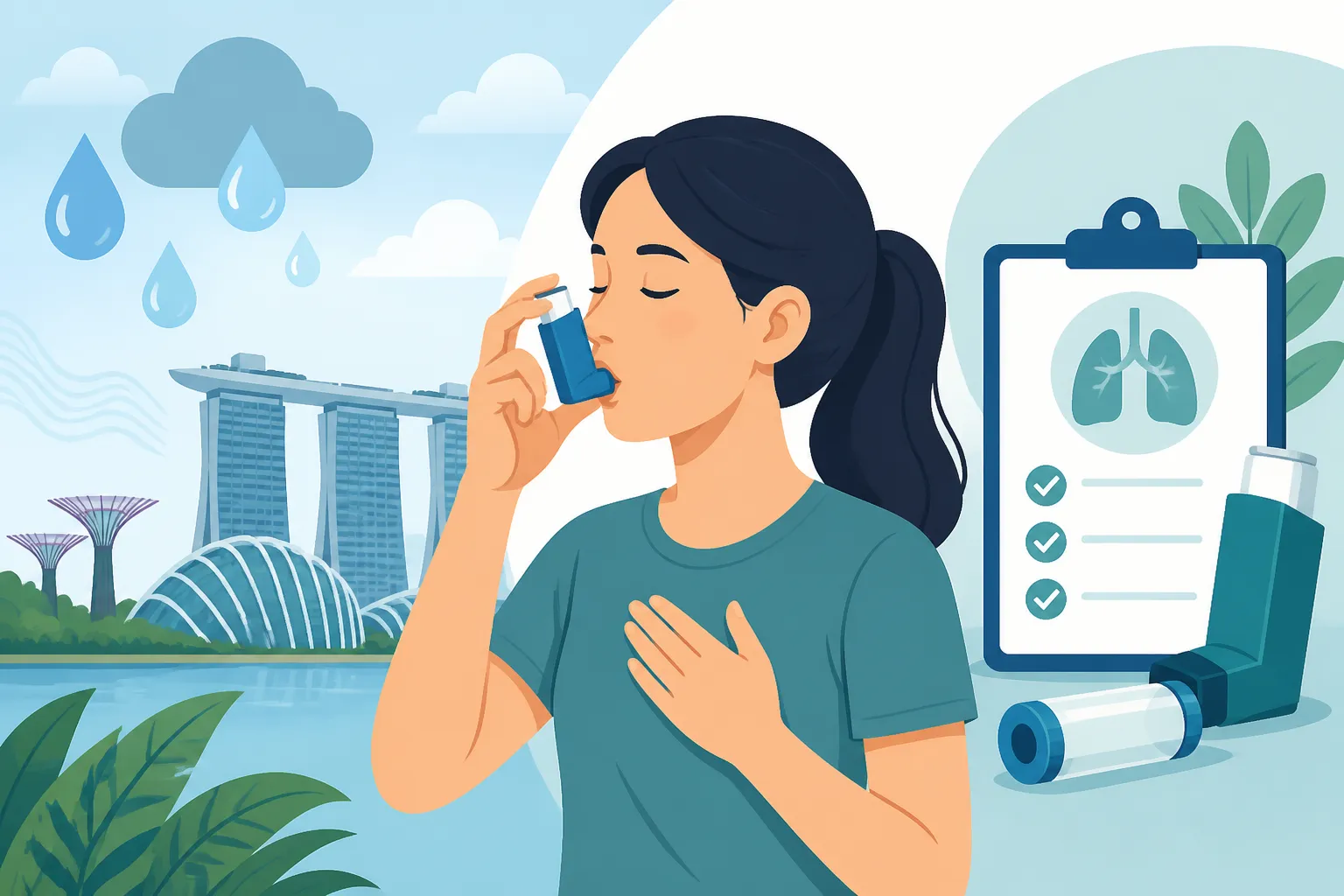
Managing Asthma in Singapore: Humidity and Inhaler Prescriptions
Stepping off the plane at Changi Airport for the first time feels like walking into a warm, wet blanket that wraps itself tightly around your chest. I remember my own first week in the Red Dot; I was so focused on finding an apartment that I completely ignored the wheeze developing in my lungs until I couldn't ignore it anymore. This guide will walk you through the realities of managing asthma in Singapore, from navigating the high humidity to securing the right inhaler prescriptions.
Understanding the Tropical Triggers: Humidity and the Haze
The Singaporean climate is a double-edged sword for respiratory health. While the lack of a cold winter means you won't suffer from traditional "cold-weather asthma," the relentless 80% to 90% humidity presents its own set of challenges. For many of us who moved from drier climates, the transition is far from seamless. High humidity is the perfect breeding ground for dust mites and mold, both of which are primary triggers for asthma attacks.
In my experience, the humidity doesn't just affect you when you are outdoors. If you aren't careful with your air conditioning settings, mold can begin to grow behind wardrobes or inside your AC units within weeks. This creates a localized environment of allergens that can make sleeping through the night a genuine struggle. Beyond the moisture, we have to talk about the "Haze." This is a transboundary smoke problem caused by peat fires in the region, usually occurring between June and October. During a bad haze year, the Pollutant Standards Index (PSI) can reach levels that are hazardous even for healthy individuals, let only those of us with sensitive airways.
To stay ahead of these triggers, you need to be proactive. I highly recommend Buying an Air Purifier in Singapore: HEPA Filters for Haze Season before the smell of smoke even hits the air. Waiting until the haze arrives usually means finding every electronics store in the city sold out of stock. Additionally, learning how to manage your home environment by Using Dehumidifiers and "Thirsty Hippos" to Prevent Closet Mold is essential for keeping your indoor air quality high enough to breathe easily.
Navigating the Singapore Healthcare System for Asthma Care
Once you realize that your asthma needs professional management, you have to decide where to go. Singapore’s medical landscape is world-class, but it can be confusing for a newcomer. You essentially have two paths: the public sector (Polyclinics and Public Hospitals) and the private sector (GP Clinics and Private Hospitals).
For routine asthma management, most expats start by Choosing a Primary Care Physician (GP) in Singapore. A private GP clinic is usually located in every neighborhood and mall. The wait times are significantly shorter than at public polyclinics, and you can often build a long-term relationship with a single doctor who understands your history. However, if your asthma is severe or "brittle," you may need to see a pulmonologist. In Singapore, you should understand Specialist Referrals: Do You Need a GP Before Seeing an Expert? before you try to book a specialist appointment. While you can go directly to a private specialist, having a GP referral can sometimes help with insurance claims or navigating the public system if you are a Permanent Resident.
If you are just arriving and feeling overwhelmed by the choices, looking into the Singapore Healthcare System for Expats: Complete 2027 Guide will give you the bird's-eye view you need to make an informed decision. I personally found that having a reliable GP near my office made it much easier to get my prescriptions refilled without taking a half-day off work.
Comparing Public vs. Private Asthma Care for Foreigners
| Feature | Public Polyclinic | Private GP Clinic |
|---|---|---|
| Wait Times | Can be 1–3 hours without an appt | Usually 15–30 minutes |
| Consultation Fee | S$50–S$70 (for foreigners) | S$40–S$100+ |
| Medication Cost | Regulated, often cheaper | Market rates, can vary by brand |
| Continuity of Care | You may see a different doctor | Same doctor every visit |
| Ease of Booking | Via HealthHub app | Phone or walk-in |
Inhaler Prescriptions and Medication Management
One of the biggest shocks for many expats is finding out that their prescription from home isn't valid at a local pharmacy. I learned this the hard way when I tried to get a Ventolin refill with a UK script and was politely turned away. You should know Why You Need a Local Doctor’s Prescription for Your Regular Medication early on. The Health Sciences Authority (HSA) in Singapore has strict regulations, and while the brands are often the same—think Ventolin, Seretide, Symbicort, and Advair—a local doctor must sign off on them.
When you visit a clinic, the doctor will likely perform a peak flow test or a spirometry test if you are a new patient. Once they have established your baseline, they will issue a prescription. Interestingly, in Singapore, most clinics dispense medication directly to you. You don't always have to take a slip to a separate pharmacy like Guardian or Watsons. This is incredibly convenient but can be more expensive than buying from a dedicated hospital pharmacy. For more details on this, check out Pharmacies and Medication in Singapore: Prescriptions and OTC Rules.
If your asthma is part of a broader set of health issues, you might find that Healthcare Budgeting in Singapore: Managing Out-of-Pocket Costs becomes a priority. Many maintenance inhalers, especially the combination preventers like Seretide or Foster, can cost between S$80 and S$130 per unit. If you are using these monthly, the costs add up quickly.
Insurance Coverage for Chronic Conditions
Managing a chronic condition like asthma as an expat requires a bit of strategic planning regarding insurance. Most corporate plans provided by employers in Singapore are "inpatient-focused," meaning they cover hospital stays but might be stingy when it comes to outpatient specialist visits and monthly inhaler costs. It is vital to spend time Understanding Corporate Health Insurance vs Personal Medical Plans to see where your gaps lie.
For those who move frequently or don't have a robust local employer plan, international health insurance is often the safest bet. Brands like Cigna Global are popular among the expat community because they offer modules specifically for outpatient care and chronic condition management, which can be a lifesaver if you require regular pulmonologist check-ups. On the other hand, if you are a digital nomad or on a shorter-term assignment, SafetyWing provides a flexible "Nomad Insurance" that covers unexpected medical emergencies, though you should always check their specific terms regarding pre-existing condition flare-ups.
Newcomers are often advised that having a personal backup policy is better than relying solely on the company. If you lose your job, your coverage often ends immediately, leaving you to pay full price for your asthma care during a very stressful time. Taking the time to research Expat Health Insurance in Singapore: Public vs Private Coverage can prevent a financial headache later on.
Lifestyle Adjustments for Breathing Easier
Living with asthma in Singapore isn't just about the medicine; it's about how you live. The tropical heat means we spend a lot of time in air-conditioned spaces. While the cool air feels great, AC units act as dehumidifiers and can sometimes make the air too dry, which can also trigger a cough in some asthmatics. Moreover, if the filters aren't cleaned regularly, they blast dust and mold spores directly into your face. I make it a rule to have my home aircon units professionally serviced every three months—it’s a standard clause in most tenancy agreements anyway.
During the Haze season, lifestyle adjustments become mandatory. You’ll want to keep an eye on the NEA (National Environment Agency) website for the 24-hour PSI readings. When the levels go above 100, it’s time to move your workouts indoors. Most condos have decent gyms, or you can look into Finding Medical Care: Hospitals, Polyclinic, and GP Networks that offer health screenings to check your lung function before and after the haze season.
I also recommend keeping a "rescue kit" in your bag at all times. Singapore is a walking city, and the combination of sudden tropical downpours (which increase humidity) and high levels of vehicle emissions in areas like Orchard Road can cause a sudden tightening of the chest. Having your inhaler and a copy of your doctor’s contact details is just basic "expat survival 101."
Emergency Situations and Acute Attacks
Even with the best management, sometimes an attack gets out of control. In Singapore, if you find yourself unable to breathe, you need to know the difference between the various emergency services. Calling 995 will get you a SCDF (Singapore Civil Defence Force) ambulance, which will take you to the nearest public hospital. You can learn more about this in our guide on Emergency Medical Care in Singapore: Ambulances and A&E Wards.
Public hospital A&E departments are incredibly efficient but use a triage system. If you are having an active asthma attack, you will be seen almost immediately. However, if your condition is stable, be prepared for a wait. If you have premium insurance, such as a plan from Cigna Global, you might prefer to go to a private hospital A&E like Mount Elizabeth or Gleneagles for a more comfortable (and faster) experience.
It is also worth noting that many neighborhood clinics stay open late. If you have a mild flare-up at 10 PM, searching for a 24-hour clinic might save you a trip to the hospital. Always keep your FIN (Foreign Identification Number) or passport handy, as you cannot be registered at any medical facility without it.
Final Advice for the Breathless Expat
Managing asthma in Singapore is entirely doable, but it requires more vigilance than it might in a temperate climate. Between the mold-inducing humidity and the periodic haze, your lungs are working harder than they used to. Be sure to find a doctor you trust early on, get your local prescriptions sorted, and invest in high-quality air filtration for your home. With the right preparation, you can enjoy everything this vibrant city-state has to offer without constantly reaching for your rescue inhaler.
Medical Disclaimer
This article is for informational purposes only and does not constitute professional medical advice, diagnosis, or treatment. Always seek the advice of your physician or other qualified health provider with any questions you may have regarding a medical condition. Never disregard professional medical advice or delay in seeking it because of something you have read on this website. If you think you may have a medical emergency, call your doctor or the emergency services immediately at 995.