Expat Health Checklist for the First 30 Days in Singapore
Landing in Changi with your suitcases is exhilarating, but the reality of the humidity and the administrative mountain ahead hits hard within 48 hours. I remember my first week in Bukit Timah, sweating through my professional attire while trying to find a GP who wouldn't charge me a fortune just because I held an Employment Pass. This guide solves that initial "healthcare panic" by providing a structured checklist for your first 30 days in the Lion City.
Week One Securing the Administrative Essentials
Your first seven days are largely about paperwork and ensuring your legal status is solidified. In Singapore, healthcare and immigration are inextricably linked. You cannot effectively access the local system without your FIN (Foreign Identification Number) and the digital keys that come with it.
Completing Your Mandatory Medical Examination
Most expats arriving on an Employment Pass or S Pass must undergo a medical screening before their physical card is issued. This isn't just a suggestion; it's a requirement from the Ministry of Manpower (MOM). I vividly recall the confusion of my first screening—I hadn't realized I needed a specific form from my employer before showing up at the clinic. Ensure you have your in-principle approval (IPA) letter and the official medical form ready.
You can visit any registered clinic in Singapore, though many expats head to SATA CommHealth or Raffles Medical Group for efficiency. They will check for tuberculosis via X-ray, HIV via blood tests, and perform a general physical. It is vital to read up on the Mandatory Medical Examinations for Employment Passes and PR Applications to understand exactly what tests apply to your specific visa category, as missing a single blood work component can delay your pass issuance by weeks.
Setting Up Your Singpass and HealthHub
Once your FIN is issued, your next priority is registering for Singpass. This is Singapore’s national digital identity. Without it, you are essentially locked out of the most convenient parts of the healthcare system. For example, the HealthHub app allows you to see your lab results, immunization records, and even book appointments at public institutions.
While you wait for your physical pass to arrive in the mail, you can often use your IPA letter to get things started, but the full digital experience kicks in once your card is in hand. I made the mistake of ignoring Singpass for my first month and ended up carrying a folder of physical medical receipts and paper records to every appointment—don't be like me.
Activating Your Initial Insurance Coverage
Do not spend a single night in Singapore without active health insurance. The "safety net" here is designed for citizens, and as a foreigner, you are responsible for 100% of your costs. Many expats rely on companies like SafetyWing for those first few weeks of transition, especially if they are digital nomads or waiting for their corporate plan to kick in.
If your employer provides a plan, ask for the policy handbook immediately. You need to know if it covers inpatient only or includes outpatient GP visits. If you find your corporate coverage lacking, you might look into a comprehensive policy from Cigna Global to ensure you have high-limit protection that follows you if you travel within the region. Understanding Expat Health Insurance in Singapore: Public vs Private Coverage is the only way to avoid a five-figure bill for a simple appendectomy.
Week Two Building Your Local Medical Network
By day eight, the jet lag should be fading, and you’ll start noticing how the tropical climate affects your body. This is the time to find your "home base" for medical care before you actually get sick.
Finding a Primary Care Physician GP
In Singapore, you have two main choices for primary care: private clinics and Polyclinics. Private clinics are everywhere—literally in every shopping mall and under many HDB blocks. They are convenient, have shorter wait times, and often offer a more personalized touch. On the other hand, Polyclinics are government-run hubs that offer high-quality care but come with much longer queues.
For an expat, the cost difference can be surprising. While citizens get heavy subsidies at Polyclinics, you will pay a "non-resident" rate which might be similar to or only slightly less than a private GP. It’s worth researching Polyclinic vs Private Clinics: Waiting Times and Cost Differences to decide which fits your lifestyle. I personally prefer a private GP near my office for those quick "I have a sinus infection" visits, but I keep the Polyclinic app ready for more comprehensive screenings.
Registering with a Specialist if Necessary
If you have a pre-existing condition, such as asthma or a thyroid issue, do not wait until your medication runs out to find a specialist. Singapore’s medical system is top-tier, but popular specialists at Mount Elizabeth or Gleneagles can have waiting lists. You should proactively look into Choosing a Primary Care Physician (GP) in Singapore who can provide you with the necessary referrals to the private specialist network.
| Healthcare Provider Type | Typical Wait Time | Best For | Expat Pricing |
|---|---|---|---|
| Private GP (Mall Clinic) | 10 – 30 Minutes | Minor ailments, MCs | S$40 – S$80 per visit |
| Government Polyclinic | 1 – 3 Hours | Routine checkups, long-term meds | S$50 – S$100 (Non-resident) |
| A&E (Public Hospital) | 3 – 6 Hours | True emergencies | S$150+ Consultation |
| 24-Hour Private Clinic | 15 – 45 Minutes | After-hours fever or pain | S$80 – S$150 |
Locating Your Nearest 24-Hour Care
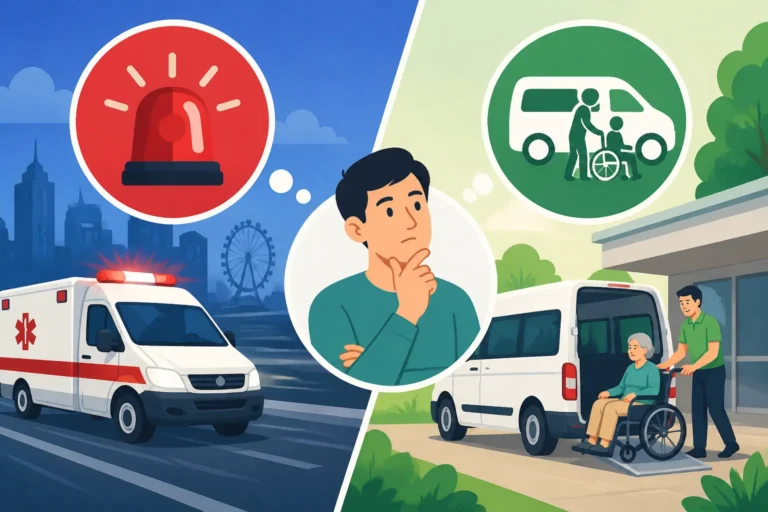
Emergencies don't happen during office hours. During my second week, my daughter developed a high fever at 2 AM. I realized then that I didn't know which hospital took kids after midnight. In Singapore, you should know the way to the nearest A&E. Public hospitals like SGH or NUH are excellent, but private options like Raffles Hospital provide faster service if your insurance, perhaps through Cigna Global, covers the higher premium costs. Take ten minutes to save Emergency Numbers: Calling 995 for Ambulance and 999 for Police into your phone contacts right now.
Week Three Managing Medication and Specialized Support
By your third week, you’ll likely need to restock your medicine cabinet or address those "hidden" health needs that arise when moving countries, like mental health support.
Navigating the Pharmacy System
You will quickly find that Guardian and Watsons are the kings of the retail pharmacy world here. However, they are quite different from pharmacies in the US or UK. Many medications that are over-the-counter elsewhere require a pharmacist’s intervention or even a doctor’s prescription in Singapore. For example, some strong cough syrups or allergy meds are kept "behind the counter."
If you brought a large supply of medicine from home, hopefully you checked the Bringing Prescription Medication into Singapore: HSA Approval Rules beforehand. Singapore is incredibly strict about controlled substances. If you run out, you cannot simply "refill" a foreign prescription; you must see a local doctor to get a Singapore-issued script. It's a bit of a hurdle, but the medical standards here are meant to keep you safe.
Addressing Mental Health and Transition Stress
Let’s be honest: moving to a new country is incredibly stressful. The "expat blues" usually hit around week three when the novelty wears off and the loneliness sets in. Singapore has a growing network of counselors and psychiatrists who specialize in the expat experience.
It is important to check if your insurance policy from a provider like SafetyWing or a corporate plan covers therapy. Many expats worry about the stigma, but the community here is very supportive. I found that Mental Health in Singapore: Counseling, Psychiatry, and Expat Support resources were vital for my spouse during our first six months. You might also want to look into Accessing Therapy in Singapore: Confidentiality and Insurance Coverage to understand how your medical records are handled by local clinics.
Dental and Vision Baseline
Check your teeth and eyes before you get too busy with work. Dental care in Singapore is purely private for expats, and it can be pricey. Finding a dentist you trust early on means you won't be scrambling when a filling falls out. Similarly, the bright tropical sun might mean you need to update your sunglasses prescription or get a checkup for the increased eye strain that comes with Singapore's high-tech office environments.
Week Four Adapting to the Tropical Environment
Your final week of the "first 30 days" is about long-term survival in a tropical climate. Singapore’s environment presents unique health challenges that you won't find in London or New York.
Dengue Prevention and Awareness
Dengue fever is a real risk in Singapore, and the National Environment Agency (NEA) is very aggressive about it. You’ll see "Dengue Alert" banners in different colors (Green, Yellow, Red) around your neighborhood. As a newcomer, your body has no immunity to the local strains.
Learn to spot the Aedes mosquito—it has black and white stripes. You should also familiarize yourself with Dengue Fever Prevention: Symptoms, Testing, and NEA Guidelines so you know when a fever is just a "flu" and when it's a medical emergency. I always keep a bottle of DEET-based repellent in my bag, especially when visiting the Botanical Gardens or MacRitchie Reservoir.
Managing Haze and Air Quality
Depending on the time of year you arrive (usually between June and October), you might encounter "The Haze." This is smoke from forest fires in neighboring countries that can spike the PSI (Pollutant Standards Index) to unhealthy levels. If you have asthma or respiratory issues, the haze can be dangerous.
In your first 30 days, buy a few N95 masks and consider an air purifier for your bedroom. Trust me, when the PSI hits 150, the shops sell out of purifiers in hours. Reading up on Air Quality and Haze in Singapore: Managing Asthma and Allergies will help you understand how to read the hourly PSI updates and when it's time to stay indoors.
Dealing with Humidity and Skin Health
The 90% humidity isn't just uncomfortable; it changes your skin chemistry. Many expats suffer from "heat rash" or fungal infections in their first month. I struggled with eczema that I hadn't seen since childhood until I moved to Pasir Panjang.
You need to adjust your hygiene routine—showering twice a day is the norm here. You should also look into Dealing with Humidity-Induced Skin Issues (Eczema and Heat Rash) to learn which local products actually work. Most importantly, stay hydrated. You lose significantly more water here than in temperate climates, even if you’re just sitting in an air-conditioned office.
Final Summary for the First 30 Days
By the end of your first month, you should have your FIN, your Singpass, an active insurance policy (whether it's a transition plan from SafetyWing or a long-term Cigna Global policy), and a clear idea of where your nearest GP and A&E are located. You’ve navigated the mandatory screenings and started to adapt to the "hot and wet" lifestyle of the equator.
Singapore is one of the safest and healthiest places in the world to live, but it requires an "active" approach to healthcare. You cannot be passive. Check your Do I Need Mandatory Health Insurance for an EP in Singapore? requirements one last time to ensure you aren't missing any renewals or riders. Once the logistics are settled, you can finally stop worrying about the "what ifs" and start enjoying the incredible food and culture this city has to offer.
Medical Disclaimer
The information provided in this guide is for educational and informational purposes only and does not constitute professional medical advice, diagnosis, or treatment. Always seek the advice of your physician or other qualified health provider with any questions you may have regarding a medical condition. Never disregard professional medical advice or delay in seeking it because of something you have read in this article. Healthcare regulations and insurance policies in Singapore change frequently; always verify the latest rules with the Ministry of Manpower (MOM) and the Ministry of Health (MOH).