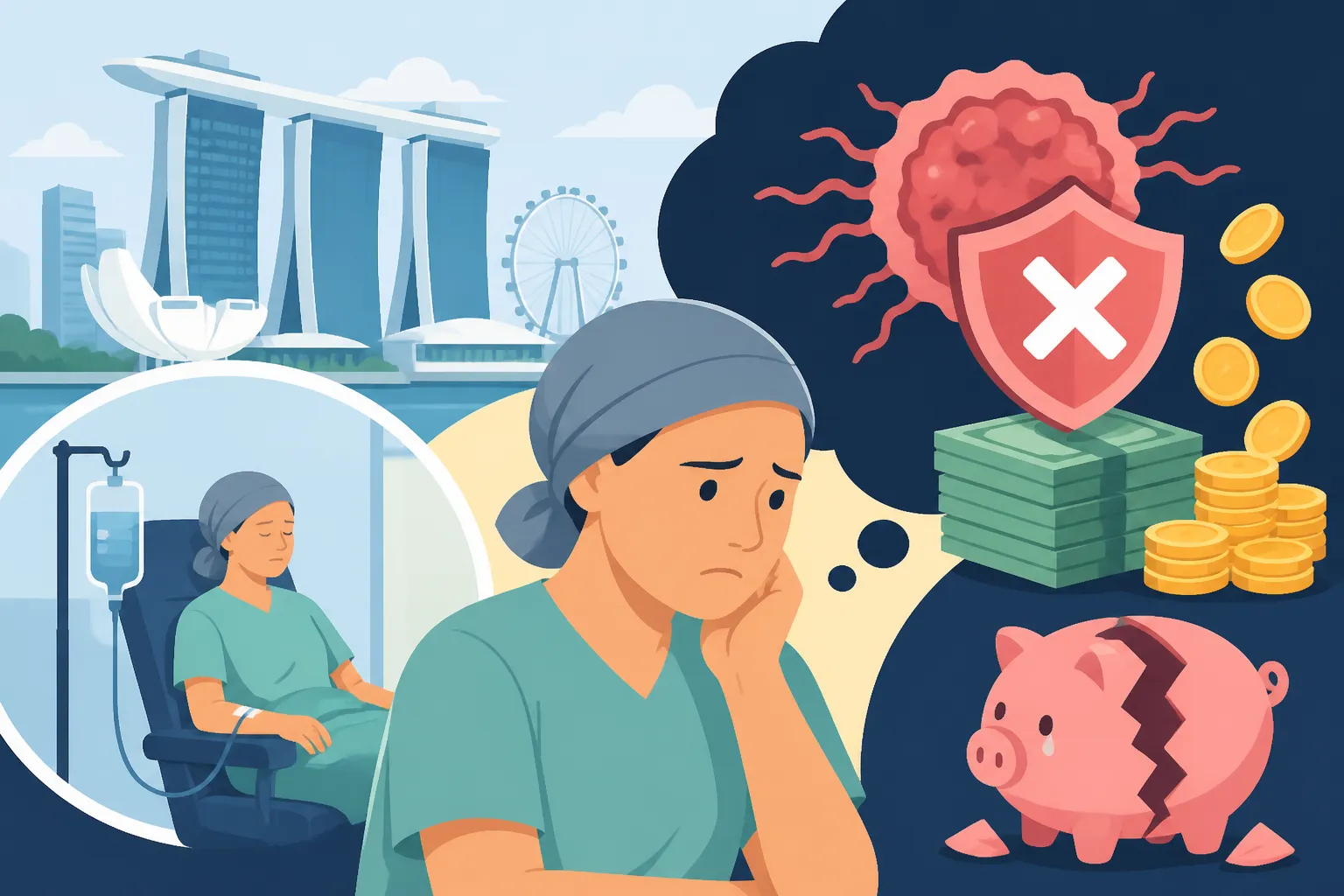
The Real Cost of Cancer Treatment for Uninsured Expats in Singapore
Navigating a serious medical diagnosis is a nightmare, but doing it in a foreign country without a local safety net is a unique kind of hell. I remember the sheer panic a former colleague felt when he received a terrifying diagnosis and realized his basic company plan would only cover the first week of his treatment. This guide breaks down the actual, unvarnished costs of cancer care for foreigners to help you prepare for the financial reality of the Singapore Healthcare System for Expats: Complete 2027 Guide.
The Myth of the Cheap Public Hospital
When you first arrive in the Little Red Dot, you might hear people talk about how world-class the public hospitals are. And they are. But there is a massive caveat that most newcomers don't realize until it's too late: the subsidy system is not for you. As an expat on an Employment Pass or an S Pass, you are essentially treated as a "private" patient even in a public institution.
In the local system, subsidies are reserved for Citizens and Permanent Residents. While a local might have 50% to 80% of their bill covered by the government, you will be billed at the "International" or "Ward A" rate. Many foreigners walk into a public hospital thinking they were choosing the budget-friendly option, only to realize that Why Expats Are Excluded from MediShield Life and CPF Subsidies means their final bill is remarkably close to what they would have paid at a boutique private clinic.
If you are uninsured, the public system will still require a significant deposit upfront—often ranging from S$10,000 to S$50,000 depending on the suspected severity of your condition. This is a cold, hard reality that requires meticulous Healthcare Budgeting in Singapore: Managing Out-of-Pocket Costs before you even start your first round of tests.
Breaking Down Diagnostic Costs and Imaging
Before treatment even begins, the diagnostic phase can easily drain a modest savings account. Unlike back home, where you might wait weeks for an MRI but pay nothing out of pocket, here the speed is incredible—but the price tag is immediate.
A standard PET-CT scan, which is essential for staging many types of cancer, can cost anywhere from S$2,500 to S$4,500. Then there are the biopsies. Depending on whether the biopsy is simple or requires Specialized Surgery in Singapore: Orthopedics, Cardiology, and Oncology, you could be looking at another S$5,000 to S$15,000.
I’ve had friends who spent over S$20,000 just to get a definitive name for what was making them sick. This is the stage where you realize why Expat Health Insurance in Singapore: Public vs Private Coverage is so critical. Without a plan from a provider like Cigna Global, these diagnostic costs must be paid via credit card or bank transfer before you even see an oncologist to discuss a survival plan.
The Financial Weight of Chemotherapy and Immunotherapy
This is where the numbers shift from "expensive" to "life-altering." In 2026, the cost of cancer drugs in Singapore has continued to rise, driven by the introduction of highly effective but incredibly pricey immunotherapy drugs.
For a foreigner, a single cycle of chemotherapy can cost between S$3,000 and S$10,000. Most patients require multiple cycles, often six to twelve, depending on the protocol. If your oncologist recommends immunotherapy—which has become the gold standard for many lung and skin cancers—the cost can jump to S$15,000 or even S$25,000 per dose, administered every three weeks.
When you look at these numbers, the "limit" on your company’s group insurance usually looks laughably small. Most corporate plans in Singapore have an annual limit of S$30,000 to S$50,000. In a cancer scenario, that might not even cover the first two months of drugs. This is exactly why many veterans in the expat community supplement their work coverage with a high-limit international policy from Cigna Global or look into flexible options like SafetyWing to ensure they aren't left stranded mid-treatment.
Estimated Costs of Cancer Treatment for Foreigners in 2026
| Service Category | Public Hospital (Unsubsidized) | Private Hospital (e.g., Gleneagles) |
|---|---|---|
| Specialist Consultation | S$200 – S$400 | S$400 – S$800 |
| PET-CT / MRI Scans | S$2,000 – S$3,500 | S$3,500 – S$5,500 |
| Major Surgery (Inpatient) | S$30,000 – S$60,000 | S$60,000 – S$120,000+ |
| Chemotherapy (Per Cycle) | S$3,000 – S$8,000 | S$6,000 – S$15,000 |
| Immunotherapy (Per Dose) | S$12,000 – S$20,000 | S$15,000 – S$25,000 |
| Daily Ward Charges (Single) | S$600 – S$900 | S$900 – S$1,500 |
Hospitalization and the Private vs. Public Choice
If your treatment requires surgery, you have to choose your battleground. Many expats prefer Mount Elizabeth, Gleneagles, and Raffles: Premium Private Hospitals because the speed of service is unparalleled. You can often have a tumor removed within 48 hours of diagnosis. However, the surgeon’s fees, anesthetist’s fees, and operating theater charges in these facilities are not regulated in the same way public "benchmarks" are.
A major cancer surgery in a private hospital can easily exceed S$100,000 once you factor in five days of recovery in a private room. In a public hospital like SGH or NUH, you might save 20% to 30%, but you are still looking at a high five-figure bill.
Beyond the surgery, you have to consider Post-Surgery Rehabilitation Centers and At-Home Nursing Care. Cancer recovery isn't just about the time on the operating table; it's the months of physical therapy and nursing that follow, all of which are billed separately and can add thousands to your monthly burn rate.
Why Your Employment Pass Is a Double-Edged Sword
There is a administrative cruelty to being an expat with a critical illness: your right to stay in the country is tied to your ability to work. If your cancer treatment is so grueling that you can no longer perform your job, your employer may eventually have to cancel your Employment Pass.
Once your pass is canceled, you typically have 30 days to leave the country. If you are in the middle of a chemotherapy protocol, traveling back to your home country might be medically impossible or incredibly dangerous. This creates a "medical hostage" situation where you are forced to pay out-of-pocket for treatment just to stay stable enough to eventually fly home.
This is the grim reality where Expat Health Insurance Portability: Keeping Coverage When You Relocate becomes the most important document you own. Having a policy from a provider like SafetyWing can sometimes offer specialized support for relocation or continued care, but if you are completely uninsured, you are effectively at the mercy of your savings account and the goodwill of the hospital's billing department.
Strategies for the Underinsured Expat
If you currently find yourself in Singapore with only basic coverage, you need to be proactive. First, sit down and do a deep dive into Understanding Corporate Health Insurance vs Personal Medical Plans. Do not assume "I'm covered" just because you have a plastic card from your HR department. Check the sub-limits for "Cancer Treatment" or "Outpatient Kidney Dialysis/Cancer." You will often find these are much lower than the "General Inpatient" limit.
If you are still healthy, now is the time to look at global providers like Cigna Global. Waiting until you have a "suspicious lump" or a "persistent cough" is too late, as these will be flagged as pre-existing conditions and excluded from any future coverage.
For those already facing a diagnosis without sufficient funds, I highly recommend speaking to the hospital's Medical Social Worker. While they primarily help locals, they can sometimes facilitate payment plans or point you toward clinical trials. You should also look into Managing Medical Disputes: Patient Rights and Filing Complaints if you feel your bill contains errors, as even a 5% discrepancy on a S$200,000 bill is a lot of money.
The Long-Tail Impact on Your Life Savings
We often talk about "surviving cancer" in medical terms, but for the uninsured expat in Singapore, there is also the "financial survival" to consider. Many families who lived a high-flying life in Orchard Road lose everything—their kids' university funds, their retirement savings, and their home equity—because they didn't account for the uncapped costs of a private medical system.
The cost of cancer here is not just the drugs; it is the loss of income, the cost of specialized diets, the high price of Pharmacies and Medication in Singapore: Prescriptions and OTC Rules for secondary infections, and the potential need for medical evacuation. If your plan doesn't include a provision for Medical Evacuation and Repatriation: Why Expats Need International Cover, the cost of a private medevac flight back to Europe or the US can start at S$150,000.
Be realistic about your situation. Singapore offers some of the best medical outcomes in the world, but it is a "pay-to-play" system for those of us without a pink IC. Don't wait for a crisis to realize your safety net has holes in it. Whether it's through a comprehensive plan with SafetyWing or a robust international policy, ensure that a health crisis doesn't become a permanent financial disaster.
Medical Disclaimer
The information provided in this guide is for educational and informational purposes only and is not intended as medical or financial advice. Healthcare costs in Singapore are subject to change and vary significantly based on individual medical needs and hospital pricing. Always consult with a qualified medical professional for health concerns and a licensed insurance advisor or financial planner regarding your specific insurance needs and coverage limits. The author and publisher are not liable for any actions taken based on the content of this article.