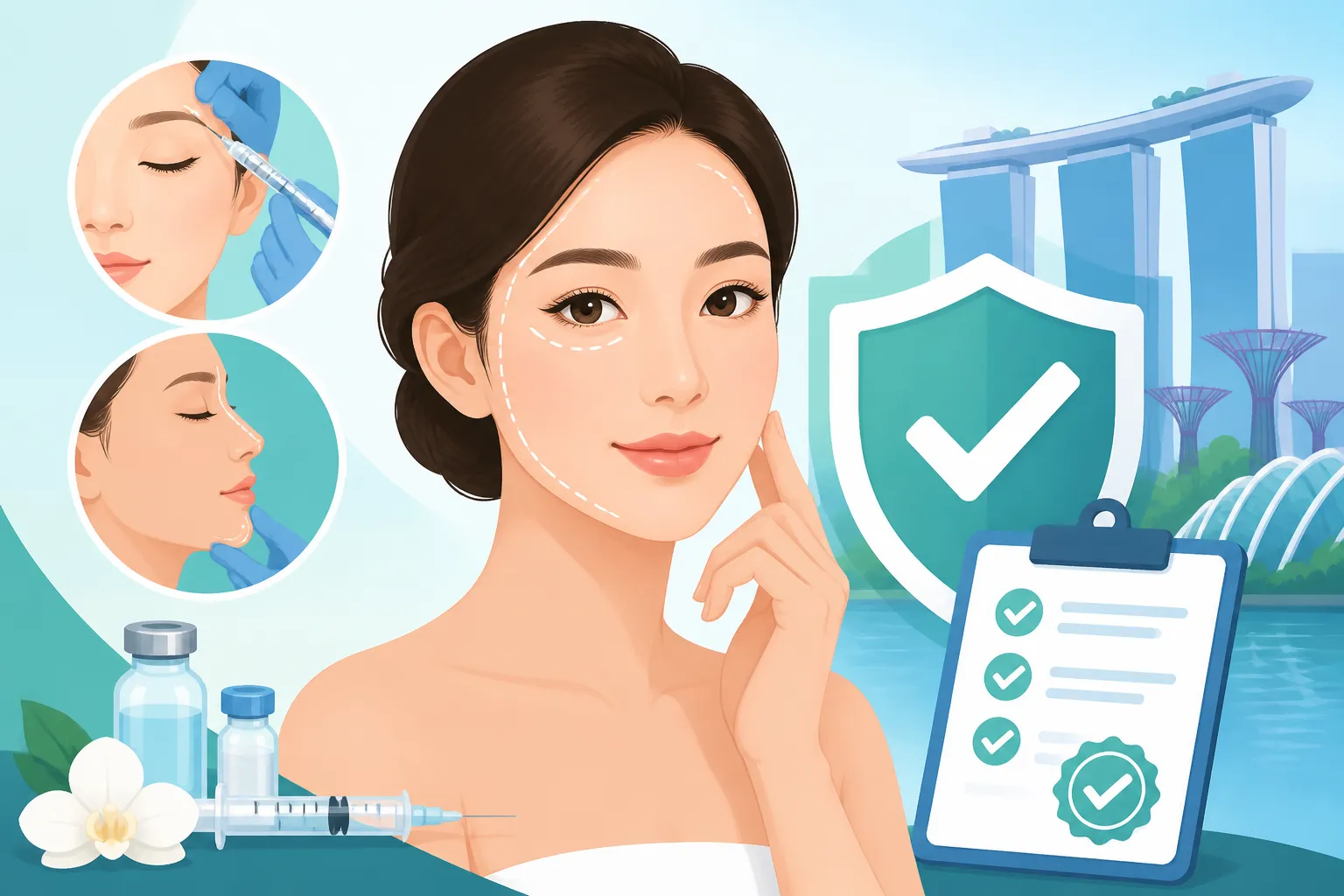
Cosmetic Surgery and Botox in Singapore: Safety and Regulations
Finding a trustworthy clinic for a little "freshening up" in a foreign country often feels like a high-stakes gamble. When I first moved to Singapore, I was overwhelmed by the sheer number of glossy clinics in Orchard Road claiming to be the best. This guide breaks down the strict regulations and safety standards to ensure your aesthetic journey is safe.
The Regulatory Framework for Aesthetic Procedures
Singapore is often lauded as the medical hub of Southeast Asia, and for good reason. The medical field here is governed by the Ministry of Health (MOH) and the Singapore Medical Council (SMC), both of which maintain a famously tight grip on what practitioners can and cannot do. If you are coming from a country where "Botox parties" in someone's living room are a thing, forget about it here. In Singapore, aesthetic procedures are categorized strictly, and only licensed medical doctors can perform them.
The SMC provides a specific "Table of Aesthetic Procedures" which classifies treatments into List A and List B. List A includes procedures with a proven track record and moderate risk, such as Botox, fillers, and certain lasers. List B covers more experimental or higher-risk treatments that require stricter oversight. As an expat, understanding this hierarchy is your first line of defense. You should always ensure that your doctor is not just a "practitioner" but a registered medical professional with the appropriate certificates of competence for the specific laser or injectable they are using.
Beyond the doctors themselves, the clinics must adhere to the Singapore Healthcare System for Expats: Complete 2027 Guide standards, which mandate high levels of sterilization and emergency preparedness. When you walk into a clinic in a place like Paragon Medical or Scotts Medical Center, you aren't just paying for the marble floors; you are paying for an environment that is legally required to be as sterile as a hospital ward.
Aesthetic Doctors vs. Plastic Surgeons
One of the most confusing things for newcomers is the distinction between an "Aesthetic Doctor" and a "Plastic Surgeon." In Singapore, any General Practitioner (GP) can pivot into aesthetics by attending workshops and obtaining the necessary accreditation from the SMC. These are your "Aesthetic Doctors." They are perfectly qualified for non-invasive work like botulinum toxin injections, chemical peels, and non-ablative lasers.
However, if you are looking for something that involves a scalpel—think rhinoplasty, breast augmentation, or a facelift—you must see a Board-Certified Plastic Surgeon. These specialists have undergone years of additional surgical training beyond their basic medical degree. Many expats try to save a few dollars by asking a GP for "minor" surgical tweaks, but the risk of complications rises exponentially when you step outside the surgeon's theatre.
When searching for a specialist, look for those affiliated with Mount Elizabeth, Gleneagles, and Raffles: Premium Private Hospitals. These institutions have rigorous vetting processes for their resident and visiting consultants. If a doctor doesn't have admitting privileges at one of these major private hospitals, it is a significant red flag you shouldn't ignore.
Comparing Practitioner Qualifications
| Feature | Aesthetic Doctor (GP) | Plastic Surgeon (Specialist) |
|---|---|---|
| Training | Basic Medical Degree + SMC Workshops | Basic Medical Degree + 6+ Years Surgical Residency |
| Scope of Work | Botox, Fillers, Lasers, Skin Boosters | All Non-Invasive + Invasive Surgery |
| Regulation | SMC Aesthetic Practice Oversight | Academy of Medicine, Singapore (Specialist Board) |
| Typical Setting | Boutique Clinics, Shopping Malls | Private Hospitals, Specialist Centers |
| Risk Management | Office-based emergencies | Hospital-grade surgical infrastructure |
Common Non-Invasive Procedures: Botox and Fillers
Botox is arguably the most common aesthetic "maintenance" procedure for the expat community. The humidity and intense UV index in Singapore can take a toll on your skin, leading to premature fine lines. When you go in for a consultation, you'll notice that the "Singapore look" tends to favor subtlety. Local doctors generally prefer a natural, "refreshed" appearance over the frozen look sometimes popular in Western markets.
Dermal fillers are also incredibly popular, particularly for augmenting the chin or cheeks to achieve a more V-shaped face, which is a major beauty trend here. Brands like Juvederm and Restylane are the gold standards used in reputable clinics. Be wary of any clinic offering "house brands" or significantly discounted fillers; these are often unapproved or low-quality imports that can cause granulomas or infections.
If you are concerned about long-term skin health rather than just freezing a wrinkle, you might look into Dermatology Clinics: Treating Acne and Sun Damage in the Tropics. Many dermatologists offer "Skin Boosters" (like Profhilo or Rejuran), which involve micro-injections of hyaluronic acid or polynucleotides to hydrate the skin from within. It’s a favorite among those of us who find our skin becoming perpetually dehydrated by the constant switch between 30-degree heat and bone-dry air conditioning.
Invasive Cosmetic Surgery: What You Need to Know
If you are considering invasive surgery, such as a blepharoplasty (double eyelid surgery) or liposuction, the safety protocols change. In Singapore, liposuction is particularly heavily regulated. Only doctors who meet strict criteria regarding their surgical volume and training can perform it, and there are limits on how much fat can be removed in a single session to prevent fluid shifts and complications.
Before you go under the knife, it is vital to have a clear understanding of the costs. This isn't just the surgeon's fee, but also the anesthetist's fee, the operating theater charges, and the cost of any overnight stays. Most cosmetic surgeries are performed as day-cases in private surgical centers, but for larger procedures, you might be moved to a ward in a facility like Mount Elizabeth Novena.
Since these procedures are elective, you will likely be paying out of pocket. It is worth Healthcare Budgeting in Singapore: Managing Out-of-Pocket Costs before committing, as a standard facelift or breast augmentation can easily range from S$15,000 to S$30,000. Unlike a necessary appendectomy, you won't be able to use your CPF or basic local insurance to cover these bills.
The Role of Insurance in Cosmetic Procedures
A common question among expats is whether their international health insurance will cover any of this. Generally, the answer is a firm no. Most plans from providers like Cigna Global or SafetyWing specifically exclude elective cosmetic treatments. However, there is a nuance you should be aware of: reconstructive surgery.
If you require surgery to correct a functional issue—such as a septoplasty to fix a deviated septum that happens to also improve the look of your nose—you might find a gray area. Similarly, if you suffer from a complication following an aesthetic procedure, your emergency coverage with SafetyWing might cover the immediate stabilization, but the "fix-it" surgery will almost certainly be your responsibility.
When you are Understanding Your Employer’s Medical Benefits Package Before Signing, always check if they have a "complication rider." Some premium corporate plans via Cigna Global might offer limited support if a surgery goes wrong and requires life-saving intervention, but never assume your "Botox gone wrong" will be covered as a standard medical claim.
Safety Precautions and Avoiding "Medical Tourism" Traps
While Singapore is a safe haven for medical care, the proximity to neighboring countries where prices are 70% lower can be tempting. There are many reported cases of people hopping over to nearby cities for "cheap fillers" only to return to Singapore with severe infections or vascular occlusions. The problem is that once you return to Singapore, the cost of fixing those mistakes will be triple what you "saved."
When choosing a local clinic, don't just rely on Instagram influencers. In Singapore, the MOH has strict rules about medical advertising. Doctors are not supposed to use "before and after" photos that are misleading or offer "prizes" for procedures. If a clinic's marketing feels more like a hair salon than a doctor's office, walk away.
Instead, focus on Finding English-Speaking and Internationally Trained Doctors who are willing to spend 30 minutes explaining the risks to you. A good doctor in Singapore will often try to talk you out of a procedure if they don't think you need it. This "conservative" approach is a hallmark of the medical culture here and is a great sign of an ethical practitioner.
Post-Procedure Recovery in a Tropical Climate
One thing nobody tells you about getting work done in Singapore is how the climate affects your recovery. If you’ve had a chemical peel or laser treatment, your skin will be incredibly photosensitive. The Singapore sun is unforgiving, and even a five-minute walk to the MRT can result in permanent hyperpigmentation if you aren't careful.
After any facial procedure, you need to be militant about sunblock. I’m talking SPF 50+, reapplied every two hours, and wearing a wide-brimmed hat. Many expats find that their skin reacts differently to products during the healing phase due to the high humidity, which can lead to "maskne" or heat rashes under bandages.
If you experience any unusual swelling, redness, or pain that feels "off," do not wait for your scheduled follow-up. Singapore has excellent emergency infrastructure. You should know the protocol for Emergency Medical Care in Singapore: Ambulances and A&E Wards just in case. While a bad reaction to Botox isn't usually a 995 emergency, a suspected infection after surgery certainly warrants a trip to the A&E.
Navigating Disputes and Patient Rights
What happens if you are unhappy with the results? Or worse, if there is actual negligence? Singapore has a very structured process for this. You shouldn't start by shouting on social media; instead, you should follow the formal path of Managing Medical Disputes: Patient Rights and Filing Complaints.
The first step is always to approach the clinic directly. Most reputable doctors are terrified of a formal complaint to the SMC and will go to great lengths to rectify a genuine mistake. If that fails, the Singapore Mediation Centre offers a way to resolve issues without the massive legal fees of a court case.
Remember that "unhappiness with the aesthetic result" is not the same as "medical negligence." If the doctor followed all safety protocols and you simply don't like your new nose, the SMC likely won't intervene. This is why the consultation phase is so critical. Ensure you and your doctor are on the same page by looking at Comprehensive Health Screenings: Annual Medical Packages Explained to see if the clinic offers holistic care rather than just "transactional" beauty.
Final Checklist for Your Aesthetic Journey
Before you book that appointment, take a deep breath and run through this checklist. Many expats go through "experimental" phases, which shows that patience is your best friend when it comes to your face.
- Verify the Doctor: Check the SMC website to ensure they are fully registered and have no pending disciplinary actions.
- Check the Facility: Is it a licensed clinic or a spa? Real Botox can only be administered in a licensed medical clinic.
- Ask About the Product: Ask to see the vial. Ensure it is a recognized brand like Botox (Allergan), Dysport, or Xeomin.
- Consider the Timing: Don't get fillers or lasers right before a beach holiday in Bali. Give yourself at least two weeks of "sun-free" recovery time.
- Review Your Finances: Ensure you have the budget for not just the procedure, but the post-care creams and potential follow-up "touch-ups."
By staying informed and respecting the local regulations, you can take advantage of some of the best aesthetic care in the world right here in the Lion City. Just remember: in Singapore, if a deal for medical care seems too good to be true, it probably is.
Medical Disclaimer
The information provided in this guide is for educational and informational purposes only and does not constitute medical advice, diagnosis, or treatment. Always seek the advice of a qualified healthcare provider in Singapore with any questions you may have regarding a medical condition or aesthetic procedure. Never disregard professional medical advice or delay in seeking it because of something you have read in this guide. The author and publisher are not responsible for any adverse effects or consequences resulting from the use of any suggestions, preparations, or procedures discussed in this article. External links are provided for convenience and do not imply endorsement of specific clinics or practitioners.