Is Home Birth Legal or Common in Singapore?
Navigating the rigid, highly medicalized maternity landscape in Singapore can be an overwhelming experience for expats who envision a more intimate, natural start for their children. I remember sitting in a sterile, crowded waiting room during my first pregnancy, feeling like a cog in a high-speed clinical machine. This guide clarifies the legalities and cultural realities of home birth in the Little Red Dot.
The Legal Reality of Home Birth in Singapore
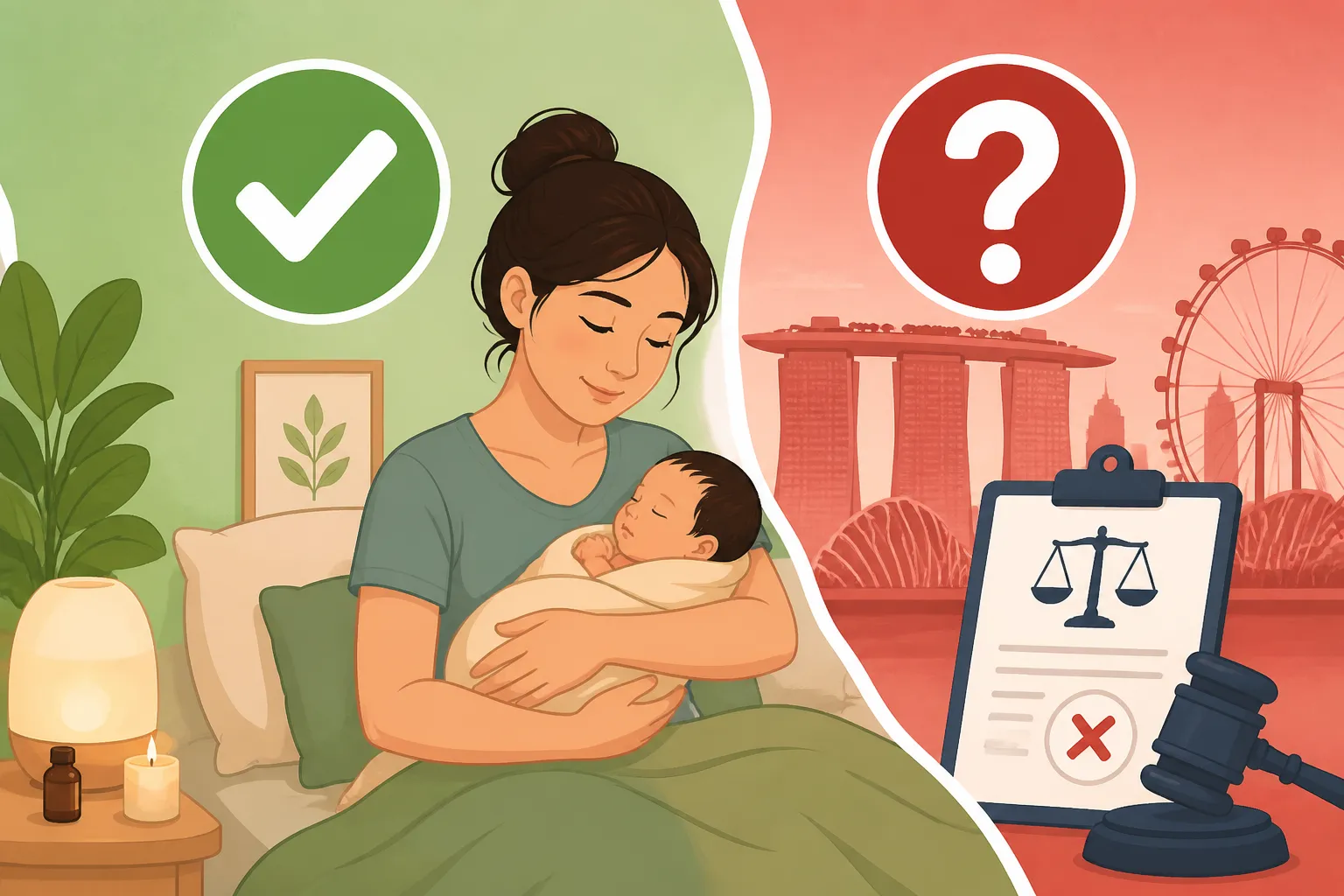
When you first arrive and start looking into your options, you might hear whispers that home birth is illegal. Let’s clear that up immediately: home birth is perfectly legal in Singapore. There is no law that mandates a woman must give birth in a hospital. However, while it is legal, the state and the medical establishment do not exactly make it easy or encourage it. You are effectively stepping outside the well-oiled "Standard Operating Procedure" of the Singapore Healthcare System for Expats: Complete 2027 Guide, and that comes with a specific set of administrative and medical hurdles.
The Ministry of Health (MOH) and the College of Obstetricians and Gynaecologists generally advocate for hospital births because of the immediate availability of emergency intervention. In Singapore, the focus is heavily on risk mitigation. If you choose a home birth, you aren't breaking the law, but you are assuming a level of personal responsibility that the local system is not designed to support. This means you won't find a government-subsidized "home birth package" or a list of state-sponsored midwives ready to come to your HDB or condo.
From an administrative perspective, the biggest challenge is the Birth Notification. In a hospital, the facility handles the paperwork. For a home birth, you must ensure a registered medical practitioner or a midwife is present to certify the birth. If no medical professional is present, the process of Registering Your Baby’s Birth with ICA and Your Embassy becomes significantly more complicated, often requiring police reports and DNA testing to prove the child is yours. This is a stressor that often catches many expat families off guard, turning what should be a peaceful "babymoon" into a bureaucratic nightmare.
Why Home Birth is Uncommon Among Expats and Locals
Despite being legal, home births account for a tiny fraction of total deliveries in Singapore—often estimated at less than 0.1%. To understand why, you have to look at the cultural premium placed on safety and "expert" intervention. Singaporeans, and the expats who move here, generally have a high degree of trust in the hospital infrastructure. When you have world-class facilities like those mentioned in our Family Health Guide: Maternity, Pediatrics, and Child Development, the incentive to stay home diminishes for most.
The primary obstacle is finding an Obstetrician-Gynecologist (OBGYN) who will support a home birth. Most private doctors in Singapore are tied to specific hospitals and their professional indemnity insurance often does not cover them for deliveries occurring outside of a licensed medical facility. If a doctor agrees to attend a home birth and something goes wrong, they risk their license and massive legal liability. Consequently, almost every OBGYN you meet will firmly, though politely, steer you toward Maternity Care: Prenatal Packages, Birth Options, and Hospital Stays at a private hospital.
For expats, the "support squad" is also a factor. In many Western countries, independent midwives are a staple of the healthcare system. In Singapore, most midwives are employed directly by hospitals as nursing staff. Finding a truly independent midwife who is willing and qualified to attend a home birth is like finding a needle in a haystack. Without this professional support, most families realize that the "DIY" nature of a Singapore home birth is simply too daunting. Even if you are a veteran of natural birth, the lack of a structured home-call system makes it a lonely path to walk.
Practical Challenges: Midwives and Hospital Back-up Plans
If you are determined to proceed, you need to understand that you are essentially acting as your own primary healthcare coordinator. You cannot simply call a Choosing a Primary Care Physician (GP) in Singapore and ask them to show up at your door when contractions start. You need a dedicated team that includes a doctor willing to sign off on the birth and a midwife or doula who understands the local landscape.
Safety is the paramount concern, and any responsible home birth plan in Singapore must include a "transfer plan." This means knowing exactly which hospital you will go to if a complication arises and how you will get there. Because Singapore is small, you are rarely more than 15 minutes from a world-class A&E, but the transition from a home environment to a high-intervention hospital ward can be jarring. If you have international coverage through a provider like Cigna Global, you need to verify if an emergency transfer from a non-clinical setting is covered under your specific policy.
Another practical hurdle is equipment. In a hospital, everything from oxygen to neonatal resuscitation kits is at hand. For a home birth, you may need to rent or buy your own supplies, including birth pools, sterilized kits, and monitoring equipment. Some doulas in Singapore specialize in "natural-leaning" births and can help bridge this gap, but they are not medical professionals and cannot legally deliver the baby. They are there for emotional and physical support, which is vital given the cultural pushback you might face from neighbors or even your own building management.
Costs, Registration, and Insurance Considerations
One might assume that staying at home would be cheaper than a luxury suite at Mount Elizabeth, but that isn't always the case. Because home birth is so rare, there are no "standard" prices. You will be paying for the private time of a doctor and a midwife, both of whom are taking a significant professional risk to be there. These bespoke fees can quickly add up, and Healthcare Budgeting in Singapore: Managing Out-of-Pocket Costs becomes a very different exercise when you can't rely on a fixed-price hospital package.
Insurance is the biggest financial "gotcha." Most standard maternity riders are designed around hospital billing. If you are using a plan from Cigna Global, you must meticulously check the wording regarding "home births" or "out-of-hospital deliveries." Some plans will only cover them if a registered physician is present, while others may exclude them entirely as a "lifestyle choice" rather than a medical necessity. Similarly, digital-nomad-friendly options like SafetyWing are excellent for general health but often have very specific exclusions or waiting periods for maternity care that you need to navigate well before conception.
| Feature | Home Birth in Singapore | Private Hospital Birth |
|---|---|---|
| Legal Status | Legal but discouraged | Standard and encouraged |
| Medical Support | Very difficult to find | Abundant (OBGYNs, Midwives, Pediatricians) |
| Cost | Bespoke / High (Out-of-pocket) | Fixed Packages (S$8,000 – S$20,000+) |
| Registration | Complex; requires doctor signature | Seamlessly handled by hospital |
| Emergency Access | Requires transfer (10-20 mins) | Immediate (seconds to minutes) |
| Insurance Coverage | Often excluded or restricted | Usually covered (with maternity rider) |
| Pain Management | Natural / TENS / Water | Epidural, Entonox, Pethidine |
After the birth, the administrative clock starts ticking. You generally have 14 days to register the birth. In a home birth scenario, you will need the "Live Birth Notification" signed by the attending doctor or midwife. Without this, you'll be spending your first days of parenthood at the Immigration and Checkpoints Authority (ICA) building explaining your situation. This is also when you should start thinking about Postpartum Confinement Culture in Singapore: Nannies and Care Centers, as the physical recovery without hospital staff can be more taxing than anticipated.
Many expats find that a "middle ground" is more achievable. This often looks like choosing a hospital that is known for being "pro-natural," such as National University Hospital (NUH) or Thomson Medical Centre, and hiring a doula to help you labor at home as long as possible before heading in. This ensures you have the safety net of the Expat Health Insurance in Singapore: Public vs Private Coverage while still maintaining some of the autonomy of a home-based labor. SafetyWing or other travel-heavy plans might cover the newborn after birth, but the delivery itself remains the primary financial hurdle to clear.
Ultimately, while home birth in Singapore is a legal right, it is a path of high resistance. It requires a level of preparation, financial flexibility, and "thick skin" to deal with the inevitable questioning from the medical community. If your heart is set on it, start your search for a supportive doctor the moment you see that positive test—and be prepared to interview many before you find your "yes."
Disclaimer
The information provided in this article is for educational and informational purposes only and does not constitute medical or legal advice. Healthcare regulations and insurance policies in Singapore are subject to frequent changes. Always consult with a qualified healthcare professional and your insurance provider before making decisions regarding childbirth and maternity care.