Dealing with “Kiasu” Parents at Popular School Intake Times
Moving to Singapore as an expat brings a whirlwind of excitement and new challenges, but few things stir up as much anxiety for parents as navigating the infamous school intake times, especially when confronted by the local phenomenon of "kiasu" culture. This guide is here to shed light on this uniquely Singaporean competitive spirit in the education system, validate your frustrations, and offer practical strategies to help you secure a school spot for your child without losing your mind in the process.
Understanding "Kiasu" Culture in Singapore's Education System
If you've spent any time in Singapore, you've likely heard the term "kiasu" thrown around. It’s a Hokkien term that literally translates to "fear of losing" or "fear of missing out," but it encapsulates so much more. In the context of the education system, it’s a pervasive drive to secure every possible advantage for one's child, leading to intense competition, early preparation, and sometimes, rather extreme parental behaviour.
What "Kiasu" Really Means in This Context
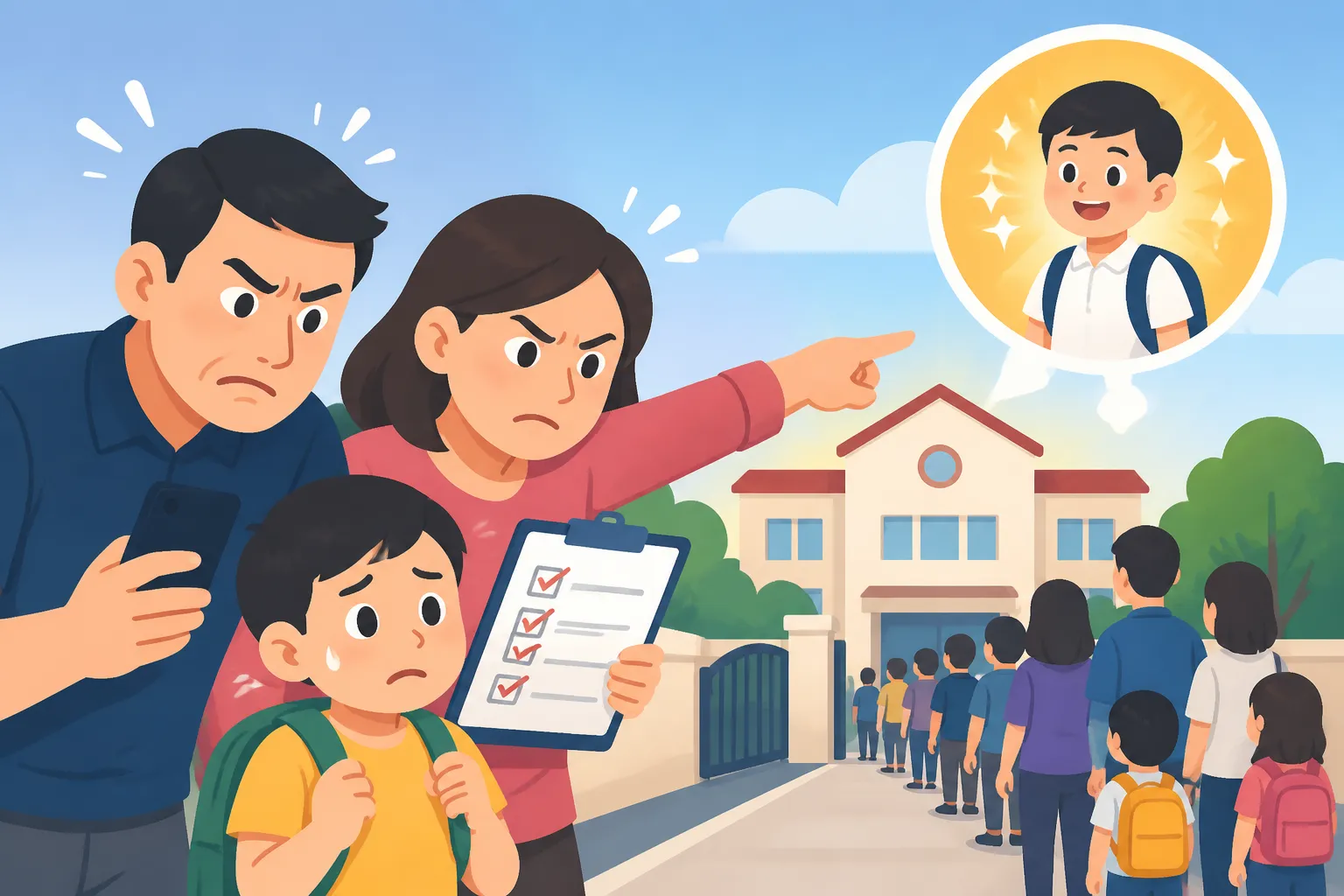
"Kiasu" isn't just about wanting your child to succeed; it's about making sure your child doesn't fall behind, or worse, doesn't miss out on opportunities that others might seize. For expat parents, this can feel incredibly overwhelming, almost like entering a race you didn't even know you were supposed to be running. You might witness parents queuing up outside schools at dawn, sometimes even camping overnight, just to submit a registration form on the first day of an intake phase. There's also the relentless pursuit of enrichment classes from a very young age, the constant comparisons between children's academic achievements, and the fervent networking to gain an edge.
I remember one expat mum, fresh off the plane, describing her shock when she attended a kindergarten open house. Instead of casual chats, she found herself in a room buzzing with parents meticulously questioning the principal about PSLE (Primary School Leaving Examination) success rates and debating the merits of various enrichment programmes for three-year-olds. It’s a cultural mindset that places immense emphasis on academic performance and getting into a "good" school, which is often perceived as the first critical step on a predetermined path to success. This intensity can be a stark contrast to what many of us are used to in our home countries, where primary school might be more about play and exploration.
The Pressure Cooker: Why Parents Feel the Need to Be "Kiasu"
To truly understand "kiasu," you need to appreciate the underlying pressures within Singaporean society. The education system is highly meritocratic and competitive. There's a widely held belief that getting into a reputable primary school sets a child up for a better secondary school, then a better junior college, and ultimately, a better university and career path. This linear view of success fuels the "fear of losing."
Limited spots in popular schools further intensify this pressure. Everyone wants their child to have the "best," and when "the best" is a finite resource, the competition inevitably escalates. Parents worry that if their child doesn't get into a highly-regarded school, they might miss out on networking opportunities, better resources, or even just the prestige associated with certain institutions. It's a system that, while delivering high academic standards, can also create incredible stress for families. You might find yourselves grappling with not only the move itself but also the added stress of school applications. Speaking of moves, if you’re still planning your relocation, services that help coordinate the logistics of an international move, such as Sirelo, can be incredibly useful to free up your mental bandwidth for these more pressing local matters like school admissions.
Navigating the Primary 1 Registration Landscape for Expats
The Primary 1 (P1) Registration Exercise is the annual event where Singaporean citizens and Permanent Residents (PRs) register their children for entry into local government and government-aided primary schools. For expat families, particularly those newly arrived without PR status, understanding this labyrinthine process is crucial. It's not as simple as walking into your local school and signing up; it's a multi-phase, highly structured system designed to prioritize specific groups.
The Phases of P1 Registration: A Whirlwind Tour
The P1 registration process unfolds over several phases, typically from July to August each year, and each phase has its own set of eligibility criteria. Here's a quick rundown:
- Phase 1: For children with siblings currently studying in the school. This is the ultimate "in" for families with older children already established.
- Phase 2A(1): For children whose parents are alumni of the school and are members of the alumni association, or who are members of the School Advisory/Management Committee.
- Phase 2A(2): For children whose parents or siblings have been former students of the school, or whose parent is a staff member of the school.
- Phase 2B: This is where things get interesting and very "kiasu." It's for children whose parents are school volunteers (having rendered at least 40 hours of voluntary service to the school by 30 June of the previous year), or who are active members of the church/clan directly connected with the school, or for children endorsed by the respective churches/clans. It's also for children whose parents are members of a parent support group of the school.
- Phase 2C: This is the general public phase, open to all eligible children who do not qualify for earlier phases. Priority is given based on the child's home address, specifically if they live within 1km or between 1-2km of the school.
- Phase 2C Supplementary: Another general public phase, for children who have not yet been registered in a school after Phase 2C. Again, proximity rules apply.
- Phase 3: This is the phase specifically for international students (non-Singapore Citizens and non-Permanent Residents). It only happens after all local children have been registered, usually in October. Spaces are highly limited and depend entirely on remaining vacancies, which are often non-existent in popular schools.
For most expat families without PR status, you're looking primarily at Phase 3. This means you’re essentially waiting to see what’s left after everyone else has picked. This stark reality often forces many expat families to consider international schools in Singapore: Choosing the Right Curriculum or private options if securing a public school spot proves too challenging or doesn't align with their child's needs.
Common Pitfalls and Misconceptions for Foreign Parents
The biggest pitfall for foreign parents is underestimating the fierce competition and not fully grasping the P1 registration system's nuances. Many arrive assuming they can simply enroll their child in any nearby school, only to be met with the harsh reality of Phase 3.
- Underestimating Competition: Even in the later phases, popular schools (which often correlates with perceived academic excellence and location) are massively oversubscribed, even for Singaporean citizens and PRs. By the time Phase 3 rolls around, these schools are almost certainly full.
- Not Understanding Distance Rules: For Phases 2C and 2C Supplementary, residential proximity is a huge advantage. Living within 1km of a school significantly boosts your chances, followed by being within 1-2km. Beyond 2km, your chances drop dramatically, especially for popular schools, even if you are a citizen or PR. Expats often select housing based on commute to work or amenities, without realizing the critical impact of school zones.
- The "Ballot" System: When a phase is oversubscribed, a ballot is conducted. This means it's a lottery – entirely random among eligible applicants. This adds another layer of uncertainty and stress. You might live 500m from your dream school and still not get in if there are too many other eligible applicants who also live close by.
- Reliance on Anecdotal Evidence: While other expat parents can offer invaluable insights, always cross-reference their experiences with official Ministry of Education (MOE) guidelines. The rules can change, and what worked for one family might not apply to another or in a different year. Keeping abreast of the latest information, perhaps while using a reliable data plan like what Airalo offers for seamless online access, is key to avoiding misinformation.
This whole process can feel isolating and deeply unfair, especially when you're already trying to navigate the broader challenges of Moving to Singapore with Family: Maids, Childcare, and Lifestyle.
Strategies for Maintaining Sanity and Securing a Spot
Given the competitive landscape, it's easy to feel overwhelmed. But there are proactive steps you can take to increase your chances, manage expectations, and keep your sanity intact throughout the P1 registration journey. Remember, securing a school spot is just one part of your child's educational journey, and a great education isn't solely defined by a school's "popular" ranking.
Researching Schools Beyond the "Popular" List
One of the most effective strategies is to broaden your search beyond the handful of schools that everyone talks about. Singapore has many excellent primary schools that might not be in the media spotlight but offer strong academic programs, dedicated teachers, and a nurturing environment.
- Look for Hidden Gems: Spend time researching schools in your preferred residential area that might not have the "kiasu" frenzy associated with them. Check MOE's School Information Service (SIS) portal for details on curriculum, co-curricular activities (CCAs), and facilities. Look for schools that align with your child’s interests and learning style.
- Visit Schools and Talk to Parents: The best way to get a feel for a school is to visit it during an open house or information session. Speak to the principal, teachers, and current parents. You’ll often find that schools with a slightly lower "reputation" on the expat grapevine are incredibly warm, supportive, and keen to integrate foreign students. Talking to other parents, both local and expat, who have children in various schools can provide invaluable, firsthand perspectives on the school's culture and teaching philosophy.
- Focus on Fit, Not Just Rankings: What truly matters is a school that is a good fit for your child. Some children thrive in highly academic, competitive environments, while others need a more play-based or creative approach. Don't get swept up in the "kiasu" current of needing to get into a specific school just because it's highly ranked. A happy, engaged child in a less "popular" school will likely do far better than a stressed child in a top-tier institution. Consider what makes a school great for your family's unique needs.
Proximity is Key: Understanding the 1KM/2KM Rule
As mentioned, for Phase 2C and 2C Supplementary, residential proximity is a critical determinant for local families. While this doesn't directly apply to expats in Phase 3, it heavily influences which schools will have any remaining vacancies by the time Phase 3 arrives.
The rule states that children living within 1km of the school receive the highest priority, followed by those living between 1-2km. If a school is oversubscribed within a distance band, balloting takes place among those eligible. Living further than 2km away significantly reduces your chances for any popular school.
What does this mean for expats?
- Strategic Housing Choices: If you are a Permanent Resident or if you hope to attain PR status soon and plan for your child to enter local schools, your choice of Where to Live in Singapore: Top Neighborhoods for Expats becomes paramount. Use the OneMap SchoolQuery function to check the distance of specific addresses to schools. This tool is incredibly useful for understanding catchment areas.
- Realistic Expectations: Assume that schools in densely populated areas or those with historical significance are likely to be heavily oversubscribed in the earlier phases. By Phase 3, these will almost certainly have no spots for international students. Your best bet for a Phase 3 spot might be in schools in newer residential areas or those slightly further from the city centre, where there's less demand from local families.
| P1 Registration Phase | Eligibility | Priority Criteria (if oversubscribed) | Relevance for Expats (non-PR) |
|---|---|---|---|
| Phase 1 | Child has sibling in school | N/A (Guaranteed entry) | N/A |
| Phase 2A(1) | Parent is alumni & member of alumni association OR School Advisory/Management Committee member | N/A (Guaranteed entry unless oversubscribed within phase) | N/A |
| Phase 2A(2) | Parent/sibling is former student OR Parent is staff | N/A (Guaranteed entry unless oversubscribed within phase) | N/A |
| Phase 2B | Parent is school volunteer (40+ hrs) OR Active community leader/church/clan member OR Parent Support Group member | Singapore Citizen (SC) first, then Permanent Resident (PR) within proximity. If SC/PR oversubscribed, ballot by proximity, then by citizenship. | Very low, unless parents volunteer early (which is unlikely for new expats) |
| Phase 2C | Open to all SC & PR children not yet registered. | SC first, then PR. Within proximity (1km, 1-2km). If oversubscribed, ballot by proximity, then by citizenship. | N/A |
| Phase 2C Supplementary | For SC & PR children not yet registered after 2C. | Same as Phase 2C. | N/A |
| Phase 3 | Non-SC & Non-PR (international students) | N/A (Based on remaining vacancies, usually very limited. No ballot.) | Primary phase for most expats. Spaces are scarce and in less popular schools. |
Volunteerism and Alumni Connections: The "Local" Advantage
Phases 2A and 2B are where the "kiasu" spirit often manifests most visibly through long-term planning and community involvement. Parents who want their children to get into a specific school often start volunteering years in advance, accumulating the required 40 hours of service to qualify for Phase 2B. Similarly, being an alumnus or having family connections provides a significant advantage.
For most newly arrived expats, this "local advantage" is simply not an option for P1 registration. You won't have alumni ties, and it's practically impossible to accumulate the volunteer hours in time. This is a tough pill to swallow, as it highlights a systemic barrier. Instead of feeling frustrated by this, acknowledge it and pivot your strategy.
However, if you plan to be in Singapore for the long haul and potentially attain PR status, and your children are much younger (e.g., still in nursery or kindergarten), then thinking ahead about community involvement, perhaps even exploring a longer-term strategy of volunteering at a school you might target in the future, could be an option. Remember, early integration into the local community can also simply enhance your family’s overall experience of Singapore life, beyond school applications.
Preparing for the Balloting Process
If you do qualify for a phase that becomes oversubscribed, the dreaded balloting process kicks in. This essentially means names are drawn randomly to fill the available spots.
- It's a Lottery: Embrace the fact that once you've met the criteria for a phase that goes to ballot, it's out of your hands. Your child's future isn't determined by this one roll of the dice.
- Have Backup Options: This is perhaps the most crucial advice. Never put all your eggs in one basket. Research multiple schools and have a ranked list of alternatives. If you're applying in Phase 3 as an international student, know that you might not get your top choice, or even any public school offer. This is where options like international schools become viable, or even considering a move to an area with more diverse school offerings. Always remember that the stress of the P1 exercise can be compounded by constant communication with various parties; keeping your phone charged and data flowing is crucial, especially if you're coordinating school visits or managing urgent communications – handy apps like Airalo can be a lifesaver for data when you're on the go, whether you're here already or just flying in for recce trips.
- Manage Expectations: Be prepared for disappointment. It's tough, but realistic expectations will save you a lot of emotional heartache. Many expat families, even those with PR, often find themselves navigating the private school route, which can also offer excellent educational pathways.
International Schools: An Alternative Path
For many expat families, especially those who find the P1 registration process for local schools too daunting, competitive, or simply not aligned with their family's plans, international schools offer a well-trodden alternative.
When Public Schools Don't Align or Aren't Accessible
International schools in Singapore are designed with expat families in mind, offering diverse curricula, multicultural environments, and often a smoother application process outside the MOE's P1 system.
- Curriculum Choice: You can choose from various curricula like the International Baccalaureate (IB), British (IGCSE, A-Levels), American, Australian, Canadian, or even specialized German or French schools. This allows for continuity with previous education systems or preparation for higher education in specific countries. You can read more about this in International Schools in Singapore: Choosing the Right Curriculum.
- Guaranteed Placement (Usually): While popular international schools also have waiting lists, applying early significantly increases your chances of securing a spot. The process is generally more straightforward, involving applications, interviews, and sometimes entrance exams, rather than the multi-phase ballot system of local schools.
- Expat-Friendly Environment: These schools are accustomed to transient populations and often have robust support systems for new students and families, helping them integrate into Singapore life. They also often offer more diverse co-curricular activities and smaller class sizes.
- Cost: The main drawback is, of course, the cost. International school fees are significantly higher than local school fees, and this needs to be factored into your Cost of Living for an Expat Family with Kids: School, Housing, and Car. However, for many, the benefits of curriculum continuity, ease of application, and an expat-centric community outweigh the financial aspect. This is particularly true if you are concerned about your child having to serve National Service as a second-generation PR male, which is not applicable to international school students unless they become PRs or citizens later on.
- Flexibility: If your posting might be for a shorter duration, or if you anticipate further international moves, an international curriculum often provides greater portability and easier transitions between different countries' education systems.
Ultimately, the decision between local and international schools often comes down to individual family circumstances, budget, long-term plans for staying in Singapore, and your child's specific needs. Don't feel pressured by the "kiasu" culture to pursue a path that isn't right for your family. There are excellent educational options available across the board in Singapore.
Disclaimer
Please note that the information provided in this guide is for general informational purposes only and is subject to change. The Primary 1 registration rules, eligibility criteria, and school landscapes in Singapore can be updated by the Ministry of Education (MOE) and relevant authorities. Expats should always refer to the official MOE website and the Immigration & Checkpoints Authority (ICA) for the most current and accurate information regarding school admissions and visa requirements. We recommend consulting with official sources or educational consultants for personalized advice.