What to Pack in Your “Go Bag” for Singapore (Typhoon/Haze Prep)
You’ve just landed in Singapore, probably picturing endless sunshine, pristine streets, and perfectly manicured gardens. And you’re not wrong – for the most part, that’s exactly what you get. But beneath that gleaming façade, even the Little Red Dot faces its own unique environmental challenges, primarily haze and incredibly heavy monsoon downpours that can lead to flash floods. This guide is all about preparing you, the expat, for those less-than-ideal scenarios by helping you pack a practical and comprehensive "go bag" so you're never caught off guard.
Navigating Singapore's Environmental Surprises: More Than Just Sunshine
Many of us arrive in Singapore expecting a perpetual summer. While that's largely true, the city-state isn't immune to Mother Nature's less charming moods. Forget the hurricanes or blizzards of your home country; here, it's typically haze or torrential rain that throws a wrench into daily life.
The haze, by far the more common and disruptive environmental phenomenon, usually descends upon Singapore from September to October, although it can happen at other times depending on prevailing winds and dry spells in neighboring countries. This isn't just a bit of fog; it’s caused by forest fires, often from slash-and-burn agriculture, resulting in a thick, smoky blanket that significantly impacts air quality. The Pollutant Standards Index (PSI) can soar into unhealthy or even hazardous ranges, leading to widespread health advisories. Schools might close, outdoor activities are cancelled, and even a simple walk to the hawker centre can leave you with a scratchy throat and burning eyes. For those with respiratory conditions like asthma or allergies, it can be a truly miserable and concerning time. You’ll find our detailed guide on Air Quality and Haze in Singapore: Managing Asthma and Allergies incredibly useful when navigating these smoky periods.
Then there's the rain. Singapore experiences two main monsoon seasons: the Northeast Monsoon (December to March) and the Southwest Monsoon (June to September). While these bring cooler, often pleasant weather, they can also unleash short, intense downpours that can quickly overwhelm the city's impressive drainage system. Localized flash floods, especially in lower-lying areas or during peak storm surges, aren't unheard of. These aren't usually catastrophic, but they can disrupt public transport, make roads impassable, and turn a short commute into a soggy nightmare. Even outside of monsoon season, unexpected "sumatra squalls" can roll in, bringing strong winds and heavy rain in a matter of minutes. While we don't face direct typhoons here, the periphery of regional storms can still bring stronger winds and heavier-than-usual rainfall. You might even find yourself paying more attention to how you prevent mosquito bites in the aftermath of heavy rain, as stagnant water is a prime breeding ground, a topic explored in Preventing Mosquito Bites: NEA Approved Repellents.
Understanding these environmental nuances is the first step to truly feeling at home and prepared as an expat in Singapore. It's about being ready for the unexpected, even in a city known for its meticulous planning.
Building Your Essential Haze & General Emergency Go Bag
Now that you know what you might face, let's talk about putting together that all-important "go bag." Think of it as your portable peace-of-mind kit, designed to get you through a few days of disruption, whether you need to hunker down or make a quick move.
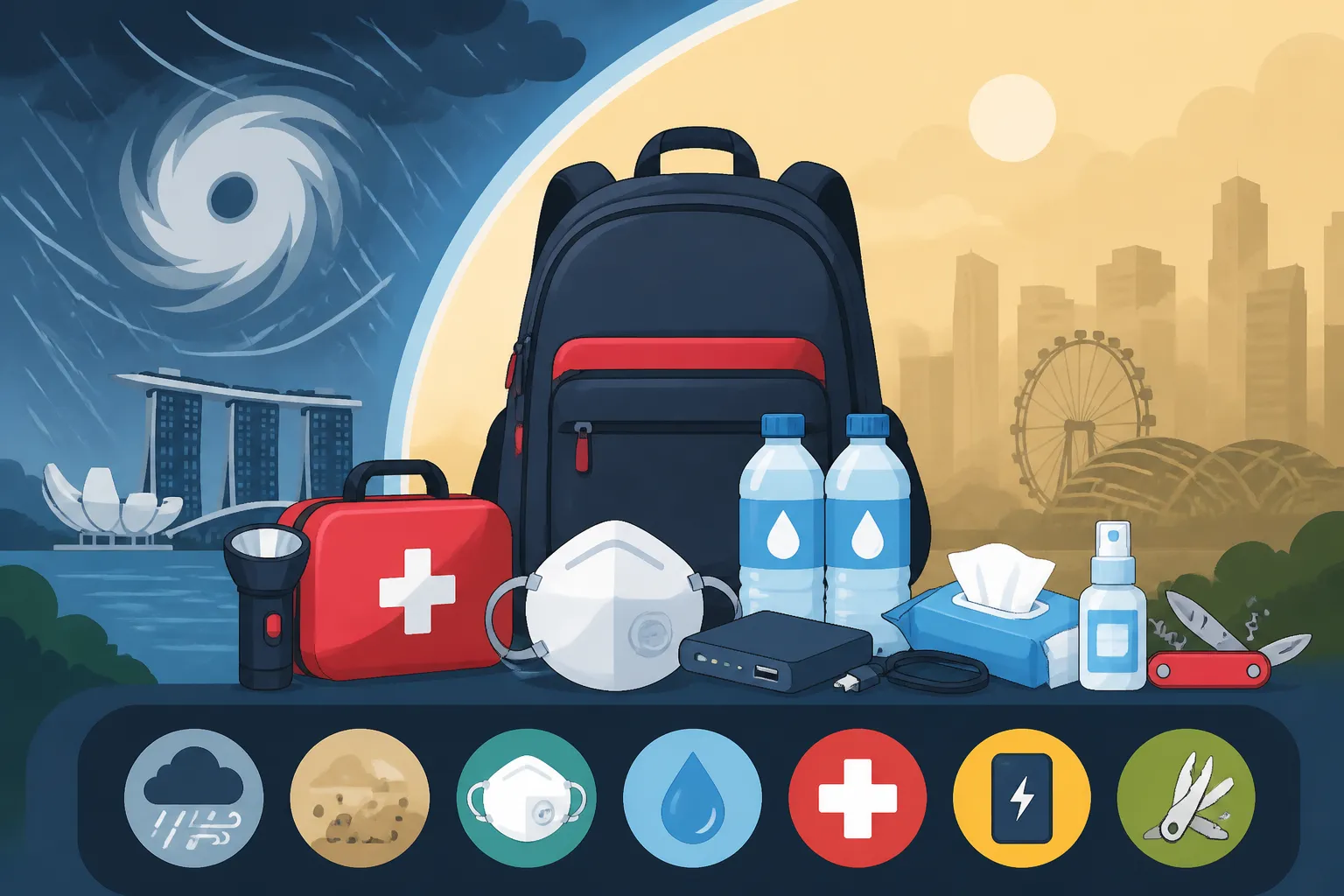
Firstly, N95 masks are absolutely non-negotiable for haze. These aren't just your regular surgical masks; N95s filter out at least 95% of airborne particles, including the fine particulate matter (PM2.5) that makes haze so dangerous. Stock up on at least five per person, ideally more. When haze hits, these fly off the shelves faster than you can say "PSI reading," so get them before you need them. You can find them at most Guardian, Watsons, Unity pharmacies, and even larger supermarkets like FairPrice. Make sure everyone in your family knows how to wear one properly to ensure maximum protection.
Next up, medication. If you or any family member relies on prescription drugs, make sure your go bag has at least a three-day supply, ideally in their original packaging with copies of your prescriptions. Don't forget any essential over-the-counter (OTC) medications either, like paracetamol for headaches, allergy pills, or anti-diarrhea medicine. Eye drops are also a lifesaver during haze, as the smoke can cause significant irritation. For more on navigating medication, check out Pharmacies and Medication in Singapore: Prescriptions and OTC Rules. It’s also wise to have a basic first aid kit with bandages, antiseptic wipes, pain relievers, and any personal items like asthma inhalers or epi-pens. Having quick access to medical care and understanding the Singapore Healthcare System for Expats: Complete 2027 Guide is always a good backup, but self-sufficiency for a few days is key here.
For sustenance, pack at least three liters of bottled water per person. While Singapore's tap water is safe, disruptions to power or pipes are possible. Supplement this with non-perishable food items like energy bars, dried fruit, nuts, or canned goods with a can opener. Choose things that require no cooking and are high in energy. Remember to rotate these items every six months to ensure freshness.
In this digital age, staying connected is paramount. A fully charged power bank with enough capacity to charge your phone multiple times, along with all necessary charging cables, is critical. Consider a car charger if you have a vehicle. When the power goes out, your phone becomes your lifeline for communication, information, and even light.
Speaking of information, compile copies of your important documents. Think passports, Employment Passes, insurance policies, and a list of emergency contacts (both local and international). Store these in a waterproof pouch. It's also a good idea to have digital copies saved to a cloud service or encrypted USB drive. Understanding the intricacies of Singapore Visa and Immigration: The Complete Guide for Expats (2027) helps you appreciate why having these copies handy is so important. And while we live in a cashless society here, always keep some cash in small denominations in your go bag. Digital payment systems rely on power and network connectivity, which can both be disrupted.
Finally, don't overlook basic hygiene items. A small bottle of hand sanitizer, a pack of wet wipes, and maybe some travel-sized soap are invaluable, especially if water access is limited. A torchlight or headlamp with spare batteries is also essential for navigating in the dark if there's a power outage.
Here's a handy table to help you pack efficiently:
| Category | Item | Purpose | Where to Get (Singapore) |
|---|---|---|---|
| Air Quality & Health | N95 Masks (minimum 5 per person) | Protection from haze particles | Guardian, Watsons, Unity, major pharmacies |
| Personal Prescription Medications | Essential for chronic conditions, 3-day supply minimum | Your local GP or hospital pharmacy | |
| Basic First Aid Kit | Minor injuries, cuts, pain relievers, eye drops | Guardian, Watsons, Unity, Daiso, supermarkets | |
| Hand Sanitizer & Wet Wipes | Personal hygiene, especially during haze or water disruptions | Convenience stores, supermarkets | |
| Hydration & Sustenance | Bottled Water (minimum 3L per person) | Essential for drinking | Supermarkets (FairPrice, Cold Storage, Sheng Siong) |
| Energy Bars, Dried Fruit, Canned Goods | Non-perishable, high-energy food | Supermarkets | |
| Communication & Info | Power Bank & Charging Cables | Keep mobile devices charged | Challenger, Best Denki, online (Lazada, Shopee) |
| Small Battery-Powered Radio | Receive official emergency broadcasts if power/internet out | Electronics stores, online | |
| Whistle | Signaling for help | Daiso, sports stores | |
| Important Documents | Waterproof Pouch | Protect vital papers | Daiso, stationery stores |
| Copies of Passport, EP, Insurance | Identification, official records (physical & digital) | Home (scanned copies on cloud, physical copies) | |
| Other Essentials | Cash (small denominations) | Contingency for payment system disruptions | ATMs, money changers |
| Torchlight/Headlamp (with spare batteries) | Illumination during power outages | Daiso, hardware stores, Decathlon | |
| Multi-tool | Versatile for various tasks | Hardware stores, outdoor recreation shops |
Beyond Haze: Preparing for Severe Rainfall and Disruptions
While haze is our most frequent visitor, we also need to consider those intense downpours and potential flash floods. Your go bag should include a few extra items to specifically address these scenarios, or simply to make a general disruption more manageable.
First and foremost, a good quality waterproof bag or dry sack is invaluable. This isn't just for keeping your go bag contents dry; it's particularly important for protecting your vital documents and any electronics if you need to move through wet conditions. Nobody wants a waterlogged passport!
Next, pack a change of clothes. Choose lightweight, quick-drying fabrics. Even if you don't need to evacuate, having dry clothes after navigating a flooded street or getting drenched in a sudden downpour can significantly boost morale and prevent chills. Along with that, a pair of sturdy, waterproof, and comfortable shoes is a must. Flip-flops or open-toed sandals won't cut it if you're slogging through standing water or debris.
Consider a small, battery-powered radio. While we rely heavily on our phones, a simple radio can pick up local news and official advisories if cellular networks or internet services are down. You might also throw in a whistle – it's a simple, low-tech way to signal for help if you're in distress or separated from your group. A basic multi-tool can also come in surprisingly handy for various small tasks.
If you're an expat with a family, your go bag needs to reflect that. Pack specific baby supplies like extra formula, bottles, diapers, and any comfort items or small toys that can help keep little ones calm during stressful situations. For those with furry friends, don't forget pet supplies – a small bag of their food, a collapsible bowl, a leash, and maybe a small carrier if space allows. These details often get overlooked but are crucial for the well-being of your entire household. Check out Moving to Singapore with Family: Maids, Childcare, and Lifestyle for broader family considerations.
Finally, while your phone's GPS is usually reliable, consider tucking in some physical maps of your immediate area and key locations like public transport hubs or emergency shelters. If digital systems fail, a good old-fashioned map can be a lifesaver. And speaking of communication, having a backup plan beyond your local SIM is smart. Perhaps an eSIM from a provider like Airalo could be a good idea, ensuring you have a reliable way to communicate even if your primary SIM encounters issues, giving you peace of mind whether you're dealing with haze or just traveling regionally. This added layer of connectivity is crucial when unexpected disruptions hit. For larger-scale emergencies, knowing the Emergency Numbers: Calling 995 for Ambulance and 999 for Police is fundamental, but self-reliance in the initial hours is paramount. Also, knowing how to navigate Public Transport in Singapore: MRT, Buses, and Commuting Hacks can be useful if personal transport is out of commission due to flooding.
Maintaining Your Go Bag and Family Preparedness
Having a go bag is one thing; keeping it ready is another. It’s not a "pack it and forget it" kind of deal. Think of it as a living, evolving kit that needs regular attention.
First, location, location, location. Your go bag should be easily accessible, not buried under a pile of holiday decorations in the back of a closet. Keep it near an exit, like by your main door or in a garage, where you can grab it quickly without fumbling.
Regularly check your go bag’s contents. Food and water have expiration dates, as do batteries and many medications. Mark your calendar to do a thorough check every six months. Rotate out expired items, replenish anything you might have used, and check battery levels in your torchlight and radio. This also gives you a chance to reassess if your family’s needs have changed – perhaps a child has grown out of certain supplies, or new medical requirements have emerged.
Customization is key. While this guide provides a general framework, your go bag should be tailored to your specific household. Do you have unique allergies? Special dietary needs? Essential items for an elderly family member or someone with a disability? Add those in. Remember that Singapore’s humidity can be relentless, so think about humidity-induced issues, a topic we cover in Dealing with Humidity-Induced Skin Issues (Eczema and Heat Rash).
Beyond the physical bag, establish a family communication plan. Discuss where you would meet if you got separated, both within your immediate neighborhood and at a secondary location. Designate an out-of-area contact person who everyone can call or text, as local networks might be overwhelmed, but long-distance calls might still go through. Practice what you'd do in different scenarios, especially if you have children.
Finally, embrace digital preparedness. Ensure all your emergency contacts are synced across multiple devices and consider having a physical list as well. Familiarize yourself with apps like the HealthHub app, which can store your medical records and appointments – a great resource to have access to, as discussed in Using the HealthHub App as a Foreigner with Singpass. Knowing your way around official government portals for news updates is also crucial.
Being an expat often means facing the unknown with a bit more courage, but it doesn't mean you have to be unprepared. With a well-thought-out go bag and a proactive mindset, you'll be ready for whatever unexpected weather Singapore throws your way, allowing you to focus on enjoying all the wonderful things this city has to offer.
Disclaimer
The information provided in this guide is for general informational purposes only and does not constitute professional advice. While we strive to offer accurate and up-to-date information, circumstances in Singapore can change rapidly. Always consult official government advisories (NEA for haze, PUB for floods, MOM/ICA for immigration), medical professionals, and relevant authorities for the most current and personalized guidance. Relying solely on this information is at your own risk.